Was the Philosopher Elias a Pagan in a Christian Empire?
A Forbidden Lesson in Alexandria
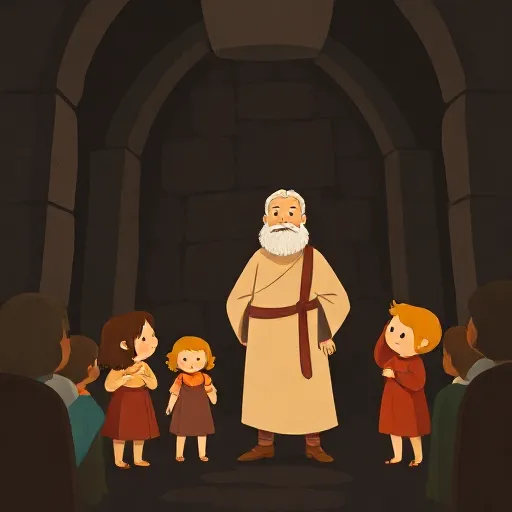
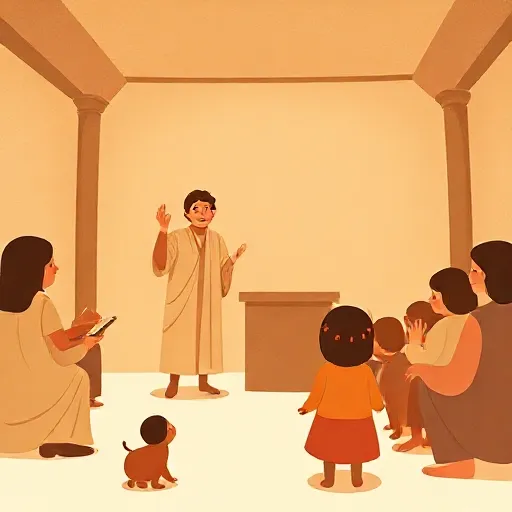
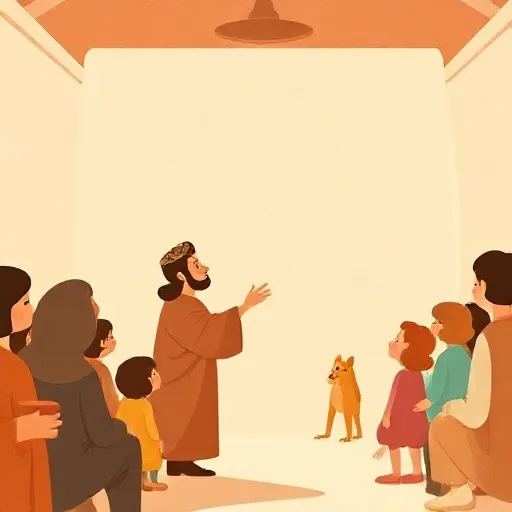
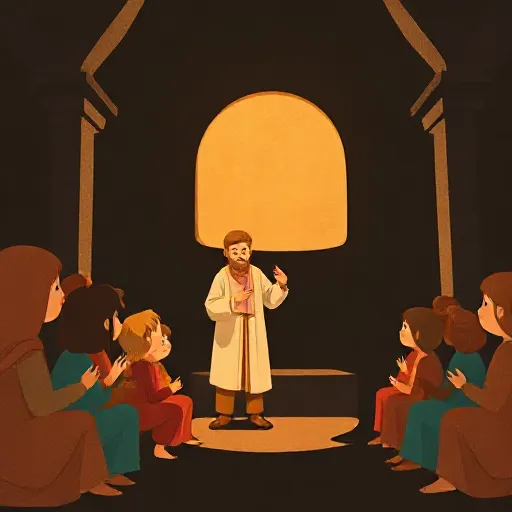
It is a warm morning in Alexandria, around 560 CE. A group of young students settles onto stone benches in a sunlit hall. Their teacher, a man named Elias, stands before them holding a scroll. He is about to launch into a course on philosophy, and he does not begin with Christian prayer. Instead, he starts talking about Plato, Aristotle, and the old Greek gods.
A few decades earlier, Emperor Justinian had shut down Plato’s Academy in Athens in 529 CE. The Athenian school was a famous center of pagan learning, and the Christian emperor wanted it gone. But in Alexandria, a different story was playing out. Here, philosophy continued to be taught — sometimes openly, sometimes in the shadows. Teachers like Olympiodorus (c. 495–565 CE), and possibly Elias, stood before classrooms full of Christian students and discussed ideas that seemed to belong to a world that had supposedly vanished.
Who was Elias? That is exactly the mystery. We have his written lectures, but we are not even sure whether he was a Christian or a pagan pretending to be one. His name, which is a good Hebrew and Christian name, appears on late manuscripts, yet the ideas inside look as if they belong to a worshiper of the old gods. The riddle of Elias shines a light on a moment when the ancient philosophical world took its last, hidden breath inside a Christian empire.
The Map of Knowledge: From Aristotle to God

To understand what Elias was doing, you need to see the map of learning that late ancient philosophers followed. By the 500s CE, the teaching of Neoplatonism — a version of Plato’s thought that added a strong focus on a single divine source, the One — had a clear curriculum. Beginners started with two works: Porphyry’s Isagoge, a short textbook that introduces logical terms, and Aristotle’s Categories, a work about the kinds of things we can say about the world. Only after mastering these would a student move on to deeper texts, aiming ultimately at Plato’s dialogues.
Elias gave his students an introduction to philosophy in twelve lectures. He wanted to do three things: define what philosophy was, explain why they had to start with logic, and fire up their desire to study. He came across as a lively teacher, not a dry drone. In those twelve lectures, he mentioned Plato 22 times, quoted Homer fifteen times, and made quick references to figures from Pythagoras to Sophocles. The room must have crackled with names and stories.
But one claim stood out and would have made a Christian listener blink. Elias repeated the Neoplatonic conviction that the purpose of philosophy is to transform a human being, to make a person slowly become like the divine. This was a genuinely Platonic ideal, straight from Plato’s Theaetetus (176A–B). For Christians, drawing close to God was not a result of reading Plato; it came through faith and divine grace. Yet here was a teacher in an empire that was officially Christian, telling his students that philosophy could do the work.
The Ideal Thinker: Truth Over Loyalty
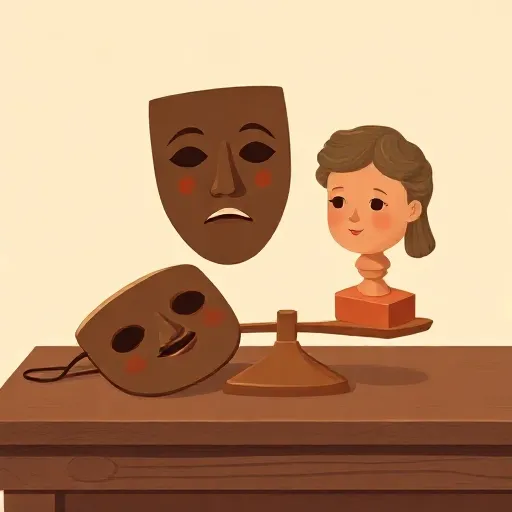
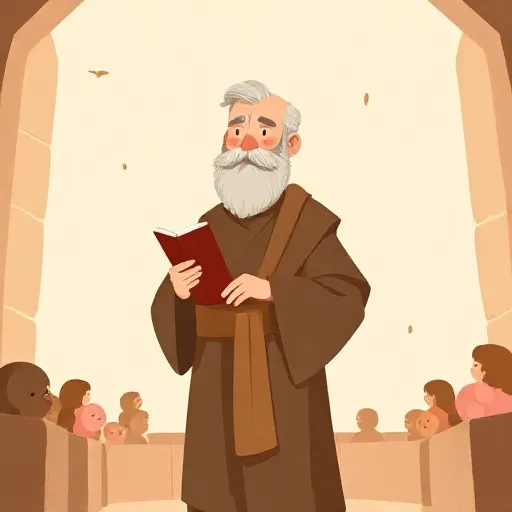
Elias did not just teach students the content of old books. He also taught them how to read those books well. In his preface to Aristotle’s Categories, he laid out the qualities an ideal commentator — a person who explains and judges a text — should have. His advice is still striking today.
A true commentator, he wrote, must be both an explainer and a judge. The explainer untangles difficult sentences; the judge evaluates what is true and what is false, what is helpful and what is useless. The commentator must never turn into an actor who puts on different masks. You should not become an Aristotelian when you read Aristotle, declaring him the greatest of all, and then switch masks to become a Platonist when you turn to Plato. Elias knew that thinkers like Iamblichus (c. 245–325 CE) had been so in love with Plato that they talked down to Aristotle, while Alexander of Aphrodisias (2nd–3rd centuries CE) had twisted Aristotle’s words to attack the idea of an immortal soul.
Instead, Elias insisted: “The author is a dear friend, but so also is truth, and when both stand before me truth is the better friend.” A good commentator must know the whole of Aristotle well enough to show that Aristotle is consistent with himself, and also know the whole of Plato so that Aristotle’s works can serve as a staircase leading up to Plato’s. That is not the posture of a fan; it is the posture of a thinker who loves ideas more than heroes.
The Mystery of the Missing Evidence

So who was this teacher with such strong advice? The name “Elias” is the first puzzle. A recently published manuscript of a commentary on Aristotle’s Prior Analytics, dated to the 13th or 14th century, names Elias as the author and says he once held the office of prefect, a very high civilian governor in the Roman Empire. A prefect named Elias does appear in a law issued by Justinian on December 12, 541 CE. If that is the same person, then Elias the philosopher was not just a teacher — he was a powerful Christian official who might have taught philosophy after his political career.
But a closer look at the manuscripts raises suspicion. For a long time, the texts that are now labeled “by Elias” circulated anonymously. No early Byzantine list of commentators on Porphyry and Aristotle mentions any philosopher named Elias. The famous 9th-century scholar Photius and the 10th-century encyclopedia Suda are silent about him. The attribution to one “Elias” seems to be a much later addition.
And the content of the lectures never once mentions the Bible, yet it overflows with references to pagan philosophers and poets. It openly teaches ideas that clash with Christianity: that a philosopher should imitate the sun, and that the world is eternal, not created at a moment in time. Because of this, some scholars have proposed a skeptical conclusion: the original author may not have been Christian at all, but a pagan who, like his teacher Olympiodorus, taught Greek philosophy to a Christian audience while keeping his own beliefs quiet. Later, a monkish copyist might have invented the name “Elias” to make the pagan texts look safe enough to preserve. On the other hand, if our Elias really was the Christian prefect who loved Plato, then we have to rethink how openly pagan ideas could still be spoken in the empire.
We cannot know for sure. The evidence is too thin. Either way, the works of “Elias” show that the old philosophy was still breathing hard in the middle and late 6th century.
Why This Ancient Puzzle Still Matters

It is tempting to treat Elias as just a footnote for scholars. But his story keeps poking us because it asks questions that are not locked in the past.
First, it shows how ideas survive when the world turns against them. In Alexandria, philosophy did not die when the Athenian Academy closed. It shifted, adapted, and perhaps even hid. Whenever a reader today comes across a banned idea or an anonymous post online, the same detective work that surrounds Elias becomes newly urgent: who wrote this, and what stake did they have in saying it?
Second, Elias’s advice about being a commentator has not aged a day. He warned his students not to become cheerleaders for a single thinker and not to force a text to say what it does not. Truth, he argued, must be more important than loyalty to an author. That is a hard rule, even for grown-ups, and it remains one of the best definitions of honest thinking a twelve-year-old can meet.
The riddle of Elias — Christian or pagan, prefect or poor lecturer — refuses to be solved. But the very act of trying keeps the old classroom alive, and it asks you the same question Elias once asked his students: will you think for yourself, or just wear someone else’s mask?
Think about it
- If you found a secret notebook full of ideas that went against the official rules of your school, would you guess the writer was a rebel, or simply a curious thinker?
- Elias believed truth is a better friend than the author. Can you remember a time when you had to disagree with a friend or a teacher because you thought they were wrong?
- When you read something online and you cannot tell who wrote it, how does that change the way you treat the idea?