Can a Pagan Philosopher Teach Christians How to Live?
A Scandalous Book About the Soul

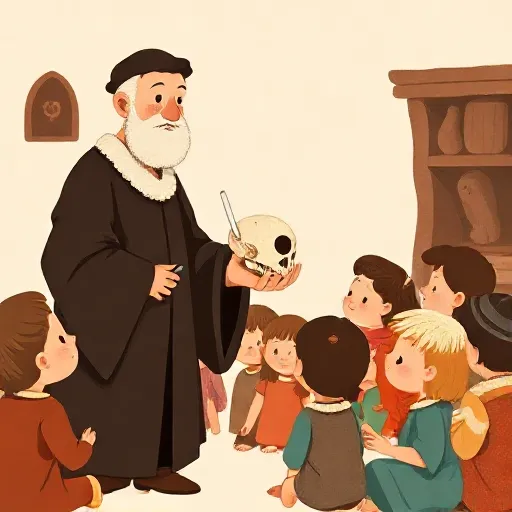
In 1516, an Italian professor named Pietro Pomponazzi (1462–1525) published a short book that made people furious. He taught philosophy at the University of Bologna, and his classroom was packed with students eager to understand Aristotle. But his new work, On the Immortality of the Soul, argued something shocking: from philosophy alone, you cannot prove that the human soul lives on after the body dies.
Church leaders were outraged. Just three years earlier, a papal decree had reminded professors that Christian doctrine clearly teaches the soul is immortal. Pomponazzi was supposed to defend that teaching, not cast doubt on it. Instead, he wrote that philosophical arguments for immortality simply were not convincing — and then added, almost as an afterthought, that he believed the church’s teaching anyway, just as a matter of faith.
The uproar was not about whether Pomponazzi personally believed in an afterlife. It was about what happens when the smartest ancient thinker, the philosopher everyone studied, seems to say things that do not fit Christian faith. And by the 1500s, Aristotle had been the great authority in European universities for over three centuries. That made the question urgent: could you really keep Aristotle and the Bible together?
Why Aristotle Wouldn’t Go Away

Aristotle was a Greek philosopher who lived more than 300 years before Jesus. By the 1200s, almost all of his surviving works had been translated into Latin and were being taught in the new universities. Subjects like logic, natural science, moral philosophy, and metaphysics all centred on his books. Even when new translations appeared in the 1400s, scholars did not abandon him. Far from it: more Latin commentaries on Aristotle were written between 1500 and 1650 than in the entire thousand years before that.
So Renaissance thinkers were not pushing Aristotle aside. They were swimming in his ideas. But they had a problem. Aristotle was a pagan. He had no concept of the Christian God, of grace, of an individual afterlife, or of a world created out of nothing. Yet his arguments were careful, his logic powerful, and his explanations of the natural world remarkably tough to replace.
The tension was not always a dramatic explosion. Many scholars spent their careers quietly adding Christian footnotes to Aristotle, suggesting small corrections or reading him through the lens of later interpreters. But in key areas — the soul, the universe, and the best way to live — his ideas kept colliding with what the Church taught. How thinkers tried to hold those pieces together is the real story of Renaissance Aristotelianism.
Could Aristotle’s Soul Fit Into Heaven?
Aristotle described the soul as the form of the body — the organising principle that makes a living thing what it is. This view, called hylomorphism, ties the soul very closely to the body. In his book On the Soul, he even says it is clear that the soul is not separable from the body, or at least certain parts of it are not. That sounds a lot like the soul dies when the body does.
But Aristotle’s words were not the only problem. Medieval and Renaissance scholars read him through commentaries written centuries later. Two main interpretations caught on. Averroes (Ibn Rushd, 1126–1198) argued that there is only one universal intellect shared by all humans. On that picture, the intellect is immortal — but you do not keep your own individual mind after death. The other interpretation, associated with the ancient commentator Alexander of Aphrodisias, held that the human soul is individual but completely mortal. Neither view matched the Christian promise that your soul, the one that is unmistakably you, lives forever.
Church authorities tried to contain the damage. The 1513 decree known as Apostolici regiminis ordered university professors to refute arguments against the soul’s immortality. That is why Pomponazzi’s book caused such fury: instead of refuting, he said philosophy could not settle the question. He leaned toward the Alexandrist position in his reasoning, then added a short statement of faith — but for many critics, that was not nearly enough. The debate did not end with him. Other professors, including Averroists who championed a single immortal intellect, battled it out in Italian lecture halls well into the next century.
The Universe That Aristotle Built — and How It Cracked
For Aristotle, the universe had no beginning. In his Physics, he argued that the world must be eternal, an endless chain of motion and change pushed by an unmoved mover. But the Bible opens with creation: God made the heavens and the earth. This was not a small disagreement. Already in 1215 the Church declared creation out of nothing a required belief, and throughout the Renaissance most Christian thinkers firmly rejected Aristotle’s eternal universe.
A few did not. The mathematician Biagio Pelacani da Parma (died 1416) was forced to take back his support for eternalism in front of a bishop’s court. Later, the political writer Niccolò Machiavelli (1469–1527) and the fiery philosopher Giordano Bruno (1548–1600) both argued for an eternal cosmos. So even inside the Christian world, Aristotle’s view kept finding defenders.
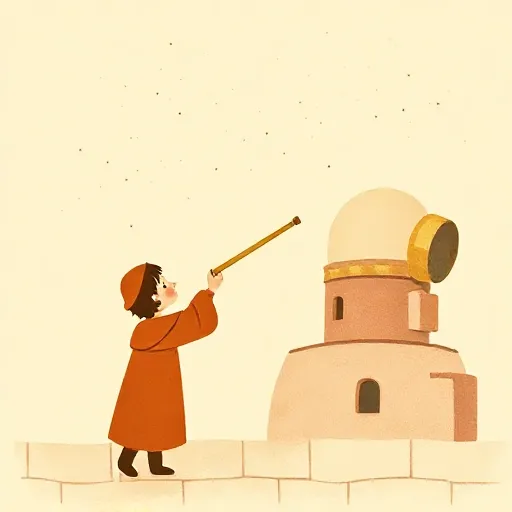
Meanwhile, a different challenge was gathering strength. Aristotle’s cosmology placed an immobile Earth at the centre, with perfect, unchanging heavenly spheres above. In 1543, Nicolaus Copernicus (1473–1543) published a mathematical model that placed the Sun at the centre instead. Observations of new stars and comets soon suggested the heavens were not unchanging after all. The Catholic Church condemned heliocentrism in the early 1600s and tried to silence Galileo Galilei (1564–1642) for defending it. Aristotle’s tidy universe was crumbling under evidence — but the shockwaves went beyond astronomy. If Aristotle could be so wrong about the sky, what else might he have been wrong about?
Can You Be Good Without God’s Help?

Perhaps the most personal clash lay in how to live a good life. Aristotle called the ultimate goal eudaimonia — often translated as happiness or human flourishing. He thought you could reach it through habituation: train yourself in the right habits, aim for the golden mean between extremes, and over a complete lifetime you become virtuous. Nowhere in his main ethical work, the Nicomachean Ethics, does divine grace appear. The entire project is rooted in this world, not an afterlife.
For Christians, this was understandably alarming. Their highest good was God, not any earthly activity. To treat human thriving as the final goal sounded like idolatry. Thinkers such as Thomas Aquinas (c. 1225–1274) worked hard to adapt Aristotle, arguing that true beatitude is knowing God. But the worry never disappeared. Protestant reformers, including Philipp Melanchthon (1497–1560), were especially blunt: without faith, hope, and love — virtues Aristotle never listed — human effort alone cannot produce real goodness. Grace was not an optional extra.
Still, early humanists such as Leonardo Bruni (1370–1444) admired Aristotle’s elegance and retranslated his ethics with tweaks to make it sound more compatible. Others turned to Platonic ideas of love or inserted Christian virtues where Aristotle fell silent. Yet the tension remained. Could you borrow Aristotle’s brilliant psychology of habit and still insist that a good life needed God’s personal action? That question divided classrooms and congregations alike.
Could Other Ancient Thinkers Save the Day?

If Aristotle kept causing trouble, perhaps another ancient voice would help. Plato’s complete works were translated into Latin in the 1400s, and his ideas about the immortal soul and a creator figure seemed much friendlier to Christianity. The Florentine philosopher Marsilio Ficino (1433–1499) spent years trying to show that Plato, Aristotle, and Christianity could all be harmonised. Others, like the Piccolomini cousins in Siena, wove Platonic love and Christian marriage into their commentaries on Aristotle’s ethics.
But not every alternative was soothing. Stoicism, with its focus on inner calm and virtue alone, gained followers through the writings of Seneca and Epictetus. Yet Stoic thinkers condoned suicide in extreme situations — a hard pill for Christians to swallow. The Flemish scholar Justus Lipsius (1547–1606) tried to prove that Stoic ethics could be baptised, but many remained sceptical.
By the late 1500s and early 1600s, outright anti-Aristotelianism grew louder. Thinkers such as Mario Nizolio, Petrus Ramus, and eventually Pierre Gassendi (1592–1655) attacked Aristotle’s logic, physics, or metaphysics directly. Gassendi wedded Epicurean science with a dose of scepticism, arguing that because the senses are unreliable, Aristotle’s whole method was shaky. The new experimental approach of Galileo and the geometry of René Descartes (1596–1650) promised to replace Aristotle’s system rather than mend it. The centuries-long effort to keep Aristotle inside the Christian framework was running out of steam.
Why a 500-Year-Old Fight Still Matters

You might think this is just dusty history. But the Renaissance struggle with Aristotle is closer to your world than it seems. Every time someone asks whether science explains everything about being human, they are walking onto the same tightrope. Pomponazzi thought philosophy could not prove the survival of the soul, yet he continued to live as a believer. To him, that was honest. To his critics, it was dangerous. The question of whether two different ways of knowing — call them reason and faith, or evidence and value — can coexist without one swallowing the other has never gone away.
When you weigh an ancient book’s advice against modern psychology, or wonder if a cosmologist’s picture of the Big Bang leaves room for meaning, you are stepping into a conversation that Renaissance students and professors began urgently five centuries ago. They did not all agree, and neither do people today. Their messy, noisy, brilliant attempts to keep thinking honestly while respecting tradition are exactly what philosophy looks like when it matters most.
Think about it
- Imagine you find a brilliant science book from 500 years ago, but it says the Earth is the centre of the universe. Would you throw it away, or keep the parts that still make sense?
- Pomponazzi said philosophy could not prove the soul lives forever, but he still went to church. Can someone honestly hold two ideas that seem to clash?
- Do you think it’s fair to expect an ancient philosopher to match the beliefs of a different religion? Why or why not?