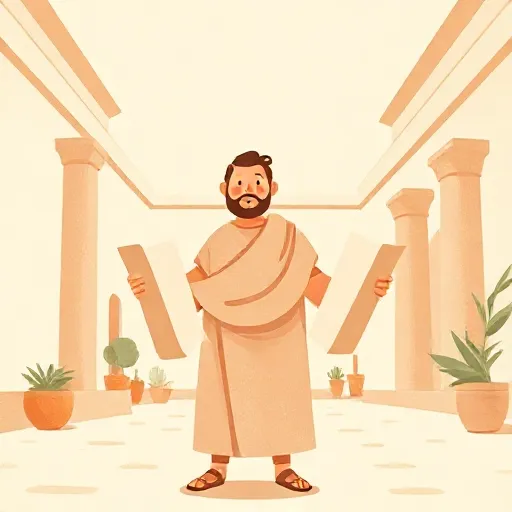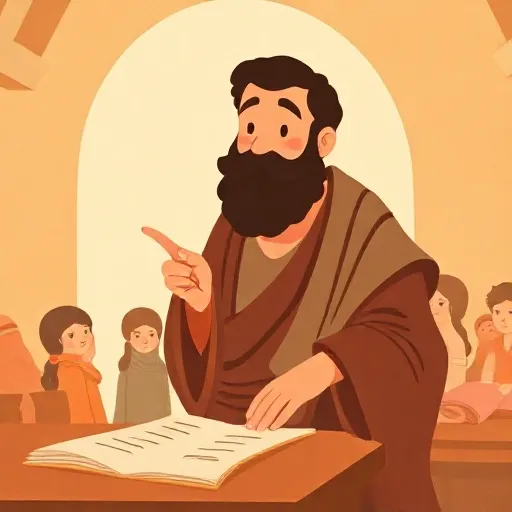

The Philosopher Who Made a Deal with the Bishop to Keep Teaching
The City Where Teaching Plato Was Dangerous
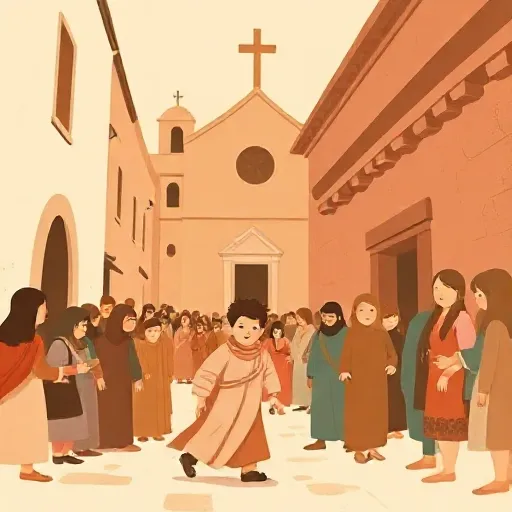
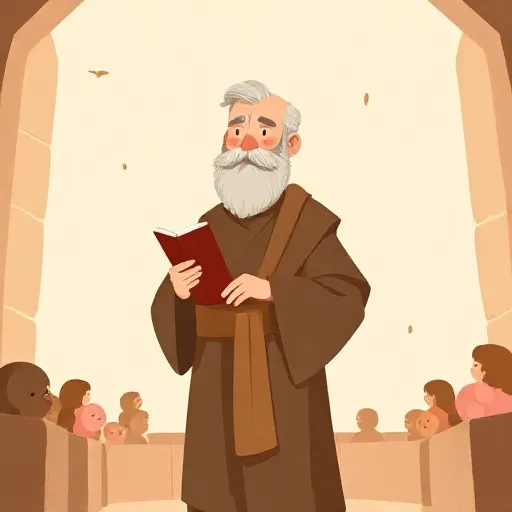
In the year 489, the great Egyptian city of Alexandria was boiling with anger. A violent revolt had just collapsed, and the new Christian leaders saw pagan teachers — those who honored the old Greek gods — as enemies. Soldiers arrested philosophers. Temples were ransacked. Yet one man, Ammonius (c. 440–after 517), stayed right where he was. While other pagan professors fled or died, he walked back into his classroom and began lecturing again.
Ammonius was not just any teacher. He had studied in Athens under Proclus (412–485), the famous head of Plato’s Academy. His mother, Aedesia, was so admired for her charity that the city had paid her a teacher’s salary even after her husband died, just to keep his memory alive. Ammonius himself taught in a remarkable school. At the school of Horapollo, rhetoricians and philosophers — both pagan and Christian — taught side by side, even if tension crackled in the air.
What made Ammonius special, though, was that he stayed. The burning question whispered across the city was: How? How could a committed pagan, known for explaining Plato and Aristotle, survive when others were destroyed? Some said he made a secret deal with the Christian bishop.
The Secret Deal — or Sour Gossip?

A later writer named Damascius (c. 460–after 532) was furious at Ammonius. He wrote that Ammonius was “wickedly greedy” and made an agreement with the Christian bishop — most likely Peter Mongus — to save his own skin. Damascius hinted that Ammonius might have betrayed his friends to the authorities or sold out the old religion. But Damascius was a zealous follower of theurgy, a set of ritual practices that he believed could unite a person’s soul with the divine. For Damascius, anyone who downplayed theurgy was a traitor. And he never mentioned Ammonius doing any theurgy at all.
Today, many scholars think the truth is less dramatic. The historian Richard Sorabji suggested that Ammonius simply promised the bishop he would not make his classroom a center for pagan worship. In particular, he would keep theurgy out of his lessons, sticking instead to plain philosophical discussion. That would have let him keep his job, his salary, and his school — without harming anyone. Some even say that, far from being a coward, Ammonius saved the tradition of Greek philosophy in Alexandria by making it less threatening to Christians.
We can’t be sure. The evidence is shaky, and Damascius had good reasons to smear him. What we do know is that Ammonius went on teaching for decades, and his ideas about God, fate, and the future became the most influential part of his work.
Making God the Creator: Aristotle Meets Plato

Ammonius was a Neoplatonist. That means he believed Plato’s dialogues pointed to a single, ultimate source of all reality — a perfect Goodness far beyond the physical world. Christians loved this idea, because it sounded a lot like their own God. But there was a problem: Plato’s God was a craftsman who deliberately designed and created the universe, while Aristotle’s God was simply the final cause — the unmoved mover that everything reached toward, like a sailor drawn toward a lighthouse without the lighthouse ever building the ship. Many Christians and pagans saw a clash.
Ammonius would not accept a clash. He devoted an entire book to proving that Aristotle’s God was both a final cause and an efficient cause — the actual maker of the world’s existence, not just its motion. Imagine a wind‑up toy car. The winder is not only the reason the car moves (the final cause), but also the reason the car exists as a moving toy in the first place. Ammonius found five passages in Aristotle’s works that, read correctly, showed God producing the very being of the heavens and the earth. This harmonization allowed later Christian, Islamic, and Jewish thinkers to use Aristotle without feeling they were betraying their faith. It was one of the most important interpretive moves in the history of philosophy.
Tomorrow’s Sea‑Battle: Is the Future Already Written?

One of Aristotle’s most famous puzzles is the sea‑battle argument. Suppose I say, “There will be a sea‑battle tomorrow.” If that sentence is true right now, then it seems the battle was always going to happen, and no one can really choose not to fight. If it’s false, then the battle cannot happen. Either way, the future looks fixed — and determinism threatens our idea of free will.
Ammonius, in his commentary on Aristotle’s On Interpretation, turned this into a small treatise on fate and choice. He added two extra determinist arguments. One was called the Reaper: if it’s already true that you will reap a field tomorrow, then reaping is necessary, not a matter of “maybe.” But Ammonius pushed back: the determinist is sneaking in the assumption that the act is necessary, when it’s really just contingent — it could happen, but it doesn’t have to. The same slip happens with the sea‑battle.
His most daring move came from an older idea: the gods, he said, know the future definitely because they exist outside time. They see all moments at once, like a video editor looking at an entire timeline. That divine knowledge doesn’t force your choices — it simply sees them clearly. So a future event can be known without being locked in place.
For statements about tomorrow’s weather or a battle, Ammonius claimed they are true or false only in an indefinite way. It’s like a spinning coin: it will land heads or tails, but right now the truth is not settled into one fixed side. You can’t point your finger and say, “That one is definitely true” — not yet. His answer kept the door open for genuine alternatives, even if the whole system of logic said one of the two contradictories must be correct.
Why Ammonius Still Echoes in Your Thoughts

Every time you ask, “Could I really have chosen something different?” or “If the universe is predictable, do I actually decide anything?” you’re standing in Ammonius’ classroom. His idea of indefinite truth helped medieval and modern philosophers grapple with whether the future can be open when physics suggests a chain of causes. It’s not settled yet.
And there’s another lasting thread. Ammonius may have bent a little — keeping mum about theurgy, emphasizing the reasonable side of his tradition — to keep philosophy alive. His students included Christians, pagans, and people who were still deciding. The notes they took in his room became standard textbooks for centuries, shaping learning in Persian, Arabic, Syriac, and later Latin Europe. So the quiet compromise maybe wasn’t just about survival. It was a way of handing down a huge set of questions: about being, choice, and the divine — without which our own thinking would look very different.
Think about it
- If someone could perfectly predict everything you will ever do, would that mean you had no real choice? Why or why not?
- Imagine you have a personal belief that could get you in big trouble. Is it ever okay to hide what you think or to bend the truth to protect yourself or your friends?
- When you flip a coin, we call it random. But if someone knew the exact speed and angle of your thumb, they could predict the outcome. Would it still be a “chance” event in any meaningful sense?