Why Add Extra Things? Ockham’s Razor and the Fight Over Reality
The Night They Fled the Pope

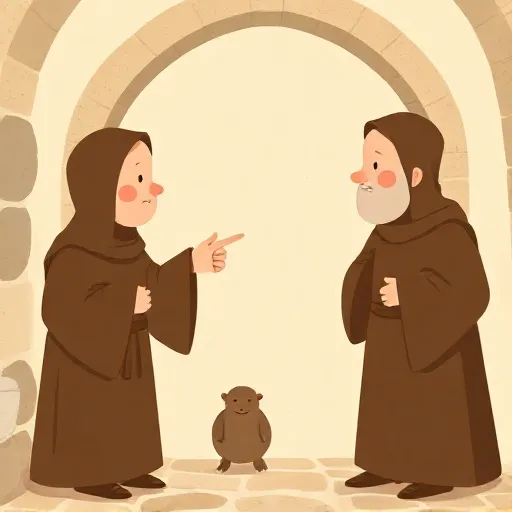
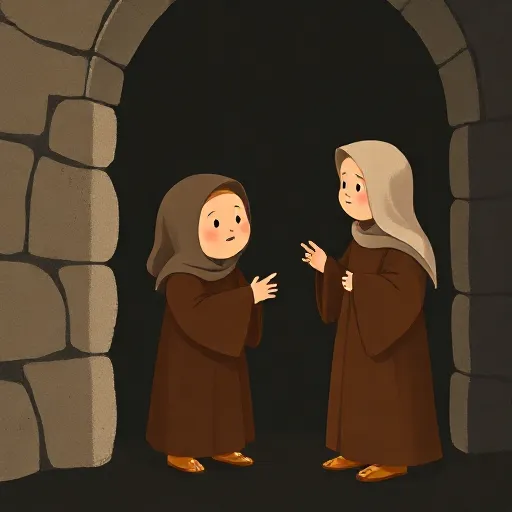
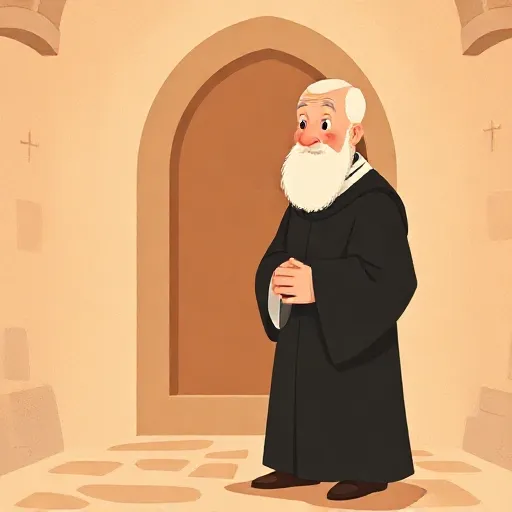
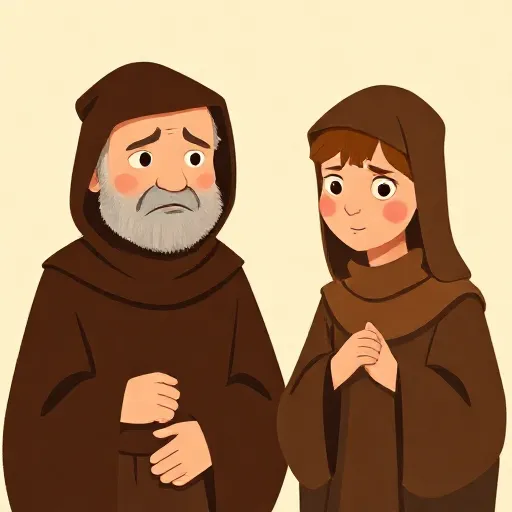
It was the night of May 26, 1328. In the southern French city of Avignon, two Franciscan friars slipped through the shadows and out of the city on horseback. One of them, the minister general Michael of Cesena, looked worried. The other, a wiry man in his late thirties with a sharp, intense face, clutched a bundle of notes. His name was William of Ockham (c. 1287–1347). He had just come to a startling conclusion: the pope himself was a heretic, and therefore no true pope at all. That night, Ockham became a fugitive for the rest of his life.
Ockham was no ordinary monk. Born in a tiny English village, he had joined the Franciscan order as a boy. From his earliest lessons in Latin logic, he showed a gift for clear, relentless thinking. As a young man he studied at Oxford, became known as the “Venerable Beginner” because he never finished his doctorate, and started writing works on logic, physics, and theology that challenged the biggest ideas of his time. In 1324 he was summoned to Avignon to answer charges of heresy—not for his political views yet, but for his philosophical opinions. While waiting for a papal commission to decide his case, Ockham was drawn into a fierce debate over Franciscan poverty. The pope had rejected the order’s belief that Jesus and the apostles owned no property. Ockham studied the documents, and what he found shocked him. He argued that the pope’s view was not just wrong but stubbornly heretical, and that by clinging to error the pope had effectively abdicated. Fleeing with Michael and a few others, Ockham found protection at the court of Emperor Ludwig of Bavaria. He spent his remaining years in Munich, writing passionately about politics, power, and the limits of the Church.
That dramatic escape is only the most colorful thread in Ockham’s story. His real revolution happened on the page. From his Oxford days onward, he wielded a simple but powerful idea: you should never invent extra invisible things to explain the world unless you absolutely have to. This principle, later called Ockham’s Razor, slashed through centuries of complicated theory. It would make him one of the most influential philosophers of the Middle Ages, and it still shapes how we think today.
The Sharpest Razor in Philosophy
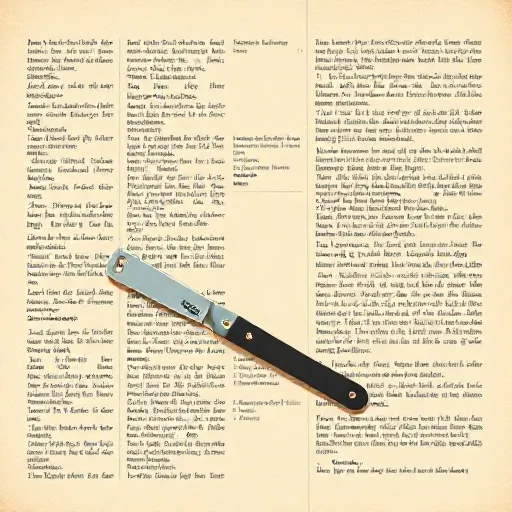
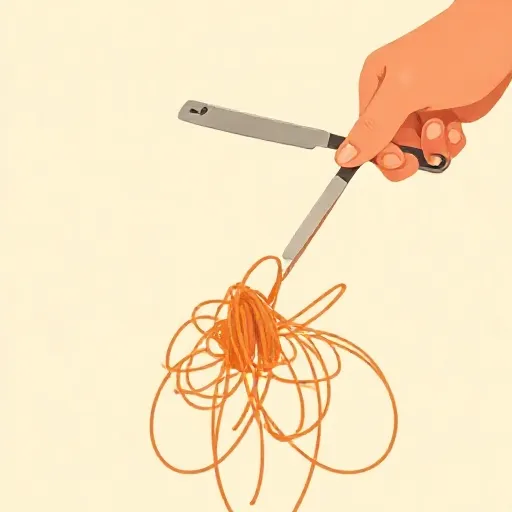
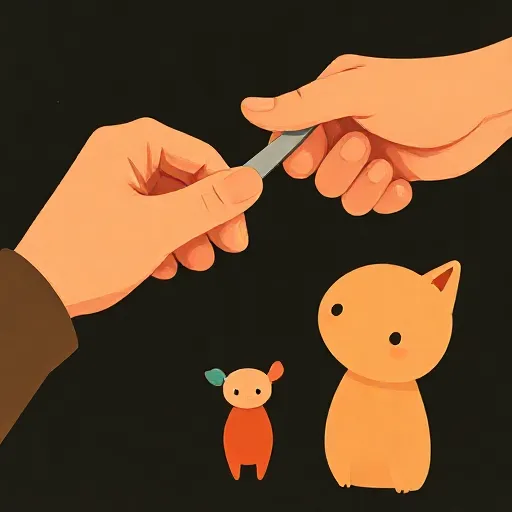
Ockham never wrote the exact phrase “Ockham’s Razor,” but he made the rule clear: “Don’t multiply entities beyond necessity.” An entity is just anything that exists. Ockham’s point was that if you can explain something with fewer kinds of things, you shouldn’t add more. Imagine you come home and find your cookies eaten. You could say a goblin broke in and ate them. Or you could say your little brother did it. The second explanation doesn’t require inventing a whole new kind of invisible creature. Ockham’s Razor says: go with the simple explanation, unless you have a powerful reason to think the goblin is real.
Philosophers at Ockham’s time often added extra entities to account for everyday facts. For example, they might say that two white stones are similar because there is a special “similarity” thing that links them, or that a long rope has a “length” entity that makes it long. Ockham found these invisible add-ons suspicious. His razor told him to cut them out unless they were absolutely needed.
He applied this rule to the ten fundamental categories—the basic kinds of existents—that Aristotle had listed. The tradition held that the world contained not only substances (like a person or a stone) and qualities (like whiteness or heat), but also separately existing quantities (length, depth), relations (similarity, motherhood), actions, passions, and several more. Ockham agreed that we can talk about all these things, but he argued that real existence needs only two categories: substance and quality. Everything else is just a way of speaking.
Take similarity. If Socrates is white and Plato is white, Ockham said, they are similar just because they are both white. You don’t need a third invisible item called “similarity” floating between them. The language of similarity is just a shorthand for the fact that they each have a quality of the same kind. By using his razor, Ockham was able to discard quantities, relations, and many other entities that philosophers had assumed were real. He wasn’t denying that a rope has length; he was denying that its length is an extra thing, over and above the rope itself with its parts placed next to each other.
This radical cleaning-up of the universe didn’t mean Ockham believed in nothing but lumps of matter. He carefully kept qualities in his ontology—whiteness, heat, courage—resting inside substances. He only cut what couldn’t pay its way in good reasons. The result was a much leaner, simpler picture of reality.
The Only Universals Are in Your Mind
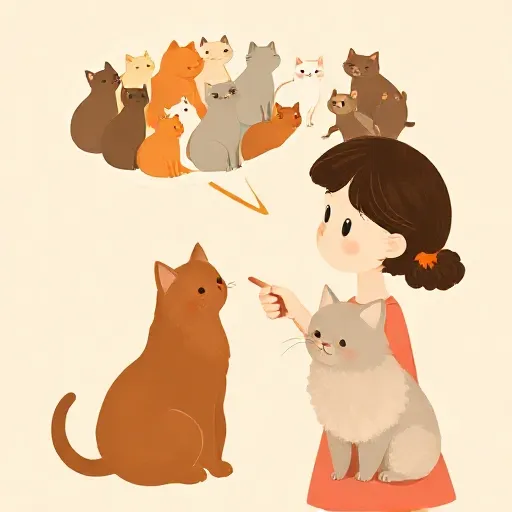
Ockham’s razor didn’t just slice away quantities and relations. It also led him to reject universals. A universal is supposed to be a single thing shared by many individuals—like “catness” or “humanity” that all cats or all humans somehow have in common. Many medieval philosophers thought that universals exist as real entities, either in the things themselves or in a separate realm. Ockham argued that this makes no sense. The real world contains only singular, individual things: this cat, that cat, you, me, a stone. There is no universal “catness” floating anywhere.
This view is called nominalism, from the Latin word nomen, meaning “name.” For Ockham, the only genuine universals are universal concepts in our minds, and the words we use that express those concepts. When you say “dog,” you aren’t pointing to some invisible universal thing; you’re using a mental sign that refers to many individual dogs because of their real similarities. His early theory imagined concepts as a kind of mental “fictive” object with a special shadowy way of existing. But he later abandoned that, saying a universal concept is simply an act of thinking about many things at once. That thinking act is itself a singular quality of your mind—just like your headache or your joy—but it points to many dogs at once.
Ockham used the theory of connotation to explain how words handle things that aren’t substances or qualities. A connotative term like “brave” primarily signifies brave people—you can point to a brave knight and say “this is brave.” But it also secondarily signifies bravery, the quality that makes someone brave. Bravery isn’t a separate thing apart from the knight’s inner quality; the word “brave” just packs both the person and the quality into one package of meaning. Absolute terms, by contrast, like “human being,” point to substances directly and don’t carry extra secondary baggage. By analyzing language this way, Ockham could “paraphrase” sentences that seemed to be about quantities or relations—like “Socrates is similar to Plato”—into claims that mention only substances and qualities. The truth of the sentence never depended on a mysterious extra entity.
This meant that many philosophical puzzles could be dissolved by paying careful attention to how words work. If someone says “justice is blind,” they aren’t discovering a strange invisible blind thing called Justice. They are using a connotative term that ultimately refers to many individual just actions and the qualities of mind behind them. Ockham’s nominalism was a lesson in clear thinking: don’t let language trick you into multiplying the furniture of the universe.
Could You Choose to Do Something You Know Is Wrong?
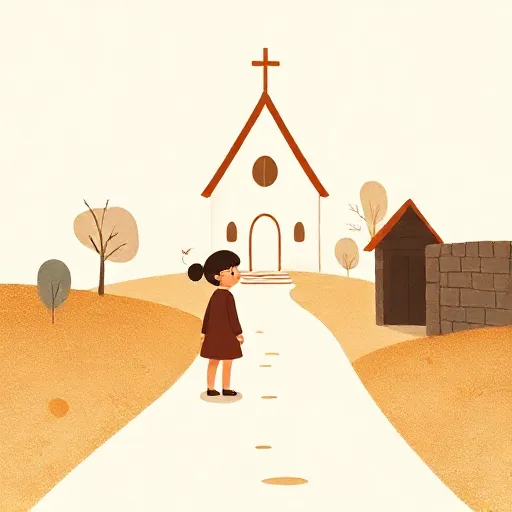
Ockham’s sharp cutting tools didn’t stop at metaphysics. In his ethics, he argued for a radical kind of human freedom. He thought that every moral act gets its worth not from what you do outwardly, but from your inner intention—your act of will. Walking to church is morally good only if you will to worship God; if you stroll over just to gossip with friends, the same outward behavior has no moral value. The intention is everything.
He also held a version of divine command theory: something is morally right because God commands it, and wrong because God forbids it. But Ockham didn’t think that made morality arbitrary or unknowable. He believed that even a person who has never heard of revelation—a “virtuous pagan”—could, through reason and experience, figure out many moral principles. God gives us human natures that steer us toward what is good, and we can discover that good by thinking.
What sets Ockham apart is his view of the will’s freedom. Most philosophers in the Middle Ages, following Aristotle and Thomas Aquinas (1225–1274), thought that the human will always aims at the good as the intellect presents it. You might be mistaken about what is good, and you might choose a lesser good over a greater one, but you can never knowingly and deliberately choose evil as evil. For Aquinas, the will is free only in choosing among the various ways to reach happiness. You can’t say “I know this will destroy my deepest happiness, and I’m choosing it anyway, precisely because it’s bad.”
Ockham disagreed. He insisted that the will is not determined by the intellect. You have a built-in tendency toward your ultimate good, but you can freely choose not to act for it—or even to act directly against it. You can look at a cruel action, recognize it as cruel and wrong, and still will to do it, just because you can. For Ockham, this startling power is what makes us truly responsible. If you could never help but choose what seems good to you, then moral praise and blame would be hollow. The fact that you can do otherwise, even in the face of your own deepest desires, is the core of moral freedom.
This doesn’t mean Ockham thought you should choose evil. It means he thought that any genuine choice between good and bad must be a real choice, not a trick of the intellect. When you decide not to share your lunch even though you know it would be kinder to share, you aren’t just making a mistake about what’s good—you are exercising the raw, awe-inspiring freedom of the will.
Can a Pope Become a Heretic?
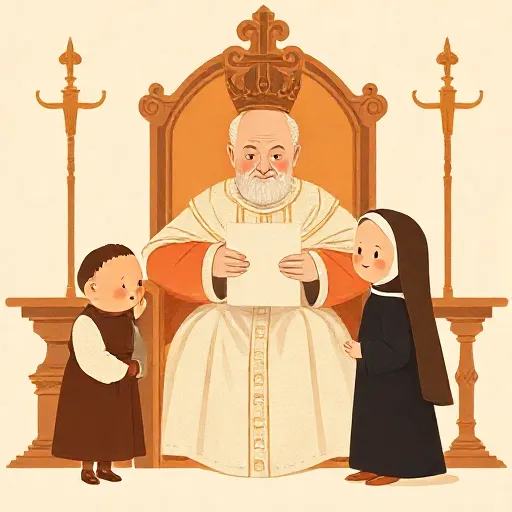
The crisis that sent Ockham fleeing into the night started with a debate about poverty. The Franciscans had built their identity on the ideal that Jesus and the apostles owned no property at all—they lived by begging and allowed others simple use of goods, but rejected ownership, both individually and as an order. Pope John XXII (1249–1334) declared this view heretical and claimed that use could not be separated from ownership, especially for things you consume, like food. For John, even the apostles must have owned something.
When Ockham examined the evidence, he concluded that the pope’s position was not just wrong but heretical. John stubbornly maintained his view even after being shown how it conflicted with Scripture and earlier papal teaching. Ockham introduced a crucial concept: heresy isn’t just error; it requires pertinacity—a stubborn clinging to error after you’ve been legitimately corrected. A person who hears a clear explanation and still refuses to change becomes a heretic. And if the pope himself is pertinacious, he too becomes a heretic, and effectively ceases to be pope.
This conviction led Ockham to write his enormous Dialogue, a conversation between a master and a student that examines heresy, authority, and the limits of power from every conceivable angle without ever explicitly stating Ockham’s own view. He argued that no single human being or group—not the pope, not the cardinals, not a council—is infallible. Any of them can fall into heresy. Christ’s promise that “I am with you always” (Matthew 28:20) means only that the whole church—the entire community of faithful Christians across time—can never entirely lose the truth. At any given moment, at least one believing Christian will keep the faith, even if all the powerful institutions go astray.
From this, Ockham developed a political theory of separate powers. Spiritual power (the pope and the Church) and temporal power (emperors and kings) are independent; each comes from God through human agreement, not one from the other. Under normal circumstances they should operate in their own spheres without interfering. But in extreme cases, if the pope becomes a heretic and no one inside the church can depose him, the temporal ruler may step in to protect the faith. Likewise, a spiritual leader could correct a tyrannical secular ruler. This was Ockham’s way of guarding human liberty against unchecked papal absolutism. Power, he insisted, is never a blank check.
Why the Razor Still Cuts

Ockham’s escape from Avignon was thrilling, but his real legacy is a way of thinking. Ockham’s Razor lives on as one of philosophy’s most famous principles because it’s a tool anyone can use. Every time you hear an explanation that adds invisible forces, mysterious energies, or suspicious extra beings, you can ask: “Do we really need to add that?” Good science, sharp argument, and honest everyday reasoning all rely on this simple habit of trimming the fat.
His nominalism reminds you that words can conjure ghosts. When people talk about “nature,” “society,” or “justice” as if they were giant invisible things doing stuff, Ockham’s logic nudges you to look for the individual people, actions, and qualities those words are really pointing to. That doesn’t make the words useless—it just keeps them from fooling you.
His ethics invite a hard question: do you believe you could genuinely choose to do something you know is wrong? When you’ve felt that electric moment of a bad decision, was your will really free to go the other way? And his political life pushes you to think about authority: who gets to say what’s true, and what happens when the people in charge get it wrong? Ockham’s answer was that no single office is beyond mistake, and that the whole community—sometimes even ordinary individuals—must keep the flame of truth alive.
Next time you’re tangled in a debate, you might picture that wiry friar riding into the night with a bundle of notes. He wasn’t just fleeing a pope. He was chasing a world where thinking straight matters more than power, and where no extra thing is allowed unless it truly earns its keep.
Think about it
- If you can explain why your friend is kind just by pointing to the kind things they do, do you need to believe in an invisible thing called “kindness”?
- Is it possible to choose to do something you know is bad for you, not because a part of you secretly thinks it’s good, but simply because you can? How would you know the difference?
- If a leader insists on a claim that later turns out to be wrong, when does stubbornness turn into something more dangerous?