Is Simpler Really Better? The Fight over Occam’s Razor
How a Ghost Left Chemistry

In the late 1700s, most chemists believed fire was a substance. They called it phlogiston. When something burned, they said, it released phlogiston into the air. It was a tidy story — except for one awkward fact. Metals sometimes weighed more after burning, not less. No one could catch phlogiston or weigh it directly. Was this invisible “fire stuff” really there, or was it just a convenient ghost?
A French chemist, Antoine Lavoisier (1743–1794), offered a simpler answer. He showed that burning could be explained entirely by the real gases oxygen and hydrogen. Phlogiston wasn’t needed. He wrote that if all of chemistry could be explained without this extra substance, that was a strong reason to think it didn’t exist. After all, he added, it’s a fundamental rule of good thinking not to pile on unnecessary entities. The ghost evaporated.
Lavoisier was using a rule that philosophers and scientists had already prized for centuries. Today, we call it Occam’s Razor — the idea that, when you have two explanations that do the same job, the simpler one is better. But why should we trust that rule? Does a simpler theory really get us closer to the truth? That question is a live fight, and it’s still not settled.
The Razor That Cuts Both Ways

The impulse to prefer simple explanations appears throughout history. Aristotle (4th century BCE) argued that a demonstration using fewer assumptions was superior, other things being equal. The medieval thinker William of Ockham (c. 1287–1347) became famous for saying “entities should not be multiplied beyond necessity.” Isaac Newton (1643–1727) made simplicity one of his chief rules of reasoning. Albert Einstein (1879–1955) said the grand aim of science is to cover the most facts from the fewest axioms. Even today, Nobel Prize–winning economists say simplicity is a virtue in their models.
But the rule has two faces that aren’t always in harmony. The first is ontological parsimony: don’t add extra things to your theory unless you really need them. That’s the kind Lavoisier used to banish phlogiston. The second is syntactic elegance: make your theory’s form — its equations or statements — as compact and smooth as possible. The two often pull in opposite directions. A gorgeous example is the planet Neptune. In the 1840s, astronomers noticed that Uranus’s orbit wobbled in ways Newton’s laws didn’t predict. One option was to scrap those simple laws and write a more complicated set of equations. The other was to keep the laws and postulate an entirely new, unseen planet. Scientists bet on the new thing — and discovered Neptune. Here, adding an extra entity (less parsimony) actually made the overall theory more elegant. So the razor can cut against itself.
This confusion is built into the way people sometimes state the razor: “Don’t multiply postulations beyond necessity.” Does “postulations” mean the entities you propose, or the claims you make? The answer matters enormously.
The Battle Between Fit and Simplicity

In the 20th century, statisticians gave the debate a new weapon: mathematics. Imagine you have a scatter of data points on a graph and you need to find the curve that generated them. You could squiggle a line that passes exactly through every point — a perfect fit. But if the data is a bit messy or noisy, that wiggly line will probably be a terrible guide to the next point. You’ve “overfitted” the pattern. A straight line that misses most dots but still follows the trend might make much better predictions.
This is the curve-fitting problem, and it’s a tug-of-war between goodness of fit and simplicity. Many philosophers and statisticians now treat simplicity as something you can measure: how many free parameters (adjustable knobs) does a model have? A straight line has two parameters (slope and intercept); a wavy polynomial has many more. Models with fewer parameters are simpler. The goal is to find the sweet spot — not too simple, not too complex.
But where exactly is that sweet spot? That’s where the fight gets intense. One rule, the Akaike Information Criterion (AIC), punishes complexity with a certain weight. Another, the Bayesian Information Criterion (BIC), penalizes extra parameters more heavily when you have lots of data. They can lead to different choices, and scientists don’t agree on which rule is always right. Thomas Kuhn (1922–1996) even argued that, in the end, how much weight you give to simplicity is a matter of personal taste — not something that can be settled by a super-theory. So the old razor isn’t a simple recipe; it’s a live disagreement about how to balance tidiness with accuracy.
When One Particle Is Better Than a Bunch

In the 1930s, physicists puzzled over a strange disappearance. During a type of radioactive decay called beta decay, the total spin of the particles before decay was ½ more than the spin of the particles they could see afterward. Spin is like an intrinsic angular momentum — it can’t just vanish. So where did the missing half go?
The neatest solution was to propose a brand-new particle: a neutrino, with exactly spin ½, that slipped away unseen. But you could explain the same data with a vast number of alternative theories: why not two neutrinos, each with spin ¼? Or ten neutrinos, each with spin ¹⁄₂₀? All of those could add up to the missing half. Yet almost no one took those options seriously. The most quantitatively parsimonious hypothesis — one single neutrino — was the clear default.
Why? Because it had greater explanatory power. Physicists had never seen a missing ¹⁄₂₀ spin in any other experiment. The one-neutrino hypothesis left that fact easy to explain: particles with that spin simply don’t exist. The ten-neutrino theory could still explain it, but only by bolting on an extra rule (like “neutrinos always travel in groups of ten”). That made the whole package less elegant and more ad hoc. So here, parsimony won not because of a blind faith in simplicity, but because the simpler theory fit the wider pattern of evidence better. The philosopher Elliott Sober (born 1952) argues that parsimony is never a free-floating global rule — it only makes sense when backed up by local, detailed reasons of this kind.
The Universe’s Counterattack: If It Can Happen, It Does?
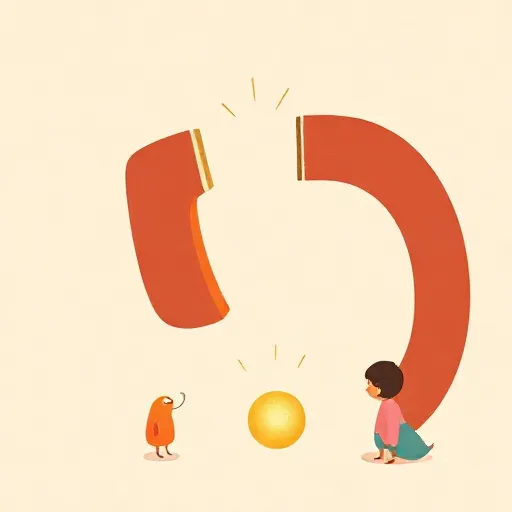
If Occam’s Razor tells us to keep our ontology lean, is there a rule that pushes the other way? Oddly, yes. Some thinkers have embraced a principle of plenitude: if something is possible according to the laws of nature, then it actually exists somewhere in the universe. The 17th‑century philosopher Gottfried Leibniz thought God created the richest set of things — the “best of all possible worlds” with the maximum variety of beings.
This idea roared into modern physics in 1931. The physicist Paul Dirac (1902–1984) showed that magnetic monopoles — single north or south magnetic charges, unlike the paired poles of any ordinary magnet — were not ruled out by quantum mechanics. No one had ever seen one, but the theory didn’t forbid them. Dirac then made a striking leap, arguing that under these circumstances one would be surprised if Nature had made no use of it. He bet that monopoles really exist, simply because they can.
Many physicists followed him, turning the razor upside down. In a probabilistic version of the argument, if something has a tiny but nonzero chance of appearing, then given enough time and space it will appear. In a stronger “many‑worlds” version, everything possible is actual in some branch of reality. This direct collision shows that simplicity is not the only game in town. Sometimes the drive to explain why things don’t exist can be as powerful as the drive to cut away the unnecessary.
Why You Already Use This Razor Every Day

Here’s a situation you might know. You walk out to the bike rack and your bike is gone. Your brain immediately starts spinning stories. Did you forget and leave it at the library? Was it stolen? Did a freak gust of wind carry it down the street? Some explanations are simpler than others — they involve fewer wild leaps and extra beings. Without anyone teaching you philosophy, you probably reach for the simpler one first. You’re applying your own razor.
That everyday instinct mirrors the debate we’ve been tracing. Scientists, too, are drawn to simple theories. But they also know the world can be stubbornly complicated. The tension between elegance and fit, between parsimony and plenitude, is not a bug in our thinking — it’s the engine that drives science forward. The right balance is not written in a rulebook. It’s something we keep discovering case by case, sometimes by guessing a single neutrino, sometimes by adding an entire planet.
So the next time you pick the simpler story, ask yourself: am I being smart, or am I just cutting corners? And when you resist the simple answer because it feels too tidy, you’ll be thinking alongside Lavoisier, Einstein, and Dirac — in a conversation that has been running for centuries and still doesn’t have a final score.
Think about it
- If you had to explain why a friend is late, would you prefer a simple excuse or a complicated chain of events? When might the simpler story lead you wrong?
- A scientist has two models that both fit the data — one with three adjustable knobs, one with thirty. Would you always trust the simpler model? Why or why not?
- If the universe really were the “best of all possible worlds” with maximum variety, would a principle like Occam’s Razor ever make sense for choosing between theories?