If God Knows Your Future, Do You Still Have a Choice?
Imagine Someone Already Knows What You’ll Do

Picture this: your best friend has a perfect track record for guessing exactly what you’ll eat for lunch before you’ve even thought about it. On Monday morning she says, “You’re going to pick a tuna sandwich today.” Does that mean you have to pick the tuna sandwich? Could you surprise her by choosing pizza instead, or is the whole thing already settled the moment she speaks?
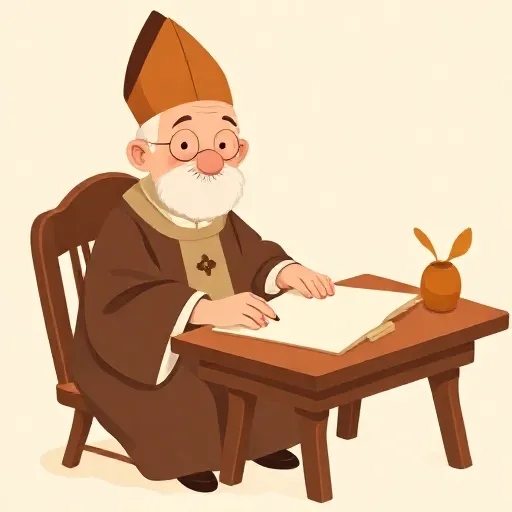
This question isn’t just a playground riddle. It’s a version of a puzzle that kept medieval philosophers awake at night: if God knows the future perfectly, does that mean every future event is already set in stone, including the choices you think you’re making freely? In the 1320s at Oxford University, a Franciscan monk named Walter Chatton (about 1285–1343) wrestled with this and came up with a bold answer — one that relied on a tool he sharpened especially for fighting his famous rival, William of Ockham.
The Razor and the Anti-Razor

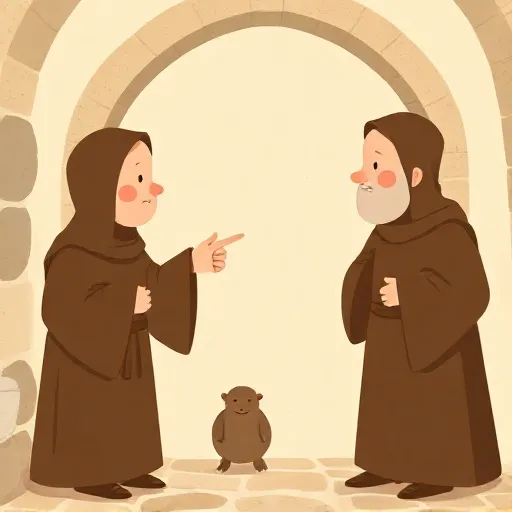
William of Ockham (about 1287–1347) was the superstar simplifier of his day. His name is tied to Ockham’s razor, the idea that when you’re explaining something, you shouldn’t add extra things unless you absolutely have to — “Don’t multiply entities beyond necessity,” as the saying goes. Ockham thought that many philosophers invented invisible stuff like “relations” or “quantities” and pretended they were real, when actually they were just words doing a job.
Chatton heard Ockham lecture at Oxford and disagreed, loudly and often. He didn’t think the razor was wrong so much as dangerously overused. To push back, he developed what scholars now call the anti-razor, or the Chatton Principle. In his early notes he put it like this: when an affirmative sentence is true for things that exist, and a certain number of things just isn’t enough to make it true, you must accept that another thing exists.
By itself that sounds trivial — of course you need however many things it takes. But Chatton added a test. Freeze time like a photograph. If the sentence is true in that frozen world, which objects absolutely have to be in the picture? If you can imagine removing one of them and the sentence becomes false, then that object is a truth-maker — it’s real and it’s necessary. Ockham wanted to keep the picture as empty as possible; Chatton insisted on filling it with everything the truth actually requires.
How Many Things Live on the Altar?
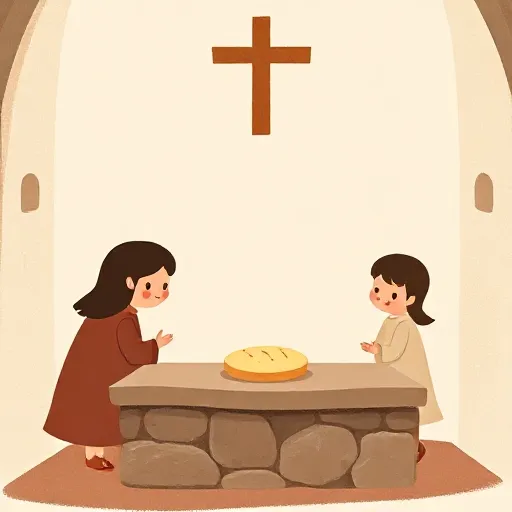
Chatton loved to test his principle on hard cases. One of those cases landed right on a church altar. Late medieval thinkers spent a lot of time thinking about the Eucharist, the Christian ritual in which bread and wine are said to become the body and blood of Christ while their appearances — color, shape, size — remain the same. Chatton asked: why can’t two consecrated hosts occupy the exact same spot at the same time?
According to Ockham, all you needed to describe a host were its substance (what it is) and its qualities (how it looks and feels). If that list were complete, there would be no reason two hosts couldn’t slide right into the same space. But that never happens. So something else must exist that stops them — an entity that makes bodies impenetrable. Chatton argued that this something was quantity, a real thing distinct from both substance and quality. If the sentence “it is impossible for two hosts to exist in the same place” is true, and substance and quality alone don’t make it true, then the anti-razor commands us to accept that quantity is a genuine part of reality.
You don’t have to share the religious background to see what Chatton was after. His point was that language and truth can guide us to what really exists, even when the results defy a clean, simple picture. Sometimes the world is crowded.
Can God Know Tomorrow Without Breaking Freedom?
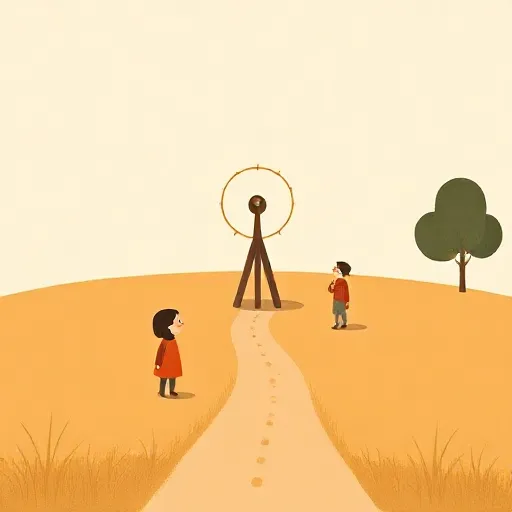
The most worrying version of the prediction puzzle involved future contingent propositions — statements about things that haven’t happened yet and might never happen, like “there will be a sea battle tomorrow.” The argument that haunted medieval theologians ran like this:
If God infallibly knows that some future event a will happen, then “God knows that a will be” is necessarily true. But if p is necessarily true, and “if p then q” is necessarily true, then q is necessarily true. So the future event itself would become necessary — no freedom, no open possibilities, just a cosmic script already written.
Chatton wanted to keep both divine knowledge and human freedom, so he attacked the second step: the idea that “God knows that a will be” is an absolute necessity. He drew a line between two kinds of awareness. Knowledge (Latin scientia) involves judgment. When you know your friend is sad, you’re mentally saying, “Yes, that’s really the case.” Cognition (Latin cognitio) is different — it’s a pure grasp of something, the way you might notice a cloud without deciding anything about it. No judgment, no stamp of approval, just awareness.
Chatton proposed that God’s grasp of the future is cognition, not knowledge in the judging sense. God directly “sees” people, events, and situations without needing sentences or propositions inside his mind. Because this divine vision doesn’t interfere with the causal chain, it doesn’t force anything to happen. Moreover, Chatton analyzed the sentence “God knows that a will be” as equivalent to “God cognizes a AND a will be.” The first part is necessary, but the second part is contingent — it could go either way. Therefore the whole statement isn’t a hard necessity, and the fatalist argument collapses.
You might say that for Chatton, God is like a flawless observer who sees your future as clearly as you see your own hand, yet his seeing doesn’t push the pieces of the world any more than your eyes push a tree you’re watching. The future stays open for you, even while it’s perfectly present to God.
Why This Still Matters When You Pick Dessert

The arguments between Ockham and Chatton weren’t merely dusty theology. They’re about a pressure you feel in ordinary life. Every time you think, “maybe I was always going to choose that,” you’re brushing against the same ideas. Chatton’s response suggests something surprising: being predictable doesn’t make you unfree, and being known doesn’t make you a puppet. Even if someone had a perfect model of your brain and could say what you’ll decide next, that knowledge records your freedom rather than erasing it.
His anti-razor reminds us to take seriously what our language and experience actually demand. If you find yourself in a world where certain truths can’t be explained away with a handful of basic ingredients, you’re allowed to add a new one to the recipe. And if you find yourself in a world where tomorrow really feels open — where you can still surprise yourself — you don’t have to give that up, even if someone wiser than you can already see how the story goes.
Think about it
- If a supercomputer could predict every choice you’ll ever make, would it still be fair to praise or blame people for what they do?
- Can you think of a time when you felt as if your decision was both completely free and completely understandable to someone who knew you well? Does that change how you see the phrase “I had no choice”?
- Ockham’s razor says “cut things down until the explanation works.” Chatton’s anti-razor says “add everything the truth forces you to.” Which one feels more helpful when trying to understand why friends act the way they do?