Can God Know Your Future and Still Let You Choose?
The Bishop Who Said No
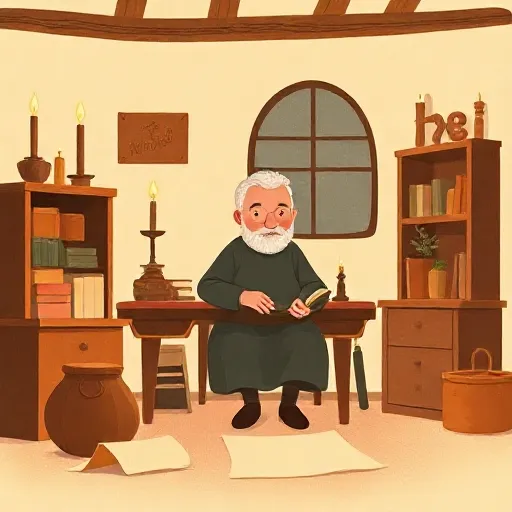
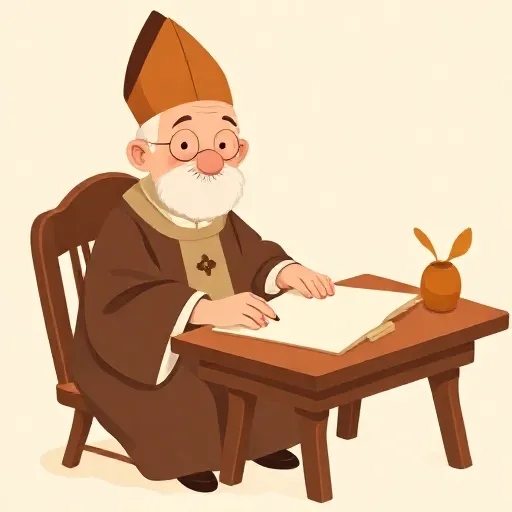
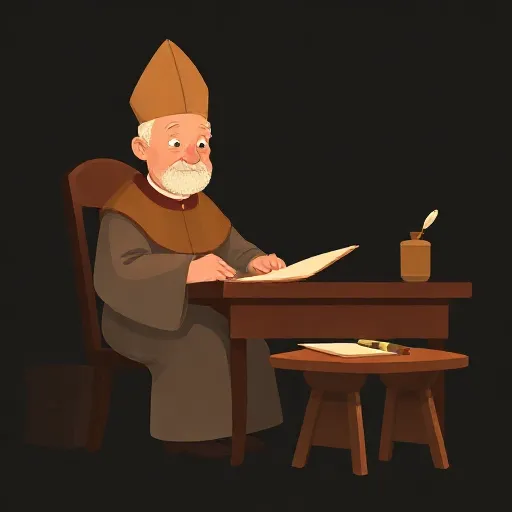
In the autumn of 1253, an old man with a steady hand dipped his quill and wrote a letter. It was addressed to the most powerful person alive — Pope Innocent IV. The Pope had ordered him to give a well-paid church job to his nephew. The nephew was clearly unqualified. Robert Grosseteste (c. 1168–1253), Bishop of Lincoln, refused. He calmly explained why he could not obey, even if it meant angering the Pope.
Grosseteste was not just a bishop. He was one of the most learned men of his age: a philosopher, a scientist, and a translator of Aristotle. But above all, he believed in doing what was right, not just what he was ordered. And he was sure that God already knew he would write that letter of refusal. Yet he felt deeply that he was freely choosing to do it. Could both things be true? That puzzle — how divine foreknowledge and human freedom can fit together — had been debated for centuries. Grosseteste spent years thinking about it, and he came up with an answer so original it still makes philosophers scratch their heads.
If God Knows, Then You Must Do It — Or Do You?
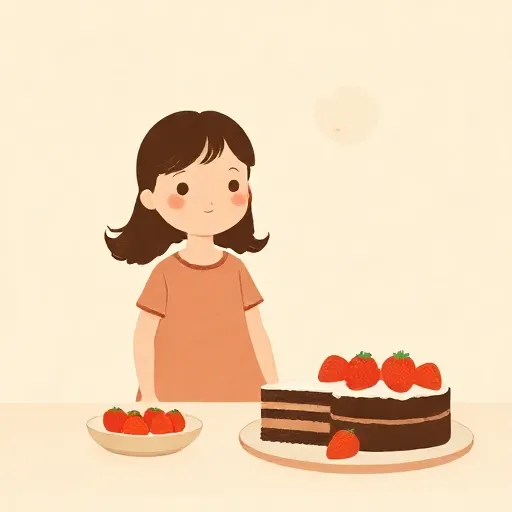
Imagine you are standing in the kitchen, trying to decide between chocolate cake and strawberries. Suppose God has known since before you were born that you would pick the cake. Since God cannot be wrong, it seems that you must pick the cake. If you must pick it, where is your free choice? It looks as if you never had a real alternative.
Grosseteste laid out this argument in a short, tough book called On Free Decision. He used a dramatic example: “God knows that Antichrist will exist.” Step by step: (1) Everything God knows is true. (2) God knows that Antichrist will exist. (3) So it is true that Antichrist will exist. The two starting claims are necessary — they cannot be false. And in logic, if the starting claims of a valid argument are necessary, the conclusion must be necessary too. So Antichrist’s future existence seems necessary, not a free act. If the logic is sound, then divine foreknowledge — God’s knowledge of the future — wipes out human freedom altogether.
Grosseteste did not try to break the logic. He accepted that the argument is valid. But he insisted that the conclusion does not destroy freedom. The trick, he said, is that the word “necessary” can mean two very different things.
Two Kinds of “Must”: The Key Distinction
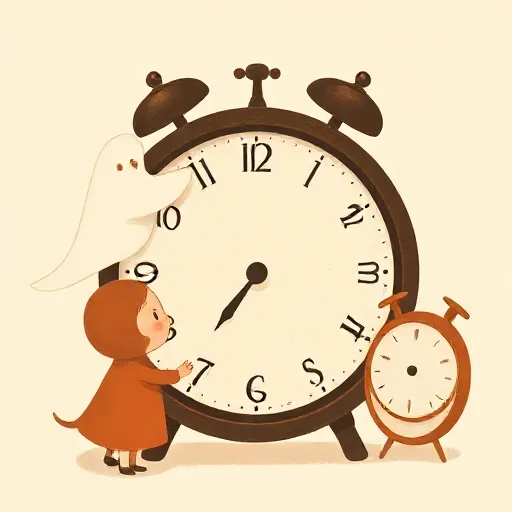
Grosseteste noticed that many things become necessary only because they are already settled in time. For example, once Caesar crossed the Rubicon, it became impossible for him not to have crossed it. The past is fixed. In the same way, if a statement about the future is true right now — “Tomorrow you will eat cake” — that statement cannot become false before tomorrow. The event has not happened yet, so the sentence cannot flip to false. This is a limited, time-bound kind of necessity, which Grosseteste called necessity per accidens. It means that a true claim about the future is stuck being true until the event occurs, just like the past is stuck.
But does that really mean you had no choice? Grosseteste said no. Think of a time traveller from next week who already knows you will choose cake. The traveller’s knowledge does not force your hand; it is simply true that you will choose it, and the traveller happens to know it. God’s knowledge, Grosseteste thought, is like that — but even stronger, because God exists outside time entirely. God does not see the future as “ahead” of us; to God, all moments are equally present. So God’s knowing your future choice is not a cause that makes it happen.
Grosseteste went further. He argued that there is another, deeper kind of possibility that has nothing to do with time. He called it a non-temporal contingency. Something is contingent in this sense if it has a “capacity for being true and being false without a beginning” to have been false — even though it is actually true. So the claim “Antichrist will exist” has always had the capacity to be false. That capacity is grounded in God’s own eternal power: God was able from eternity to know otherwise. Because God could have known a different future, the world really could have been otherwise. And that openness, Grosseteste said, is exactly the kind of contingency that freedom needs.
How a Free Choice Actually Works Inside You
Grosseteste did not stop at the big cosmic puzzle. He also wanted to explain how free decision (liberum arbitrium) works inside a person. He thought the soul has two main powers: reason (he called it aspectus) and will (affectus). Reason is like a wise advisor: it sorts through options, figures out what is better or worse, and makes a recommendation. But the will does not have to obey. The will can turn away and choose something else — even something reason says is foolish.
This ability to turn, which Grosseteste called flexibility (flexibilitas), is the heart of freedom. As long as two options are not forced by some outside power, the will can go either way. Grosseteste said the will’s choices are not about picking good versus evil. Rather, we first need the ability to choose between “bare opposites” — things that are morally neutral, like chocolate versus strawberry. That basic capacity to do otherwise is what makes us free agents. (To choose what is morally good, he thought, we need God’s help, but that is a separate question.)
So when you stand before the cake and the strawberries, your reason might tell you the strawberries are healthier, but your will can say, “I’ll take the cake.” That decision comes from you, not from some chain of necessary events. And God, seeing all of time at once, knows which way you will go — but that knowledge does not steal your choice.
Why It Still Matters: The Feeling of “I Could Have Done Otherwise”

Pause for a moment. Have you ever chosen a snack, then thought, “I really could have picked the other one”? That feeling — the vivid sense that an alternative was genuinely possible — is something Grosseteste took seriously. His solution to the foreknowledge puzzle shows that future knowledge does not have to lock everything in place. The fact that someone knows what you will do does not mean you could not have done otherwise.
Philosophers still argue about this today. Grosseteste’s ideas — the distinction between time-bound necessity and timeless possibility, the understanding of free will as the ability to turn between opposites — echo in modern debates about determinism and freedom. He reminds us that our gut feeling of being free is not just an illusion. Even if a friend could perfectly predict your every move, you remain the one doing the choosing.
Next time you face a small decision, think of the old bishop at his desk. He believed he could choose, and he acted on it. And he believed that God’s knowing it did not make it any less his own.
Think about it
- If a friend could perfectly predict every choice you’ll ever make, would you still be free? Why or why not?
- If God knows all your future actions, is it fair to praise or punish people for those actions?
- Grosseteste said you can go against your reason’s advice. Can you remember a time you did something even though you knew a better option? Did that feel free?