
Why Can’t We Take From the Rich to Give to the Poor? Nozick’s Answer
A Basketball Star, a Mountain of Quarters, and a Question
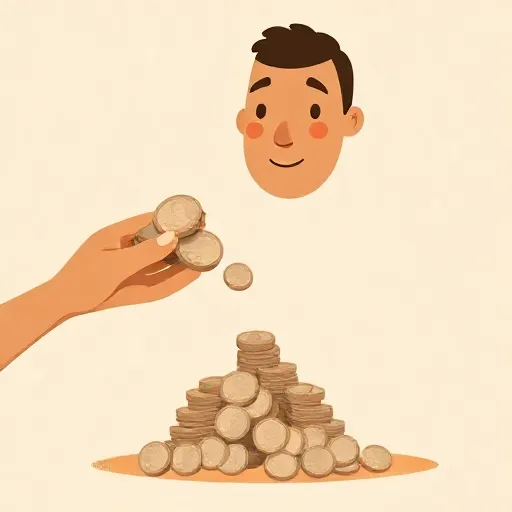
It’s 1974. Wilt Chamberlain is a basketball superstar, and a million fans each pay 25 cents to watch him play. By the end of the season, Chamberlain has earned $250,000 — a huge mountain of quarters. Many people look at that pile and think, “It’s unfair that one person has so much while others have so little. Let’s take some of his money and give it to those who need it.” But the philosopher Robert Nozick (1938–2002) asked a surprising question: what could be wrong with that? After all, every fan gave their quarter freely. Nozick’s answer — and his whole big book Anarchy, State, and Utopia (1974) — shook up political philosophy. He declared, “Individuals have rights, and there are things no person or group may do to them (without violating their rights).” That meant only a minimal state is just — a government that does nothing but protect people from force, theft, and fraud, and enforces contracts. It never taxes people to redistribute wealth.
No Balancing Act: Why We Can’t Sacrifice One for the Many
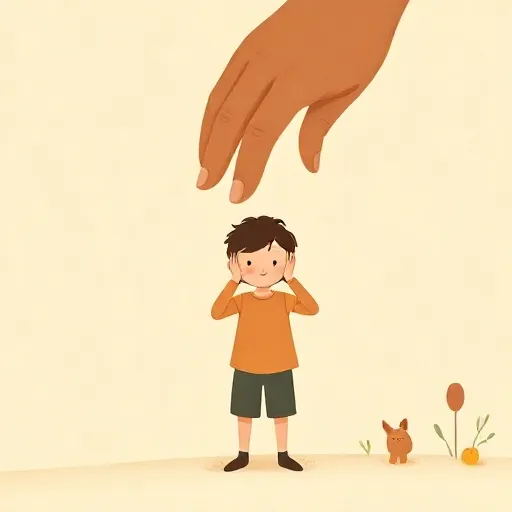
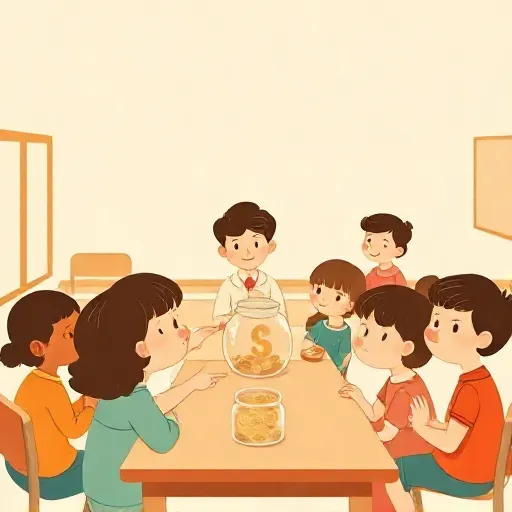
Nozick’s deepest reason starts with a simple idea: each of us is a separate person. You might choose to skip dessert tonight so you’ll feel healthier tomorrow. That makes sense — you weigh costs and benefits inside your own life. But, Nozick said, you can’t do that across different people. You can’t force one person to skip dessert just so someone else gets healthier. Yet, he argued, that is exactly what governments do when they tax some people to help others. They treat separate lives as if they were one big pot. Nozick called this the separateness of persons argument. Because each person has their own ends and plans, no one may be sacrificed for the greater good — even if the sacrifice would make the whole society better off. This places strict moral side-constraints on what anyone may do: you must never use someone simply as a means, even for a shining social goal. Your right not to be harmed, cheated, or enslaved isn’t based on what would produce the best overall outcome; it’s a fence around you that others cannot cross.
Liberty Upsets Patterns: The Wilt Chamberlain Problem
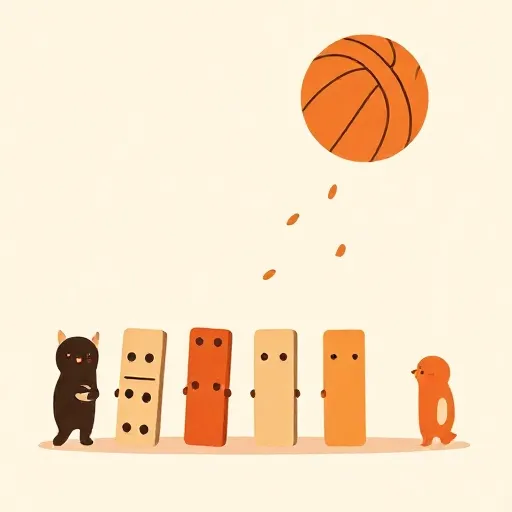
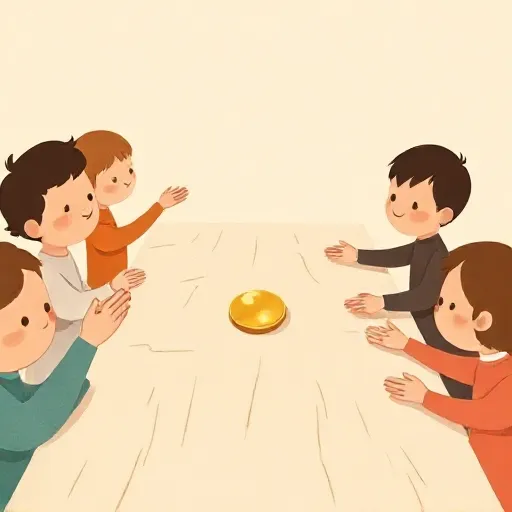
Many people think a fair society has money and resources arranged in a certain picture — an equal distribution, or one that helps the neediest most. Nozick called these patterned principles of justice. He then asked: what happens after we set up that perfect picture? Suppose tomorrow morning everyone’s wealth matches your favorite pattern exactly. By afternoon, a million fans freely hand Chamberlain 25 cents each to see him play. Now the pattern is broken — Chamberlain is far richer. How could this new situation be unjust? The original holdings were just, and the transfers were just (no one was forced). Nozick said patterned principles are trapped. If you try to restore the original pattern by taking money from Chamberlain and giving it back, you’re treating the fans’ free choices as if they didn’t count. You’re saying, “We pretended you owned those quarters, but really you didn’t.” Liberty, Nozick insisted, always upsets patterns. So if you truly respect people’s freedom, you must accept whatever distribution results from their peaceful, voluntary choices — not a planned picture.
Are You Part-Owned by Others? Nozick’s Sharpest Claim
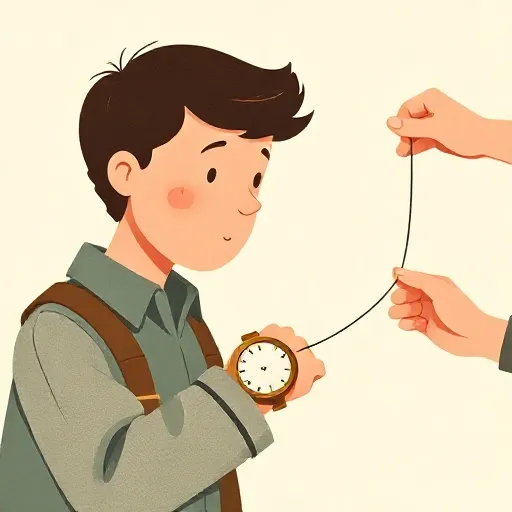
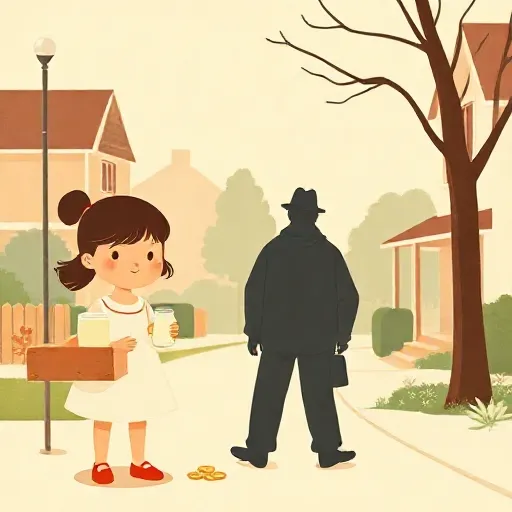
Nozick went further. If the government taxes your wages and gives that money to someone else, it is effectively deciding how your time and effort will be used. Work an extra hour, and you keep only part of what you earn; the rest goes where the tax system sends it. Nozick said this is no different from someone else owning a piece of you. Just as having the right to control an object makes you its owner, having a right to direct your labor for another’s benefit gives that other person a property right in you. That’s why Nozick’s view is often called self-ownership, although he did not use that exact term in his key explanation of people’s rights. He believed each person naturally owns their own body and talents, and that seizing the fruits of someone’s labor without their consent treats them as a tool, not as a separate individual. For Nozick, any entitlement theory of justice must be historical: a holding is just only if it was acquired justly (for example, by making something from unowned materials) or transferred justly (by gift or exchange), or if it corrects a past injustice. You don’t get to judge a distribution by how good the snapshot looks; you must trace how each person got what they have.
A Free Market of Utopias: Another Reason for a Small State
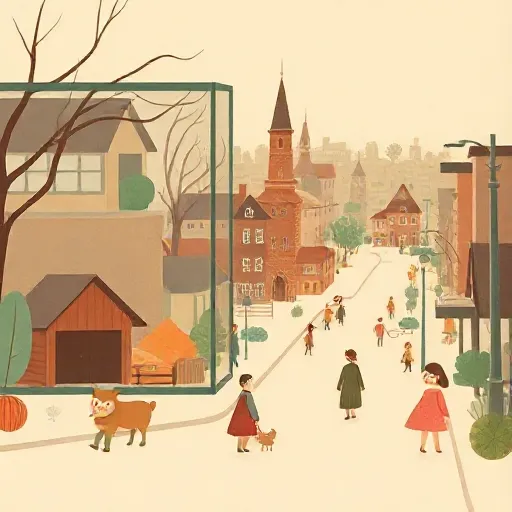
Even if you remain unsure about the rights arguments, Nozick offered a second, independent path to the minimal state. Because no one knows the single best way to live, forcing everyone into one utopia is arrogant. Instead, the best arrangement is a framework for utopia — a society where all kinds of communities can be born, tried, and left, without anyone imposing their vision on others. Under this framework, you could join a quiet farming collective, a tech-minded commune, or a neighborhood that prizes extreme privacy. If you don’t like it, you can leave. This constant trying-and-adjusting is a discovery procedure: over time, we learn what sorts of communities actually help people flourish. Nozick noted that in Israel, where people could freely choose to live in socialist kibbutzim or elsewhere, only about 6 percent chose the socialist option. That suggests many utopian dreams would not attract enough volunteers without force. The framework lets different dreams compete peacefully and protects your freedom to walk away — a process that, like a market, doesn’t require a boss.
What This Means for You: Your Money, Your Choices
Any time you hear a debate about raising taxes to fund free college, a universal basic income, or health care, Nozick’s challenge is simmering underneath. The question isn’t whether helping others is good — it’s whether forcing someone else to pay for that help treats them like a separate person or like a resource. Think about your own life. If you earn money doing chores or walking dogs, and the government takes part of it to give to someone who didn’t earn anything, is that fair? Nozick would want you to ask: are you truly free to use your time and effort as you choose, or do others get to decide how your hours are spent? His ideas, first sparked by that image of quarters piling up around Wilt Chamberlain, still shape how we argue about justice, work, and ownership today.
Think about it
- Imagine you mow lawns and earn $50. The government takes $15 to help someone who has no money. Would you feel the government is treating you fairly? Why or why not?
- If everyone in your town voted to create a fund where each person gives a small amount voluntarily to help the poorest, would that be different from being forced to pay? According to Nozick, what makes the difference?
- Nozick says taking someone’s earnings without consent is like taking their time and effort. Do you agree, or is money something separate from the person who earned it? Why?