Was Isaac Newton a Scientist or a Philosopher?
One Question That Changed Everything
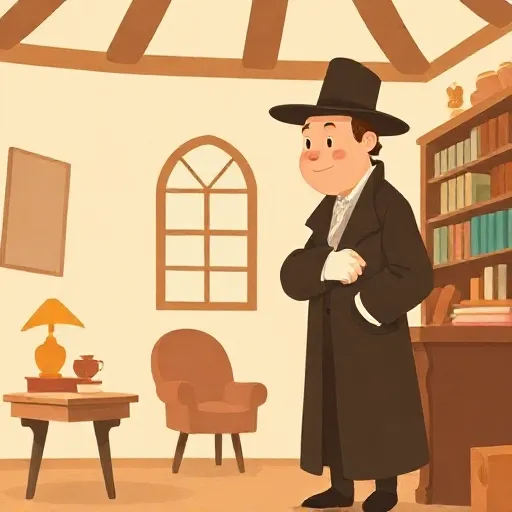
In August 1684, a young astronomer named Edmond Halley (1656–1742) traveled to Cambridge with a puzzle. He asked Isaac Newton (1642–1727) a single question: If the Sun pulls on the planets with a force that weakens with the square of their distance, what shape would their orbits be? Newton answered instantly: an ellipse. He had already worked it out. But he couldn’t find the paper. That visit led Newton to write his masterpiece, the Mathematical Principles of Natural Philosophy — the book that changed how we think about the universe.
Newton is famous today as a scientist. Yet in his own time, he was called a natural philosopher. The word “scientist” didn’t exist until 1833. Newton saw himself as a philosopher studying nature, not a physicist in the modern sense. And his ideas raised philosophical questions that still puzzle us: What is space? How do forces work? Can something act across empty distance? These debates made Newton one of the most controversial thinkers of his age.
The Philosopher Who Studied Nature
In the 1600s, people who investigated the natural world were called natural philosophers. They didn’t just measure things; they argued about the fundamental nature of matter, motion, the soul, and even God. When Newton published his great book, he was challenging the most influential natural philosopher of the day: René Descartes (1596–1650).
Descartes had argued that the whole universe is full of matter — no empty space — and that all change happens through physical contact, like billiard balls smashing together. Newton thought that picture was wrong. He insisted that space exists on its own, even if nothing fills it. And he invented a new kind of cause: the impressed force. An impressed force is an action on a body that changes its motion. It does not have to be a push from another object; it can be gravity pulling across millions of miles. This was revolutionary — and to many, deeply alarming.
How to Read Nature’s Book: Newton’s Method
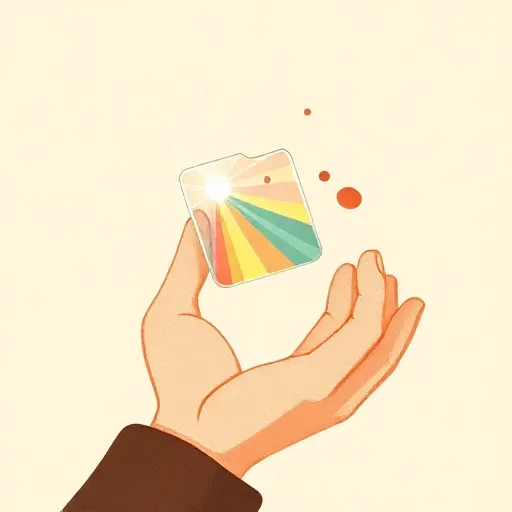
Newton didn’t just declare his ideas; he developed a method for finding truth. In his first published paper on optics in 1672, he described shining sunlight through a prism. The rainbow of colors, he argued, were properties of the light rays themselves, not changes made by the prism. But then he used a philosophical argument: if rays have colors as qualities, they must be substances — tiny particles, not waves. This mix of experiment and philosophical reasoning triggered a storm. Robert Hooke and Christiaan Huygens attacked his reasoning. The young Newton was furious. He promised never to publish again. Fortunately, he didn’t keep that promise.
Later, in the Principia, Newton insisted that natural philosophers should separate what is derived from phenomena from mere hypotheses — speculations not yet backed by observation or mathematical reasoning. When he couldn’t explain why gravity works the way it does, he famously declared, “Hypotheses non fingo” — “I do not feign hypotheses.” He meant: don’t pretend to know what you haven’t proved. This rule became a rallying cry for the experimental philosophy sweeping England.
The Battle Over Space: Empty or Full?

Descartes believed there was no such thing as empty space. For him, all motion was just objects changing their relations with surrounding objects. Newton saw a fatal flaw. Imagine a bucket of water hanging from a twisted rope. When you release it, the bucket spins. The water’s surface rises up the sides. Why? Newton said: the water is accelerating — a true motion through absolute space, not just relative to the bucket. If the universe were a plenum of objects, as Descartes thought, you could never tell if the bucket or the whole universe was rotating. Yet you can see the water curve. So space itself must be real, independent of everything in it.
Newton also tied space to his view of God. He believed God is everywhere, present in all of space throughout all time. Space, for Newton, was almost a divine canvas. This idea horrified Leibniz. It would become the center of the most famous philosophical fight of the 1700s.
The Gravity War: Newton vs. the Philosophers
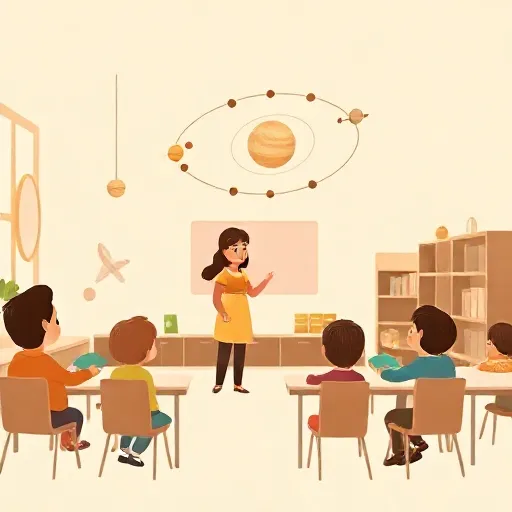
Newton’s law of universal gravity said that every object attracts every other object, across any distance, in proportion to its mass. Gottfried Wilhelm Leibniz (1646–1716) and Christiaan Huygens thought this was absurd. How could the Moon affect the tides without anything touching it? They accused Newton of bringing back occult qualities — hidden powers that medieval philosophers had supposedly banished. For mechanists like Leibniz, all causation had to happen through physical contact. Gravity as a force acting at a distance was, to them, a miracle in disguise.
John Locke (1632–1704), a friend of Newton, wrestled with this. At first he insisted that “bodies operate by impulse and nothing else.” But reading Newton convinced him that God could have added powers to matter that we can’t understand through our idea of “body.” He changed his view: gravity is real, even if it’s unintelligible to us. Leibniz shot back that any law of nature must be graspable by the mind — otherwise philosophy becomes a mystery cult.
The clash exploded in a public exchange of letters between Leibniz and Samuel Clarke (1675–1729), a Newtonian. Leibniz argued that Newton’s absolute space violated the principle of sufficient reason: if space were really a huge, uniform container, God would have no reason to put the universe in one spot rather than another. Clarke replied that God’s will itself is a sufficient reason. This debate never got settled. It forced later philosophers to choose sides.
Why It Still Matters
Newton’s ideas didn’t just create physics — they reshaped philosophy. David Hume (1711–1776) tried to interpret Newton’s “force of inertia” as a description of what bodies do, not a mysterious power inside them. Immanuel Kant (1724–1804) accepted that gravity is an essential property of matter, even acting at a distance, but rejected absolute space as a real thing. Instead, Kant argued that space is a framework our minds bring to experience.
These are not just dusty old disputes. When you wonder whether the empty space between stars is really a thing, or whether two objects can affect each other instantly without touching — those questions trace right back to Newton’s workshop and the fights he started. Even today, physicists and philosophers debate whether forces act at a distance or through fields, and what space actually is. Newton showed that to understand the universe, you often have to ask uncomfortable philosophical questions, and never feign an answer you haven’t earned.
Think about it
- If you could prove that two objects change each other’s motion without anything touching them, would that feel like a miracle or just a fact of nature?
- Is it ever okay to accept a scientific explanation that you can’t fully imagine or understand, as long as the experiments support it?
- If space is something real that exists even without stars or planets, what kind of thing would it be?