Isaac Newton and the Rule That Made Modern Science
A Visitor’s Question That Changed Everything
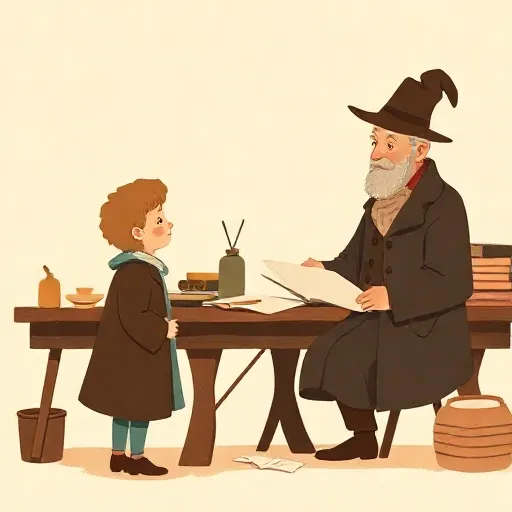
In the summer of 1684, astronomer Edmond Halley walked into Isaac Newton’s rooms at Trinity College, Cambridge. Halley had been puzzling over a problem that nobody could solve: if the Sun pulls on the planets with a force that weakens according to an inverse-square law — weaker the farther away you are — what shape does a planet’s path trace? Halley asked Newton what the curve would be. Without hesitating, Newton answered: an ellipse. He had solved the problem years earlier, tucked away in a drawer, and had told almost nobody.
That answer led to a book, finished in 1687, whose full title begins Philosophiæ Naturalis Principia Mathematica — the Principia for short. In its 500 pages Newton derived nearly 200 propositions about motion, gravity, and the solar system. The book did more than explain orbits. It gave the world a new kind of rule for deciding what counts as real knowledge. And that rule, more than any single scientific discovery, is why philosophers still argue about Newton today.
Newton’s One Rule: Let Nature Decide

Before Newton, many natural philosophers used what was called the method of hypotheses. They would invent an idea about how the world works — a hypothesis — that went far beyond anything they could see or test, and then they would try to defend it by drawing logical conclusions from it. Newton hated this. He thought a theory should be built from phenomena, the specific things you can observe and measure, and should go no further than those phenomena allow.
His approach was empirical — based on experience — and it relied on induction: if you see the same pattern over and over again in careful experiments, you can tentatively accept it as a general rule until new evidence forces you to adjust it. Newton stated his rule this way in the Principia: propositions gathered from phenomena by induction should be taken as true (or very nearly true) despite any imagined alternatives, until fresh phenomena make the proposition more exact or show where it fails. The important thing was not to let a hypothesis — a guess with no backing — undo a rule that had real observations behind it.
Newton was not the first to value experiments. Galileo, Kepler, Huygens, and the early Royal Society all did. But Newton carried the idea further. He refused to entertain ideas about the ultimate cause of gravity when there was no observed fact that could settle the question. He said that if the evidence is missing, you stop. This was a radical break from the older natural philosophy, where speculating about hidden causes was standard.
Newton vs. Leibniz: Two Ways of Doing Science
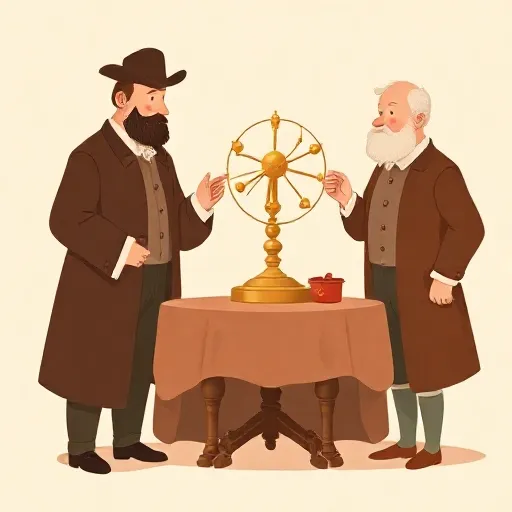
The sharpest contrast appeared in Newton’s rivalry with the German philosopher and mathematician Gottfried Wilhelm Leibniz (1646–1716). Both men had invented the calculus — a mathematical tool for describing change and motion — independently, and a bitter dispute broke out over who did it first. But underneath the quarrel over credit lay a deeper philosophical split.
Newton, writing anonymously about the dispute, described the difference like this: “The one proceeds upon the Evidence arising from Experiments and Phenomena, and stops where such Evidence is wanting; the other is taken up with Hypotheses, and propounds them, not to be examined by Experiments, but to be believed without Examination.” That was his picture of Leibniz. Leibniz, for his part, thought the Principia’s approach was philosophically incomplete. Newton’s gravity acted across empty space without any mechanical push or pull — an “action at a distance” that Leibniz found suspiciously like a miracle. Newton replied that he did not have to say why gravity works; he only had to show, from the phenomena, how it works in terms of precise mathematical laws.
This was not just a technical argument. It was a fight about what should count as scientific understanding. Leibniz wanted a full explanation that told you why things happen; Newton was content with a law that let you predict and calculate. Newton applied the same restraint to light. He personally thought light was made of tiny particles, but he admitted no experiment had yet proved it. So he left the question open. His refusal to pretend certainty when the evidence was thin drove a lasting wedge between science and unbridled speculation.
What Made the Principia So Successful?
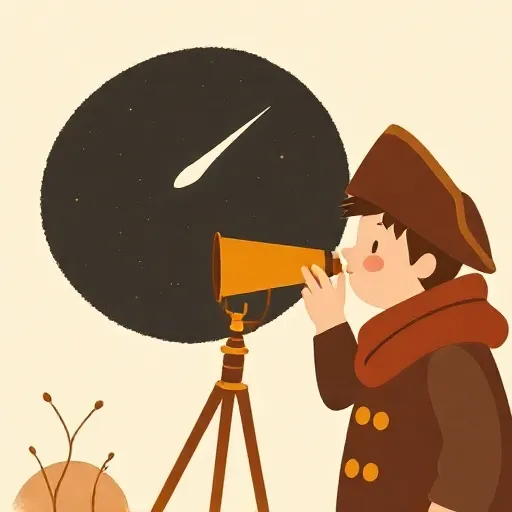
For decades after the Principia appeared, scientists tested Newton’s theory in more and more daring ways. They predicted that Earth would be slightly flattened at the poles, and expeditions to Lapland and Peru measured it. They computed the Moon’s complicated wobble from the pulls of both Earth and Sun. In 1758, a comet returned right on schedule, exactly as Alexis Clairaut had calculated using Newtonian gravity. By the early 1800s, Pierre-Simon Laplace could show that the whole machinery of the planets could be predicted from Newton’s starting rules — even tiny shifts in the orbits of Jupiter and Saturn that took 900 years to cycle.
Philosophers noticed. John Locke (1632–1704) and George Berkeley (1685–1753) already asked, while Newton was alive, what it was about the Principia that made its predictions so trustworthy. Later, Immanuel Kant (1724–1804) used Newton’s success to launch an entire branch of inquiry: the philosophy of science. The question was no longer simply “how do the planets move?” but “what does it mean for a scientific theory to be good?” Newton’s rule — cling to the phenomena and refuse to wander beyond them — seemed to be the secret ingredient.
Yet the Principia was not a magic bullet. Newton’s own trial calculations in Book 2 contained mistakes that later scientists had to fix. The laws Newton wrote were for point‑masses, tiny theoretical dots; it took Leonhard Euler and others to extend them to rigid bodies and fluids, eventually giving us the version of Newtonian mechanics we use today. The point philosophers drew from all this was not that Newton was never wrong, but that his method — bootstrapping from observations to ever‑wider theories — was able to catch its own errors and grow.
What Does It Mean for You to Know Something?

Every time you decide to trust something — that your friend really means what she says, or that a video online is real — you are doing a miniature version of what Newton did. You can accept a guess because it feels right, or because everyone else believes it. Or you can ask: what have I actually observed? What would make me change my mind?
Newton’s legacy is not that he gave us the final truth about motion and gravity. In the twentieth century, Einstein showed that Newton’s laws are only an approximation, good in everyday conditions but not when speeds approach the speed of light or when gravity grows enormous. Newtonian science remains a spectacularly successful approximation. The deeper legacy is the rule itself: let the world tell you when you are wrong, and do not pretend to know things you have not yet seen.
That rule has a price. It demands that we live with unanswered questions. Newton never knew — and we still argue about — what gravity ultimately is. But if you can sit with uncertainty, you can build knowledge that keeps getting stronger, a piece at a time.
Think about it
- If a friend makes a claim and you have no way to test it, what is it fair to say you really know about it?
- Imagine you have to decide whether a new medicine works. What would count as better evidence: a scientist’s clever explanation of why it should work, or careful records of what happens when people take it?
- Newton lived with big open questions — the cause of gravity, the nature of light. Can a person ever be completely certain about a scientific idea, or is knowledge always a work in progress?