Was Newton the Greatest Genius? Hume Didn’t Think So
The Greatest Genius — With a Hidden Flaw
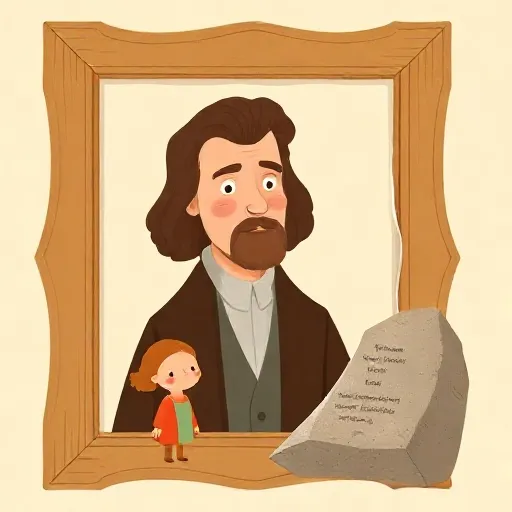
In 1739, David Hume (1711–1776) was twenty-eight years old. He had just finished a massive book, A Treatise of Human Nature. Most great philosophers wrote about God, the cosmos, or the laws of motion — Isaac Newton (1642–1727) had done that. But Hume had a different target: the human mind itself. He believed that before we could understand the universe, we first needed to understand the tool we use to do science — our own thinking. And when Hume looked at Newton, the towering genius of the age, he didn’t just see a hero. He saw flaws.
Hume admitted that Newton was perhaps the rarest genius who ever lived. He even wrote that Newton’s theory “will probably go down triumphant to the latest posterity.” But he also delivered a backhanded compliment. Hume ranked philosophers by “Genius and Capacity” rather than by “Virtue and Usefulness to the Public.” He said Newton had little virtue and his work wasn’t very useful to ordinary people. In other words, Newton’s brilliant mind hadn’t made the world a better or wiser place — it had only uncovered abstract truths about planets and light.
Hume even hinted that Newton’s success came partly from not understanding how extraordinary he was. Newton was so focused on his own ideas that he didn’t bother to connect them to everyday concerns. And, worst of all, Newton still clung to religious superstitions of his time, like interpreting the Book of Revelation. So while Hume respected Newton’s intellect, he worried that Newton’s project could actually shelter superstition rather than chase it away.
Hume’s Big Idea: A Science of Human Nature

Hume didn’t just criticize — he offered an alternative. He called it the science of man (sometimes “true metaphysics”). This new foundational science would study how humans perceive, feel, reason, and make moral judgments. In his Treatise, he declared that before any other science could be truly secure — even mathematics and natural philosophy — we needed to understand the human faculties that produce them. That made his science of man the ultimate foundation.
But Hume’s ambition went deeper. He claimed his project would be “much superior in utility” to Newton’s natural philosophy. Whereas Newton gave us equations for planetary orbits, Hume wanted to give us tools to improve logic, morals, criticism, and politics — things that directly affect how we live. He thought that teaching people to avoid intellectual overreaching (what he called mitigated skepticism) would make us less likely to fall for superstitions or grandiose theories.
So right from the start, Hume set up a rivalry. He would not try to beat Newton at describing invisible forces. Instead, he would redefine what counts as valuable knowledge — and place human nature at the center.
Why Can’t We Know Hidden Causes?
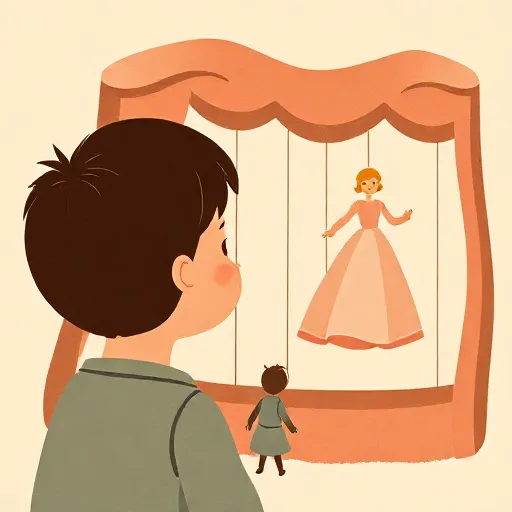
To understand why Hume parted ways with Newton, you need to meet his most famous rule: the copy principle. Hume argued that every simple idea in your mind must be a copy of something you first experienced through your senses. If you have never seen, touched, tasted, smelled, or heard something, you cannot truly form an idea of it. For Hume, this was the ultimate test.
Now think about Newton’s concept of a force, like gravity. Newton believed gravity was a real, invisible power that acts across empty space, pulling apples to the ground and keeping planets in orbit. But have you ever seen, heard, or felt “force” itself? You observe one billiard ball hit another and the second ball move — but do you perceive the power, or just the motion? Hume’s answer: you perceive only the motion, the “sensible qualities.” The idea of an invisible force is, at best, a handy label to track patterns, not a glimpse into hidden reality.
This led Hume to reinterpret Newtonian philosophy “rightly understood.” He said a modest skeptic would admit ignorance about the inner nature of bodies. All we can do is keep track of the appearances — the way one event follows another. So when Newton speaks of “forces” or “laws,” Hume translates those terms into merely describing how things behave, not what they are. Science stays on the surface.
What Hume Took from Newton — and What He Left Behind
Despite his criticisms, Hume learned a lot from Newton. He admired Newton’s experimental method and his rules for how to reason about causes and effects. In his own Treatise, Hume listed eight rules by which to judge of causes and effects. Several of them mirror Newton’s famous four Rules of Reasoning in the Principia.
For example, Newton’s second rule said that the same natural effects should be assigned the same causes. Hume’s fourth rule echoed this: “The same cause always produces the same effect.” But then came a crucial crack. Newton’s third rule boldly asserted that qualities we find in every body we can test — like extension or gravity — should be taken as universal qualities of all bodies everywhere. Hume was not so sure.
Hume’s seventh rule warned that if an effect increases or decreases proportionally with its cause within a limited range, you can’t just assume it will keep doing so far beyond that range. Heat gives pleasure up to a point — then it burns. What seems like a straight, proportional relation can break down outside your narrow experience. That meant Newton’s claim of universal gravity, extending to the farthest stars, was a leap that went beyond anything we could safely verify.
Moreover, Hume lacked a rule like Newton’s fourth: a commitment to treat well-confirmed theories as true until new evidence requires a change. This allowed Hume to remain more cautious — some say too cautious — about the hidden parts of nature. He reserved the right to draw a line between common life (where we can be reasonably sure) and the farthest reaches of natural philosophy (where doubt grows). So where Newton said “trust the theory and refine it,” Hume said “remember your limits.”
Mathematics: Even the Queen of Sciences Can’t Give Certainty
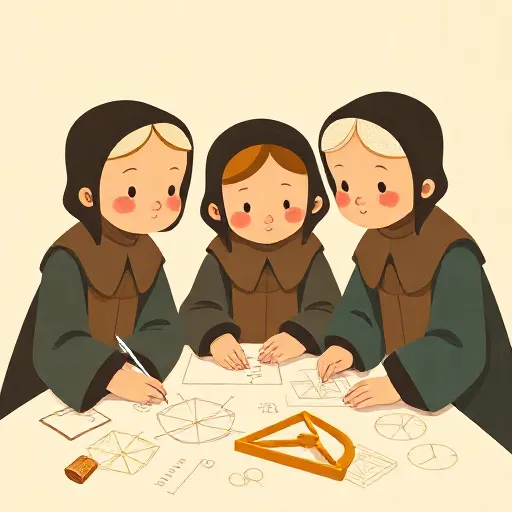
Newton’s grand ambition was to make natural philosophy as certain as mathematics. By building theories like geometry, with definitions, axioms, and demonstrated conclusions, Newton hoped to give physics an unshakeable foundation. But Hume challenged even mathematics’ claim to perfect certainty.
Geometry deals with figures we draw or imagine, but those figures are never perfectly exact — our perceptions are limited. Arithmetic deals with numbers, which are exact in principle, but our reasoning is still fallible: we make mistakes, forget steps, miscalculate. So any demonstration we produce is ultimately checked not by perfect logic but by how confident we feel — and that confidence comes from social processes. Every time a mathematician re-checks his proof, he gains a little more certainty. And when the whole community of experts approves, that certainty peaks. For Hume, mathematical knowledge is as much a human achievement as a logical one.
This meant Newton’s dream was hollow. Even if physics could be expressed mathematically, mathematics itself rested on shaky human foundations. There is no escape from fallibility. So while Newton thought mathematization would make science certain, Hume argued it just spread the same human uncertainty across a different domain.
Why This Old Argument Still Matters

You might think this is a dusty debate between two dead philosophers. But it strikes at the heart of how we trust science today. When you learn physics in school, you are taught laws like Newton’s law of universal gravitation. It feels rock-solid. Yet Hume’s voice whispers: everything we know about nature comes from our limited experience and our mental habits. The future might not always resemble the past; the hidden parts of reality might be different from what we imagine. That does not mean science is useless — far from it. It means we should hold our theories with a dose of fallibilism (the recognition that any claim about the world might be wrong).
Hume’s deeper concern was about what science does for people. He worried that celebrating Newton’s physics could trick people into thinking we understand far more than we do — and that overconfidence could invite superstition or arrogance. Today, we still argue about whether science should aim only at practical improvements or pursue pure, mind-bending theories without a clear use. And we still encounter people who invoke science to claim certainty about things far beyond the evidence.
So the next time you hear someone say “science has proved,” remember Hume’s cautious, modest skepticism. The most important tool for understanding the universe is not a telescope or a particle accelerator — it is the human mind, with all its quirks and limits. And that is why, for Hume, the science of man had to come first.
Think about it
- If all ideas come from experiences, can we ever genuinely know what causes gravity, or are we just good at describing patterns?
- Hume thought knowledge should aim at making human life better. Do you agree, or is it fine to study something just because it’s fascinating, even if nobody will ever use it?
- When you trust a scientific fact (like that the Earth is round), how much of your trust comes from seeing the evidence yourself, and how much from hearing other people agree? Could that be a problem?