The Enlightenment Genius Who Couldn’t See His Own Cruelty
The Novel That Laughed at Everyone—Including Its Hero
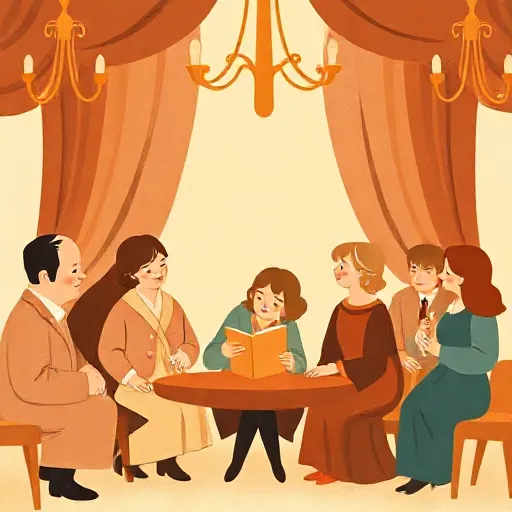
In 1721, a book of letters appeared in Paris, and nobody could stop talking about it. Two Persian travelers, Usbek and Rica, described the strange habits of Europeans: a pope who could make the king believe three were one, a scientist who nearly froze to death because lighting a fire would ruin his temperature measurements, and Parisians so vain they turned themselves into walking jokes. The book was funny, scandalous, and written by a wealthy French baron named Charles-Louis de Secondat, Baron de Montesquieu (1689–1755). But the last letters were not funny at all.
Usbek seemed wise. He wrote against despotism, the form of government where one person rules by fear and whim, without any fixed laws. He argued that the best government “controls men in the manner best adapted to their inclinations and desires.” He praised the French for obeying their king out of a sense of honor rather than terror. Readers admired him as an enlightened thinker. Yet all along, Usbek was hiding something that would make him just as scary as the tyrants he criticized.
The Despot Who Didn’t Know He Was One
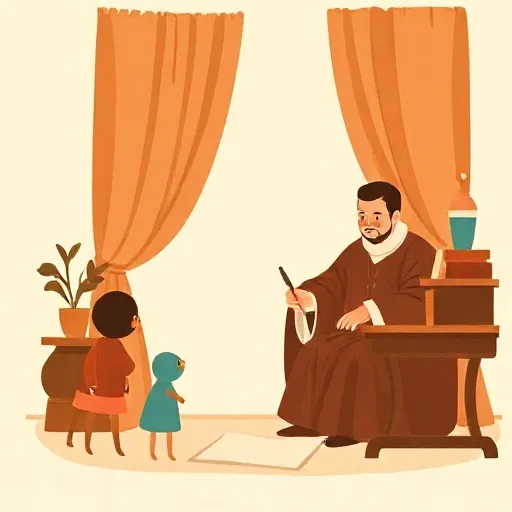
Montesquieu’s novel, the Persian Letters, unfolds through letters sent between Usbek and his household back in Persia. And that household is a prison. Usbek keeps his wives locked in a seraglio, guarded by enslaved eunuchs whom he can beat or kill at a word. He is, in his own home, a despot. The story becomes a slow-motion catastrophe: the wives feud, the eunuchs lose control, and Usbek, far away in Europe, is devoured by jealousy even though he admits he does not love his wives. He orders brutal punishments. He demands that his servants “exterminate the criminals.” By the novel’s end, horror rules the seraglio.
Roxana, his favorite wife, is the only truly admirable character. She has lived as a slave, but her mind has always been free. When she is caught with another man, she takes her own life. Her final letter to Usbek is a furious declaration: “I may have lived in servitude, but I have always been free.” The novel closes without comfort. The man who fought despotism in public was a monster in private, and he never really saw it.
Montesquieu never pretends that self-knowledge is easy. In the Persian Letters, almost nobody understands themselves. Rica is good-natured only because he has no real responsibilities. The eunuchs learn to enjoy tormenting others. The French characters are ridiculous. The book suggests that recognizing your own cruelty is nearly impossible—and that even brilliant people can be utterly blind to the cages they build.
Fear, Honor, and Self-Denial: The Engines of Government
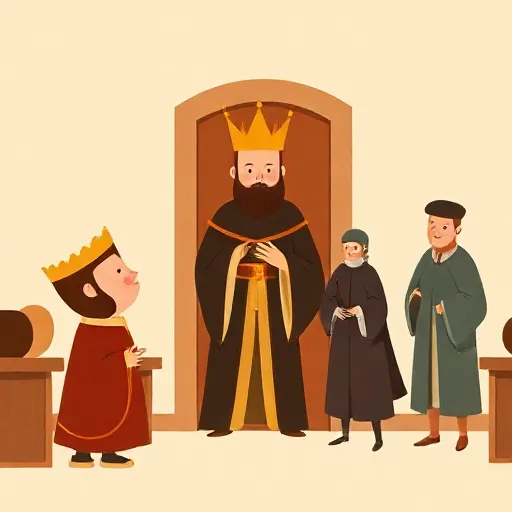
Montesquieu’s great work, The Spirit of the Laws (1748), sets out to explain why human laws and governments take the shapes they do. He believed that laws are not just arbitrary. They must be adapted “to the people for whom they are framed,” to the climate, to the soil, to the religion, and to the form of government itself. His goal was not to design a perfect utopia. He wanted to understand existing systems so that people would stop making dangerous, misguided reforms—and so that they could see which changes would actually increase freedom.
He sorted governments into four kinds, each with a special principle—a human passion that keeps it running. A republic (either a democracy or an aristocracy) requires political virtue, meaning citizens must constantly choose the public good over their own selfish interests. Montesquieu called this a “self-renunciation” and said it takes the whole power of education to produce. A monarchy runs on honor—the natural desire for distinction and praise. Its strength comes from the way personal ambition can accidentally serve the country. A despotism relies on fear. Subjects are treated like beasts, and any spark of pride must be crushed because “persons capable of setting a value on themselves would be likely to create disturbances.”
Corruption is never far away. Democracies fall when citizens stop caring about the common good and chase inequality, or when they demand such extreme equality that they refuse to obey anyone at all. Monarchies collapse if the ruler sweeps aside the nobility or courts—the “intermediate channels” that check his power—or if he rewards crawling flattery instead of genuine honor. Despotism, by contrast, is already corrupt by its very nature. It destroys commerce, requires ever-bloodier punishments, and leaves even the despot unsafe in his own palace.
Why a Government Must Fight Itself (on Purpose)
What does freedom actually mean for Montesquieu? Political liberty is not the right to do whatever pops into your head. If everyone can hurt everyone else, nobody feels safe. Liberty is “a tranquillity of mind arising from the opinion each person has of his safety”—a calm confidence that the state’s power will not be turned against you if you follow the law.
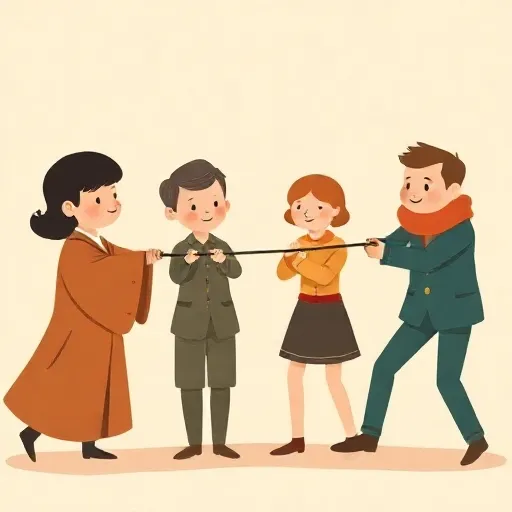
To create that confidence, power must be split up. “Constant experience,” Montesquieu wrote, “shows us that every man invested with power is apt to abuse it.” The solution is that “power should be a check to power.” He argued that government must divide its tasks into three separate branches: the legislative power that makes laws, the executive power that carries them out, and the judicial power that applies them in particular cases. If one person or body holds all three, nothing stops tyranny.
But the rules of criminal law matter just as much. Laws should forbid only what truly threatens public safety—not private sins, not thoughts, not dreams. They must be clear, so citizens can know in advance what is forbidden. They must concern outward acts, not unprovable things like witchcraft or passing doubts. If the law makes it too hard to prove innocence, people can never rest easy. These ideas were radical in Montesquieu’s day and later inspired reformers like Cesare Beccaria.
Warm Winds, Barren Fields, and the Rise of Tyranny

Montesquieu did not think that climate forces a country’s character, but he did think it pushes in certain directions. Cold air, he believed, tightens the body’s fibers and makes people vigorous, blunt, and insensitive to pain. Heat relaxes the fibers and makes people more fearful, more amorous, and less capable of sustained effort. A temperate climate produces inconstant manners because it has no strong physical grip.
These differences had political consequences. Where the soil was fertile, people were more willing to accept a monarchy that offered security so they could get on with farming. Where the soil was barren, people had to be tough and self-reliant—which suited republics. And in Asia, vast plains and a sudden shift from icy north to tropical south made it easy for one conqueror to sweep across whole populations. That, Montesquieu thought, was why huge despotic empires so often rose there. He even suggested that in extremely hot countries, slavery, though wrong in itself, became “more reconcilable to reason” because the heat left people so exhausted that only fear could make them work. Yet he immediately hoped there was no climate where free workers, motivated by profit, could not do the same labor better.
How Commerce Made Kings Play Nice
Commerce, for Montesquieu, was the one path to wealth that didn’t eventually destroy the country that pursued it. Plundering neighbors and mining colonial gold might bring quick money, but they bred inflation and collapse. Trade, by contrast, rewarded hard work, taught moderation, and “is a cure for the most destructive prejudices.” He even thought it made nations more peaceful.
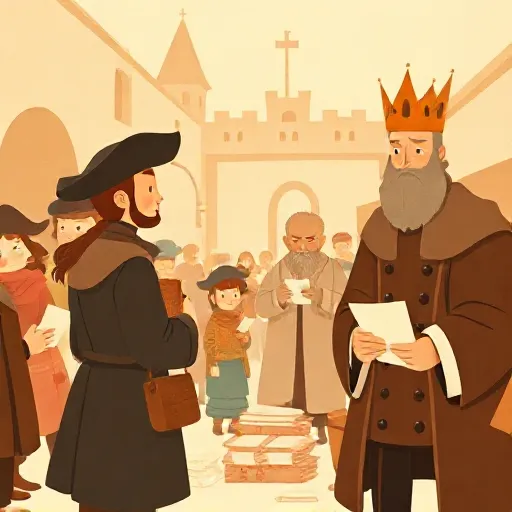
Most importantly, commerce escaped the control of rulers. Montesquieu traced this to a medieval invention: persecuted Jewish merchants devised letters of exchange—documents that let wealth travel invisibly. Suddenly, even the richest trader had no chest of gold a king could seize. International markets and currency exchanges arose, and prices came to depend on “the general opinion of the merchants, never by the decrees of the prince.” A monarch who tried to set prices by command, Montesquieu warned, would cause famine. Governments that wanted to borrow money had to stay trustworthy. Rulers learned, slowly, that cruelty was bad for business. “Happy is it for men,” he wrote, that in a commercial world “it is to their interest to be humane and virtuous.”
Religion, in his view, should stay out of the driver’s seat. Different faiths suit different governments—Protestantism for republics, Catholicism for monarchies—but civil laws exist for the welfare of society, not for making souls perfect. Governments should tolerate all peaceful religions. Trying to force belief only breeds fanaticism and oppression.
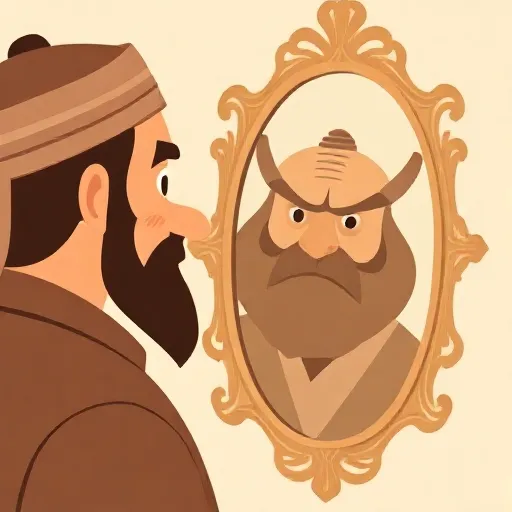
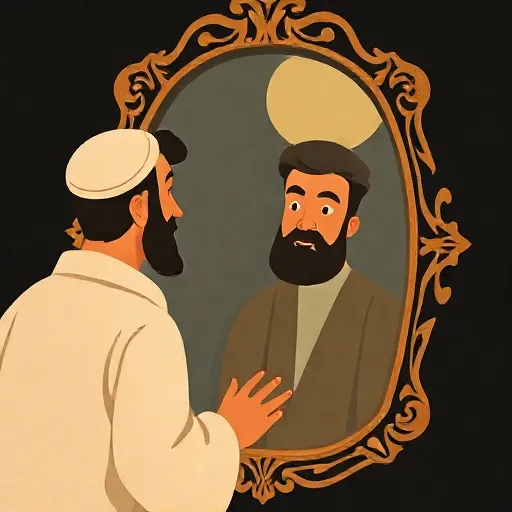
The Mirror We Still Can’t See
Montesquieu died in 1755, but the puzzles he left behind are still alive. We still design constitutions that split power into branches that check one another. We still argue over whether warm climates or fertile land make people less likely to fight for liberty. And we still struggle with the same riddle that destroyed Usbek: how can you be so sharp about the world’s injustices and so blind to your own?
Today, you might call out a bully online without noticing that you silence your little brother at home. A leader might champion human rights while making life unbearable for a spouse. Montesquieu’s novel doesn’t offer a comforting answer. It just shows that the mirror you hold up to others may never be turned toward yourself—and that true freedom requires not only good laws, but the courage to look where it hurts.
Think about it
- If you found out that a leader you admire treats their own family cruelly, would that change how you judge their ideas about government? Why or why not?
- Does living in a place with a mild climate make people more easygoing about being ruled, or is that just an old stereotype? What evidence would you look for?
- If power always needs to be split to prevent bullying, should a school principal have to get permission from a student council before making big changes? What checks would make things fair without making them impossible?