What If Reason Is Just Language in Disguise?
‘Dare to Know!’ — and the Man Who Pushed Back

In 1784, the philosopher Immanuel Kant (1724–1804) published a famous essay, “An Answer to the Question: What is Enlightenment?” He urged people to dare to know and think for themselves. His friend Johann Georg Hamann (1730–1788) was not impressed. In a furious private letter, Hamann attacked Kant’s vision. He said the public’s so-called immaturity was not self-imposed. It was forced on them by powerful rulers and by self-appointed experts who claimed to enlighten others. With biting sarcasm, Hamann redefined enlightenment: “True enlightenment consists in an emergence of the immature person from a supremely self-incurred guardianship.”
This clash between friends was more than a spat. It was the eruption of a philosophical battle: is pure reason the path to truth, or is reason always tangled up in language, tradition, and faith? Hamann’s answer would shake the foundations of the Enlightenment.
The Irritating Genius Who Hid in Plain Sight

Hamann was a strange figure among philosophers. As a young man he studied law, wandered, and failed at a business mission in London. Penniless and depressed, he read the Bible cover to cover and experienced a dramatic religious conversion. He returned to his hometown of Königsberg and spent the rest of his life writing short, explosive essays. He never held an academic job—partly because of a speech problem—but he was one of the most widely read thinkers of his time.
His writing was deliberately baffling. He filled his pages with obscure quotations, parodies, and wild imagery. He often published under playful masks: “the Knight of the Rose-Cross,” “the Sibyl,” “Aristobolus.” He wanted readers to work hard, to unroll his “balled fist” into a flat hand. Goethe said reading Hamann meant giving up “what one normally means by understanding.” But Hamann wasn’t just being difficult. He believed a passive reader never truly understands. The real work of thinking happens when writer and reader wrestle together.
This style also served a deeper mission he called metacritique—a critique of critique itself. Instead of building a rival system, Hamann wanted to examine the hidden assumptions that philosophers make before they even start. He liked to imagine his collected works as “curative baths,” each volume a healing tub that would wash away philosophical foolishness. His job was not to offer tidy answers, but to dig down to the roots of problems, especially the problem of language.
Can You Think Without Words?
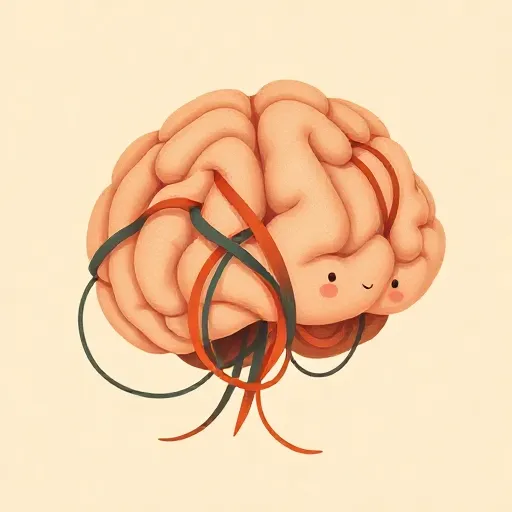
Hamann’s boldest claim was that reason cannot be pure because thinking depends on language. Enlightenment thinkers like Kant wanted to isolate reason from messy experience: they dreamed of a pure, logical mind that worked the same everywhere, untouched by history or culture. Kant’s Critique of Pure Reason (1781) attempted to clean up philosophy by separating what we know through the senses from what reason knows “a priori,” before experience.
Hamann pounced. In his unpublished “Metacritique of the Purism of Reason,” he argued that language is the inescapable medium of all thought. “Without language we would have no reason, without reason no religion, and without these three essential aspects of our nature, neither mind nor bond of society,” he wrote. Language isn’t a tidy tool for transmitting ideas. It carries the whole messy history of human experience, the traditions and passions we inherit. So the project of a purely logical, experience-free reason is doomed from the start.
He also suspected that philosophers had fallen for a trick he called prosopopoeia, or personification. In medieval plays, abstract qualities like Chastity or Greed were turned into characters that walked and talked. Hamann thought philosophers did the same when they took the activity of reasoning and turned it into a noun: “reason.” They made a verb into a thing, then imagined that thing as a flawless, disembodied faculty. But there is no such thing as Reason. There is only reasoning—something fallible humans do with words, guided by feelings and habits.
That’s why Hamann shocked his contemporaries by insisting, “Poetry is the mother-tongue of the human race.” Symbols, images, and metaphor come before logic and abstraction. Reason is language. He gnawed on that idea like a bone, admitting the depths still left him in the dark.
Knowing Needs Faith, Not Just Facts

Enlightenment philosophers prized absolute certainty. They wanted knowledge to rest on a foundation of clear, indubitable ideas and logical deduction. Hamann thought that was a fantasy. He had read the Scottish philosopher David Hume (1711–1776) and agreed that much of our thinking rests on belief—on trust, not proof. But Hamann turned this insight into a theological hammer. The German word Glaube means both “belief” (in the sense of a reasonable assumption) and “faith” (in the religious sense). With a linguistic sleight of hand, Hamann could say that even the biggest champions of impartial reason ultimately have only faith as the ground for their convictions.
He went further: knowledge is impossible without other people. “Self knowledge begins with the neighbor, the mirror,” he wrote. You see yourself reflected in others. All learning depends on help from someone else—even basic bodily functions like eating, he joked, are not purely instinctual but must be taught. Our reason itself arises from “a twofold lesson of sensuous revelations and human testimonies.” Tradition matters. Community matters. The idea that a lone thinker can strip away all influence and arrive at pure truth is a myth.
Hamann also hated the divorce between the senses and the understanding. Kant had pictured sensibility and the understanding as two separate stems of human knowledge. Hamann insisted they are one stem with two roots, united like the divine and the human in Christian theology. Any philosophy that splits them apart, he said, is a “violent, unwarranted, obstinate divorce of what nature has joined together.” Knowledge always involves a union of opposites—body and mind, sense and thought, faith and reason—that we must hold together, not tear apart.
How to Read a Text: Passion First, Detachment Never

Most philosophers of Hamann’s time thought you should read a book coolly and objectively, sweeping aside your own prejudices. Hamann called that nonsense. He said interpretation requires passion and commitment. In one essay, he provocatively claimed that the interpreter needed initiation into “orgies” before the hermeneutic act could safely begin. He mocked the ideal of the detached, self-castrating scholar.
But he was no wild subjectivist. If you simply flood the text with your own fantasies, Hamann scorned you as the blind leading the blind. The text pushes back. It asks, “What are you trying to make of me?” Good interpretation happens in a three-way relationship among author, text, and reader. The reader must be both a rhapsodist (someone who stitches something new together from existing materials) and a kabbalist (someone who dares to say what the text left unsaid, while remaining faithful to it).
Hamann also believed that an author often doesn’t fully understand themselves. The interpreter therefore has a responsibility not just to understand what the author meant, but to see beyond the author—to bring what is unspoken into the light. Few philosophers have placed so much weight on the reader’s creative, respectful effort.
For Hamann, the deepest understanding of any text or experience is ultimately a recognition of God revealed within it. He could not imagine philosophy apart from his faith. Even human sexuality, which he discussed with startling frankness, was for him a sign of human beings made in God’s image—a trinity of woman, man, and God in the moment of self-giving love.
What Hamann Can Teach Us About Arguments Today
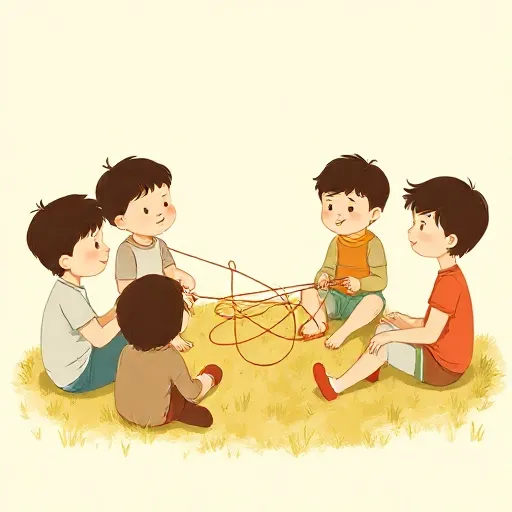
Hamann’s ideas can feel odd, but they echo into our own time. When you argue with a friend, the words you choose carry centuries of shifting meanings. When you try to be “objective,” you are still standing somewhere—inside a language, a family, a culture. Hamann’s core insight was that we never think from nowhere. Reason is always embodied in words that have a history.
This might sound like a limitation, but Hamann found it liberating. He would probably have agreed with the later philosopher Ludwig Wittgenstein (1889–1951), who thought many philosophical problems could be cured by paying closer attention to ordinary language. If you can’t purify your thinking, you can at least become more honest about where it comes from. And if knowledge relies on relationships and trust, then listening well to others—even those you disagree with—is not a weakness. It’s the only way you ever get closer to the truth.
Hamann remains a challenge. He forces us to ask uncomfortable questions. Are you really thinking for yourself, or are you just borrowing ideas from the people around you? How much of what you “know” is something you simply trust? And when you read an argument, are you working hard enough to understand it, or are you just waiting for your turn to speak? Hamann wouldn’t settle for easy answers.
Think about it
- If you were raised speaking a completely different language, do you think you would notice different things about the world? How might your thinking change?
- Hamann believed you can’t truly understand a book without caring about it. Do you agree? Is there any situation where being completely neutral might make you a worse reader?
- Hamann said that all knowledge depends on trust in other people. Can you think of something you “know”—about science, history, or even your own life—that you haven’t actually verified yourself? Does that mean you know it with certainty, or with faith?