Why Did Einstein Spend So Much Time Arguing About What’s Real?
A Young Teacher’s Question
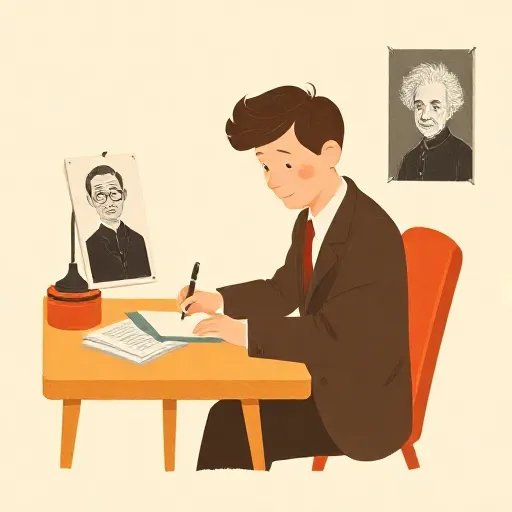
In December 1944, a young African-American philosopher named Robert Thornton sat down to write a letter. He had just earned his PhD and was about to teach modern physics at the University of Puerto Rico. He wanted to weave the philosophy of science into his classes, and he hoped the most famous scientist in the world would back him up. So he wrote to Albert Einstein (1879–1955).
Einstein replied fast — and warmly. He said he fully agreed. Too many scientists, he wrote, are “like somebody who has seen thousands of trees but has never seen a forest.” Knowing the history and philosophy of science gives a researcher independence from the prejudices of the moment. It marks the difference, Einstein believed, between a mere specialist and a real seeker after truth.
This was no polite padding. Einstein had been saying the same thing for decades. As a young man, he devoured works by philosophers of science. He insisted that his best students all had a lively interest in epistemology — the study of how we know things. Why? Because science can get stuck when old concepts become so familiar that we mistake them for unchangeable facts. Philosophy teaches you to ask: Where did this idea come from? Why do we trust it? Could we think differently?
Yet what kind of philosopher was Einstein? He refused to join any club. Some friends called him an opportunist because he seemed to borrow whatever outlook fit the physics problem at hand — a little realism here, a touch of idealism there. He didn’t mind. “I do not feel comfortable and at home in any of the ‘isms,’” he admitted. Beneath that restless surface, though, lay a striking, consistent philosophy of his own. And it began with a French thinker he met through a neighbor.
The Forest and the Trees: Holism

In 1909, Einstein moved to Zurich and became the upstairs neighbor of Friedrich Adler, an old friend from his student days. Adler had just translated a book by Pierre Duhem (1861–1916), a French physicist and philosopher. Duhem’s big idea was theoretical holism: in a mature science like physics, no hypothesis is tested in isolation. A theory is a whole fabric of ideas. When experiment clashes with a prediction, you can mend the fabric in many different places. Which thread you choose to replace is a matter of judgment, not logic.
Einstein soaked this up. It meant that no single concept — not even something as basic as “electric charge inside a solid” — gets its meaning one-on-one from an observation. The charge is part of a theoretical system that touches experience only as a whole. Einstein soon used this insight to push back against thinkers who said certain truths about space and time are known independently of experience, or a priori. He argued that any part of a theory could be treated as a mere convention, because only the whole system has to fit the data.
This leads to a startling conclusion: the same set of experiments can often be explained by more than one theory. Philosophers call this underdetermination of theory by evidence. In principle, many different “webs” could cover the same facts. Einstein recognized that, but he also noticed something curious — in practice, physicists usually agree on which theory is best. The question was why.
Chasing Simplicity
Decades before anyone coined the phrase “keep it simple,” Einstein placed a huge bet on elegance. He believed that when experiments don’t force a unique choice, the winning theory is the simplest one. More than that — he had a kind of faith that “nature is the realization of the simplest that is mathematically conceivable.”
That faith shaped his own greatest achievement, the general theory of relativity. He searched for the simplest set of equations that matched a few deep principles, and the equations he found turned out to describe gravity as the curving of space and time. He later said that this experience taught him to trust pure mathematical hunches, even when the path from the axioms to a testable prediction grew very long.
But what exactly is simplicity? Einstein admitted he couldn’t define it sharply. It is not just counting the number of assumptions. It is a feeling for the “inner perfection” of a theory — a sense that the pieces fit together without waste. Experienced physicists, the “oracles” of the field, tend to agree about which theory is more perfect. That shared intuition, Einstein thought, is what makes science move forward in practice, even though logic alone does not force one choice.
The One True Map: Univocalness
If many theories can fit the same evidence, at least each one of them should tell a single, unambiguous story. Einstein called this demand univocalness: a good theory should pin down exactly one picture of reality, not several.
This idea nearly tripped him up in 1913. While trying to build general relativity, he imagined a region of empty space — a “hole” — where his equations seemed to allow two different sets of values at the very same point. That would mean the theory wasn’t unique; it couldn’t decide what was happening inside the hole. Discouraged, Einstein almost abandoned the whole approach.
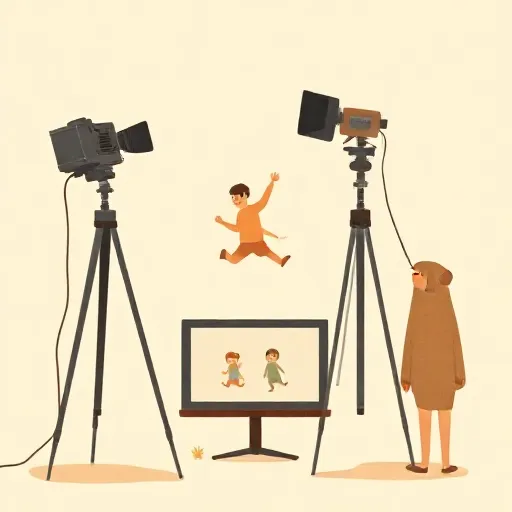
Two years later, he saw his mistake. The labels we slap on points — the coordinates — are not part of nature. They are like the different camera angles filming the same event. What is physically real are the spacetime coincidences: two world lines crossing, or a particle arriving at a detector. If different coordinate choices preserve all the same coincidences, they describe the same world. Uniqueness is restored. Coordinates, Einstein concluded, “lose the last vestige of physical reality.” Only the invariant coincidences remain — a sharp lesson in what it means for a theory to represent the world without cheating.
What Counts as Real? The Quantum Cage Match

Now the plot thickens. Einstein once told a fellow scientist, “I concede that the natural sciences concern the ‘real,’ but I am still not a realist.” He thought the word “real” was nearly empty till you put something concrete inside it. For him, that something was separability: the principle that whatever exists in one part of space is independent of whatever exists in another part, unless something travels between them.
This sounds technical, but its point is almost common sense. Imagine you and a friend are on opposite sides of a field. Your friend jumps. Nothing about that jump can instantly change the ball in your hand, right? For Einstein, any decent physical theory had to honor that independence. Without it, we could not even speak of separate objects having their own properties.
In 1935, Einstein, together with Boris Podolsky and Nathan Rosen, published a paper arguing that quantum mechanics fails this test. According to quantum theory, measuring a particle on one side of a laboratory can instantly settle the state of a distant particle, even though no signal could have crossed the gap. Einstein saw this as a sign that quantum mechanics was incomplete — missing some deeper facts that would restore separability.
Why was separability so sacred? Because Einstein’s ideal theory, general relativity, builds it into the very fabric of space: every infinitesimal region has its own independent reality. If quantum mechanics forced us to give up separability, then, for Einstein, we would lose any grip on an objective world. Many modern physicists disagree; they say that entanglement is real and that reality can be non-separable. But Einstein never budged. He thought that no separability meant no physics worth its name.
Two Kinds of Theories: Guardrails and Models
One of Einstein’s most original ideas was a distinction between two styles of physical theory.
A constructive theory builds a microscopic model. Think of the kinetic theory of gases, which imagines tiny bouncing balls to explain pressure and temperature. It is satisfying and concrete, but it is also risky — you might build the wrong model too soon.
A principle theory starts with a few high-level, well-tested generalizations — like the laws of thermodynamics — and uses them to put constraints on any possible model. Einstein said that relativity was a principle theory: the relativity principle and the constancy of the speed of light were the general rules. They didn’t tell you what space and time are made of; they told you what any acceptable theory must respect.
This way of working let him make progress even when a full constructive picture was out of reach. He used the same trick with the famous Boltzmann principle to guess that light might come in particle-like chunks — the quantum hypothesis. Only later would physicists try to construct a deeper model. For Einstein, the art was knowing when to set up guardrails and when to build the bridge itself.
Why Einstein’s Philosophy Still Echoes

Einstein never won the quantum fight — most physicists today accept non-separable entanglement as a fact. But the argument he started ignited a revolution. His 1935 paper led, decades later, to the work of John Bell and to whole laboratories devoted to testing the nature of reality. The holism he learned from Duhem reappeared, almost verbatim, in the philosopher W.V.O. Quine’s famous attack on the idea that some truths are true purely by meaning. And his trust in simplicity and mathematical beauty continues to inspire those who hunt for a theory of quantum gravity.
More than any single doctrine, Einstein left behind a conviction: science without philosophy becomes “Science without epistemology is—insofar as it is thinkable at all—primitive and muddled.” When you sit in a physics class, you are not just memorizing formulas. You are stepping into a conversation that began with Einstein and his neighbors, letters, and late-night chalk dust — a conversation about whether what we say about the world is merely useful, or whether it touches something real.
Think about it
- If two different scientific theories make exactly the same predictions, can one still be better than the other? What would make it better?
- Einstein thought that the simplest theory is usually right. Can you think of a situation where a more complicated theory turned out to be true?
- Suppose a supercomputer could predict every choice you will ever make. Would your choices still feel free? Would they be real?