What Makes a Science Real? Kant’s Surprising Answer
The Day Kant Declared Chemistry Not a Real Science
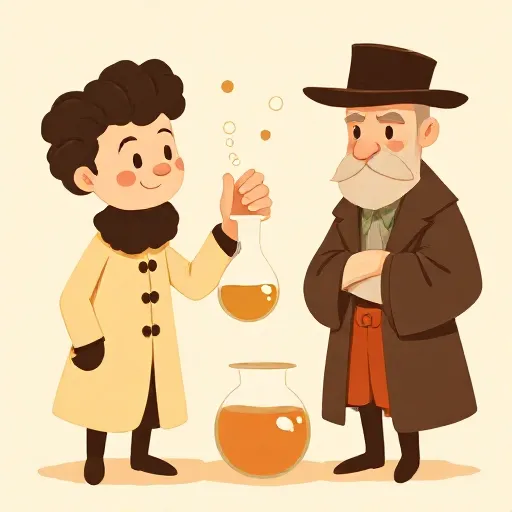
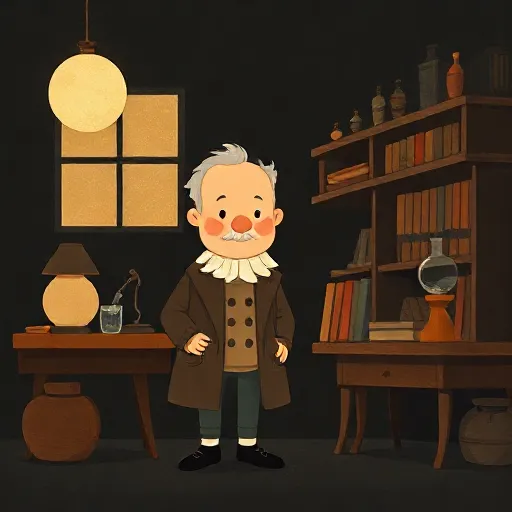
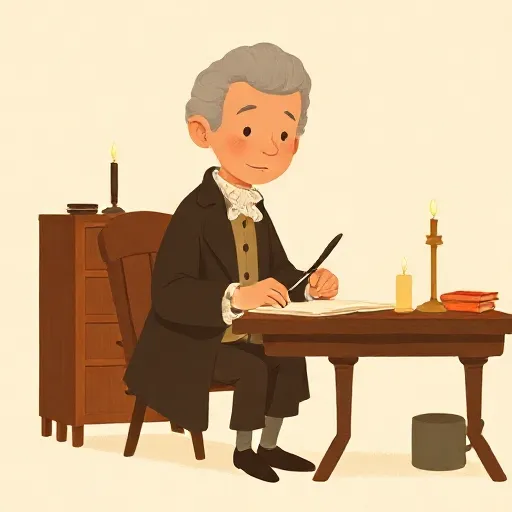
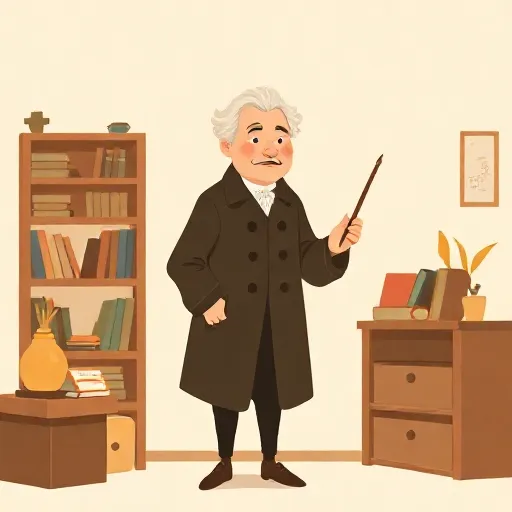
In 1786, Immanuel Kant (1724–1804) sat in his study, a calm but exacting figure in a powdered wig. A visitor might have shown him a stunning chemical demonstration — a metal transformed, a gas released — and expected applause. Instead, Kant shook his head. He wasn’t being rude; he was applying a test so strict that it still stirs arguments today. For Kant, chemistry, no matter how dazzling, was not yet a real science.
Kant had a checklist for what he called proper science. First, the knowledge had to be ordered as a system, not a heap of facts. Second, it had to rest on rational principles that could be known a priori — that is, independent of messy sense experience, using pure thought. Third, and most famously, proper science required apodictic certainty: knowledge so necessary that the opposite would be impossible, not just surprising. No room for “maybe.”
But that wasn’t all. Kant insisted that “in any special doctrine of nature there can be only as much proper science as there is mathematics therein.” If you couldn’t build your core concepts in pure intuition — the mental space of geometry and arithmetic — then your discipline was, at best, a systematic art. Chemistry in his time had no such mathematical backbone. Its laws, like the proportions in which substances combine, were only empirical — sketched from experience, not stamped with necessity. So Kant politely but firmly placed chemistry outside the circle of proper science.
Psychology fared no better. Kant argued that the inner world of thoughts and feelings unfolds in time alone, a one‑dimensional line that gives mathematicians almost nothing to grip. Worse, you can’t split and rearrange your own mental states in a laboratory like you can with chemicals. Introspection can’t produce the kind of controlled, repeatable experiments that a proper science demands. So Kant left psychology in the same outer courtyard as chemistry: useful, rational, but not truly scientific.
Why Physics Fits Like a Perfect Puzzle
If chemistry and psychology were out, what was in? For Kant, the shining example was physics — specifically, the physics of Isaac Newton (1643–1727). And he set out to prove exactly why.
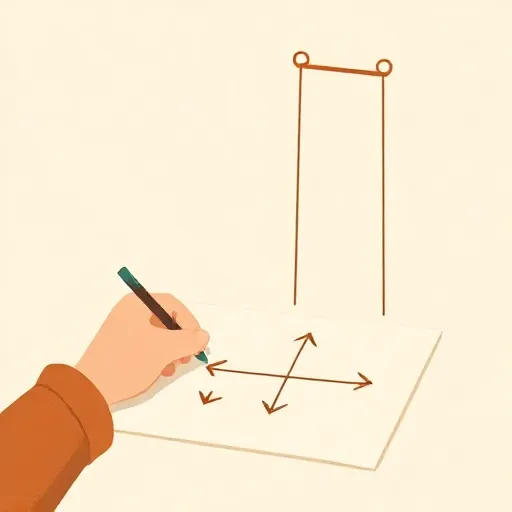
In his book Metaphysical Foundations of Natural Science (1786), Kant built a special metaphysics of matter. He argued that the concept of a material body isn’t just an empirical guess; it can be constructed a priori using space, time, and the categories of the understanding. He organized his investigation by moving through quantity, quality, relation, and modality — the same framework he had used in his famous Critique of Pure Reason. First came Phoronomy, the study of how to add together motions in space. Kant showed that the parallelogram rule for combining velocities isn’t just something we measure — it’s a necessary truth we can draw in intuition before we ever see a moving object.
Then he turned to Dynamics, where he asked what makes matter fill a space at all. Imagine a lump of dough. If it were only repulsive — pushing outward against everything — it would scatter to infinity. If it were only attractive — pulling inward — it would collapse to a single point. So matter needs both a repulsive force and an attractive force, balancing each other to create a stable volume. Kant called this a balancing argument, and he saw it as a proof that attraction and repulsion are essential to matter, not just observed curiosities.
In the Mechanics chapter, Kant laid down three laws that govern the communication of motion: the conservation of the total quantity of matter, the law of inertia (every change of motion needs an external cause), and the equality of action and reaction. These weren’t just summaries of experiments. Kant derived them from the Analogies of Experience — the most general principles that any thinker must use to make sense of a world of things changing in time. So the laws of physics, in his eyes, gain their unbreakable quality from the very structure of the human mind. Physics had exactly the a priori, mathematical, necessary character that proper science demands.
The Strange Case of Living Things
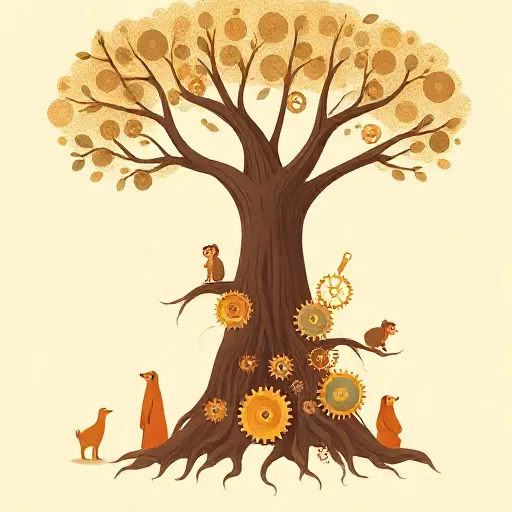
If physics was the ideal science, living organisms were its most stubborn mystery. Watch a seed grow into an oak: the whole tree seems to direct the formation of its own parts — roots, trunk, leaves — in a way no watch or engine does. A watch’s pieces exist before the watch and determine how it runs. But an organism, Kant noted, is “cause and effect of itself.” Its parts exist for the sake of the whole, and the whole keeps itself alive.
This tension leads to what Kant called the Antinomy of Teleological Judgment. On one side, our reason demands that we explain everything in nature according to merely mechanical laws — the push‑and‑pull of matter. On the other side, some natural products, like a fish or a flower, stubbornly refuse to be explained that way. We can’t help but see them as natural purposes, organized as if a plan were unfolding from within.
Kant’s solution was delicate. He said we must use the idea of purposes not as a fact about things in themselves, but as a regulative principle — a guide for our own thinking. A biologist should look for mechanical causes as far as possible, yet always hold the whole organism in mind as a purpose‑driven unity. The conflict can never be fully solved, because human reason cannot grasp a supersensible ground that might unite mechanism and purpose. So biology, for Kant, remained a rational doctrine, not a proper science. It was systematic, fascinating, and necessary, but it lacked the absolute necessity of mathematical physics.
The Unfinished Symphony: Kant’s Last Hunt for a Bridge
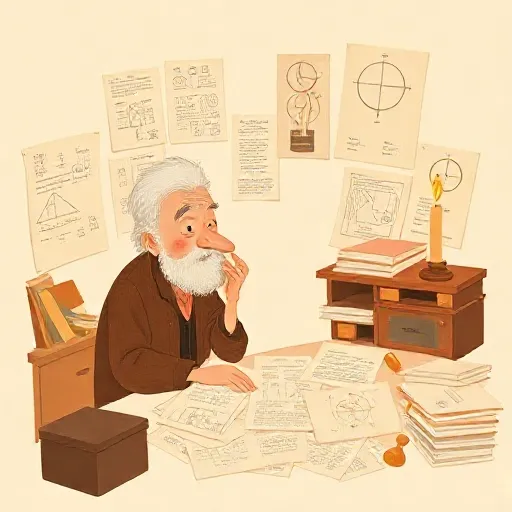
Kant never stopped chasing the boundaries of science. In his final years, after 1796, he filled hundreds of pages now collected as the Opus postumum. He believed there was a “gap” in his system — a missing bridge between the pure metaphysical foundations of physics and the sprawling, empirical study of nature in all its variety.
To span that gap, Kant proposed an all‑pervading ether, a kind of subtle fluid that would fill space, carry forces, and make heat, light, and cohesion intelligible. He also searched for an “elementary system of the moving forces” — a rational map that would organize all the specific properties of matter, like elasticity, weight, and solidity, before we even discover them.
Kant never finished this work. The Opus postumum remains a sketchbook of bold attempts, not a final answer. But it shows that even the stern gatekeeper of “proper science” knew that the world of real inquiry is messier than any checklist can capture.
Why Kant’s Test Still Echoes Today
Walk into a university today and you’ll find departments that call themselves sciences: political science, climate science, neuroscience, social science. Few of them deliver apodictic certainty, and many rely on probabilities rather than necessity. Does that mean they aren’t real science? Kant’s ghost might nod gravely — but we might push back.
The debate he started is now called the demarcation problem: what makes something science and something else not? Some thinkers insist on Kant’s demand for universal, mathematically expressed laws. Others point out that even physics has surrendered absolute certainty in the quantum world, yet we don’t deny it’s a science. Maybe the mark of science isn’t a perfect a priori backbone but a method — testable predictions, openness to being wrong, and a community that checks its own work.
Kant’s challenge still matters because it forces us to ask what we really want from science. Do we demand unshakable foundation stones, or is it enough to build a sturdy tower piece by piece, even if we never hit bedrock? The chemist who stood at Kant’s door in 1786 might smile, knowing that centuries later, the argument is very much alive.
Think about it
- If a subject can’t make predictions that are 100% certain, but it still explains the world well, should we call it a “real” science?
- Kant believed that mathematics is essential for any proper science. Can you imagine a field that explains nature without using numbers — and would you still trust it?
- Suppose you had to decide whether a new field like “friendship science” counts as a science. What would your own checklist look like — and would it include Kant’s demand for necessity?