Are You Made of Other People? George Herbert Mead's Social Self
The Loop That Builds Your Mind

You and your friend are playing an online game. You shout into your headset, “Cover me!” You hear your own voice echo in your ears. In that same split‑second, you imagine what your teammate will do: she’ll move left, shield you. That tiny loop—hearing yourself, anticipating her reaction—is exactly what George Herbert Mead (1863–1931) thought gave rise to your mind.
Mead was an American philosopher who wanted to know: where does your sense of self come from? His answer was surprising. The mind, he said, is not something you’re born with fully formed. It grows through talk, gesture, and role‑playing. Even when you’re alone and thinking to yourself, you’re using skills you learned from other people. In fact, Mead argued, there would be no self without society.
That might sound strange. Don’t you have a private inner world no one else can see? Mead would say that private world is built out of public materials. Let’s see how.
From Barks to Words: How a Gesture Gets Meaning
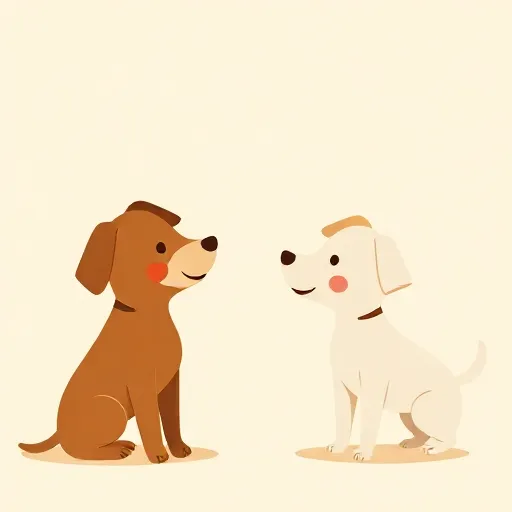
Mead started with something simple: a gesture. A gesture is any action one animal makes that causes another to respond. For example, a dog barks, and a second dog either barks back or runs. That’s communication, but not yet meaning. The dogs do not understand the bark the same way; they just follow instinct.
To have real meaning—what Mead called a significant symbol—you need something extra. You need a gesture that brings out the same response in the speaker as it does in the hearer. And that’s where the human voice comes in.
A vocal gesture is a word or phrase. When I shout “Don’t walk!” on a busy street, I hear my own voice just as you do. I might even feel myself pulling back, almost stopping. According to Mead, “Gestures become significant symbols when they implicitly arouse in the individual making them the same responses which they explicitly arouse, or are supposed to arouse, in other individuals.” In other words, a significant symbol means the same thing to both people. And that ability—to hear your own words and feel what they’ll do to someone else—is what lets you talk to yourself later, even when you’re alone. It plants the seed of thinking.
Mead believed that this reflexivity—the turning of experience back on itself—creates mind. It’s no accident that language is social all the way down. As he once said, it’s absurd to look at the mind simply from the standpoint of the individual organism; though mind has its focus there, it is essentially a social phenomenon.
The Self as a Team Sport: Role‑Taking and the Generalized Other
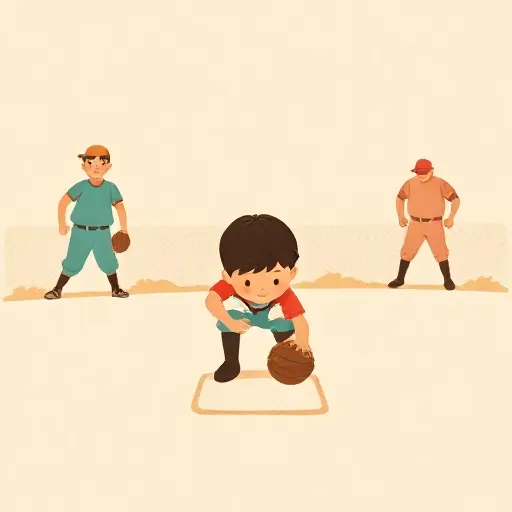
Having a self is more than just thinking. To be a self, you must be able to see yourself from the outside—to take the attitude of others toward you. Kids do this naturally when they play. A child pretends to be a doctor while her friend pretends to be a patient. To act like a doctor, she must imagine what a patient expects. That’s role‑taking. But role‑taking one‑on‑one only gives you a kind of proto‑self, like a mirror held by just one other person.
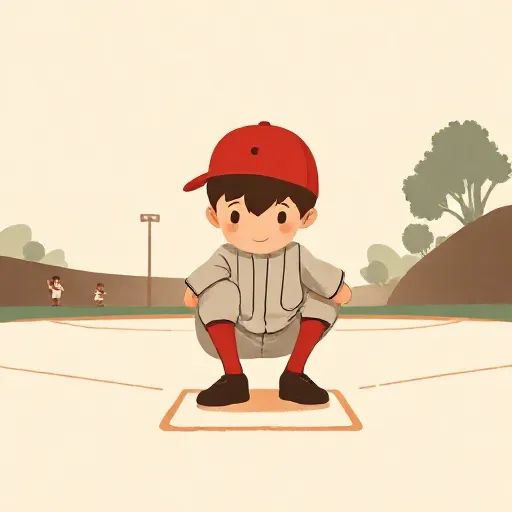
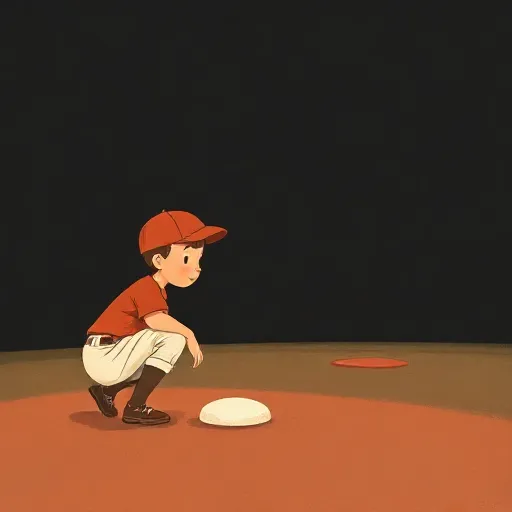
For a full‑fledged self, Mead argued, you need something bigger: the generalized other. Think of a baseball game. If you play second base, you can’t just respond to the batter. You must know what every player on your team—and the other team—might do in any situation. The game is a system of rules and positions. When you’ve internalized that whole system, you can view your own actions from the perspective of the game itself. That’s the generalized other.
Mead wrote, “The organized community or social group which gives to the individual his unity of self may be called ‘the generalized other.’ The attitude of the generalized other is the attitude of the whole community. Thus, for example, in the case of such a social group as a ball team, the team is the generalized other in so far as it enters—as an organized process or social activity—into the experience of any one of the individual members of it.”
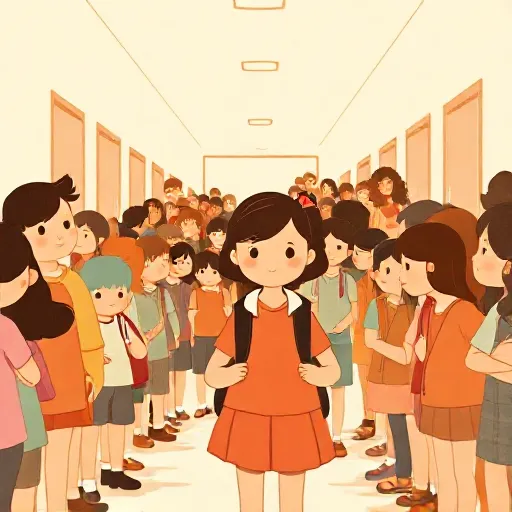
The generalized other is not just for sports. It can be your family, your class, or even larger groups like a political party. Through it, you develop a self that fits within a community. Without that organized system of perspectives, you’d never have a unified sense of who you are.
The Two Sides of You: “I” and “Me”

So far, the self sounds like it’s entirely shaped by society. But Mead insisted that is not the whole story. He split the self into two phases: the “Me” and the “I.”
The “Me” is the part formed by the generalized other. It’s the you that you can look at and describe: “I’m a second baseman,” “I’m a big sister,” “I’m someone who hates broccoli.” The “Me” is a set of organized habits and attitudes you’ve absorbed from groups. It’s known only by looking back on yourself—on reflection.
The “I,” on the other hand, is your response in the moment. When a ball is hit to you at second base, you react. That reaction is never exactly the same as before; it’s novel. The “I” gives the feeling of freedom and initiative. As Mead put it, “The ‘I’ gives the sense of freedom, of initiative. … exactly how we will act never gets into experience until after the action takes place.” You can’t catch the “I” in the act. Once you notice it, it has already become part of the “Me.”
Mead thought these two phases worked together like a running stream of awareness. The “I” acts; the “Me” instantly comments on that action, almost like a voice‑over. That commentary—often made up of the internalized expectations of others—is what makes it feel like you have a continuous, thinking self. The “I” is never directly visible; it’s always a step ahead.
This does not mean the “Me” is a cage. Because the “I” introduces something new with every response, you can change the system. If a baseball player makes a catch no one has ever seen before, that new move can become part of the team’s playbook. The generalized other shifts; the “Me” grows.
Why It Still Matters: A Self That Can Keep Changing
Mead’s ideas are not just about baseball or barking dogs. They speak directly to how you can grow and make choices. Because every action of the “I” is a little surprise, you are not a puppet of your upbringing. You can bring something new into the world—a new joke, a new way to solve a conflict, a new move in a game. And if that new response gets picked up by your team, your family, or your friends, it can reshape the whole social system and change your own “Me” along with it.
Mead believed that this is how moral progress happens: when people step outside old roles and integrate new, more inclusive perspectives. He called the moment between an old self and a new one sociality—a betwixt‑and‑between phase where you’re not quite the person you were, and not yet the person you’re becoming. Because humans can reflect on that in‑between state, we have a shot at steering our own growth.
So the next time you surprise yourself by saying something brave, or you learn a skill that changes how your friends see you, you’re glimpsing Mead’s theory in action. Your mind may be built from other people’s voices, but your “I” can still improvise new melodies. And that, Mead might say, is what makes you a self at all.
Think about it
- If your sense of yourself is built from other people’s reactions, can you ever have a thought that is completely your own? Why or why not?
- Think of a time you did something totally out of character—maybe you told a joke you’d never normally tell. Was that your spontaneous “I” breaking free, or had you just absorbed a new way of acting from someone else? How could you tell?
- If you grew up alone on a desert island with no language or other people, would you still have a self? Defend your answer.