
You Can't Be Yourself Without Others: The Real Meaning of Recognition
The New Kid’s Secret: Why Being Seen Changes Everything

You walk into a new school. Nobody knows your name. As you pass groups of chatting kids, a thought creeps in: Do I even exist here? You’re still breathing, still thinking — but something feels missing. Philosophers who study recognition say that feeling isn’t just in your head. They argue that being a full person requires more than a body and a brain. You also need other people to recognise you — to see you as someone who matters, who can make choices, who has a voice worth hearing.
This isn’t just about politeness. It’s about the very shape of your identity. Without recognition you might still be a living creature, but you wouldn’t be the you that can stand up for yourself, set goals, or feel at home in the world. The big question they’ve been wrestling with for centuries is: how much of who we are is built by the eyes and words of other people — and how much comes from inside us?
Hegel’s Dangerous Idea: You Can’t Think Without a Fight

The philosopher Georg Wilhelm Friedrich Hegel (1770–1831) made a startling claim. He said you cannot become aware of yourself as a free, thinking person by yourself. You need another person to challenge you. His teacher Johann Gottlieb Fichte (1762–1814) had put it this way: I only realise I’m an intentional agent when another subject “calls upon” me — when someone else’s action forces me to recognise that I, too, am a being who acts for reasons.
Hegel took that idea further in his famous master–slave parable. Imagine two people meet. Each wants to prove that her freedom is more important than anything — even her own life. They fight. One wins and becomes the master; the other, afraid to die, surrenders and becomes the slave. At first glance, the master seems to have won recognition: the slave serves her. But Hegel saw a trap. The master can’t really be recognised, because the recogniser — the slave — is no longer a free equal. The slave’s “yes” is worth nothing, so the master’s victory is hollow. Real recognition, Hegel argued, can only be mutual: both people must see each other as free and enjoy institutions that protect that equality. Otherwise they end up in a dead end where nobody’s self-worth is secure.
For Hegel, this wasn’t just a story about violent clashes. It was a deep truth about how we need a shared world of laws, families, and communities to feel at home with ourselves. Only when that social world reflects back our freedom do we achieve what he called “social freedom.”
Four Ways the World Tells You Who You Are

Philosophers today break recognition into several layers, each answering a different human need. Although they debate the list, most agree on at least four.
Elementary recognition is the deepest layer. Before you can form any identity, you have to be treated as a person who belongs in the world. Some thinkers argue that babies can’t even learn to think unless a caregiver connects with them emotionally, sharing attention and meaning. Through that bond, the child gradually sees all human beings as beings like herself. This basic attitude — taking someone as capable of reasons and responsibilities — makes every other form of recognition possible.
Respect is the modern replacement for old hierarchies. In earlier times, “honour” was reserved for nobles and warriors. The Enlightenment split that into two ideas: equal respect for everyone simply because they are human, and esteem you earn through what you do. Respect means you are treated as a creature who can make choices and give reasons — never as a tool or an animal. When people are humiliated, tortured, or stripped of rights, they aren’t just hurt physically; their whole sense of being a person with a voice is damaged. Think of being called a “nobody” or treated as if your opinion can’t possibly count. That’s a violation of respect.
Esteem is trickier. It’s the recognition you get for specific qualities or achievements — being good at soccer, writing a great song, belonging to a culture you’re proud of. The struggle for esteem drives many social movements. Groups that were dismissed as inferior demand that their traditions, their work, or their very existence be valued. Yet this raises a hard problem: who gets to decide what’s truly valuable? If the majority’s standards are unfair, does asking for esteem just trap you in someone else’s value system? Some thinkers say we should only demand equal respect in public, and save esteem for friends and family. Others reply that you can’t walk down the street without shame if society as a whole thinks you’re worthless — so some kind of public esteem, perhaps based on contributing to the common good, is necessary.
Love and friendship complete the picture. In close relationships we’re recognised for our whole, changing selves — not for any one trait. That early experience of being loved “just because” gives us a deep self-trust that makes it possible to face the world. Without it, the other forms of recognition are much harder to hold onto.
Money or Dignity? The Big Clash About What Justice Requires

In the 1990s a fierce debate broke out. Political philosopher Nancy Fraser (born 1947) worried that the growing focus on “identity politics” was pushing economic fairness off the table. She insisted that justice has two separate ingredients: redistribution (sharing resources so everyone has a decent material life) and recognition (making sure nobody is disrespected because of who they are). Her ideal was “participatory parity” — the chance for every person to interact in society as a peer.
Fraser pointed to different types of injustice. A gay teenager may suffer mostly from cultural humiliation, while a factory worker may be crushed by low wages and dangerous conditions. But most real cases, like those involving gender or race, mix both. Women and people of colour are not only looked down upon; they are also shunted into underpaid jobs. Fraser warned that if you hand out welfare without respect, the recipients can be branded “parasites.” And if you pursue recognition policies that ignore the economy — say, by celebrating a group’s culture without addressing poverty — you might leave people worse off.
On the other side, Axel Honneth (born 1949) argued that even money questions are at bottom questions of recognition. Workers who earn starvation wages aren’t just short of cash; they feel their contribution is treated as worthless. Social rights like healthcare and education, he said, are part of what we owe each other as equal citizens — a form of respect. In his view, the anger that fuels protests is almost always a cry of “I’m being treated as if I don’t matter.” So for Honneth, redistribution is a kind of recognition, not a separate category. The debate remains unsettled, but both sides agree: you can’t build a decent world without taking the need to be seen seriously.
When Recognition Becomes a Cage
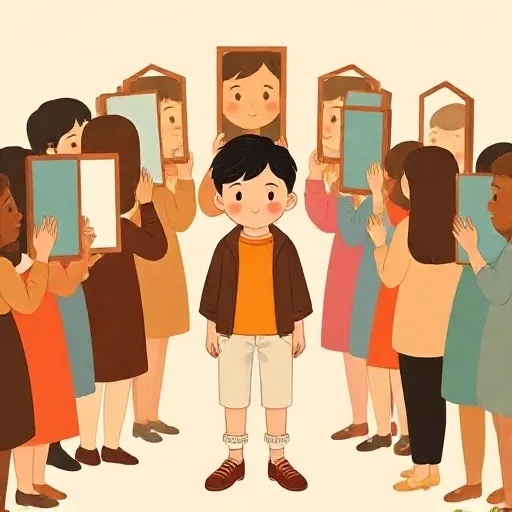
Not every philosopher cheers for recognition. A powerful stream of thought warns that seeking recognition can trap you inside other people’s expectations. The French thinker Louis Althusser (1918–1990) called recognition the core mechanism of ideology — the hidden way society convinces you to obey. He imagined a police officer shouting “Hey, you!” and you turning around: in that instant, you accept the identity the system assigns you. Jean-Paul Sartre (1905–1980) was even darker: he thought any look from another person freezes you into a fixed label, denying your freedom to change.
More recently, thinkers inspired by Michel Foucault have argued that the whole language of identity can lock you in. If you fight to be recognised as, say, a “good student” or a “real man,” you may be reinforcing categories that were built on injustice. Judith Butler (born 1956) suggests that norms need constant repetition to stay alive — and every repetition is a chance to tweak them. So resistance isn’t about refusing all recognition; it’s about bending the terms slightly, so you don’t have to fit inside a ready‑made box.
Even defenders of recognition admit the danger. Recognition can be ideological when it soothes you into accepting a lowly place — like calling an overworked servant “a loyal family retainer” to make her feel proud while denying her fair pay. The line between genuine affirmation and a velvet cage is razor thin. Recognising that tension is part of what makes this philosophy so alive.
Why the Mirror Still Matters in Your Own Hallway
Back to that new school. The feeling of invisibility you get when nobody looks your way isn’t just a sad moment — it’s evidence that you’re a social creature through and through. You need your classmates, your family, your community to reflect back that you are seen as you. Yet the hallway also shows the danger: if you twist yourself into whatever shape will win you the most attention, you may lose the very self you wanted recognised.
That’s the tightrope every person walks. Your identity isn’t a private treasure you guard inside your head; it’s something you build together with others. But you also need enough inner steadiness to say “no” when the mirror they hold up distorts who you are. Philosophy gives you language for this: it’s the dance of mutual recognition, the demand for respect, and the risky business of esteem. And it reminds you that the fights over who gets seen — and on whose terms — have never been just about politeness. They’re about the kind of person you get to be.
Think about it
- If everyone in your class treated you like you were invisible — as if you didn’t exist — how would that change the way you think about yourself after a week? Would you still feel like the same person?
- Can someone be deeply loved by their family and close friends, yet still feel like they don’t “count” in the wider world? Is that enough for a full life, or does society need to see you too?
- Have you ever wanted to be seen so badly that you changed something important about yourself — and then wondered whether the “you” that others finally noticed was really you?