Is Your Job Stealing Who You Really Are? Marx’s Big Idea
A Mill Town Morning

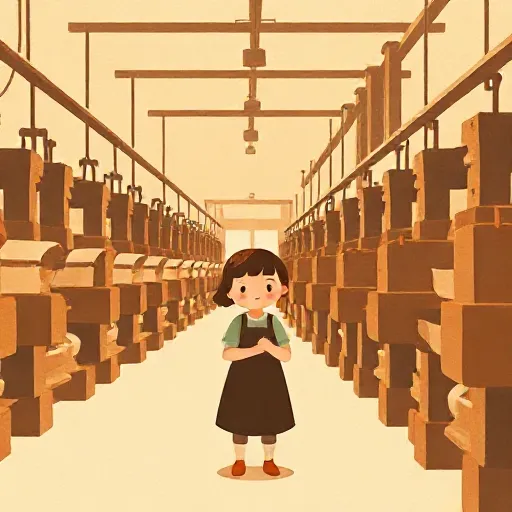
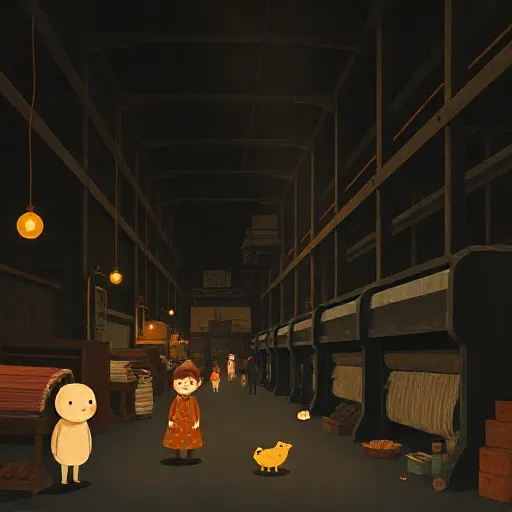
Imagine waking before sunrise, stumbling through fog‑thick streets, and spending fourteen hours feeding cotton into a deafening machine. Your legs ache, your mind goes numb, and the fabric you produce is sold for a fortune — a fortune that never reaches you. You cannot afford the very thing your own hands have made.
Karl Marx (1818–1883) walked through factory districts like that and saw a deep sickness. He was not just angry about low pay or long hours. He believed the whole way work was organized in his time — and in ours — cut people off from something essential. He called this alienation, and it became one of his most powerful ideas.
Marx was a philosopher, economist, and fiery critic of the new industrial world rising around him. He did not invent the word “alienation,” but he gave it a sharp, specific meaning that still makes us squirm today: a painful separation between what you are and what you actually get to do, make, and be.
God as a Mirror: The Roots of Alienation
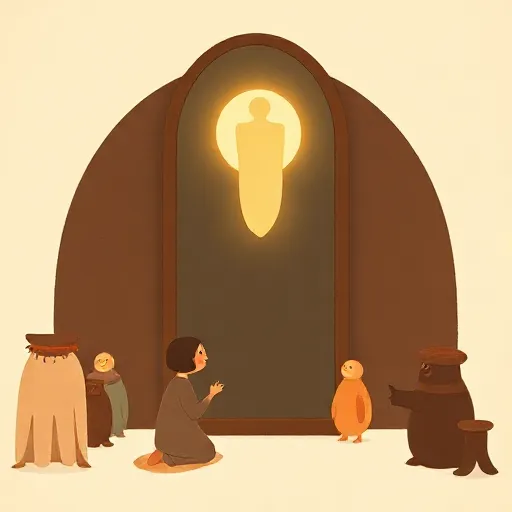
To understand Marx, you have to meet his teacher‑critic: Ludwig Feuerbach (1804–1872). Feuerbach turned a very old idea upside down. For centuries, Christians said God created humans in God’s image. Feuerbach said no — humans invented God in our image. We take our own powers of love, creativity, and wisdom, blow them up to an infinite size, and project them onto a being we then worship. In that moment, we give away our own greatness. Religion, Feuerbach argued, is a kind of alienation: we separate ourselves from the very qualities that make us human.
Marx loved the boldness of this idea but thought Feuerbach missed the deeper cause. Why do people need to invent such a comforting illusion? Marx’s answer: because their real lives on earth are miserable and drained of meaning. Religion is not the root problem; it is a soothing painkiller — the “opium of the people,” he wrote. To cure the addiction, you have to heal the wounded life beneath it.
So Marx turned his gaze from the heavens to the factory floor. He set out to show that the real engine of alienation was not in our heads but in our daily labor.
Four Cuts That Separate You from Yourself
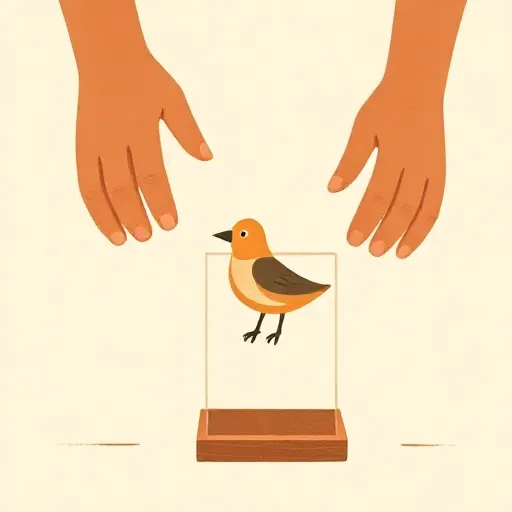
In his early writings, Marx unfurled a startling claim: under capitalism, work alienates us in four connected ways. Each is a separation between something that ought to belong together.
First, you are cut off from what you make. Imagine spending all day building the most beautiful chairs. You choose the wood, shape the legs, sand every curve. But those chairs belong to your boss. You never sit in them. Worse, the more chairs you produce, the more power your boss has over your life. The world you build with your own hands becomes a hostile force that dominates you.
Second, you are cut off from your own activity. Work becomes something forced, not freely chosen. You twist bolts or swipe screens in ways that numb your mind or exhaust your body. Instead of expressing who you are, your labor drains you. Marx said this turns work into a mere means to survive, not an end you enjoy for itself.
Third, you are cut off from other people. In a competitive market, you are trained to see other human beings as tools — rivals to beat or instruments to use for your own profit. The natural social bond between people is broken. You become an isolated island, even when surrounded by coworkers.
Fourth, and most important, you are cut off from your own human nature. Marx believed humans are not simply hungry animals. We are, at our core, creative, social, and free. We want to shape the world thoughtfully and share our lives with others. But capitalist work crushes those powers. You spend your days in dull, repetitive tasks that never ask for your imagination or your heart. You stop feeling like the author of your own life.
These four separations, for Marx, are not fair trades — they are deformations. You become, as he painfully put it, “dehumanised.”
What Work Could Be: Marx’s Creative Dream

Was Marx just a grumpy critic? Not at all. He burned with a vision of what work should feel like. In a different kind of society — one he called communism — labor would become a central piece of human flourishing, not a curse to escape.
Imagine waking up and choosing what you want to make that day. You paint, or code, or tend a garden, or write a song — not because a boss demands it, but because the activity itself stretches your powers and satisfies a need in someone you care about. Marx thought such unalienated work would be: freely chosen, deeply self‑realising (you develop and use your essential talents), performed to meet the genuine needs of others, and genuinely appreciated by them.
For Marx, this wasn’t a fantasy for lazy days. It was what it means to be fully human. Our productive, creative energy — our “species essence,” he called it — is what separates us from robots and beasts. Capitalism, he argued, puts that essence to sleep. Communism would wake it up.
No Blueprints, Just a Living Hope
If Marx had such a beautiful dream, why didn’t he write down a detailed plan? Later critics, and even some followers, called him frustratingly vague. Marx insisted on staying silent about the exact recipes for the “restaurants” of the future. He was fiercely opposed to what he called utopian socialism — the habit of drawing up perfect blueprints of an ideal society in advance.
He gave several reasons. First, a detailed plan decided now would be undemocratic — it would steal from future people the freedom to design their own world. Second, a perfectly accurate blueprint is impossible — no one can predict all the complicated circumstances of a future society. Third, Marx believed the basic shape of a better world was already developing inside the struggles of the present; history itself would do the designing. Our job was to help deliver that new world, not to prescribe every street corner.
Many philosophers find these arguments shaky. Still, they show why Marx refused to play the prophet. He wanted to unlock our own creative power now, not hand us a finished picture to copy.
Still Feeling Like a Cog? Why This Matters

Today, you probably don’t work in a smoky textile mill. But the feeling Marx described can hit hard wherever repetition, speed, and profit squeeze out meaning. Maybe you have a job where you follow a script, never say what you think, and watch your real talents go unused. Maybe you build things — code, sandwiches, clickable ads — that disappear into a system you don’t control. Alienation did not vanish when the chimneys came down.
Marx’s challenge is not a dusty museum piece. It asks: are the ways we work today actually helping us become more fully ourselves? And if not, what would a world look like where you get to pour your heart into something, see it matter to others, and go home feeling more alive than when you arrived? For Marx, that is not just a nice bonus — it is the measure of a human life worth living.
Think about it
- If you were free to do any kind of work tomorrow that truly felt like “you,” what would it look like? What, besides money, might still stop you?
- Can a job that feels meaningless to you still be a good job if it allows you to do meaningful things outside of work? Why or why not?
- Marx thought a society that forces most people into deadening work is deeply broken. Do you agree, or can a fair society exist alongside a lot of dull labor?