Why Do We Obey Without Being Forced? Marcuse’s Big Question
Are You Really Choosing That Soda?

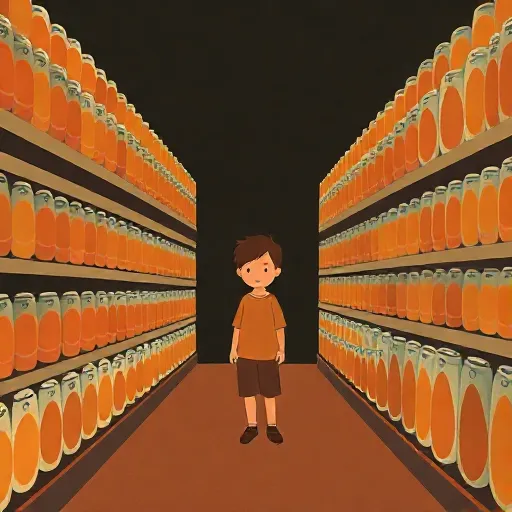
Imagine standing in a convenience store, staring into a cooler full of brightly coloured cans. You reach for your favourite soda and think, “That was my choice.” But was it? Herbert Marcuse (1898–1979), a German philosopher who fled the Nazis and eventually taught in the United States, would ask you to look again. Marcuse spent his life trying to understand why people in modern capitalist societies so rarely rebel, even when they are exploited. His alarming answer: the system makes us feel free while quietly squeezing the rebellious thoughts out of us. Comfort, entertainment, and even the way we think all work to make unfreedom feel like the natural state of things. But Marcuse also believed that cracks exist — in art, in imagination, and in the everyday moments when someone says “No.”
Art: The Mirror and the Muzzle

Even as a young man, Marcuse loved art and literature. His very first book, in 1922, was about artists in German novels who felt alienated from society. He believed art had a radical power: it could show a gap between the ideal (what could be) and the real (what is). That gap can be painful, but it also sparks a desire for change. In an essay from 1937 called “The Affirmative Character of Culture,” Marcuse argued that culture separates itself from everyday life, creating a space where people can imagine different values, different ways of living. That is art’s revolutionary job.
But Marcuse, always a dialectical thinker (one who sees both sides of a coin and how they feed each other), noticed the flip side. The very same culture can be swallowed by the system and used to pacify people. He called this affirmative culture. In a society that prizes the inner soul over changing material conditions, art becomes a private happiness: you feel transformed on the inside while the real world of inequality stays exactly the same. A painting can make you ache for freedom, but the same painting can hang on a wall while you go back to a grinding job and accept that nothing will change. Art, then, is both a window and a muzzle.
Why Rowing a Boat Isn’t the Same as Sailing Free
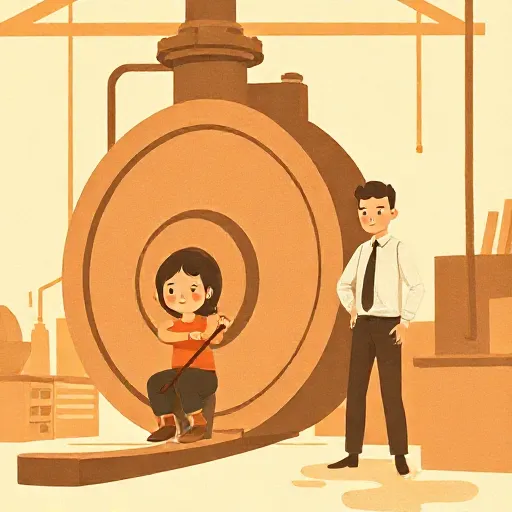
To explain why people accept this, Marcuse turned to the German philosopher Karl Marx (1818–1883). Marx believed that human beings develop their true selves through work — through creatively shaping the world around them. In an ideal situation, your labour expresses who you are. But under capitalism, Marx argued, work becomes alienated: you sell your labour, and what you make belongs to someone else. You become a thing, a tool in a machine you do not control.
Marcuse pushed this further. In advanced industrial societies, he said, the system does not just exploit your body; it gets inside your head and reshapes what you want. The performance principle — the rule that you must perform a fixed function to earn a living — takes over. You learn to desire what the system needs you to desire. As Marcuse put it, “he desires what he is supposed to desire.” Work stops being about building yourself and becomes about feeding an apparatus that grows richer while you stay in your lane. The twist is that this can feel completely ordinary. You row and row and believe you are steering.
Surplus Repression: The Extra Leash

When Marcuse wrote his most famous book, Eros and Civilization (1955), he borrowed ideas from the psychoanalyst Sigmund Freud (1856–1939). Freud believed that civilisation requires us to repress our raw desires if we are to live together — that is the reality principle. Marcuse accepted that some basic repression is needed for any society to function. But he added a crucial distinction: surplus repression — the extra, unnecessary restrictions imposed by the ruling system to maintain dominance.
Under the performance principle, workers direct their energy and desire into work far beyond what is needed to survive, and the wealth they produce flows to a small few. The fear of scarcity is kept alive as an ideology: we are told we must work harder and produce more, even when there is already enough for everyone. The result is a society that demands constant performance, leaving people too drained to question the arrangement. The leash is so long and comfortable that you forget it is there, but it still holds you back.
One-Dimensional Thinking: When Freedom Feels Slippery
In his 1964 book One-Dimensional Man, Marcuse sharpened his diagnosis. A one-dimensional society is one that flattens out contradictions and neutralises critical thinking. You live in a “comfortable, smooth, reasonable, democratic unfreedom.” The system works by making you feel freer than you are: there are enough gadgets, streaming shows, and snack choices to keep you satisfied. Political language turns vague — “the American people,” “our way of life” — and hides the fact that life looks very different for the rich and the poor, the powerful and the powerless.
Even tolerance can become a tool of control. In a controversial essay called “Repressive Tolerance,” Marcuse argued that pure, blanket tolerance — tolerance of everything for its own sake — can end up protecting oppressive ideas. He wanted discriminating tolerance: the kind that knows when letting a dangerous voice speak freely actually silences the people that voice harms. One-dimensional thinking is not stupidity; it is a fog that makes contradictions invisible. When everyone agrees that the system is basically fine, the possibility of real change disappears.
The Great Refusal: Saying No
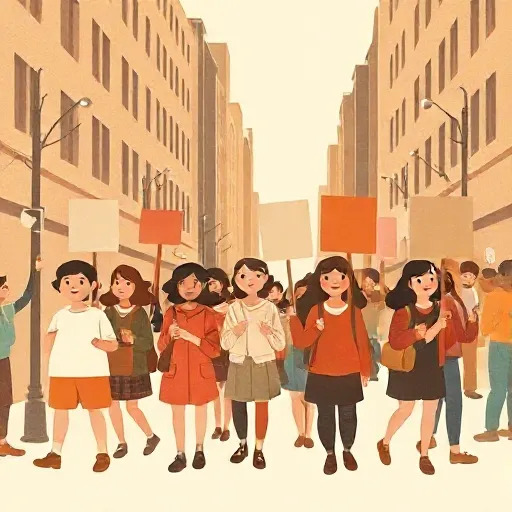
Marcuse did not believe we were trapped forever. He was convinced that the same society that represses also produces the seeds of liberation. The key is the Great Refusal — a deliberate, collective “no” to the entire performance principle. He saw it flicker in the student uprisings of the 1960s, in feminist movements, and in any group that rejected a life organised around profit, war, and consumption.
For real change to stick, Marcuse thought we would need a new sensibility: a reshaping of human drives so that love, pleasure, and cooperation are no longer pushed aside by aggression and competition. This meant reclaiming Eros — the life-building, creative drive — and letting it sit as an equal partner with Logos (reason). He even believed that qualities often labelled “feminine,” like care and receptivity, could be universalised to transform everyone, creating a gentler, more solidaristic world. The Great Refusal is not just about seizing power; it is about reimagining what it means to be human.
Why It Still Matters: Is Your Phone in Charge?

You might never have read Marcuse, but his question follows you around. When an algorithm guesses what you want before you do, are you still choosing? When a feed keeps you scrolling just comfortable enough to stay, has one-dimensional thinking found a new home? Marcuse is not telling you to smash your phone. He is asking you to ask: who benefits when I stay quiet, click, and nod? The Great Refusal can begin in small, private moments — in a painting that unsettles you, in a conversation that names an injustice, in the choice to say “no” when saying “yes” would be easier. The cage feels like a playground, but you now know it has bars.
Think about it
- If you had a comfortable life with everything you wanted, would you still have a reason to change an unfair system — and why might you not?
- Can art that makes you feel free actually help change the world, or does it just make an unfair world easier to live in?
- If an app knows your preferences so well that it decides for you, is it stealing your freedom, or just being helpful?