Could Your Mind Be Made of Matter? Margaret Cavendish’s Bold Idea
The Woman Who Said Matter Could Think

In 1664, Margaret Cavendish (1623–1673) mailed her book Philosophical Letters to scholars across Europe. One replied that she had spent a great deal of money to print it, and that her volumes would look wonderful on library shelves. He meant it as a compliment, but he didn’t say a word about her arguments. In a century when women were rarely taken seriously as thinkers, Cavendish was fighting to be heard — and she was about to defend one of the most startling ideas in philosophy: that every single thing in the universe, including your own mind, is made of matter.
Matter is the stuff you can touch, the stuff that takes up space. Most philosophers of Cavendish’s time thought matter was dead, stupid, and completely passive. The mind, they said, must be an immaterial soul — something without shape or size, something invisible and divine. Cavendish flatly rejected this picture. For her, nature is “completely material.” She called this view materialism: the thesis that there is no ghostly soul separate from the body. Instead, thoughts, sensations, and perceptions are activities of matter itself — not ordinary clay or wood, but a “purest, simplest, and subtlest” matter that can think.
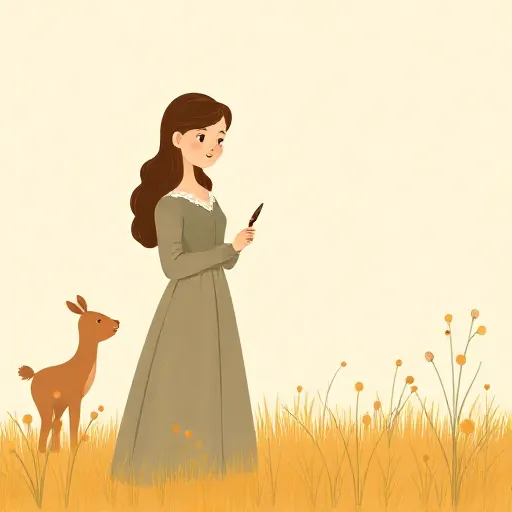
Cavendish came to these ideas without a university education. Born in Colchester, Essex, she learned by reading and by talking with her brother John, a scholar who would later help found the Royal Society. When she married William Cavendish, she joined a circle that included René Descartes, Thomas Hobbes, and other giants of the 1600s. She listened, she read, and she began writing. Without a large audience, she mailed her books to libraries and professors, hoping for serious debate. When replies came, they praised her courage — and ignored her arguments. So she had to fight back on her own terms.
Your Thoughts Have a Place, So They Must Be Material
Cavendish built her case with disarmingly simple questions. Think about where your thinking happens. “I would ask those, that say the Brain has neither sense, reason, nor self-motion, and therefore no Perception; but that all proceeds from an Immaterial Principle, and an Incorporeal Spirit, distinct from the body, which moveth and actuates corporeal matter; I would fain ask them, I say, where their Immaterial Ideas reside, in what part or place of the Body?” she wrote. If you are serious when you say “I thought about it in my head,” then your thought has a location. But only a body can have a place — an immaterial thing has no length, width, or depth, so it can’t be anywhere. Therefore, Cavendish concluded, ideas and minds are material.
She pushed the point further. When you take a coach from London to Oxford, your whole self — body and mind — travels. Yet an immaterial thing cannot move, because movement is a change of place, and only bodies have places. As Cavendish put it, “I cannot conceive how it is possible that the Soul, being incorporeal, can walk in the air, like a body.” If your mind truly goes with you, then it must be made of matter.
This reasoning also solved a famous puzzle: how can an immaterial soul push a physical body around? Cavendish held that nothing can touch or influence a body except another body. If your decision to raise your arm makes your arm go up, the decision itself must be a material event. She was not the first to use this interaction argument — versions go back to ancient thinkers — but she applied it with a force that her contemporaries could not easily dismiss.
She did not deny that God might be immaterial. But she insisted that natural reason cannot naturally know, perceive, or have any idea of an incorporeal being. The minds we talk about every day — the ones that wonder, remember, and choose — are the minds that move with us through the world. And those minds, Cavendish argued, are completely material.
Ants, Trees, and the Thinking Universe

If human brains are thinking matter, where does the thinking stop? Cavendish’s answer was stark: it doesn’t stop anywhere. She held that panpsychism is true — the view that some kind of mentality runs through every part of nature.
Look around, she said. Crocodiles build their nests higher or lower depending on how high the Nile will rise, as if they foresee the flood. Birds take shelter before a storm. Ants construct elaborate cities, care for their dead, and repair tiny damages. “They, being Wiser than Man, know Time is precious,” Cavendish wrote admiringly. If ants and birds behave intelligently, we should admit that intelligence isn’t just a human possession.
Then she turned to a deeper puzzle. A human brain thinks, but the brain is made of tiny parts — cells, fibers, what she called “elemental bodies.” If those tiny parts had no trace of mentality at all, how could they ever add up to a thinking whole? That, Cavendish said, would be magic. “I shall never be able to conceive how senseless and irrational atoms can produce sense and reason, or a sensible and rational body.” The only way a brain can think, she argued, is if its smallest components already have a kind of proto‑mentality — a faint, basic awareness. And since the bits that make up a brain are the same kind of stuff as the bits that make up a tree, a stone, or a drop of water, the whole universe is filled with perception and thought.
Cavendish even offered a striking image for the unconscious thinking that happens inside us. In a poem, she imagined “little small Fairies” living in the brain, quietly arranging our ideas in order while we sleep or talk. She didn’t believe in literal fairies; this was her way of saying that most of our mental life — digestion, heartbeat, the flow of words in a conversation — runs without our noticing. The bulk of nature’s intelligence is quiet, embodied, and everywhere.
A Ball Doesn’t Get a Push — It Gets a Message

If everything is thinking matter, how does one thing make another move? Cavendish gave a surprising answer: motion never really gets transferred from one body to another. Suppose you slide a bowl across a table with your hand. You feel like you are giving the bowl your motion. But if a property like motion could hop from your hand to the bowl, your hand would have to lose some of its own matter — and it doesn’t get smaller. “If it did,” Cavendish wrote, “the hand would in a short time become weak and useless.”
Instead, she proposed that when two bodies meet, they communicate. The hand acts as an occasional cause — it doesn’t inject motion into the bowl, but it gives the bowl a kind of signal. The bowl’s own matter, which is intelligent and perceptive, responds by moving itself in the appropriate way. All motion is self‑motion; a body never acquires new motion from the outside, but it can be prompted to rearrange the motions it already has.
This picture helped Cavendish explain why nature is so orderly. If bodies were dead lumps, they would need an outside boss — maybe a divine puppeteer — to keep them in line. But if matter is smart from the ground up, each part can coordinate with its neighbors. Perception works the same way: when you look at a tree, light doesn’t stamp a picture onto your eye. Instead, the sensitive matter in your eye patterns an image of the tree, using light as an occasion. The whole natural world, for Cavendish, is a web of bodies chatting with each other, never transferring motion, always responding.
When the Real World Won’t Listen, Build Your Own

Cavendish’s theory of occasional causation had a deeply personal side. Being heard as a philosopher depends not just on what you say, but on how your audience responds. In mid‑1600s England, the audience refused to take a woman’s ideas seriously. Cavendish had the talent, the drive, and the arguments — but the social world around her would not play along.
So she did something extraordinary: she wrote herself into a different world. In The Description of a New World, Called the Blazing World (1666), she created a fictional universe where a young woman becomes empress, debates philosophy with bear‑men, fish‑men, and worm‑men, and rules with wisdom and peace. “Though I cannot be Henry the Fifth,” she declared, “yet I will endeavour to be Margaret the First.” Imagination, for Cavendish, was not mere escapism. It was a way to exercise capacities that reality blocked, to keep alive a version of herself that had no room to exist in the plenum of 17th‑century society.
She thought imagination could also gradually change the real world. A vivid story can make strange ideas feel familiar, soften resistance, and plant seeds for new possibilities. Her own writing exposed the double standard that kept women from science, politics, and art — and she did it without a violent revolt, by letting readers step inside a world where the rules were different. That strategy, she believed, was more effective than insisting all at once that reality rearrange itself.
Beyond imagination, Cavendish’s political philosophy leaned toward stability and order. Like her contemporary Thomas Hobbes, she thought life without a strong government would be chaotic and unsafe, a “war of all against all.” She argued for rule by a single sovereign with absolute power — not because she loved kings, but because she feared that divided power would lead to faction, conflict, and ruin. Still, her view of power was shaped by occasional causation: a ruler can only succeed if subjects cooperate. Even the mightiest sovereign, she wrote, must send messages that people are willing to hear.
Why a 17th‑Century Materialist Still Matters

You might never have heard of Margaret Cavendish before today, but her ideas are everywhere in the arguments that scientists and philosophers are having right now.
First, she challenged us to explain how a physical brain can produce a conscious mind. If matter is dead and thoughtless, how does a rush of chemicals become a feeling of joy or a flash of memory? That puzzle — today called the hard problem of consciousness — has led some contemporary philosophers back to a version of panpsychism. They don’t say atoms have full‑blown thoughts, but they suspect that something like a very simple awareness might be built into the basic fabric of the universe. Cavendish was making the same sort of guess three and a half centuries ago.
Second, she saw that mental health is a bodily affair long before modern medicine connected mood to nutrition, brain injury, and old age. She insisted that if we really understood that minds are material, we would look for better, more systematic treatments for mental illness instead of dismissing it as a problem of weak will or sin.
Finally, her life story is a live reminder that being heard is not only about how loudly you speak. It’s also about whether the world has ears for your voice. Cavendish knew that the obstacles facing women — and anyone else shut out by prejudice — aren’t just inside the person. They are baked into the reactions, expectations, and habits of a whole society. She wrote alternative worlds to show that those obstacles are not necessary; they are choices we can slowly unmake.
Cavendish died in 1673 and was buried in Westminster Abbey. She never got the back‑and‑forth debate she craved. But she left her books on the shelf, hoping a future generation would pick them up and finally engage. That generation is ours.
Think about it
- If scientists someday prove that every thought is just a physical event in the brain, would that change how you think about your own choices — and should people still be held responsible for what they do?
- Cavendish built an imaginary world to live a life she couldn’t live in reality. When, if ever, is imagination a better tool for changing society than protest or direct action?
- If even tiny parts of matter had some kind of very simple awareness, would that change how you treat plants, insects, or everyday objects?