Do You Really Have a Choice? John Locke's Answer
The Locked Room and the Paralyzed Arm
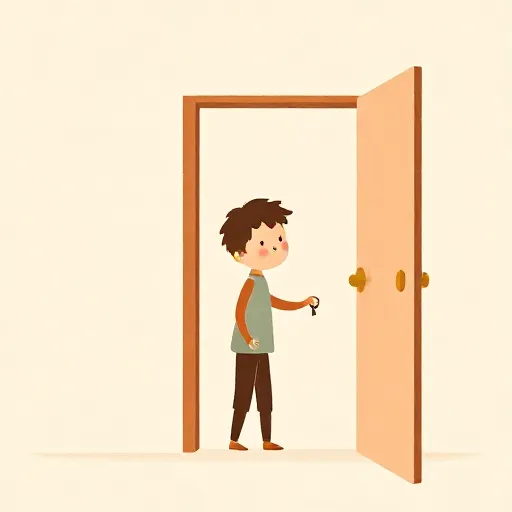
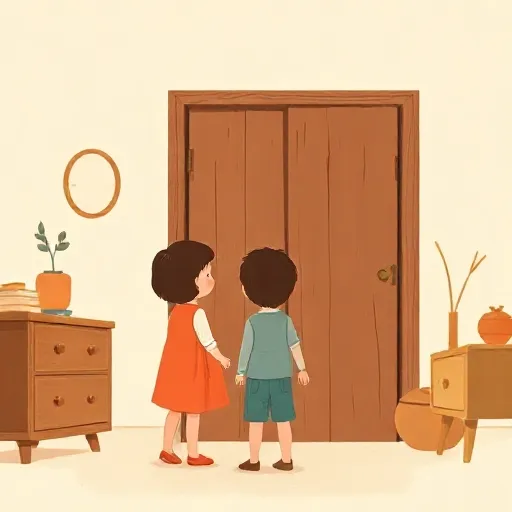
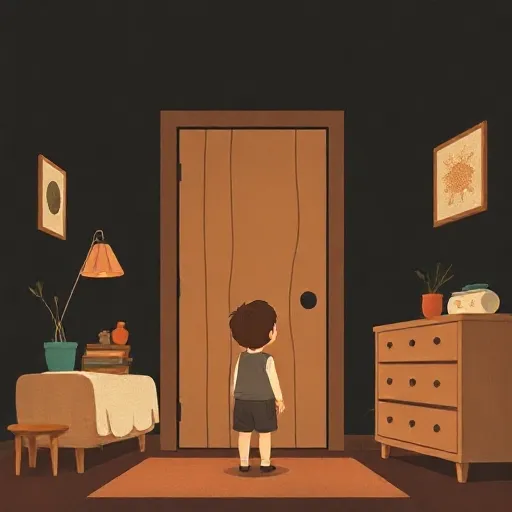
Imagine you’re locked in a room. You want to leave, but the door won’t budge. Now imagine your arm is paralyzed — you can think about raising it, but it stays limp no matter how hard you try. In both cases, something stops you from doing what you decide. But are you free in those moments? The English philosopher John Locke (1632–1704) spent a lot of time thinking about exactly that. He wanted to know what it means for a person to be free, and his answer still shapes how philosophers talk about choice today.
Locke noticed that freedom isn’t just about wanting something; it’s about having a certain kind of power. To understand that power, we first need to look at what he thought actions really are.
What Is an Action, Anyway?
You might think an action is something you do on purpose. But Locke took a more surprising view. He said that all actions are simply motions of the body or operations of the mind — like thinking. A convulsive twitch of your arm? That’s a motion, so Locke called it an action, even though it’s not something you control. A random thought popping into your head? That’s a mental operation, so it’s also an action. This is called the Deflationary view: actions aren’t defined by your intentions; they’re just movements or thoughts.
Locke added a twist. He also talked about forbearances — the absence of an action, like sitting still or not thinking about something. For him, a forbearance wasn’t always a deliberate choice; it was just the opposite of motion or thought. So when you don’t get up from your chair, that’s a forbearance, regardless of why you stay seated. This way of thinking let Locke draw a sharp line between doing and not doing, which mattered for his whole theory of freedom.
The Will: Commanding Your Body and Mind
Early in his career, Locke thought the will was just a power to feel more pleased with one thing than another — a bit like preferring chocolate ice cream over vanilla. But later he realized that doesn’t quite work. You might prefer flying over walking, but you can’t will yourself to fly if you know you don’t have wings. So Locke changed his mind. In his later writings, he described the will as a directive power, the ability to issue mental commands to your body or mind, like telling your arm to rise or your brain to stop humming a tune.
He called the specific act of willing a volition. A volition is when your mind tries to produce or stop an action that you believe is in your power. You can will to raise your arm if you think your arm is capable of moving. If you’re convinced it’s impossible, you can’t even form the volition. That idea — that a volition requires a belief in your own ability — was central to Locke’s picture.
Freedom: A Two-Way Power
So what is freedom? Locke said it’s not a property of the will itself — it’s a power that a person has. Specifically, a person is free with respect to some action A if two things are true: (1) if she wills to do A, she can do it; and (2) if she wills to forbear doing A, she can forbear doing it. That’s why Locke described freedom as a “two-way power”: you can go either direction, depending on what you command yourself to do.
Notice that this has nothing directly to do with whether your action is voluntary (caused by a volition) or involuntary. You could be paralyzed and still voluntarily stay still, but you wouldn’t be free to move. Or someone could gently lift your arm without your volition, and you’d be unfree with respect to that arm motion even though the motion happened. The locked room example shows the point beautifully: if the door is unlocked, you’re free with respect to leaving — you can stay or go as you will. If the door is locked, you’re not free, regardless of how much you want to leave.
Locke thought the question “Is the will free?” was absurd. Powers (like the power to will) can’t themselves have powers (like freedom), just as you can’t ask if your “Sleep be Swift, or his Vertue square”. It’s a category mistake. Instead, the real questions are whether a person is free with respect to willing something.
What Determines What You Will?

If you’re free to do what you will, what causes you to will one thing rather than another? Locke’s answer changed over time. Originally he thought we’re always pulled by what seems like the greatest good — the promise of future pleasure. But his friend William Molyneux pointed out a big problem: people often make terrible choices even when they know better. A drunkard sees that drinking will ruin his health, yet he still goes to the tavern. That isn’t just ignorance; it’s something deeper.
So Locke replaced his early view with a psychology of uneasiness — a word he used for any kind of bodily pain or mental discomfort. In his later work, he argued that what actually determines (causes) your will is the most pressing uneasiness you feel at the moment. A gnawing desire, a sharp toothache, a restless boredom — those are the forces that push you into action, not a calm calculation of long-term happiness. This explained why we sometimes act against our own better judgment.
But here’s where Locke added a crucial twist: he believed we have the power of suspension. That means you can pause before your most urgent desire pulls you into action. You can step back, examine your options, and choose whether to go along with that uneasiness or not. This power to delay, Locke said, is the “source of all liberty” and what makes us responsible for our choices. You might feel a craving to break a promise, but you can stop and think about whether that action really leads to your long-term good. If you don’t use that power, you’re blameworthy — not because you lacked knowledge, but because you rushed headlong into a desire without reflection.
Why This Still Matters
Locke’s ideas planted a seed for a huge modern debate: compatibilism. Compatibilism says that free will is compatible with the world being fully determined by physical laws, like a giant chain of dominoes. Locke himself seems to lean that way. He thought that even if every act of willing is determined by some uneasiness, you can still be free as long as you have the two-way power to do or forbear according to your will. The locked door makes you unfree, not the fact that your brain states cause your choices.
This matters because it affects how we think about praise, blame, and punishment. If a scientist could predict every choice you’ll ever make, would it still make sense to hold you responsible for those choices? Locke’s answer is that it can, if you had the chance to pause and examine your desires. The power of suspension gives your freedom its moral bite. Next time you’re torn between checking your phone and finishing your homework, you’re in the middle of Locke’s philosophy — deciding whether to let the most pressing uneasiness win, or to step back and command yourself differently.
Think about it
- If a supercomputer could predict every decision you’ll make a week before you make it, are you still free when you actually choose? Why or why not?
- Suppose you do something wrong but you honestly felt an overwhelming urge you couldn’t resist. Should other people still hold you responsible, even if you didn’t feel free in that moment? Where should the line be drawn?
- Can you think of a time when you hit “pause” on a strong desire and ended up making a better choice? What exactly did that pause let you do, and does it prove you have the power of suspension?