When the King Fled, a Dangerous Idea Took Over Latin America
A Kingdom Without a King
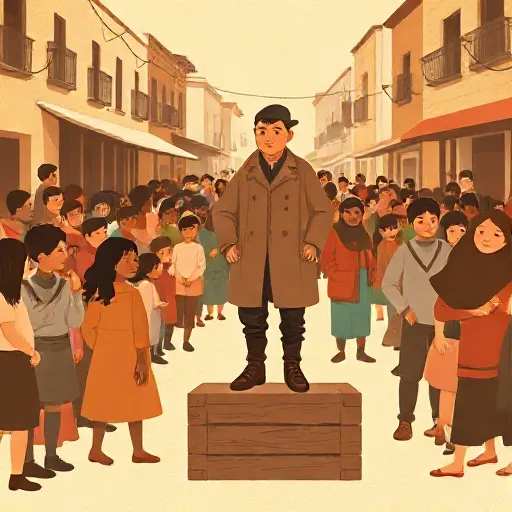
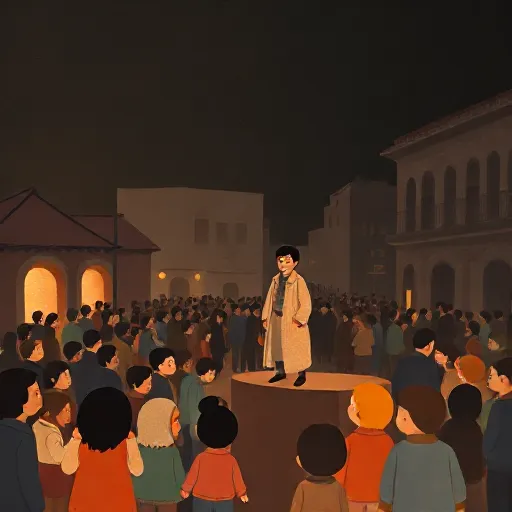
In 1808 French armies invaded Spain and took the Spanish king prisoner. Across the Atlantic Ocean, from Mexico to Argentina, people woke up to a startling fact: there was no king. For three centuries the monarchy had told them exactly who was in charge. Now the answer was gone.
Suddenly, everyone asked the same question. If there is no king, who gets to rule?
Some looked backward. An old Spanish idea said the king’s power came from a pact with the people. If the king vanished, the people’s right to rule returned, at least for a while. But a far more dangerous answer was already arriving on ships from Europe. A set of ideas called liberalism taught that power does not come from a crown or from the past. It comes from the people themselves — all the time, not just during an emergency.
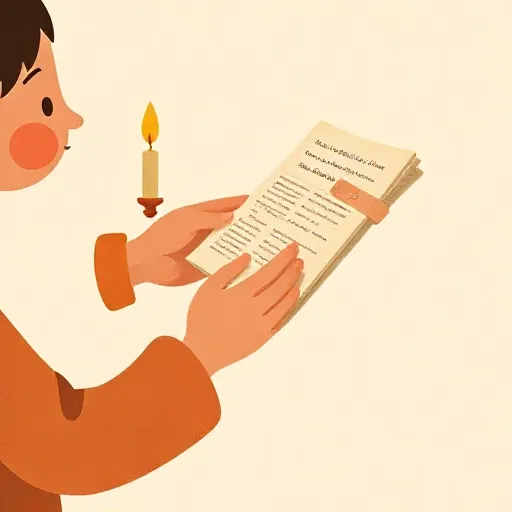
The first big shipment of these ideas was a document: the Cádiz Constitution of 1812. It had been written by Spanish liberals fighting the French invasion. The constitution said the nation is sovereign, not a king. It promised individual rights, freedom of thought, freedom of the press, and a government divided into branches so no single person could grab all the power. To most people in Latin America, this was like a locked door suddenly swinging open. The Spanish and Portuguese Inquisitions had long banned free thinking and free books. Now, for the first time, modern political ideas could travel openly.
The Cádiz constitution carried the DNA of the French Revolution. It borrowed popular sovereignty — the idea that the people, not a monarch, hold the highest authority. It insisted on civil equality: the law should treat everyone the same, without special favors for nobles or the Church. It also demanded a separation of powers so that the body that writes laws, the body that enforces them, and the courts that judge them stay apart. These principles were electric. They promised a world turned upside down.
But that constitution was only in force for two years before the Spanish king returned and crushed it. The spark, however, had already jumped. In Latin America, people began to imagine countries built on freedom, not on a distant throne.
Two Revolutions, Two Paths
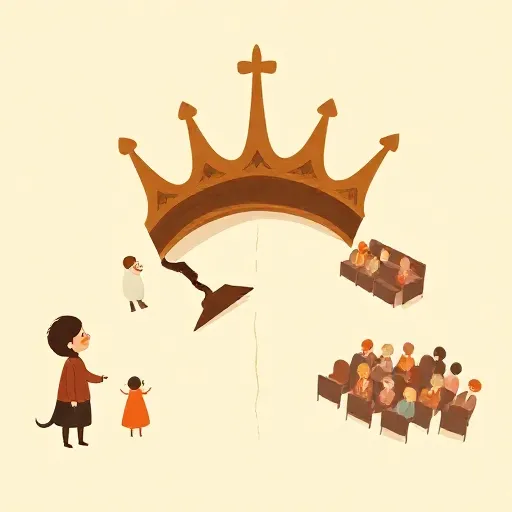
Latin America soon split into two great experiments. In Spanish-speaking America, the king’s disappearance triggered wars that lasted nearly two decades. Colonies fought Spain and won their independence one by one. The old monarchies were thrown out. Republics took their place — governments without a king, where leaders are elected.
The new republics did not want to be a slightly better version of the past. They wanted a clean break. Because they could not pretend their constitutions grew from old Spanish traditions, they looked only forward. They called themselves “the party of progress.” Early on, they abolished noble titles and, in most places, slavery. They built a system of individual rights and voting. But almost all liberal leaders added a hard limit: only men who owned property or could read were allowed to vote. They feared that uneducated masses, raised under colonial rule, were not yet ready for real citizenship. Liberty was for everyone in theory, but in practice the door stayed half shut.
Brazil took a completely different road. When Napoleon invaded, the Portuguese royal family escaped to Brazil and moved the whole empire there. Stability survived. Years later, the prince declared Brazil independent without a bloody war — and he stayed as emperor. Brazilian liberals never tried to erase the monarchy. Instead they fought to cage it with a parliament. They wanted a representative monarchy, one in which the king shared power with an elected legislature. The struggle was not people versus crown; it was whether the crown or the legislature would have the final word.
So two liberalisms grew side by side. One shouted “never again a king.” The other whispered “a king, but a limited one.” Each believed it was building a society of free individuals. But both soon discovered that freedom had an enemy inside their own borders — an enemy that was not a foreign empire.
The Church Becomes a Battlefield
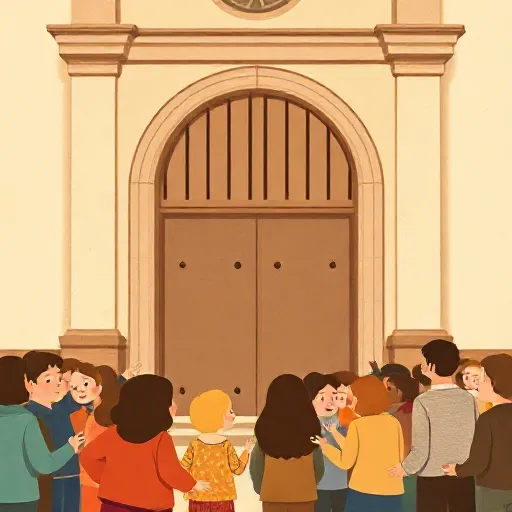
By the middle of the 1800s, the main fight in Spanish America was no longer against Spain. It was against the Catholic Church.
The Church was enormous. In places like Mexico and Colombia it owned more land and money than almost anyone else. It ran schools, controlled records of births and deaths, and held legal privileges that ordinary citizens did not have. When liberals demanded freedom of worship, the freedom to publish any opinion, and the end of the Church’s special legal shield, the Church pushed back hard. In 1864 Pope Pius IX issued a list of “errors” that condemned liberalism, religious toleration, and freedom of thought. The message from Rome was unmistakable: these new ideas were evil.
Conservatives — the liberals’ main opponents — often sided with the Church. Not always out of deep faith, but because they saw the Church as a heavy anchor of social order. In Chile, the conservative 1833 Constitution even made Catholicism the only allowed religion. Keeping the Church happy seemed like a way to keep the country from spinning apart.
Mexican liberal José María Luis Mora (1794–1850) was a priest himself, yet he became the voice of an uncompromising anticlericalism. Mora argued that a church that can grab political power corrupts itself and poisons the republic. He insisted on the “absolute” freedom of thought, because fallible human beings can only find truth by free discussion, never by censorship. He wanted the state to strip the Church of its wealth and its legal privileges, leave it free to tend to souls, but forbid it from controlling laws or schools. He wrote that religious beliefs are man’s most sacred property considered as an individual. The trouble began, Mora believed, the moment the Church used force instead of faith.
Mora’s ideas helped shape the fierce Reform Laws in Mexico during the 1850s and 1860s. Many nations, from Colombia to Venezuela to Chile, eventually passed similar measures: civil marriage, public schools free from Church control, cemeteries open to everyone regardless of creed. The process was often bloody. Where the Church was strongest, the reforms felt like a civil war fought with ink, laws, and sometimes swords.
But the deeper question was never just about a single institution. It was this: when you strip away old authorities, what do you put in their place to keep a society from flying into chaos?
Progress, Science, and a New Faith
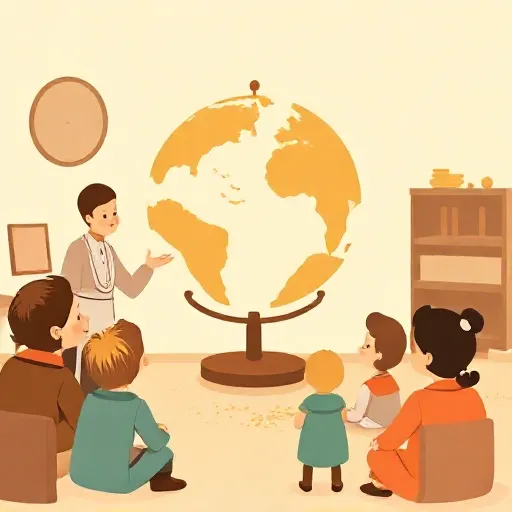
In the late 1800s, many liberals found their answer in positivism, a way of thinking that came from France. Positivism said that human societies, like plants or planets, follow laws that can be discovered by observation and science. Its founder, Auguste Comte, promised that you could have both order and progress at the same time — a cure for decades of civil war and instability.
Chilean thinker José Victorino Lastarria (1817–1888) soaked up these ideas but refused to let go of individual freedom. He believed society moves through stages: first a rule of priests and kings, then a confused stage of abstract debate, and finally a “positive” stage built on liberty and self‑government. For Lastarria, freedom was the engine of progress. A person had the right to think, to work, to own property, to worship any faith — or none. The state should protect these freedoms and, crucially, stay out of religion. True liberty, he argued, needed a government that refused to push any single set of beliefs.
But the same positivist toolkit could be wielded for a very different goal. In Mexico, a group of positivist intellectuals known as “the scientists” used the language of science to justify a strong‑fisted government. If society is an organism, they reasoned, then a wise elite must run it the way a doctor treats a body — even if that means ignoring votes and crushing dissent. Liberty became secondary to order. Brazil’s transition to a republic in 1889, backed by a military coup, was drenched in positivist slogans; reformers there wanted a modern state built by experts, not by the messy noise of democracy.
Thus the same philosophy that inspired radical freedom in one place became a license for dictatorship next door. Latin America’s liberalisms were never a single, stable thing. They were a series of arguments, fought with ideas that morphed as soon as they touched local ground.
Did It All Go Wrong?

By the early twentieth century, a gloomy verdict spread across the region. Liberalism, critics said, had failed. The new republics were unstable; strongmen and dictators kept appearing; the promised equality remained a paper promise. The most common explanation was that liberal ideas were a foreign transplant. They were born in France, Britain, and the United States — places with very different histories — and had been forced onto Latin American soil that simply could not nourish them.
This “failure view” lasted for most of the 1900s. It carried a quiet, bitter implication: maybe Latin America was not ready for freedom. Maybe its colonial past had left habits too deep to change. Critics on the left and right agreed on the diagnosis, even if they prescribed different medicines.
Recent scholars, however, have pushed back hard. They argue that nineteenth‑century liberals were not just clumsy imitators copying European models. They were thinkers who faced real, urgent problems — a powerful Church, staggering inequality, vast territories without roads or schools — and who tried to patch together solutions with the tools they had. Looking only for “influences” misses the creativity and the sincerity of their work. This newer approach asks: what did people like Mora or Alberdi actually mean when they called themselves liberals? And how did their ideas change as they collided with real life?
The debate is far from settled. But it raises a live question for anyone, anywhere: can a set of ideas cross an ocean and put down roots, or do ideas always need to be remade by the people who use them?
Why a 200‑Year‑Old Quarrel Still Matters
You might never have to build a republic from scratch, but you already live inside the argument that Latin American liberals started. Whenever a society debates whether to separate church and state, or whether people’s rights are natural or just legal inventions, or whether foreign ideas can be trusted in local soil — those are the same questions that exploded two hundred years ago.
Today, in many Latin American countries, you can hear liberal voices again. They speak for the rights of minorities, for the pluralism of different ways of life, and for a government that treats all citizens equally without favoring one religion. Philosophers like John Rawls are studied in universities across the continent. But most of this new conversation has not yet been stitched together with the older, homegrown liberal tradition. History and philosophy still rarely talk to each other.
The next time you hear someone say “that idea doesn’t fit our culture,” you will know that the argument is not new. It is part of a long, still‑unfinished struggle to figure out how freedom can grow in every kind of soil. The early Latin American liberals never reached a final answer. But they asked the question loudly enough that we are still trying to reply.
Think about it
- If you were designing a government for a brand‑new country, would you copy a model from a nation you admire exactly, or would you change it to fit your own traditions — even if that meant less freedom at first?
- The Church said it protected moral order; liberals said it blocked freedom. Can a powerful institution ever be both a protector of tradition and an enemy of progress?
- If you believe in an idea, and it keeps failing every time you try it out, does that mean the idea is bad, or does it mean you need to change something else before you try again?