When a Book Was Burned in Chile: Can Philosophy Be Too Dangerous?
The Bonfire in the Plaza
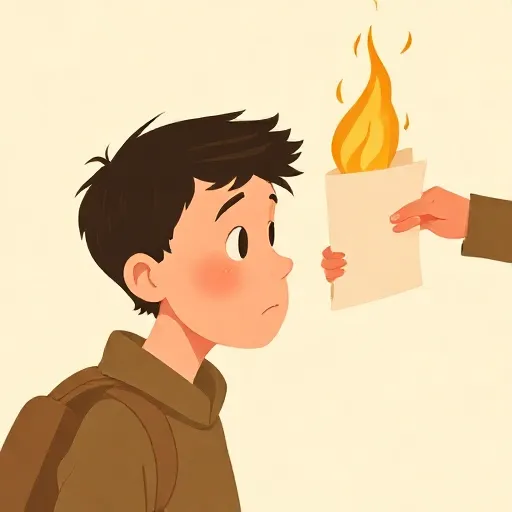
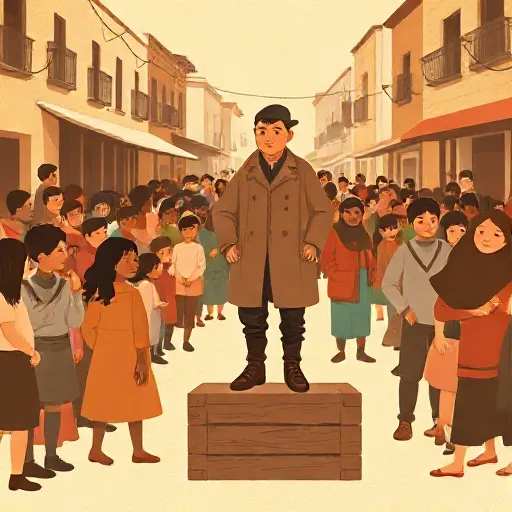
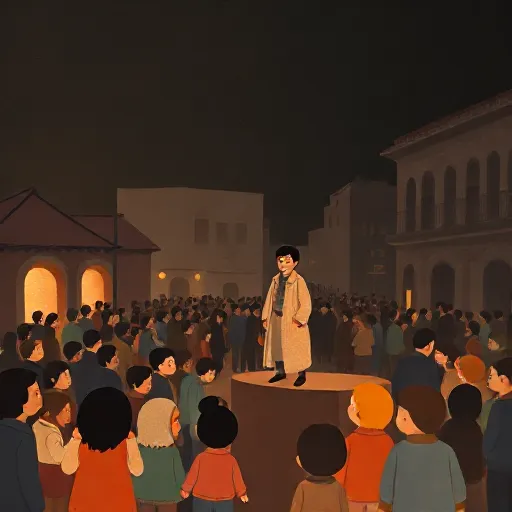
It was 1844 in Santiago, Chile. A crowd gathered as a soldier set fire to a stack of pamphlets. The author, a young writer named Francisco Bilbao, had dared to attack the Catholic Church’s power over Chilean society. The authorities declared his work blasphemous and immoral — too dangerous to be read. Ashes drifted over the cobblestones. Why would a country burn a book about ideas? In Chile, philosophy was never just a private affair. Because the state and the Church were tightly linked, what you thought could be treated as a threat. This story traces how Chilean thinkers navigated that pressure for over a century, asking a question that still matters: what should philosophy be for?
God, Country, and the Classroom: The Early Rules
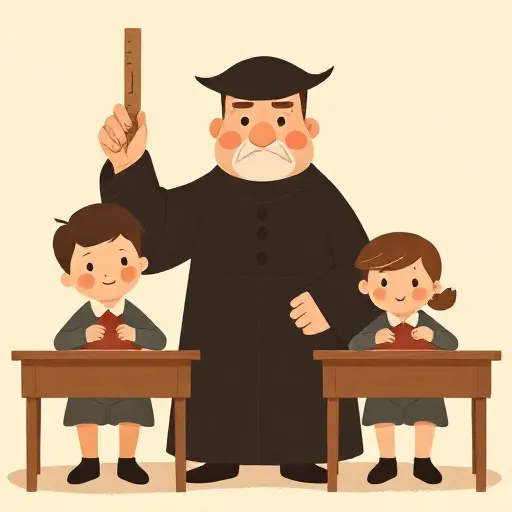
After Chile won independence from Spain in 1818, the new republic kept Catholicism as its official religion. Every school and university had to make sure its teaching lined up with Church doctrine. Most philosophers were believers, so this limit didn’t always feel like a cage. But when they taught thinkers like David Hume, who questioned miracles, they had to strip away his most skeptical edges. Philosophy was packaged in textbooks approved by both the government and the Church.
Andrés Bello (1781–1865) navigated this tightrope with great care. He crafted the statutes of the University of Chile and served as its rector for 23 years. His major work, Filosofía del entendimiento, explored how human beings acquire ideas, mixing psychology (the study of the mind) and logic. Bello engaged with John Locke and George Berkeley seriously but never questioned the importance of religion. He believed philosophy could guide action without toppling faith.
Others wanted no such balance. Ramón Briseño (1814–1910) wrote a textbook that became the most widely used in Chile. He argued that a person’s highest duty was to practice religion, and that any philosophy not leading to Christian conclusions was dangerous and false. Bello objected — not to the religious aim, but to how Briseño treated logic. Briseño limited logic to deductive logic (reasoning from general rules to specific cases), ignoring other forms of reasoning. This looks like a tiny classroom quarrel, but it reveals a deeper tug-of-war: must philosophy serve religion, or can it move on its own ground while staying friendly to faith?
Science as a Sledgehammer: Positivism Arrives
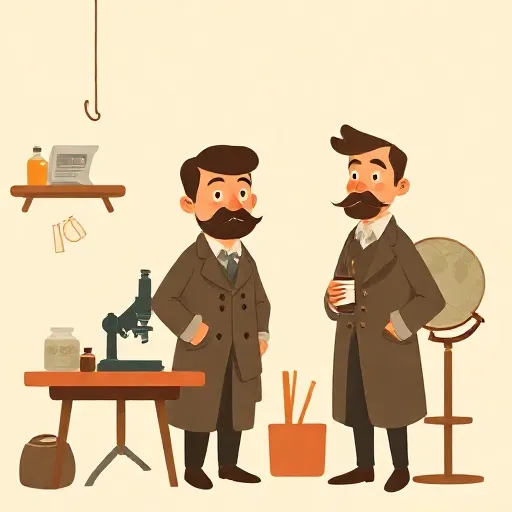
By the 1860s, many Chileans wanted to weaken the Church’s grip. They found a mighty weapon in a new philosophy from France — positivism. Its founder, Auguste Comte, taught that human knowledge passes through three stages: the theological (explaining things by God), the metaphysical (abstract principles), and the scientific (facts and laws). Only science delivered certainty. In politics, this meant that to become modern, Chile had to leave religious influence behind.
José Victorino Lastarria (1817–1888), once a liberal, abandoned his earlier ideals as too abstract. Science, he now argued, could solve Chile’s problems in the most effective way. The energy of positivism poured into education. Valentín Letelier (1852–1919) wrote Filosofía de la educación, insisting that theological and metaphysical thinking had failed to unite the country. In 1893, he reshaped the school curriculum. Logic, understood as the tool of scientific method, replaced courses in ethics and theodicy (the attempt to justify God’s ways to humans). Experimental psychology gained ground. Philosophy became more like a science itself. Another thinker, Juan Serapio Lois, published a rigorous positivist logic textbook, applying logical analysis to many branches of science. Philosophy was now firmly tied to the promise of progress — and less afraid to push the Church aside.
A Rebellion of the Spirit: Metaphysics Strikes Back

Not everyone celebrated the scientific turn. Enrique Molina (1871–1964) had trained at the positivist-inspired Pedagogical Institute. But after reading William James and Henri Bergson, he began to feel that science and technology had not advanced human happiness. In his most important book, De lo espiritual en la vida humana (1937), he claimed that philosophy should center on the life of the spirit — not in a religious sense, but as a higher realm of values. He built a hierarchy of values where spiritual concerns sat above material ones.
Molina also saw Marxism as another dangerous materialism. As a rector who founded the University of Concepción, he worked to install metaphysics — the study of what is ultimately real — at the top of philosophy’s pecking order. Other thinkers followed. Jorge Millas (1917–1982) insisted in Idea de la individualidad (1943) that individual liberty was the highest stage of human existence, beyond social and political noise. A consensus formed: philosophy should be a specialized, autonomous field. Philosophers had journals, international conferences, and university positions. But they drew a strong line between their academic work and the political storms outside.
The Philosopher on the Sidelines — or in the Fight?

In the 1950s and 1960s, this professional model thrived. Yet a logician named Juan Rivano (1926–2015) grew fed up. He criticized his colleagues for using key concepts loosely and for working at a level of abstraction that ignored Chile’s real problems. Rivano plunged into the study of Hegel and Marx. In books like Entre Hegel y Marx (1962), he argued that philosophy must critique social and economic conditions — that staying safely inside the university was a betrayal.
Jorge Millas fired back. In El desafío espiritual de la sociedad de masas (1962), he warned that mass society threatened the life of the spirit. For Millas, the university was a refuge where thinkers could protect higher values from the noise of politics. The debate grew fierce as student enrollments swelled and left-wing parties gained strength. Philosophy classes were interrupted, the Revista de Filosofía stopped publishing in 1970, and the community split over the question: should thinkers stay in their ivory towers, or throw themselves into the fight?
When the Generals Took Over Philosophy
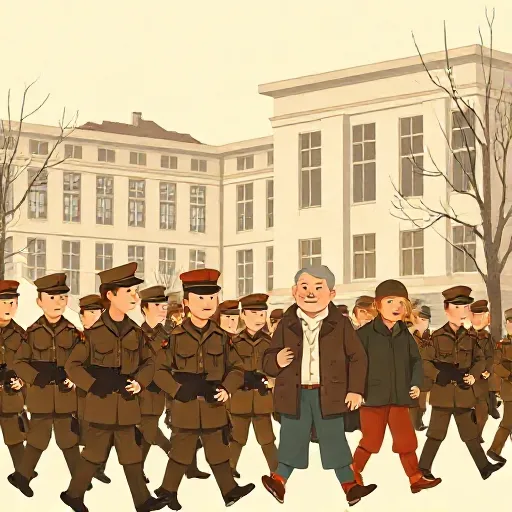
The military coup of September 11, 1973, crushed that debate with force. The regime appointed military rectors, closed faculties, and purged professors seen as dissidents. The philosophy department at the University of Chile was hit especially hard. Juan Rivano was arrested and sent into exile. Others were simply dismissed.
Jorge Millas had initially hoped the military might create his ideal of a university devoted to pure reason. By 1976, his hopes were ash. He publicly declared that the university had become an institution “under surveillance.” Co-writing La violencia y sus máscaras with the critic Edison Otero, he kept arguing for reason and reflection. His final book, Idea de la Universidad (1981), was a sharp critique of military control. Silenced and ill, he died at age 65. Other philosophers lowered their voices or worked quietly, but the climate of repression smothered the free inquiry they believed philosophy needed.
A surprising change grew from the dictatorship: philosophers who had once shunned politics now embraced democratic values. Many moved to independent research centers and began talking with scholars from other fields. The old wall between philosophy and public life began to crumble. Chilean thinkers learned the hard way that you cannot seal ideas off from power — that the question of what philosophy is for is never just academic.
Why a 19th-Century Book Burning Still Matters for You
The Chilean story is extreme, but its core question is yours. What should thinking be for? If your school taught only what is useful for science and jobs, what would you lose? Should a thinker stay out of politics and keep ideas pure, or jump into the mess and push for change? When Francisco Bilbao’s book burned, the authorities understood something true: ideas have power. Every time you study a subject, you face a version of the same choice that Chilean philosophers wrestled with for a century — are you learning just to pass a test, or to think about what really matters? That question hasn’t stopped burning.
Think about it
- If your school could teach only one of these for a whole year — science, ethics, or religion — which would you pick, and what might you lose by leaving out the others?
- Should a country’s government ever be allowed to decide what ideas get taught in a philosophy class? Why or why not?
- Is it better for a thinker to stay out of politics and focus on pure ideas, or to use their ideas to try to change society? What might be risked either way?