The King Is Dead; Long Live the King! What That Really Means
The King’s Two Bodies: A Death That Didn’t Stop the Kingdom
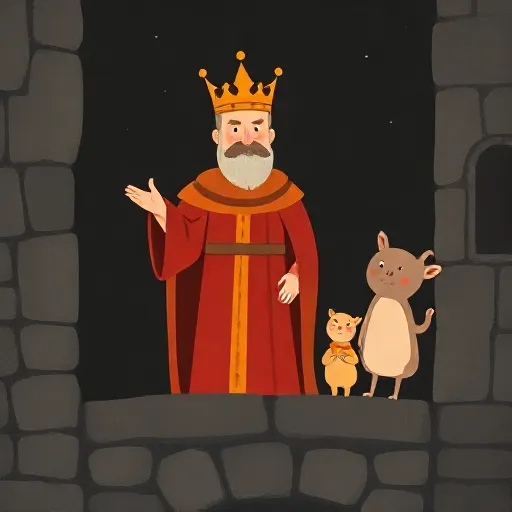
Imagine you live in a medieval kingdom. The old king dies. Everyone knows he is gone, yet someone shouts, “The king is dead; long live the king!” It sounds like a trick, but it wasn’t. People truly believed the king had two bodies: a mortal one that got sick and died, and a mystical one that never died—the body politic. That second body held the dignity and justice of the whole kingdom. It lived on in the crown, the laws, and the territory.
This strange idea didn’t just belong to fairy tales. Historian Ernest Kantorowicz showed how it grew out of a medieval way of thinking about the church as a social body that outlived any single person. Once that thought took hold, rulers could claim that their authority didn’t belong to them as humans, but to something bigger that lasted forever. That something is the starting point for one of the most powerful concepts in modern politics: sovereignty.
The Three Ingredients of Sovereignty: Authority, Supremacy, Territory
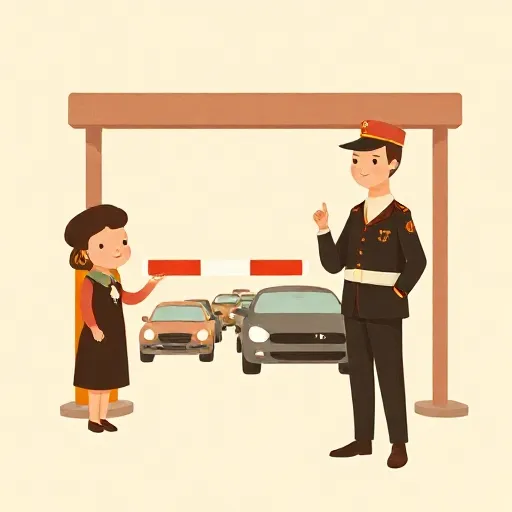
At its simplest, sovereignty means supreme authority within a territory. Every piece of that definition matters. Let’s pull it apart.
First, authority. This is not just the power to force people to do something. If a big kid steals your lunch, he has power, but he doesn’t have a right to your lunch. Authority is different: it’s the right to make rules and expect you to obey them. Philosopher R.P. Wolff (1933– ) put it this way: authority is “the right to command and correlatively the right to be obeyed.” A sovereign doesn’t just boss people around with threats; people generally accept that the sovereign’s commands are legitimate—because of a constitution, a tradition, or some other shared source.
Second, supremacy. Supreme means “highest.” Inside a sovereign state, nobody outranks the sovereign. Your school principal has authority, but she answers to a school board. The board answers to state law. The government of a state answers to the national government. So who does the national government answer to? The sovereign—whoever or whatever holds the final word inside the country. Before modern times, authority was often a messy patchwork: a pope had some religious authority over kings, a local duke owed loyalty to an emperor but also ran his own land. Sovereignty wiped that slate clean: exactly one authority sits at the top.
Third, territory. Sovereignty is tied to a piece of land with borders. What makes you a member of a state today is mostly where you live, not your religion, your family, or your tribal ties. If you are born inside a country’s borders, you almost certainly fall under its sovereign’s rules—even if you feel more connected to a different people across the border. This seems so normal that it’s hard to see how new it is. For much of history, a wandering tribe’s authority moved with the tribe, not with a piece of ground. Sovereignty nailed authority to a map, like private property nails ownership to a fence.
How Europe Built a World of Borders: The Peace of Westphalia
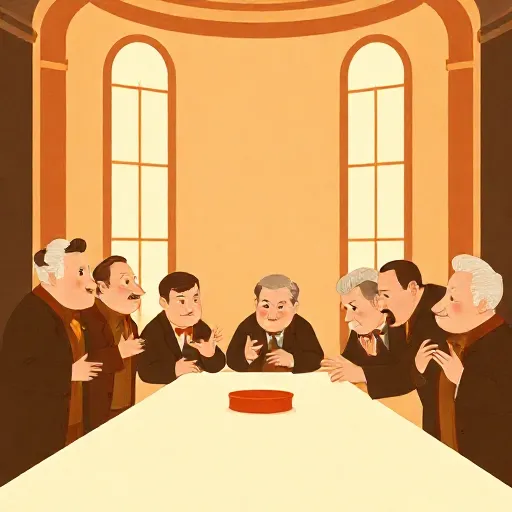
For centuries, Europe was a jumble of overlapping rulers. A king might claim a region, but a bishop held special courts there, and the Holy Roman Emperor had his own claims, and the pope could excommunicate the king and encourage a rebellion. There was no single, supreme authority in any one patch of land.
That began to change dramatically when Martin Luther (1483–1546) and other reformers challenged the power of the Catholic Church. They argued that the church should not hold land, tax people, or run courts—those were civil matters. The territorial prince should handle them alone. In Luther’s vision, God gave two realms: a spiritual one for the church and a worldly one for government. That put princes in the driver’s seat of almost everything on earth.
The new idea boiled over into more than a century of religious wars. Finally, in 1648, a series of treaties known as the Peace of Westphalia drew a line under the chaos. The treaties didn’t invent sovereign states out of thin air, but they locked in two game-changing practices. First, states became the only real constitutional authorities in Europe; no pope or emperor could seriously overrule a prince inside his own territory. Pope Innocent X furiously condemned the peace as “null, void, invalid, iniquitous, unjust, damnable,” but his words carried no weight. Second, the old habit of intervening in another ruler’s religious affairs became deeply suspect. The formula cuius regio, eius religio—whose realm, his religion—meant that within your borders, you decided the official faith. Over the next three centuries, this non-interference norm spread across the globe, until the entire land surface of the earth was divided into sovereign states.
Some scholars today argue that Westphalia wasn’t such a clean break, and that medieval-style overlapping authority stuck around for a long time. But the basic model caught on: a world of self-contained territories, each with its own supreme boss.
The King Above the Law: Bodin and Hobbes Argue for Absolute Power
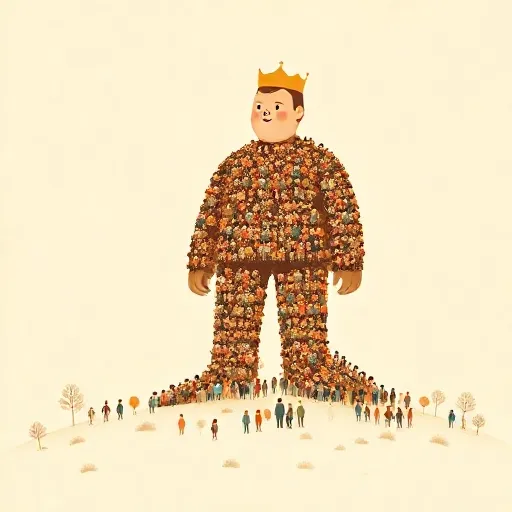
Two thinkers from the age of religious civil wars gave sovereignty its most hard-headed form. French philosopher Jean Bodin (c. 1529–1596) wrote during a gruesome conflict between Catholics and Calvinists. He was convinced that a fractured society could only be stitched back together by one supreme authority—a sovereign. In his 1576 book De la république, he argued that the sovereign is the source of all human law and cannot be judged by any human court. Notice the word “human”: Bodin still thought the sovereign had to obey natural law and divine law, and should respect property and custom. But no law made by people could tie the sovereign’s hands.
A few decades later, English philosopher Thomas Hobbes (1588–1679) went even further, painting a terrifying picture of life without a sovereign. In a “state of nature” without government, he wrote, people would live in constant fear and violence. To escape that misery, they make a contract: they hand over all their rights to a single mighty ruler, the Leviathan, a “mortal god.” This Leviathan—whether a king or an assembly—held supreme authority, unmade by any constitution or contract with any outside party. Law was simply the command of the sovereign. To Hobbes, absolute sovereignty was the only thing standing between civilization and chaos.
Both Bodin and Hobbes pressed the idea to its logical extreme: the sovereign is above ordinary law. That line of thought didn’t disappear. In 1922, German jurist Carl Schmitt (1888–1985) opened a book with the words, “Sovereign is he who decides on the exception.” Schmitt meant that in a genuine emergency, the one who can suspend the normal rules and act to save the state is the real sovereign—constitutions be damned. His ideas would later serve a brutal regime he supported, showing just how dangerous an untamed sovereign can be.
Taming the Beast: Human Rights, Europe, and the Critics
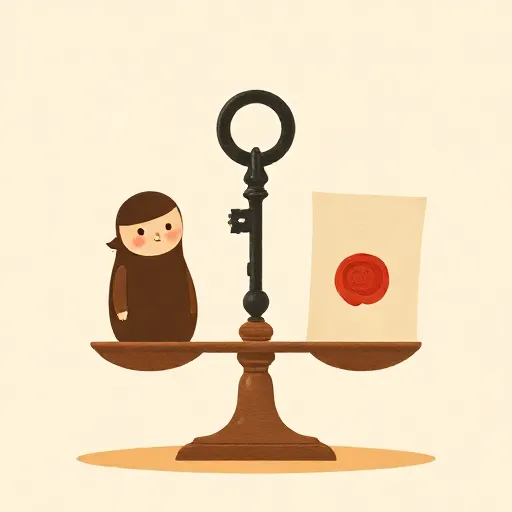
The 20th century delivered a brutal lesson about absolute sovereignty. After the Holocaust, no one could ignore what happens when a state is answerable to nobody. The response came in two major forms: human rights law and shared institutions that chip away at a state’s ability to do whatever it wants inside its own borders.
In 1948, the United Nations adopted the Universal Declaration of Human Rights. It wasn’t legally binding, but it planted a flag: a state’s treatment of its own people was no longer a purely internal affair. Over the decades, more muscular agreements followed—the European Convention on Human Rights, the Genocide Convention, and international covenants on civil, political, economic, and cultural rights. These placed real, if often mild, limits on sovereignty.
After the Cold War, a more radical step arrived: humanitarian intervention. In the 1990s, the U.N. and other bodies authorized military action to stop mass suffering inside sovereign states—in Bosnia, Somalia, Kosovo, and elsewhere. A 2001 report called The Responsibility to Protect argued openly that sovereignty includes a state’s duty to protect its own citizens, and that if a state fails in that duty, outside powers may step in. This turns absolute sovereignty into conditional sovereignty.
At the same time, Europe launched an experiment that would have stunned Bodin. Starting in 1950, a handful of countries pooled control over coal, steel, trade, currencies, and eventually far more into a supranational body—the European Union. In the EU, a member state is still sovereign in many areas, but it is not absolutely sovereign; it shares its power with a permanent bureaucracy, a court, a parliament, and a council of ministers. The EU can overrule a member’s own laws on certain matters. As one scholar put it, the EU “pools” sovereignty rather than abolishing it.
Philosophers had been warning about absolute sovereignty long before these institutions existed. French thinker Bertrand de Jouvenel (1903–1987) called the idea itself dangerous because it creates a ruler whose will is above all rules. He hoped shared moral beliefs among citizens could keep sovereign choices in check. His fellow Frenchman Jacques Maritain (1882–1973) went further: he argued that the whole concept of sovereignty is intrinsically wrong. In his view, transferring the authority of a community permanently to a single entity—a king, a party, or even “the people”—is idolatry. A government should be accountable to natural law and to the people it represents, not a transcendent power over them. These critics give philosophical weight to the modern push to put limits on sovereignty.
The Crown That Lives On: Why Sovereignty Still Shapes Your World
You were probably born into a sovereign state. Its borders wrap around you, its laws say what you must do and what you may not do, and its government claims the last word inside those lines. That’s the legacy of the king’s two bodies, Westphalia, Bodin, and Hobbes.
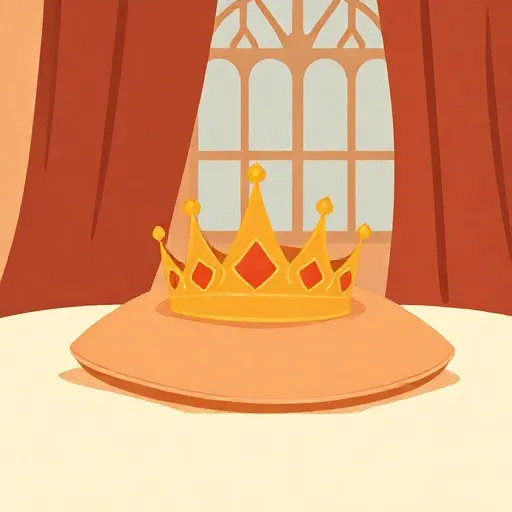
But you also live in a world where sovereignty is not always the last word anymore. An international court can try a former head of state for war crimes. A United Nations resolution can authorize outside soldiers to protect civilians. The European Union can tell a member country to change its budget. Human rights watchdogs can embarrass a government on the world stage. The crown still sits on the cushion, but more hands than ever reach for it.
That raises questions you can feel in your own life. When you disagree with a law, do you owe it your obedience simply because it comes from a sovereign authority? If a government harms its own people, should outsiders stay silent because of borders? And if absolute sovereignty can be so dangerous, what should take its place—a web of treaties, a world parliament, or something else nobody has yet invented? The debate that Bodin and Maritain fought is far from over. Every time you hear about a border wall, a war, a human rights ruling, or a country leaving a big union, sovereignty is right there, still being negotiated.
Think about it
- If your country’s government passed a law that you honestly believed was deeply unfair, would you still have a moral duty to obey it? Why or why not?
- Should a group of other countries ever be allowed to send military forces into a nation to stop that nation’s own government from hurting its people? What makes an intervention acceptable—or unacceptable?
- Imagine the whole world decided to create one single sovereign government with no borders. What might we gain? What might we lose?