Are There Other Worlds Where You Made a Different Choice?
The Fork in the Road That Never Disappears
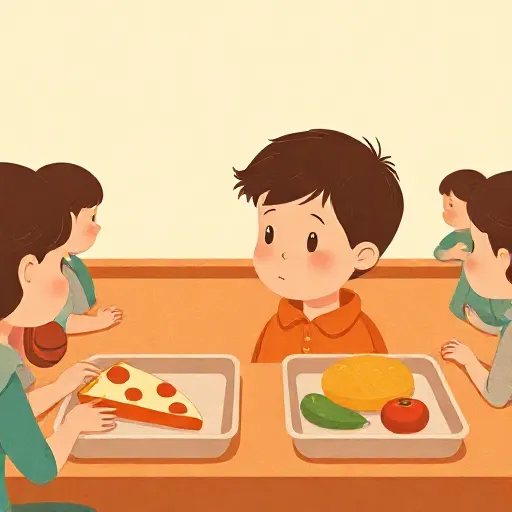
You are standing in the cafeteria line, deciding between pizza and a sandwich. You pick pizza. But a question nags at you: what if you had chosen the sandwich? Could that sandwich-choosing version of you still exist somewhere, in a different reality?
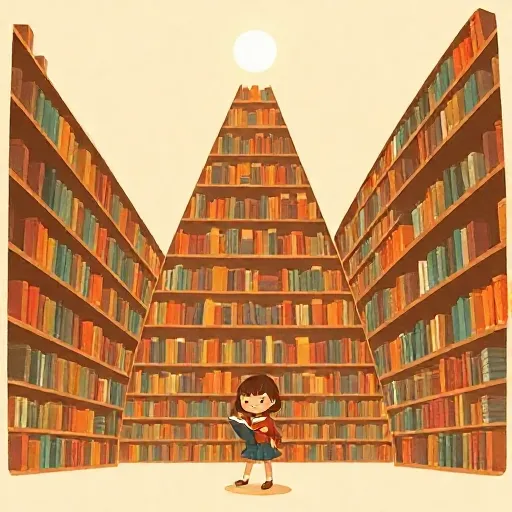
Over 300 years ago, the German philosopher and mathematician Gottfried Wilhelm Leibniz (1646–1716) asked the same kind of question on a much bigger scale. He imagined an infinite library of possible worlds — complete, detailed universes where every alternative choice and every different life is stored in the mind of God. Our world is just one volume pulled from that shelf. This idea let Leibniz explain some of the deepest puzzles about possibility, necessity, and freedom. It also gave us a way to talk about “what might have been” that philosophers still use today.
What’s in Your Complete Concept?
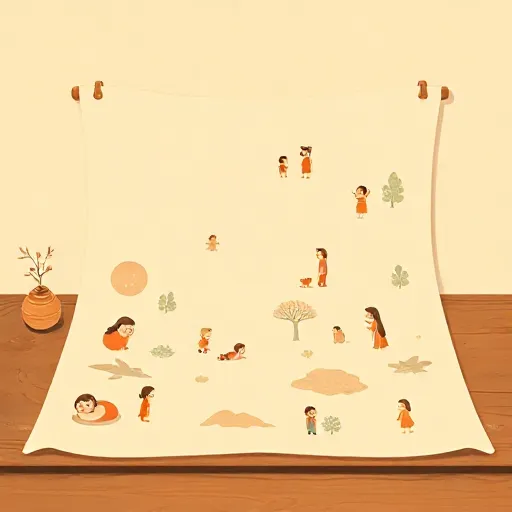
Leibniz believed that every single thing in the universe — every person, rock, and raindrop — is an individual substance. Each substance has what he called a complete individual concept (CIC). Think of it as a kind of life-book that contains every fact about that thing, past, present, and future.
If you could open the CIC of Alexander the Great, you would find not just that he conquered Persia, but also what he ate for breakfast on the morning of the battle, how many hairs were on his head, and even what he dreamed about the night before. God, Leibniz said, can “read” all these books at once.
This leads to a startling rule: no two substances can be exactly alike in every way yet be two different things. Leibniz called this the Principle of the Identity of Indiscernibles (PII). If two apples had exactly the same shape, color, weight, and history, they wouldn’t really be two apples — they would be the same apple. So every substance is uniquely itself, down to the tiniest detail. There are no true duplicates in any possible world.
Why Some People Can’t Share a World
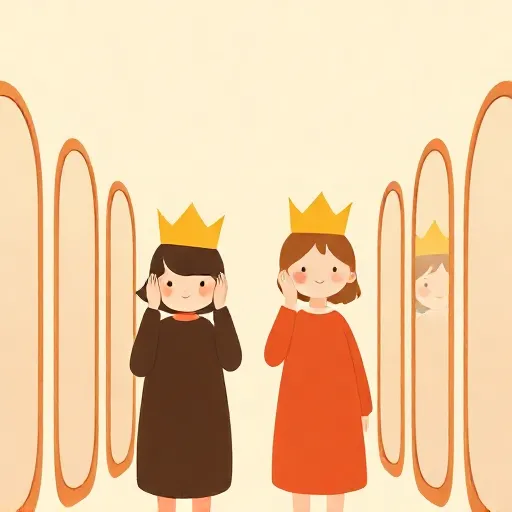
Not every possible substance can live together in the same world. Leibniz introduced the idea of compossibility to explain why. Two substances are compossible if their complete concepts do not contradict each other.
Imagine two characters, Don and Ron. Don’s CIC includes “being the tallest person at noon on Tuesday.” Ron’s CIC also includes “being the tallest person at noon on Tuesday.” They logically cannot exist in the same world. If two people both demand to be the tallest, the universe just can’t hold both at once. So they belong to different possible worlds.
A possible world is a set of compossible substances — a collection of individuals that can fit together without any contradictions. Each world also comes with its own laws of nature. A world where gravity is slightly stronger will have different people, different planets, and different histories. Change one law, and you get a whole new set of compossible individuals. According to Leibniz, God can survey all these worlds before deciding which one to make real.
Necessary, Possible, and the Big Book of Worlds
Leibniz used possible worlds to define our basic ideas about truth and falsity.
A proposition is necessary if it is true in every possible world. For example, “2 + 2 = 4” could never be false, no matter which world you look at. A proposition is possible if it is true in at least one world. A proposition is contingent if it is true in our world but false in some other world — like “You chose pizza today.” That truth depends on which world God decided to create.
Leibniz had a deeper way of explaining the difference. He thought that a necessary truth could be analyzed step by step until you reach an identity — like breaking down “2 + 2 = 4” into “1+1+1+1 = 1+1+1+1.” The analysis eventually stops. But a contingent truth, like “Julius Caesar crossed the Rubicon,” never bottoms out. Its chain of reasons goes on forever, all the way back to God’s free choice to create this particular world. Because our minds are finite, we can never finish the analysis; only God can see the whole infinite series.
This is how Leibniz pushed back against thinkers like Baruch Spinoza (1632–1677). Spinoza argued that everything that is possible must actually happen, because God’s nature expresses itself in every possible way. For Spinoza, there are no unactualized possibilities — no shelf of world-books. Leibniz disagreed. He insisted that God’s intellect contains real possibilities that never become actual, and that’s what makes our world’s events contingent rather than necessary.
Are You Trapped in Your Own Properties?

Here Leibniz’s view takes a radical turn. If your complete concept includes every single property you have, then changing any one of them means you are no longer you. This is called superessentialism — the idea that every property of a thing is essential to it.
Consider the Roman general Julius Caesar. His CIC includes “crossed the Rubicon River.” What if he had stayed on his side of the river? Leibniz would say that such a person is not Caesar at all, but a different individual who merely resembles Caesar. We might call him a counterpart. Every possible world contains its own Caesar-counterparts, but they are not the same person. They are like close cousins living in separate libraries.
The French philosopher Antoine Arnauld (1612–1694) objected. He said: “Since it is impossible that I should not always have remained myself , whether I had married or lived in celibacy, the individual concept of myself contained neither of these two states;” Leibniz replied that being a specific person means having a completely determinate history. A “vague” Arnauld who floats between marriage and celibacy is not a fully real individual at all — just an incomplete sketch. God’s mind holds only fully detailed persons.
Still, Leibniz didn’t treat all properties equally. Some are specific essential properties, like being human and being rational. If you lost those, you wouldn’t just become a different person — you would be annihilated, gone completely. Other properties are individuating: they separate you from everyone else in your species. Losing one of those turns you into a counterpart in another possible world, but you remain a person. So Leibniz balanced the radical claim that every property matters with a more traditional belief that some properties matter more than others.
The Best Library in God’s Mind
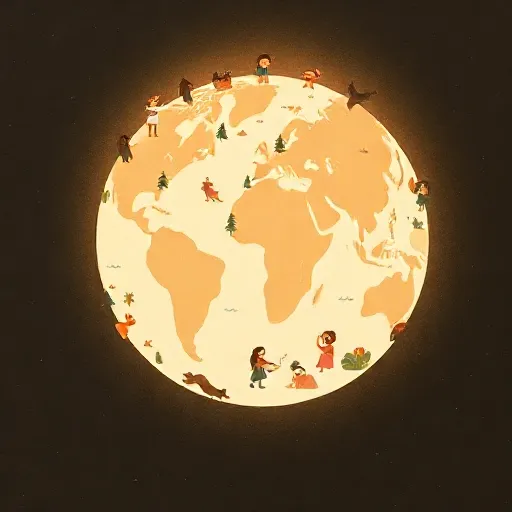
So why are we living in this particular world and not some other? Leibniz’s answer has become famous: this is the best of all possible worlds. When God surveyed the infinite library, he chose the world that combines the simplest laws with the richest variety of phenomena. The chosen world also maximizes the happiness of conscious minds.
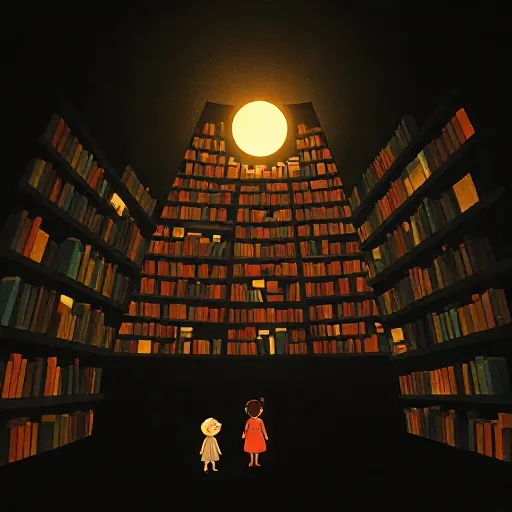
In his book Theodicy (1710), Leibniz paints a memorable picture. A priest named Theodorus visits the palace of the fates and sees a pyramid of books. Each book is a possible world. The halls rise higher and higher, and the worlds become more beautiful and perfect. At the very top sits the best world, the one God actually created. There is no bottom, because for any world you can imagine, a slightly worse one exists below it.
But if God already knows your complete concept, are you truly free? Leibniz thought so. Your actions are certain — they will happen, just as written — but they are not necessary. The opposite action does not create a contradiction; it simply describes a different counterpart in another book. You act freely because your choices flow spontaneously from your own nature, not from an outside force. God’s knowledge of your life is like a reader who has already finished the story you are still writing.
Think about it
- If there is a possible world where you made a different choice this morning, does that make your actual choice more or less meaningful?
- Can you imagine one property — like your sense of humor or a specific memory — that you feel makes you you? Why that one?
- Is it comforting or unsettling to think that this world might be the best possible one? Why?