
Were You Always Going to Choose That? Kant vs. the Domino Theory
A Quiet Decision in a Café
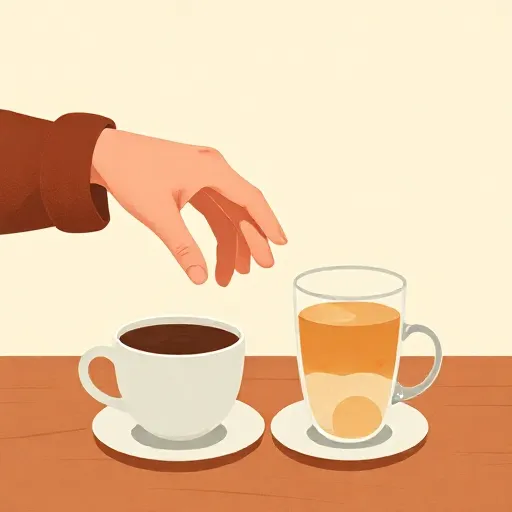
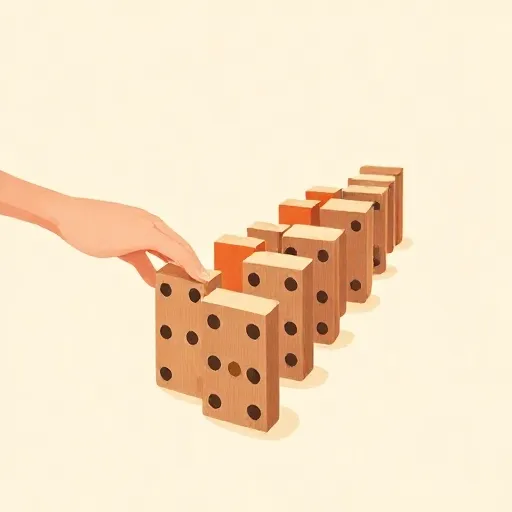
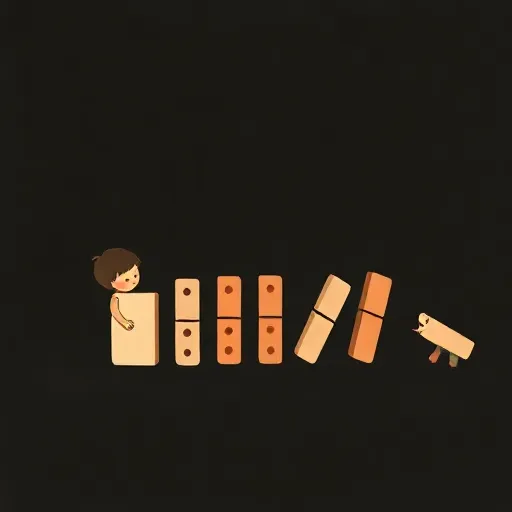
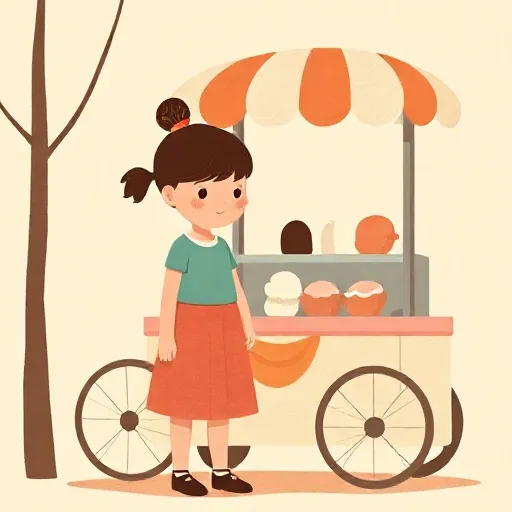
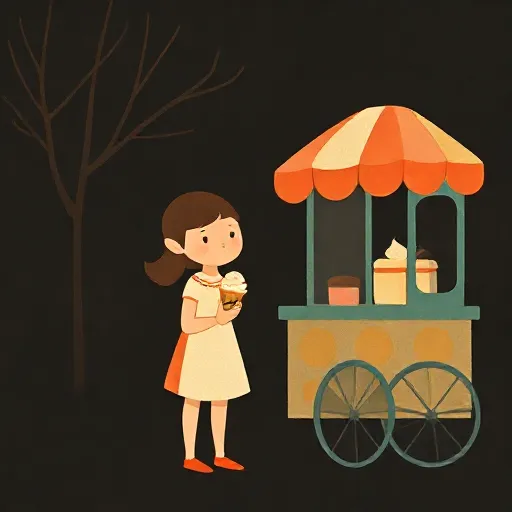
You are standing in a café, trying to decide between hot chocolate and iced tea. You think for a moment, then point to the chocolate. It feels completely free. You could have chosen the tea. But what if that feeling is an illusion? What if every choice you make was already guaranteed by events that happened before you were born — like dominoes falling one after another?
That unsettling question lies at the heart of a fight that exploded in the 1700s between two of the sharpest minds in philosophy. On one side was Gottfried Wilhelm Leibniz (1646–1716), a German thinker who helped invent calculus and believed the universe ran on perfect logical laws. On the other was Immanuel Kant (1724–1804), who started out admiring Leibniz but came to believe that human freedom — and morality itself — demanded a different picture of reality.
The Domino World and the Spit-Turning Dog
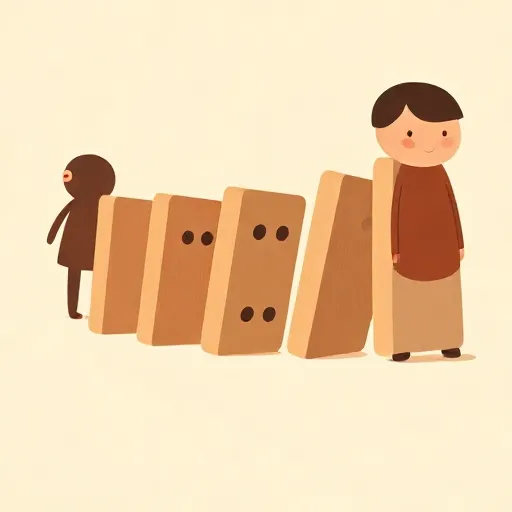
Leibniz lived in an age of clocks, gears, and new mechanical science. He was thrilled by the idea that nature might be one enormous, law‑governed machine. He gave this idea a philosophical backbone called the Principle of Sufficient Reason. The principle says: nothing happens without a complete explanation. If you knew enough, you could give a reason for every single event — why the rain fell exactly here, why you yawned just now, and why you picked chocolate instead of tea.
For Leibniz, that reason always goes back to an earlier state of the world. Every event has a cause, which itself had a cause, stretching back forever. Because of this, whatever happens is the only thing that could have happened, given the starting conditions. We call this view determinism: the future is already fixed by the past.
Leibniz’s follower Christian Wolff (1679–1754) turned these ideas into a tidy system taught at German universities. Wolff cheerfully accepted that, if determinism is true, then human choices are not free in the way we ordinarily think. A person is like a spiritual automaton — a machine with thoughts and feelings, but still a machine. Kant, reading this, was horrified. He imagined a turnspit dog, the kind that once ran inside a wheel to turn roasting meat over a fire. The dog moves, but only because it was wound up and set going. Kant said that, on this view, a human would be no different — a marionette whose strings are pulled by forces it did not choose. And if that were true, Kant thought, there would be no real right or wrong. Morality would be a trick of the imagination.
Kant’s Escape Hatch: Two Ways of Looking at Yourself
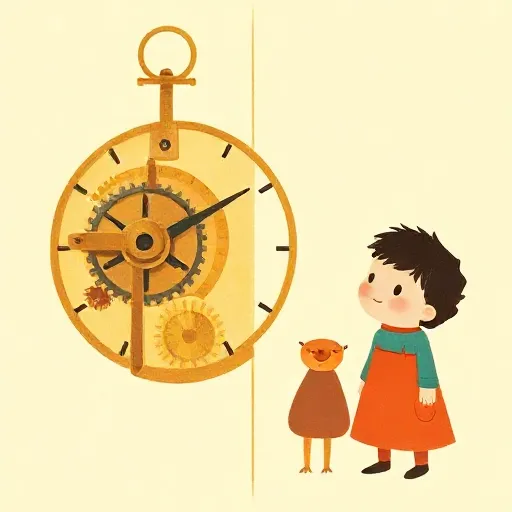
Kant could not simply snap his fingers and prove that determinism is false. The problem is a classic antinomy — a situation where reason seems to prove two opposite things. On one hand, everything we observe in nature seems to obey cause‑and‑effect laws. A scientist investigating the brain would look for causes of your decisions, just as she would look for causes of a falling rock. On the other hand, when you deliberate about what to do, you cannot shake the sense that you really can choose otherwise.
Kant’s solution was to say: both sides are right, but in different ways. He drew a sharp line between appearances (or phenomena), the world we see, hear, and measure, and things in themselves (or noumena), which are reality as it is apart from our experience. In the world of appearances — the physical world science describes — the domino chain never breaks. Every event has a cause. You can study your own behavior from the outside and explain why you did what you did.
But you are not only an appearance. You also experience yourself from the inside, as a thinking, deciding self. About that self, Kant argued, we cannot know that it is trapped in the causal chain. The real you — the noumenal you — might be free. Since we can never prove we aren’t free, and since believing in freedom is absolutely necessary for taking responsibility, Kant said we ought to believe in it. He called this deciding on “practical grounds”: not because we can prove it with science, but because morality makes no sense without it.
A New Box of Tools: Why Space and Time Matter

To see why Kant was so confident that determinism only rules over appearances, you have to understand how he rewired the way we think about the mind. Leibniz and Wolff treated all thinking as one big faculty. They said the senses just give us a confused, fuzzy version of what pure reason could grasp clearly. For Leibniz, even a dreamy slumbering monad — a basic unit of reality — had dim perceptions of the whole universe.
Kant thought this was a disastrous mistake. He insisted that sensibility (our ability to perceive) and understanding (our ability to think and reason) are two completely separate tools. Sensibility does not confuse clear thoughts; it adds something of its own: space and time. According to Kant, space and time are not features of things in themselves. They are the forms of intuition — the built‑in lenses through which we must experience everything. That is why you can never picture an object without it being somewhere and sometime.
This idea had a powerful payoff. If space, time, and cause‑and‑effect are only how our minds structure appearances, then what lies beyond experience — the noumenal world — is not trapped in those structures. You can think about freedom and moral responsibility without contradicting science. Science tells you how things appear; it cannot tell you what you are in yourself.
God and the Soul Turn into Practical Ideas
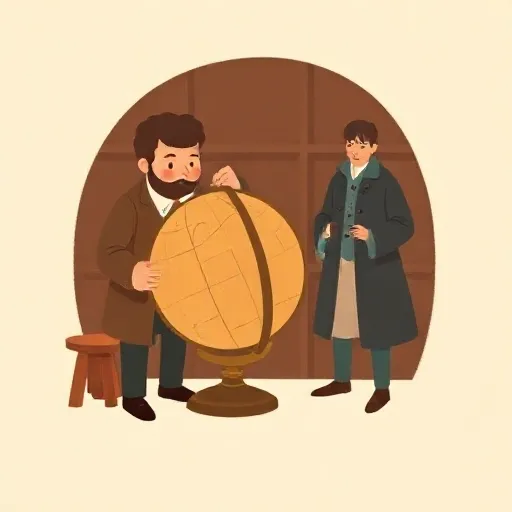
Leibniz’s world was a kingdom ruled by God. He believed that everything in nature was mechanical, but at the same time, the universe was the kingdom of grace — a moral community in which every good deed would be rewarded and every crime punished, if not in this life then in the next. He also tried to prove God’s existence using pure logic, starting from the idea of “the most perfect being” and arguing that such a being must exist, because existence is a perfection.
Kant found all such proofs flimsy. His critical philosophy had already shown that pure reason cannot reach beyond experience. We cannot know whether God exists, what happens after death, or whether the soul is immortal. But Kant did not throw those ideas away. Instead, he turned them into necessary ideas of reason — compass points we need to make our thinking systematic and our moral striving meaningful. We should hope that a just world is possible, and act as if it is. This did not mean Kant thought the world was already full of happiness. On the contrary, he saw suffering and moral struggle everywhere. But he insisted we must view history as moving — however slowly — toward greater freedom and moral development, because giving up on that hope would be giving up on the effort morality demands.
Why It Still Matters: Owning Your Choices

So why should a twelve-year-old today care about a dusty German quarrel? Because every time you are praised for honesty or blamed for cheating, the domino‑world question is lurking underneath. If your actions were already determined by your genes, your upbringing, and the particles in your brain, can anyone really deserve credit or blame?
Kant’s answer is subtle and practical. He does not say, “You definitely have a magic free will that floats above physics.” He says: you cannot know you are free, but you also cannot know you are not. Meanwhile, you are a person who has to make decisions, set goals, and treat yourself and others as responsible beings. So live that way. Take your choices seriously. Work to improve yourself. Push back against unfairness, even if the outcome is uncertain. In Kant’s picture, the very act of trying — of struggling to be better — makes sense only if you see yourself as more than a domino in someone else’s chain.
The next time you stand before a tough choice, you are standing inside a philosophical argument that has not been settled. Kant does not hand you an easy victory. He hands you a way of looking at yourself that keeps the door of responsibility open — and that, he thought, is worth holding onto.
Think about it
- If a supercomputer could predict every choice you will make tomorrow with perfect accuracy, would it still be fair to blame someone for a hurtful thing they did?
- Imagine a video game character whose every move is determined by the game’s code. Could that character still be brave, or kind, or wicked — and does that change how you feel about the player controlling it?
- If you had to live in a world where everything is predictable and orderly but nobody is truly free, or a world with real freedom but also accidents, mistakes, and injustice, which would you pick — and why?