Do Your Choices Start a New Chain, or Are They Just More Dominoes?
The Ice Cream Test: What Is a Free Choice?
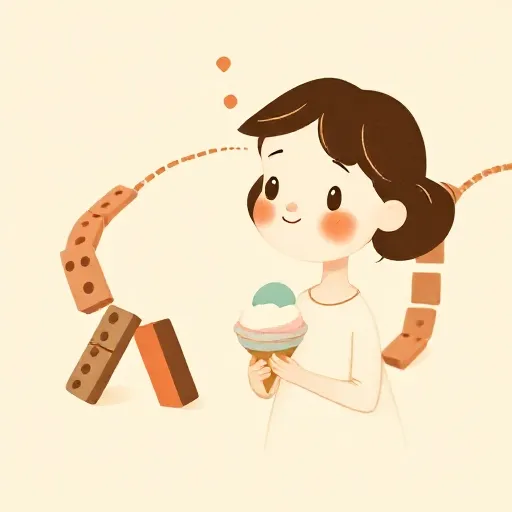
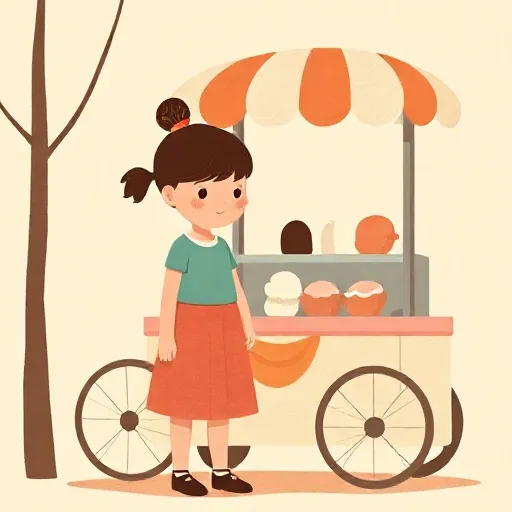
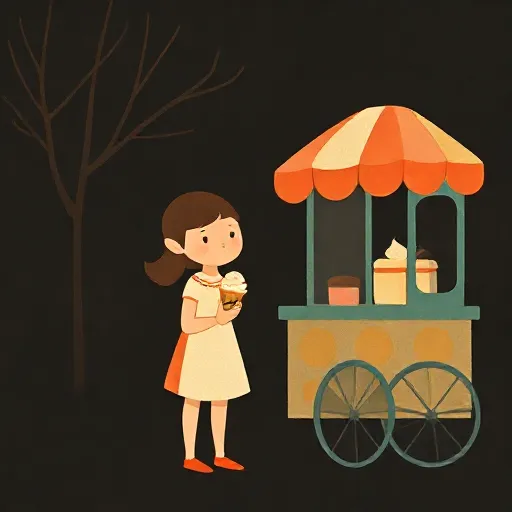
You’re standing in front of an ice cream cart. Chocolate or vanilla? You think you can freely pick either one. But think about it: if everything that happens has a cause, then did your choice have a cause too? Maybe your brain cells fired in a certain way because of your memories, your mood, the weather. If all those things made your choice inevitable, was it really free?
Many philosophers accept that ordinary actions are part of a giant chain of causes, like a row of dominoes knocking each other over. That view is called determinism. Some think we can still be free even if determinism is true — they’re called compatibilists. But others — incompatibilists — say freedom requires a break in the chain, a moment that isn’t completely fixed by the past. They believe free will needs indeterminism: not every event has a full enough cause to make it certain. And they’ve built three main kinds of theories about what that break must look like. Each one tries to explain how an action can be really yours.
No Cause at All: The Noncausal Idea
The simplest way to break the causal chain is to say a free action has no cause whatever. In a noncausal theory, your decision isn’t pushed into existence by any earlier event — not even by your own desires, beliefs, or reasons. The philosopher Carl Ginet (b. 1932) developed this idea. He argued that when you act freely, you have an “actish feel” — a sensation that you are directly making something happen. That feel doesn’t mean you are literally a cause; Ginet believed genuine agent-causation is impossible. Instead, the feeling itself is what makes the action yours.
Hugh McCann (b. 1942) proposed another version: a free basic action has a special quality of “intrinsic intentionality.” You don’t need your reasons to cause your act; the act is just naturally directed toward a goal, and you spontaneously bring it about.
These views face two tough objections. The first is about control. Suppose a brain scientist zapped someone’s neurons so that they had the exact same “actish feel” and did something — without any desire or intention. Would that be a free action? Almost everyone says no. If the feel can be faked, then the feel alone can’t be what makes an action free.
The second objection is about acting for a reason. When you take an umbrella because it’s raining, we usually think your recognition of the rain caused your action. Noncausal theories try to explain this without causation. Ginet said that if, while acting, you intend that your action satisfy an earlier desire (like staying dry), then you act for that reason. But critics point out that your desire might play no causal role at all — you might have had the intention but the desire had nothing to do with moving your body. That seems wrong. As McCann himself noted, you could have the intention but fail to carry it out, which suggests intention alone isn’t enough.
Because of these problems, many philosophers doubt that a completely uncaused action can be controlled, or done for a reason. But noncausal theorists keep searching for a way to make it work.
A Little Bit of Chance: Event-Causal Theories
What if a free action does have causes, but those causes don’t make it certain? That’s the event-causal incompatibilist approach. The idea: your beliefs, desires, and evaluations cause your decision, but the causation is nondeterministic — there remains a real chance, right up to the moment you choose, that you’ll choose something else. Like a coin that could land on either side, your decision isn’t fixed ahead of time.
The most famous defender of this view is Robert Kane (1938–2024). He said that truly free actions — what he called self-forming actions — happen when you face a deep motivational conflict. Imagine you know you should tell the truth, but lying would save you from embarrassment. You make an effort of will to do the right thing. On Kane’s picture, that effort has an indeterminate strength, like a blurry quantum state. Whether you succeed in resisting the temptation is not fully determined. If you do, you’ve acted freely, actively trying to make the moral choice and succeeding despite the indeterminism.
But here comes the luck objection. Suppose you actually decide to lie. There is a possible world identical to the actual world right up to the moment of decision where you decide to tell the truth instead. Nothing about you or your past explains why one happens rather than the other. Then the difference is just luck — and if it’s luck, how can you be responsible? Kane replied that exact sameness across indeterminate efforts is impossible, so the luck objection misses its target. He also proposed “doubling” of effort: in a moral conflict, you try simultaneously to make both choices, so whichever happens, you succeed at something you were actively trying to do. Many critics still worry that if the effort’s outcome is undetermined, your control is still too thin.
Alfred Mele (b. 1950) offered another response. When you’re very young, your earliest free decisions are only a little bit free. Over time, you shape your own character by making such choices, building up responsibility like savings in a bank. By the time you face big moral tests, you’ve earned enough ownership of your probabilities to be genuinely responsible — even if some chance remains. Still, making sense of that earliest sliver of responsibility remains a challenge.
You, the Unmoved Mover: Agent Causation
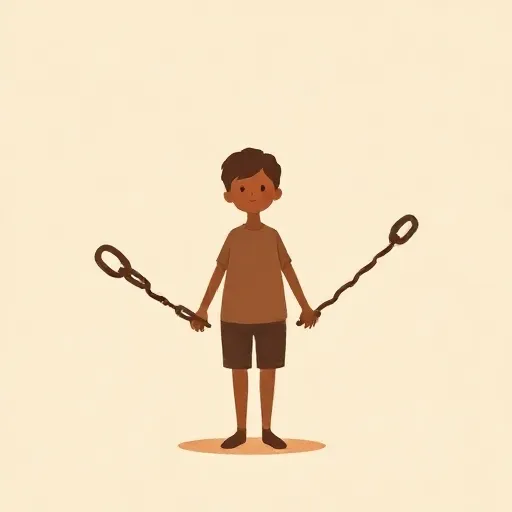
Some incompatibilists think neither noncausal nor event-causal theories capture what it is to be the ultimate source of your action. In agent-causal theories, you — not your desires, not your brain states — directly cause your decision. You are a substance (a persisting thing, like a whole person), and your causation isn’t reducible to any collection of events. It’s more like you are the unmoved mover of your own story.
Timothy O’Connor (b. 1961) defended a sophisticated version. When you freely decide to, say, tell the truth, your decision is a complex event: you cause yourself to form an intention whose content includes the reason — e.g., “to tell the truth in order to be honest.” The intention’s content explains why that reason matters, even though the reason itself doesn’t cause the decision. The agent is the cause, not the reason.
Yet the luck objection reappears. If you agent-cause a decision to lie, and there was a chance you would instead agent-cause one to tell the truth, then what makes the difference? Supporters of agent-causation reply that the difference is not luck — it’s you exercising your free will differently. That claim rests on whether we can make sense of agent causation as genuinely up to the agent, without it collapsing into event causation.
Recently, some philosophers have argued that all causation, all the way down to electrons and trees, is fundamentally substance causation. If that’s right, then appealing to agent causation isn’t weird — it’s just how things work. But then a new worry pops up: if an electron also is an uncaused cause of what it does, why is your choice any more free than an electron’s jump? The answer might lie in the purposiveness of your action — your ability to act for a goal. That, however, remains an open debate.
Does Science Tell Us We’re Really Free?
Do we have any evidence that real freedom, in any of these senses, exists? Incompatibilist theories need indeterminism — not just anywhere, but right where decisions happen. Some point to quantum mechanics, which seems to show that the world is not fully deterministic. However, physicists disagree on how to interpret quantum theory; some interpretations are deterministic, others not. So the science isn’t settled.
Noncausal theories face an extra challenge. Many everyday actions show strong signs of being caused. Take Tony, who goes to the store to buy cake because his wife asked. Her request makes his action more likely; if she hadn’t asked, he wouldn’t have gone; he would have gotten a different cake if she’d asked for carrot. These are causal markers — signs that one thing causes another. Lots of our actions look like this. If free actions must be uncaused, then maybe we rarely act freely at all.
What about our inner experience? When you deliberate, it feels as if the future is open. Some incompatibilists argue that this feeling is evidence of indeterminism. But others reply that a feeling can’t give us reliable knowledge about the laws of physics inside our brains. Just as the sensation of falling doesn’t prove there’s a specific law of gravity, the sensation of freedom might not prove there’s indeterminism in the right spot.
Some thinkers say we have a moral need to believe in free will, because without it, holding people responsible seems unfair. But if the evidence is thin, that might mean we should be less confident about responsibility, not more confident about freedom.
Why It Matters When You Pick a Game
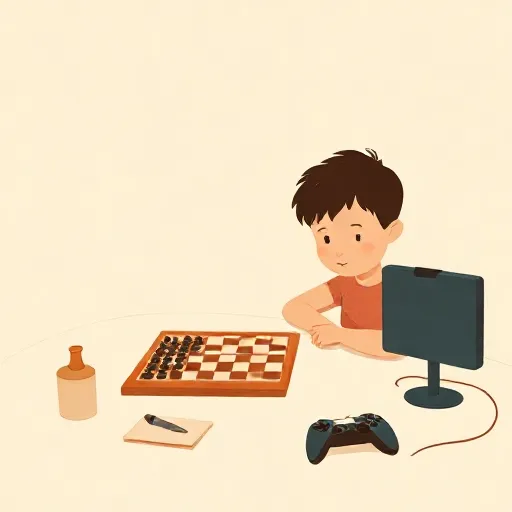
Tonight, you might choose between playing chess or a video game. You feel like you could go either way. That feeling — that you’re the one calling the shots — is central to being human. The different philosophical theories we’ve explored are attempts to explain what exactly that feeling picks out: a break in the causal chain, a bit of controlled chance, or the direct action of you as a whole person.
None of them has yet convinced everyone. The luck objection still haunts event-causal and agent-causal views. The control and reason objections trouble noncausal ones. And science hasn’t pronounced a final answer. But wrestling with these ideas changes how you see yourself. It asks you to consider: if every move you make were as predictable as dominoes, would you be a person at all? And if your moves were totally random, would they be yours? The truth probably lies somewhere in between, but figuring out exactly where is a job that philosophers — and maybe you — are still working on.
Think about it
- If a scientist could perfectly predict every choice you’ll ever make, would it still be fair to give out prizes and punishments?
- Imagine you’re about to raise your hand, and a coin flip in your brain decides which hand goes up. Is that any more “free” than having a brain that always picks the right hand?
- Think of a time you made a difficult decision. Did it feel like you could have done otherwise at the very last moment? How would you explain that feeling to someone who said it was just an illusion?