
Do You Really Choose, or Was It Always Going to Happen?
The King’s Order: A Philosopher in Trouble
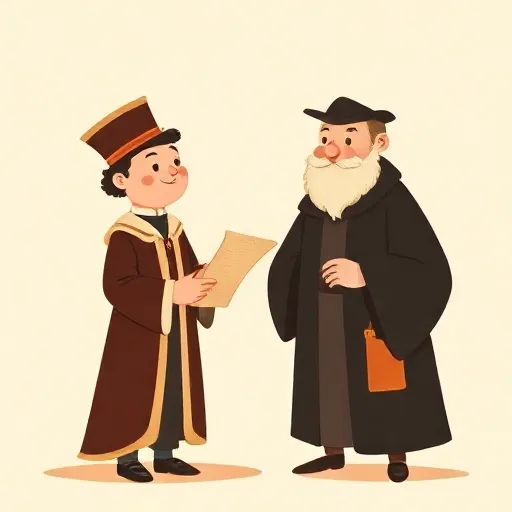
On a cold November morning in 1723, a royal messenger strode through the stone archway of the University of Halle. He carried a decree: Christian Wolff (1679–1754), the university’s most famous philosophy professor, had 48 hours to leave the entire kingdom of Prussia. If he stayed, he would be executed. His crime was not theft or treason, but an idea. Wolff taught that every single event in the universe — including every human thought and choice — has a cause that makes it happen, with no exceptions. To his enemies, this was a dangerous attack on God, morality, and human freedom. To Wolff, it was simply logical truth.
Wolff had risen to stardom by writing clear German-language textbooks on logic, metaphysics, ethics, and politics, making the latest ideas accessible far beyond Latin‑reading scholars. But his success unsettled the theology faculty, especially the Pietists — devout Lutherans who cared deeply about inner religious experience and feared Wolff’s system left no room for a free relationship with God. The dispute simmered for years until it exploded into the open with a lecture Wolff gave in 1721, defending the moral wisdom of ancient Chinese thinkers who had never read the Bible. The Pietists were furious. Wolff, they decided, had to be stopped.
Wolff’s Big Idea: The Domino Chain of Causes

At the heart of the conflict stood a single rule Wolff called the Principle of Sufficient Reason. It says: nothing happens without a reason why it happens that way rather than another. Think of a line of dominoes. You push the first, and the rest fall, one by one. If you knew the exact position of every domino and the force of that first push, you could predict the whole chain. Wolff believed the universe works the same way. Every event is the domino that knocks over the next, stretching back to the beginning of time.
Even your most personal choices — like picking chocolate or vanilla ice cream — are part of that chain. Wolff offered a proof to back up his claim. If something could happen without a sufficient reason, he argued, it would simply pop into existence from nothing. But nothing can come from nothing. Therefore, everything must have a reason. If that is true, then your future actions were already fixed by past causes long before you were born. This is determinism: the view that all events are inevitable given the past and the laws of nature.
Wolff did not think his idea destroyed morality. He believed that when you act on clear, distinct knowledge of what is perfect, your will freely follows that knowledge. But his critics were not reassured.
”But I Feel Free!” — The Pietists Fight Back

The loudest critic was Joachim Lange (1670–1744), a Pietist theologian and philosopher at Halle. Lange read Wolff’s books and was horrified. Determined choices, he insisted, are not really choices at all. If everything you do is forced by a chain of prior causes, then you are not a person — you are an automaton, a mindless machine. And if that were true, you could never truly blame a thief or praise a hero; they were just doing what they had to do. Worst of all, determinism seemed to strip even God of freedom and to make human sin something unavoidable — an idea Lange considered shocking.
Lange did not merely argue against Wolff with logic. He appealed to something anyone can notice: the plain inner feeling of being free. When you feel guilty for lying or proud of standing up for a friend, you are not just noticing a mechanical outcome. You hear an inner voice — your conscience — telling you that you could have acted differently. That direct, lived experience of freedom, Lange said, is more certain than any abstract logical proof. Freedom is not a clever theory; it is something you know from inside, every day.
The Harmony That Alarmed a King
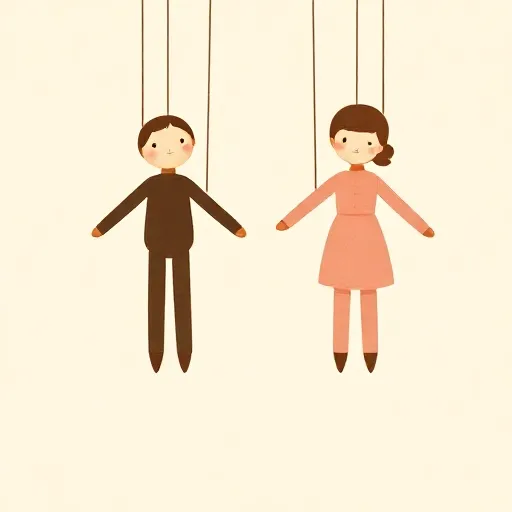
One piece of Wolff’s system especially frightened the Prussian court. Wolff defended an idea he borrowed from the philosopher Gottfried Wilhelm Leibniz called pre‑established harmony. According to this view, your soul and your body never actually touch or influence each other. They are like two perfect clocks, set at the creation of the world, that always show the exact same time without ever interacting. Every time you decide to raise your arm, your body moves in sync — not because your will caused it, but because both soul and body were programmed to match from the start.
When Prussian generals heard about this, they panicked. If a soldier’s body merely follows its clockwork program and the soul is a separate program running in parallel, then desertion — running away from battle — is just a predetermined event. How could you justly punish a soldier for what his body was bound to do? The king, Frederick William I, already inclined to side with his trusted Pietist advisor August Hermann Francke (1663–1727), became convinced that Wolff’s philosophy was godless and would destroy the army. The banishment order was signed.
The Middle Path: Is There a Way to Have Both?

Even Wolff’s enemies recognized that the Principle of Sufficient Reason cannot simply be tossed out — it helps us do science and make sense of the world. So later thinkers tried to carve out a space for freedom without denying causes entirely. Christian August Crusius (1715–1775), a philosopher and theologian at Leipzig, agreed that most events follow determining reasons. But he drew a line. Some actions, he said, are free first actions: they spring directly from a person’s fundamental power to choose, without being forced by prior causes. When you decide to finish your homework or daydream, the circumstances do not push you. You exercise your will, and you could have done otherwise. Crusius claimed that inner experience discloses these free acts just as clearly as your eyes see colors.
Alexander Gottlieb Baumgarten (1714–1762) took a more peace‑minded approach. He sought to repair Wolff’s system from the inside. Baumgarten softened determinism by distinguishing mere spontaneity — the soul moving itself — from genuine freedom. He also added rich detail about how moral feelings, expectations about the future, and lively versus dim cognition influence our choices, making human action more than a cold calculation. Neither Crusius nor Baumgarten fully solved the puzzle, but they showed that freedom did not have to mean chaos without any reasons at all.
Why This Matters: Your Choice at the Crossroad

Three hundred years later, the debate is alive and well. Every time you make a tough choice — to tell a secret, to help a sibling, to try something scary — you feel as if you could have done differently. Yet scientists know your brain has causes: your genes, your upbringing, even your lunch. Do those causes always force your answer, or is there a genuine “you” that steps in? If we could build a machine that predicted every move you would ever make, would it still be fair to blame you for bad choices — or praise you for good ones?
The fierce argument between Wolff and the Pietists pushed later thinkers like Immanuel Kant to search for a way to keep both science and freedom. Today, debates about artificial intelligence, criminal justice, mental health, and personal responsibility still hinge on whether we are dominoes falling in a chain or agents who can truly choose. The question that arrived with that royal decree — a question that almost cost a man his life — is the same one you face at the ice cream cart or at a personal crossroads: am I really choosing, or was it always going to be this way?
Think about it
- If a scientist could predict every choice you will ever make, would it still be fair to punish people for bad choices? Why or why not?
- Think of a time you did something unexpected — even surprising yourself. Does that moment prove your will is free, or could it just be a cause you hadn’t noticed?
- Imagine two people, one who grew up in a supportive family and one who faced many hardships. If their choices are shaped by those experiences, does each person deserve equal credit or blame for what they do? Where should you draw the line?