Is the Universe Made of Tiny Souls? Leibniz's Strange Answer
A Walk in the Rosental: What Is the World Made Of?

In the summer of 1661, a fifteen-year-old took a walk in a grove called the Rosental, just outside Leipzig. He was wrestling with a huge question: are living things simply complex machines made of tiny moving parts, or do they have something extra — a soul, a “form” — that makes them truly alive? The boy was Gottfried Wilhelm Leibniz (1646–1716), and this question would shape his entire life.
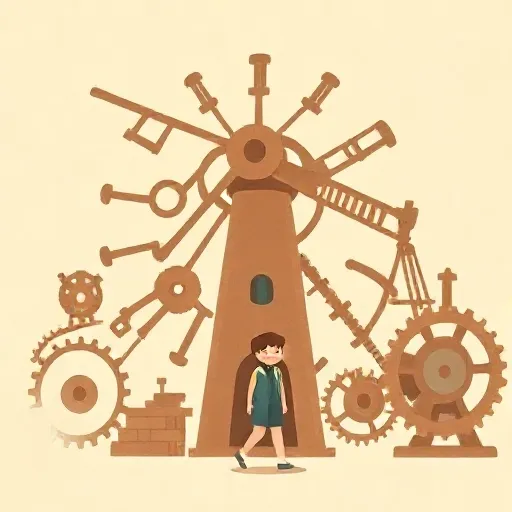
Leibniz grew up surrounded by books. His father was a professor of moral philosophy, and after his father died, young Leibniz buried himself in the family library. At university he studied the traditional philosophy of Aristotle, but soon he discovered the exciting new ideas of Descartes, Galileo, and Hobbes — a “mechanical philosophy” that explained the world in terms of matter in motion. Leibniz was tempted. Perhaps everything really was just a giant clockwork. But as he dug deeper, he found problems. If bodies are just bits of stuff pushing each other around, where does the unity of a single thing — like you — come from? And where does the inner drive, the activity, come from? These questions sent him back to ancient ideas and eventually led him to a breathtaking vision: the universe is made not of dead lumps of matter, but of countless living, mind-like mirrors he called monads.
The Two Clocks: How Mind and Body Talk Without Touching
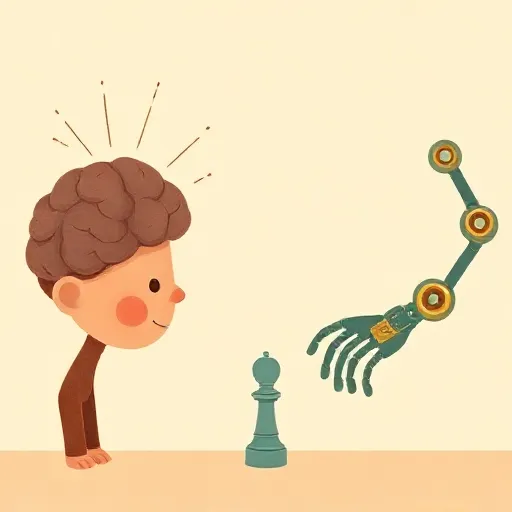
One of the biggest puzzles Leibniz faced was the mind-body problem. René Descartes (1596–1650) had argued that mind and body are completely different kinds of thing: mind is unextended thinking substance, body is extended stuff with size and shape. But if they are so different, how can they interact? How does your desire to raise your arm make your arm actually move?
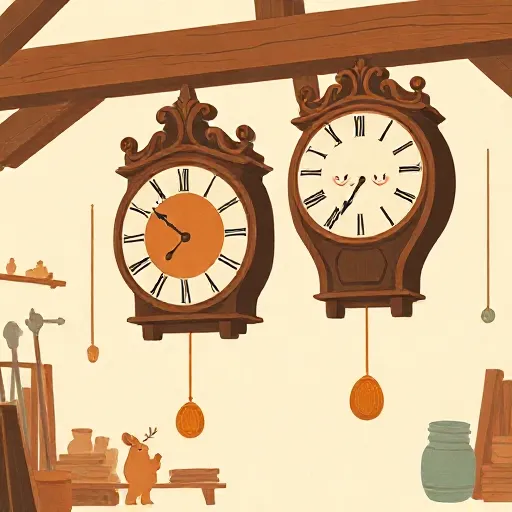
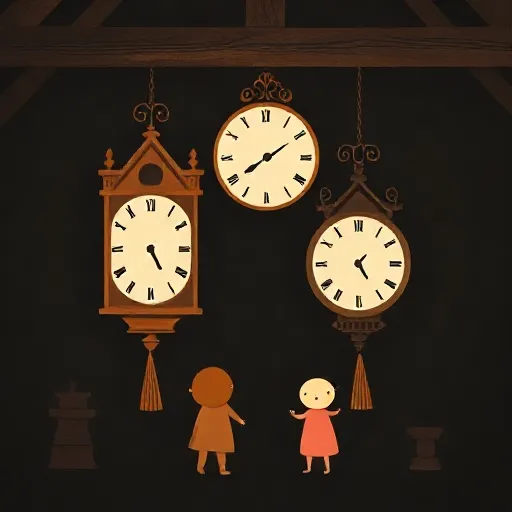
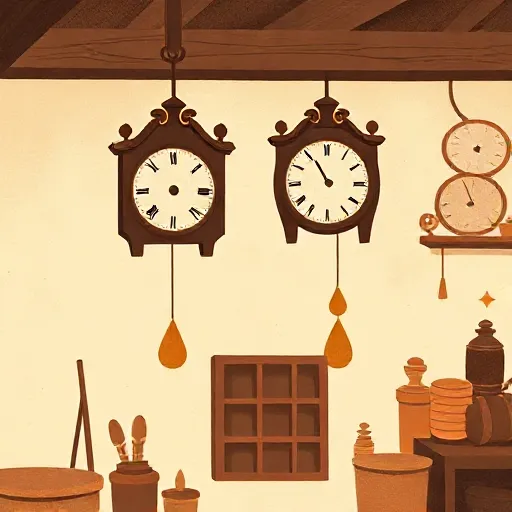
Many philosophers offered answers. Some said the mind pushes the body through a tiny gland in the brain. Others said God steps in at every moment to make them match, like a puppeteer (a view called occasionalism). Leibniz had a more elegant idea. Imagine two perfectly made pendulum clocks hanging from the same beam. They could swing in perfect time for three reasons: (1) one clock could physically push the other through the beam; (2) a clockmaker could constantly adjust them; or (3) they could have been designed so flawlessly from the start that, each following its own inner mechanism, they stay in harmony forever. Leibniz chose option three.
He called this pre-established harmony. God, at the moment of creation, gave every single substance its own internal law of unfolding — a kind of script that determines all its perceptions and actions — and made sure all those scripts play together perfectly, like a symphony. So your mind does not really cause your arm to move; your mind simply follows its own series of perceptions, and your body follows its own mechanical laws, and they always agree. As Leibniz put it, each substance is like a “world apart,” containing everything it will ever experience already inside itself, with no influence coming from the outside.
Monads: Living Mirrors With No Windows
If substances can’t really interact, what kind of thing are they? Leibniz concluded that a true substance must be indivisible — you can’t break it into pieces — and it must be a genuine unity, not just a heap of smaller parts. Only something soul-like can meet that test. A chunk of matter, like a rock, is always divisible into smaller bits, so it can’t be a true substance. Instead, the real building blocks of reality are simple, unextended, mind-like entities. Leibniz borrowed a Greek word for “unit” and called them monads.
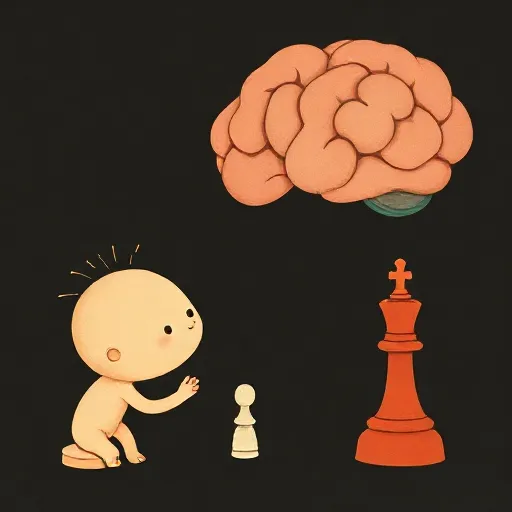
A monad is not a physical particle. It has no shape, no size, and no parts. It is a center of perception (an internal state that represents the world) and appetition (the inner drive to pass from one perception to the next). Every monad perceives the entire universe from its own unique point of view, like a living mirror. The monad that is your soul has very clear and distinct perceptions; the monads that make up the cells of your body have much more confused perceptions. Even what we call a rock is, for Leibniz, a swarm of infinite monads, each with its own dim, dreamlike awareness of the whole cosmos. There is no dead matter anywhere — “all of nature is full of life.”
Because monads do not interact, their perceptions never come in through sense organs (which are themselves just phenomena). Instead, each monad unfolds its entire history from within, like a drum playing a rhythm that was programmed into it at the beginning of time. Yet this internal programming, thanks to pre-established harmony, matches perfectly with the programming of every other monad. When you see a tree, it is not because the tree sends images into your eyes; it is because God arranged that your soul would have the perception of a tree at exactly the moment that certain monads in the so-called tree are having the perceptions that correspond to being that tree.
The Best of All Possible Worlds? The Problem of Suffering
In the 1700s, the writer Voltaire mocked Leibniz in his novel Candide. The hero suffers earthquake, shipwreck, hanging, and slavery while his teacher Pangloss keeps insisting that all is for the best in this best of all possible worlds. Voltaire thought it was absurd to call a world with so much suffering the best. But Leibniz was deadly serious.
His argument went like this. God is all-powerful, all-knowing, and perfectly good. God freely chose to create this world out of an infinite number of possible worlds — alternative ways the whole history of the universe could have gone. If this world were not the best, God (being good and knowing) would have chosen a better one. Therefore, this must be the best possible world.
But what makes a world “best”? Leibniz did not mean it contains the most pleasure or the least pain. Instead, he said the best world is the one that combines the greatest richness and variety of phenomena with the simplest set of basic laws. Think of a computer game with very simple rules that generates endlessly surprising landscapes and stories. In Leibniz’s universe, even pain and evil play a role in the larger harmony, like dark shades in a painting that make the bright colors stand out. We can’t see the whole picture; a jagged, ugly stone may be part of a beautiful mosaic when viewed from afar. Leibniz did not deny that suffering is real and terrible — he just believed that a world containing free, rational minds who grow through struggle is richer and more worthy than a world of effortless happiness.
Why It Still Matters: Your Unique View of the Whole
Leibniz’s ideas are wild, but they keep coming back. When you wonder whether your mind is really just your brain — a squishy machine — Leibniz pushes back: how could a machine, no matter how complex, give rise to a single unified “you” that feels and thinks? He argued that even if you walked inside a giant mechanical brain, you would only see parts moving, never a thought or a feeling. That challenge is still discussed by philosophers of mind today.
His vision also turns the usual way we think about ourselves upside down. If every monad is a mirror of the entire universe, then your perspective — your inner life — is not a tiny, unimportant blip. It is a unique way that the whole cosmos expresses itself. You really are a “world apart.” And the question of suffering remains as urgent as ever: can we believe the world is good while acknowledging how much pain it contains? Leibniz’s answer may not satisfy everyone, but it forces us to think harder about what “good” means and whether harmony can emerge from struggle.
So the next time you look at a rock, consider this: it might be a blurry, sleeping universe, full of dim perceptions. And the next time you wrestle with a difficult choice or a painful moment, consider that Leibniz would say you are playing a necessary note in a cosmic symphony — a note no one else can play.
Think about it
- If you were designed to be a perfect mirror of everything happening in the universe, would you feel free? Why or why not?
- Leibniz thought that even rocks are made of countless tiny minds. If that were true, would it change how you treat ordinary objects?
- Can a world with terrible suffering still be the best possible world? What would you need to believe to accept that?