Is Law Just a Price Tag on Bad Behavior?
When You Stop at a Red Light

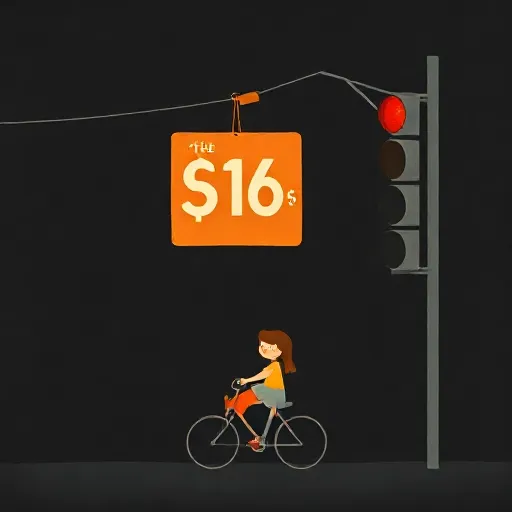
Imagine you’re biking to a friend’s house. The path takes you to a four-way stop. No cars are coming. No police officer is in sight. Do you roll through without stopping? Many people would at least think about it. You might worry about getting a ticket. You might also feel that you should stop, just because it’s the rule. Law seems to push us in two directions at once: by threat of punishment and by a quiet sense of duty.
In the 1960s and 1970s, a bold group of legal thinkers began studying law with the tools of economics. They focused almost entirely on that first push—the threat. They asked: What if legal rules are just incentives? What if we obey because the cost of breaking a rule is too high? This approach became known as economic analysis of law. It treats people as calculative choosers who constantly weigh costs and benefits. The idea still stirs up debates in courtrooms, classrooms, and legislatures.
The Invisible Calculator Inside Your Head

To an economist, a rational person is someone who acts to satisfy her preferences—that is, her personal rankings of the things she wants. If you prefer chocolate to vanilla, and both are available for the same price, a rational chooser picks chocolate. This picture of choice is extremely flexible. All it really demands is that your rankings be complete (you can compare any two options) and transitive (if you prefer A to B and B to C, you prefer A to C). But most legal economists add another strong assumption: people are self-interested in a narrow way. They care about their own wealth, safety, and comfort—not about others.
When the law changes the costs or benefits you face, your behavior changes too. Raise the fine for speeding, and people speed less. A legal rule, on this view, is like a price tag. The “classical model” of economic analysis of law, still the dominant approach, runs on this logic.
In the 1990s, some scholars (like Christine Jolls, Cass Sunstein, and Richard Thaler) started to borrow ideas from psychology. They noticed that real people don’t always calculate like perfect computers. We use mental shortcuts, we care about fairness, and we sometimes follow rules just because we think we should. This behavioral economic analysis of law comes in a few varieties. Some researchers keep the rational-choice framework but allow broader preferences—for fairness, for equality, for sticking with a group. Others argue that people use quick-and-dirty “heuristics” that often work well, though they can lead to mistakes. A third camp says that many of our mental habits are simply irrational and cause us to act against our own stated goals.
All three camps still speak the core language of economics: they try to explain how rules change what people do by changing their incentives, whether those incentives are conscious calculations or built-in biases.
Posner’s Big Bet: Law as a Machine for Efficiency
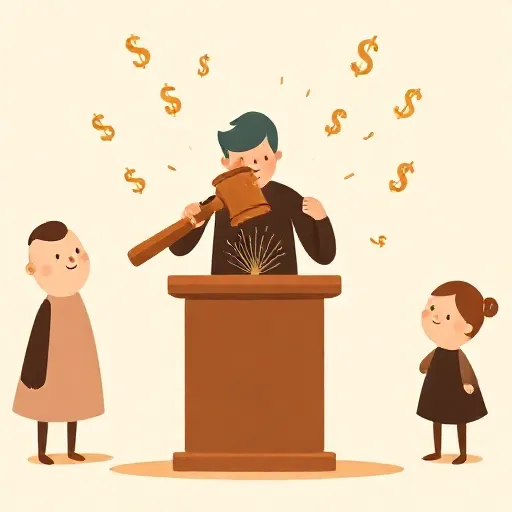
The thinker who put economic analysis of law on the map was Richard Posner, an American judge and scholar. In a famous 1973 book, he made two sweeping claims that set off decades of argument.
The first was a positive claim: the actual rules of common law—the judge-made law that covers accidents, contracts, and property—are, in fact, efficient. An efficient rule, roughly speaking, is one that makes the total social pie as large as possible. If the winners gain more than the losers lose, and the winners could in theory compensate the losers, the rule counts as efficient. This idea, sometimes called Kaldor-Hicks efficiency, doesn’t require that anyone actually get paid back; it only asks whether the total benefits outweigh the total costs.
The second was a normative claim: common law ought to be efficient. Judges, Posner argued, should decide cases in ways that maximize society’s wealth.
Both claims are trickier than they sound. Does “the law is efficient” mean that the rules cause people to behave efficiently? Or that the content of the law is determined by efficiency—as if judges secretly aim at it? Or only that efficiency makes the best sense of the pattern of court decisions we observe? These questions split the movement into several projects, each with a different idea of what law is and how it works.
Three Camps, One Toolbox

Today, most work in economic analysis of law falls into one of three strands.
Policy analysis treats legal rules as tools a wise designer could use to promote social goals—often efficiency. The policy analyst asks: If we changed the standard of care in accident law, would it reduce injuries? Would it cost too much? This strand usually assumes that judges and officials are conscientious: they faithfully apply whatever rule is chosen. It’s a bit like a mechanic who tries different engine settings to see which one burns fuel most cleanly.
Political economy takes a very different view. It assumes that everyone—citizens, politicians, judges—is self-interested down to the bone. Laws don’t come from a single wise designer. They emerge from struggles among interest groups, each trying to get rules that benefit itself. On this picture, there’s no guarantee that any statute is efficient. A judge isn’t a neutral solver of social puzzles; she may vote to advance her own policy preferences. Political economy thus tries to explain why legal institutions look the way they do, not to prescribe how judges should decide cases.
Doctrinal analysis focuses on the content of legal rules themselves. It tries to show that existing court decisions—say, the rules about who pays when a broken contract causes a loss—make sense if we understand them as promoting efficiency. A doctrinal analyst doesn’t need to claim that judges intended to be efficient. The claim is more modest: the pattern of outcomes, viewed through an economic lens, has a rational shape. Many critics, however, argue that this approach misses what is most distinctive about private law: its focus on the duties one person owes to another, not on the overall size of the social pie.
These three strands differ sharply on how they think about judges. Policy analysis imagines a judge who follows the rule that maximizes welfare. Political economy imagines a judge who pursues her own agenda—but constitutional designers might build institutions that channel that self-interest toward decent results. Doctrinal analysis often sidesteps the judge’s motivation and simply reads efficiency into the legal materials.
Why “Because It’s the Law” Feels Different

The classical economic model struggles with a deep fact about law: we often feel that we ought to obey, not just because we’re scared of punishment. Philosophers call this the normativity of law—the way legal rules seem to give us reasons for action that feel moral, not just prudential.
Consider Liza, who goes to a restaurant and believes that eating meat is wrong. She orders tofu. An economist can try to fit this into the model of preferences. Maybe Liza has a “taste” for following moral norms, so she avoids meat just as she avoids foods she dislikes. Or maybe she internalized the norm so deeply that she now simply prefers tofu. The first story seems ad hoc—it adds an unobservable cost every time a rule is broken. The second story turns a moral conviction into a mere appetite, and if she later changes her mind, her preference wouldn’t shift back.
There’s another telling clue. When governments want to control pollution, they sometimes use a criminal penalty and sometimes use a tax. Lawyers tend to believe that a criminal prohibition expresses a stronger social judgment and will reduce emissions more than a tax that sets the same expected penalty. The form of the legal rule seems to carry a message that goes beyond the price tag. Economic models can partly explain this by noticing that criminal penalties bring different monitoring, different proof rules, and larger informal shaming. But many suspect that something else is at work—a sense of duty that doesn’t reduce to a price.
Can economics accommodate this richer picture? Perhaps. One strategy points out that real people are boundedly rational. Calculating the best action in every situation is mentally costly. It can be smart to adopt a rule, like “stop at red lights,” and follow it without recalculating each time. If legal rules are well-designed, following them blindly may serve your own interests. But this only works for rules that actually make your life better in the absence of punishment—and many legal duties require you to absorb a cost for the sake of others. Another strategy suggests that our preferences are context-dependent: what we rank highest changes when an obligation applies. This idea stretches the economic model but may keep it in the game.
The debate over normativity—whether law provides any special reason for action beyond the threat of a sanction—remains one of the deepest puzzles that economic analysis of law must face.
What Should a Judge Really Be Thinking?

Posner’s normative claim gave rise to a whole theory of judging: a judge should choose the legal rule that maximizes social wealth, sometimes measured by people’s willingness to pay. This is a form of welfarism—the view that only the well-being of individuals matters when evaluating a rule. Modern defenders, like Louis Kaplow and Steven Shavell, argue that any non-welfarist criterion—like fairness or rights—conflicts with the Pareto criterion, the idea that if everyone prefers option A to option B, then A is socially better. The Pareto criterion looks harmless, but it turns out to clash with other deeply held values, including personal liberty, responsibility for one’s choices, and democratic self-governance.
Critics also point out that judges sitting in real courtrooms rarely have the information they’d need to calculate which rule would maximize social welfare. A case involves two specific parties; it gives hardly any glimpse of the thousands of people who never end up in court but whose behavior the rule would shape. Moreover, judges are not trained as economists or statisticians, and they are usually limited to a narrow set of possible remedies—they can’t redesign the whole insurance system from the bench.
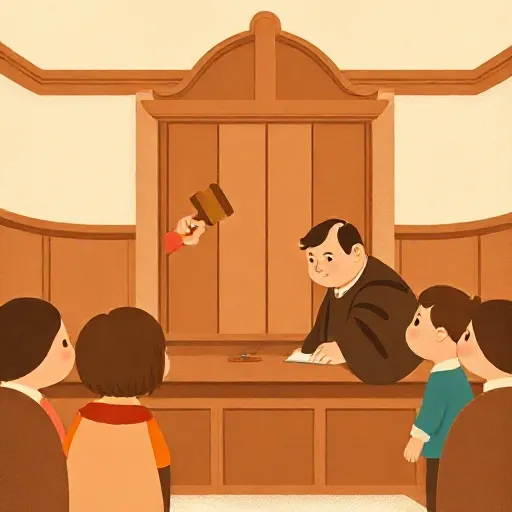
So the economic theory of adjudication remains controversial. It forces us to ask whether the job of judging is fundamentally to do justice between the people standing in front of the court, or to craft rules that push society as a whole toward prosperity.
Why It Still Matters: The Rules We Choose

When your city debates whether to ticket people who don’t recycle or to charge a small fee per bag of trash, it’s drawing on the same ideas that occupy economic analysts of law. Is a rule more effective when it carries a price, or when it carries a prohibition? Does the form of the rule shape what we think is right, not just what we find convenient?
The economic approach offers powerful tools for predicting how people will respond to legal changes. But it also raises a deeper question: Is law nothing more than a clever arrangement of incentives, or does it need to speak to our sense of obligation? If we treat every legal command as a price tag, we might lose something essential—the idea that some things are simply not for sale, and that law can be a shared moral language, not just a giant calculator. The debate over economic analysis of law is, at bottom, a debate about what law can and should be.
Think about it
- If the government replaced speeding fines with a “speeding pass” you could buy once a month for a set price, would you drive differently? Why?
- Should a judge decide a case by trying to make society overall as wealthy as possible, even if the ruling feels unfair to one of the people in the courtroom?
- When you follow a rule that nobody is around to enforce, is it usually because you would feel guilty breaking it, or because you still worry about being caught? Can you tell the difference?