Can You Win by Doing Nothing? Laozi’s Strange Idea
When Confucius Met a Strange Old Master
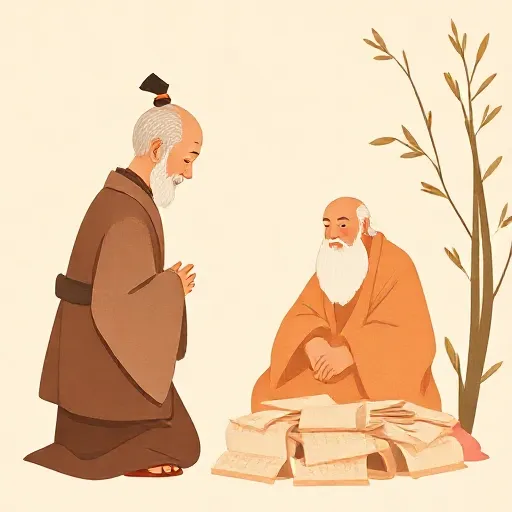
Imagine being the smartest person in the room, then meeting someone who makes you rethink everything. According to a story from the ancient Chinese historian Sima Qian (around 145–86 B.C.E.), that happened to Confucius (551–479 B.C.E.). Confucius, the famous teacher, once visited an older man named Lao Dan to ask about funeral rituals. After their talk, Confucius supposedly praised Lao Dan lavishly.
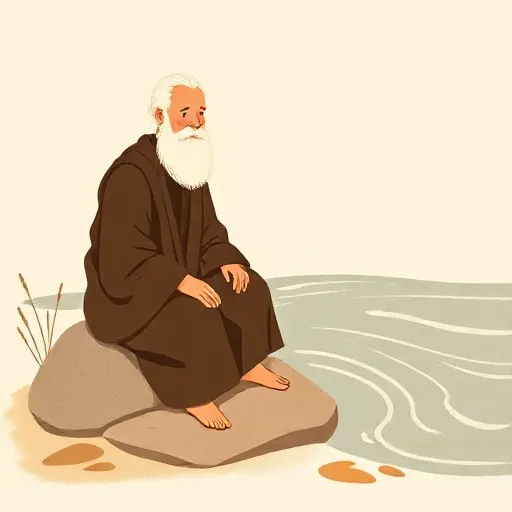
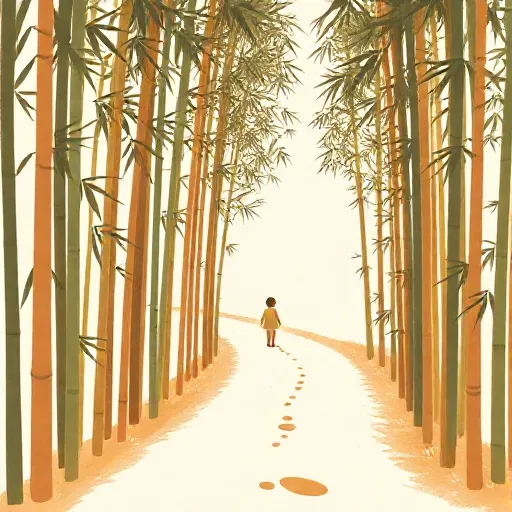
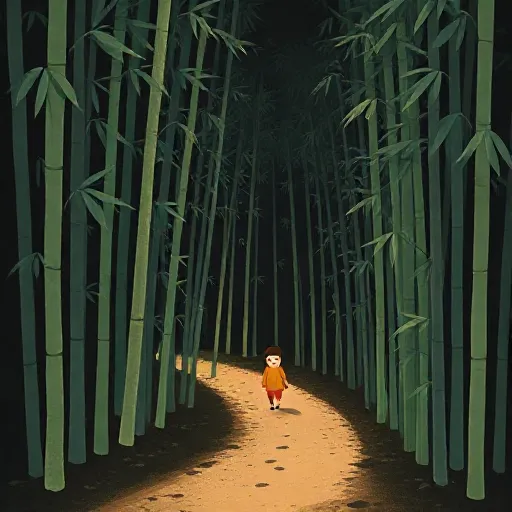
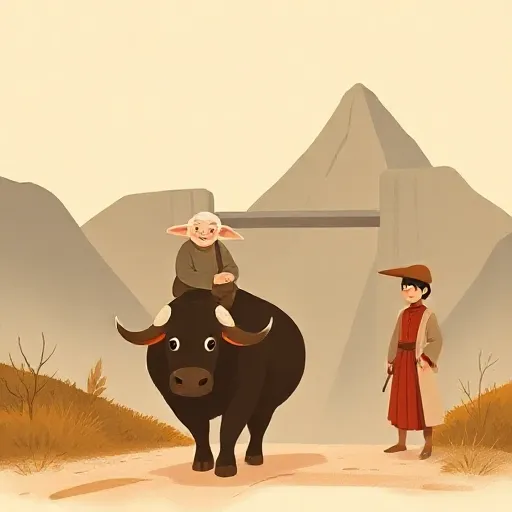
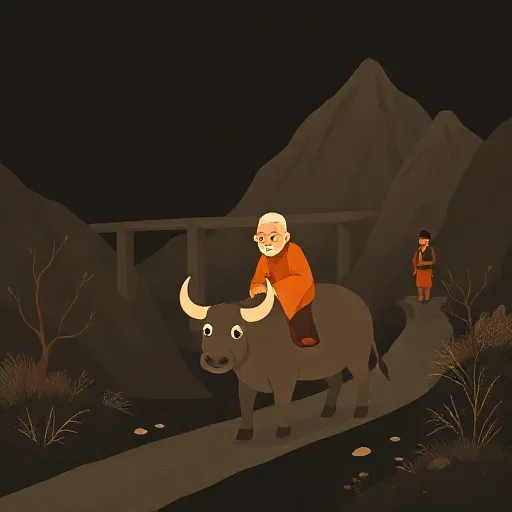
Who was this Lao Dan? Tradition says he was a keeper of archives at the Zhou court, a man who devoted himself to a quiet life and not to fame. As the Zhou kingdom declined, he decided to leave. At the western border pass, the guard Yin Xi begged him to write down his teachings before disappearing. The result was a short book of about five thousand Chinese characters, divided into two parts, on the meaning of Dao (the Way) and de (virtue or power). Then the old master rode off and no one knew where he went.
Today most scholars doubt that a single person wrote the whole book, which later became known as the Daodejing (or Laozi). They think different collections of sayings were gathered and polished by many hands over a century or two. But the legend sticks because it captures something real: the book feels like wisdom from a vanished world, both mysterious and piercingly clear.
A Way That Cannot Be Spoken

The Daodejing opens with lines that have puzzled readers for over two thousand years: “The Dao that can be spoken of is not the constant Dao. The name that can be named is not the constant name.” In other words, if you can define it easily, you are already missing it.
The Chinese word dao originally means a road or a path, something you travel on. In philosophy it came to mean the right way to live, or the underlying pattern of the universe. But Laozi’s book pushes further: the ultimate Dao is wu — literally “not having” any shape, name, or limit. It is not a thing you can point to. It is more like the silence before sound, or the empty space that makes a bowl useful.
Because Dao is wu, it is beyond sensory perception. You cannot see it, hear it, or grab it. Yet the text also says, “All things under heaven are born of being, and being is born of wu.” Dao is somehow the fertile emptiness from which everything arises, like a mother whose children fill the world but whose own face remains hidden.
This paradox — nothing that is also the source of everything — is why some readers see the Daodejing as a book of mysticism, and why others treat it as a deep metaphysical puzzle.
Why the Softest Thing Wins
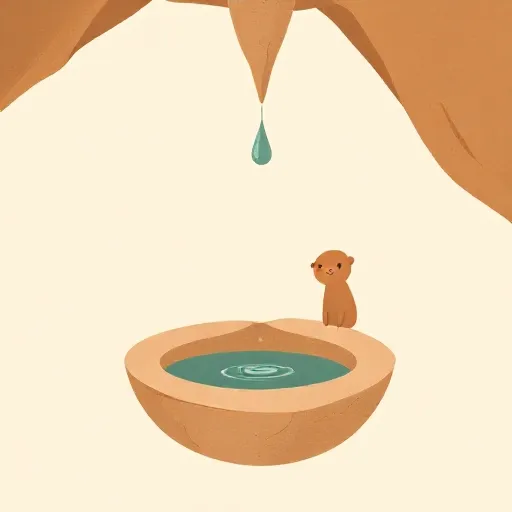
If Dao is empty and still, what does that mean for how you live? The Daodejing’s answer is wuwei, often translated as “nonaction.” The term sounds like “do nothing,” but it does not mean sitting around all day. It means acting without forcing, without selfish desire, without trying to control what naturally flows.
Think of water. It is soft and yielding, yet over time it can wear down the hardest stone. A living tree is flexible and bends in the wind; a stiff, dry branch snaps. Laozi’s text uses images like the uncarved block — a plain piece of wood that has not been cut or decorated. It looks worthless, yet it holds the possibility of becoming anything. A person who lives by wuwei is not flashy or aggressive, but in their quietness they possess a deep strength.
The concept of ziran, “naturalness” or “self-so,” explains why. Dao does not follow anyone’s orders; it simply is what it is, and the whole natural world unfolds from it without a plan. When humans try to impose artificial rules, force grand projects, or chase endless desires, they disrupt that natural balance. Laozi’s sage — the ideal person — returns to a state of simplicity, with few desires and no need to prove anything.
Politically, this turns the usual advice upside down. A ruler who practices wuwei does not wage wars of conquest, does not crush people with heavy taxes, and does not parade his cleverness. Instead, he creates a space where people can live simply, and order arises by itself. As the Daodejing says, “Governing a large country is like cooking a small fish” — too much poking and it falls apart.
Two Ways to Read the Mystery
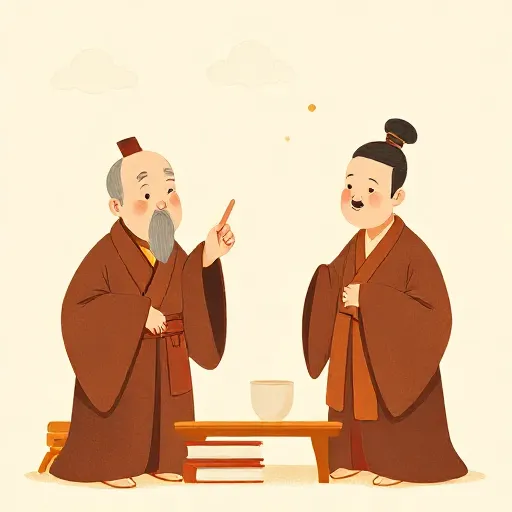
For centuries, commentators have argued about what Dao and wu really mean. Two influential early interpreters show how different the answers can be.
The first is known as Heshang Gong (the “Old Master by the River”), a legendary teacher from around the second century C.E. He read the Daodejing as a guide to cultivating life and governing well. On his view, Dao is not an abstract idea but the purest form of qi, the vital energy that makes up everything in the cosmos. The “One” that Dao gives birth to, as chapter 42 says, is the original undivided qi, which then splits into yin and yang and eventually produces all the things of the world. For Heshang Gong, de is the qi endowment you receive from Dao. Self-cultivation means guarding that inner energy through quietness, simple living, and less desire. A ruler who does this radiates calm and order.
The second interpreter, Wang Bi (226–249 C.E.), was a brilliant young thinker who lived centuries later. He was not interested in qi or immortality. For him, “nothingness” is not a mysterious vapor but a conceptual foundation. Dao is wu because if the ground of everything were itself a thing, you would need another ground behind it, and so on forever. Dao must be no-thing to stop that endless chain of “but why?” Wang Bi interprets the “One” as the principle of unity, not a substance. De, then, is not a quantity of energy but your authentic nature, free from artificial desires. The sage simply returns to what is naturally genuine inside.
Both readings are alive today. Some modern readers, inspired by physics, like the qi-energy picture; others prefer the purely philosophical one. The Daodejing itself does not settle the argument — and that openness is part of its power.
Why Doing Less Still Matters

You probably live in a world that shouts “do more.” Notifications ping, schedules fill up, and the pressure to achieve never stops. Laozi’s little book, written in an age of war and collapsing kingdoms, offers a different mirror. It argues that the root of much trouble is desire — not basic needs like food and shelter, but the endless hunger for more money, more status, more things.
The Daodejing’s remedy is not to quit school or abandon technology. It is to notice how craving distorts your mind. When you chase after “beautiful” things, you automatically brand other things as “ugly.” When you stress about winning, you create losers and tension. Laozi’s paradoxes — “the highest virtue is not virtuous, therefore it has virtue” — are meant to jolt you awake, to question what you have been told is valuable.
The concept of wuwei still influences martial arts, where a fighter blends with an opponent’s force rather than meeting it head-on. It appears in advice about leadership: the best boss often empowers others and steps back. It also touches personal life, reminding you that rest, play, and silence are not laziness but part of a healthy natural rhythm.
No one can fully define Dao, and scholars will keep debating what the Daodejing really meant. But the book’s call to loosen your grip, to trust the simple and the quiet, still resonates. The old master vanished into the mountains, but his words remain — and they keep inviting you to look at the world upside down.
Think about it
- Can you think of a time when trying harder made things worse, and easing up actually helped? Why does that happen?
- If a school principal ruled by wuwei — making very few rules and rarely punishing students — do you think the school would become peaceful or chaotic?
- Is there something in your life right now that might improve if you stopped forcing it? How would you know the difference between giving up wisely and being lazy?