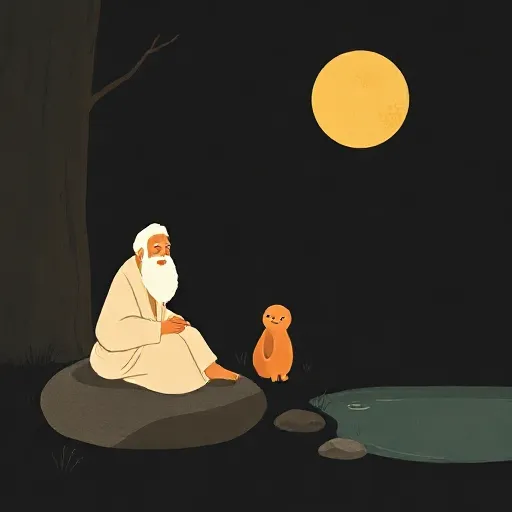
Daoism: The Way, the Body, and Immortality
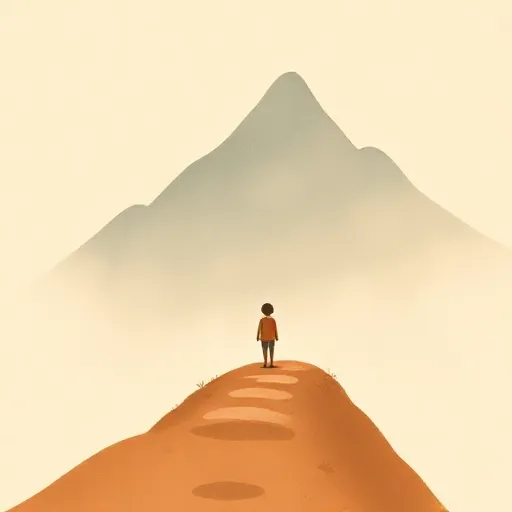
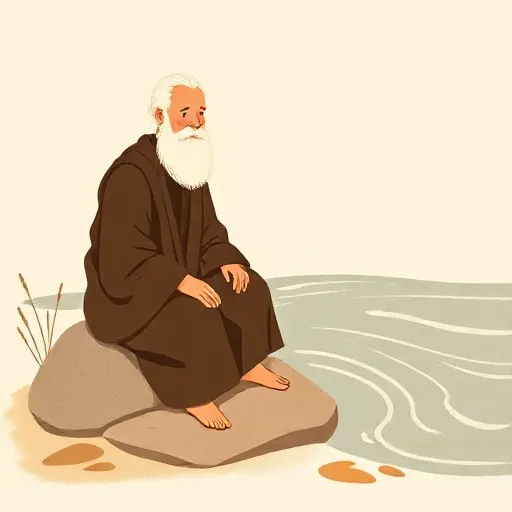
Imagine you’re walking through a forest, and you come across a stream. You didn’t build it. You didn’t plan it. It’s just there, flowing around rocks, carving its path, finding the easiest way downhill without trying. It’s not pushing or struggling—it’s just doing what water does.
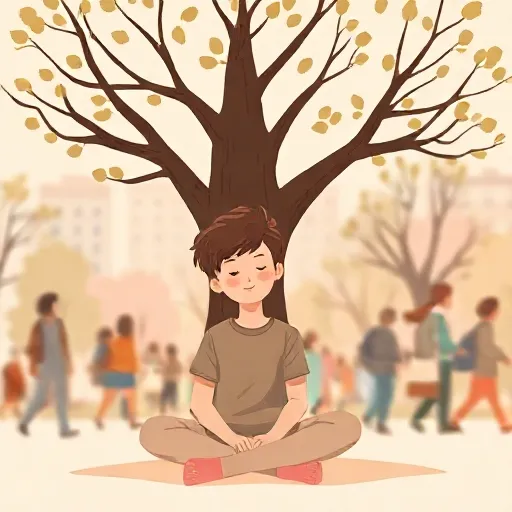
Now imagine living your life like that stream. Not forcing things. Not constantly trying to be the best or prove you’re right. Just moving through the world in a way that feels natural, effortless, and right. What would that even look like? And what would it mean to say that the whole universe works like that stream—that there’s a Way things happen, and the best thing you can do is go along with it?
That’s one of the oldest and strangest questions in Chinese philosophy. It belongs to a tradition we call Daoism (pronounced “dow-ism”), and it’s been puzzling people for over two thousand years.
The Dao That Can’t Be Named
The earliest Daoist text is a short book called the Daode jing (Book of the Way and Its Virtue). According to legend, it was written by a man named Laozi (which means “Old Master”) sometime around the 500s BCE. But here’s the thing: most scholars today think there was no single person named Laozi. The book seems to have been assembled from older sayings passed down by word of mouth, and only took its current form a few centuries later. The “Old Master” might be a fictional character—a symbol of the nameless tradition behind the text.
What matters isn’t who wrote it, but what it says. And what it says is strange.
The central idea is called the Dao (pronounced “dow”), which means “Way” or “Path.” But it’s not just any path. It’s the way the whole universe works—the source of everything that exists. And here’s the tricky part: you can’t really describe it. The very first line of the Daode jing says: “The Dao that can be spoken is not the eternal Dao.” It has no name, no form, no qualities you can pin down. As soon as you try to say what it is, you’ve missed it.
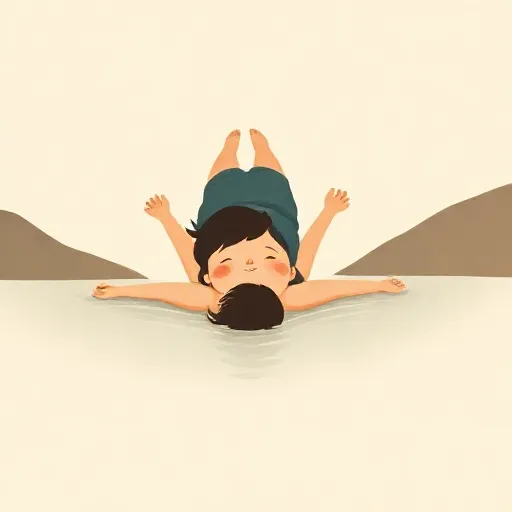
But even though the Dao can’t be described, it does things. It generates the world. It’s like a mother giving birth to everything. The Daode jing says the Dao “does nothing, yet nothing is left undone.” This is the idea of wuwei (pronounced “woo-way”), often translated as “non-doing” or “effortless action.” It doesn’t mean doing nothing. It means acting without forcing, without straining, without ego—like that stream flowing downhill.
The Perfect Human
So what kind of person lives this way? The Daode jing describes someone called the shengren, which is sometimes translated as “saint.” This person doesn’t try to be good in the way most people think of goodness. They don’t go around being “benevolent” or “righteous” on purpose. In fact, the book says that those virtues only appear after people have lost the Dao—like putting a bandage on a wound that wouldn’t be there in the first place.
Instead, the Daoist saint acts without personal ambition. They don’t push themselves forward. They don’t try to lead others. They don’t chase desires. They respond to whatever the situation requires and then step back. By putting themselves behind, they end up in front. By not trying to control anything, everything falls into place.
This sounds like a nice way to live, but the Daode jing also says it’s how rulers should govern. A good ruler, according to this view, issues few laws and lets people sort things out for themselves. The more rules you make, the more people find ways to break them. The more you try to fix things, the more you mess them up.
Zhuangzi: The Butterfly Dreamer
A few decades after the Daode jing came another foundational text, the Zhuangzi (named after its supposed author, Zhuang Zhou, who lived around 370–280 BCE). This book is weirder, funnier, and more playful than the Daode jing. It’s full of bizarre stories, jokes, and conversations between imaginary characters.
Zhuangzi agreed with Laozi about the Dao being beyond words. But he pushed further into a question: If the Dao can’t be known by ordinary thinking, how can you know it? His answer is something he calls “the knowledge that does not know”—a kind of knowing that isn’t about gathering facts or making distinctions between right and wrong, self and other.
One of the most famous stories in the Zhuangzi goes like this: Zhuangzi once dreamed he was a butterfly, fluttering around happily without knowing he was Zhuangzi. Then he woke up and was Zhuangzi again. But then he wondered: Was he Zhuangzi who dreamed he was a butterfly, or was he a butterfly now dreaming he was Zhuangzi?
This isn’t just a cute riddle. It’s about the whole way we separate things into categories. Zhuangzi thought that most of our ideas about what’s real, what’s right, what’s “me” and what’s “not me” are just habits of thinking—not the truth. The truly free person isn’t stuck to any one identity or point of view. They flow with whatever happens, including death. The Zhuangzi describes a “True Person” who “knew nothing of loving life, knew nothing of hating death.”
Where the Gods Came In
So far, this might sound like a philosophy—a set of ideas about how to live and what’s real. But around 2,000 years ago, something else happened. Daoism became a religion. People began worshipping Laozi as a god, performing rituals, and believing in immortals who lived forever.
This shift wasn’t random. Several things fed into it. For centuries before Daoism became a religion, there were Chinese healers and exorcists called wu (often translated as “shamans”) who dealt with demons and spirits. There were experts called fangshi (“masters of methods”) who practiced astrology, medicine, alchemy, and divination. There were ideas about the “Great Peace”—a perfect society that would come when a righteous ruler followed the Dao. And there were prophecies that a messiah named Li would appear to save humanity.
That messiah turned out to be Laozi himself (whose family name, according to legend, was Li). By the 100s CE, Laozi had become a deity called Lord Lao (Laojun). People believed he periodically descended to earth to teach rulers and reveal sacred texts.
The Celestial Masters
In 142 CE, according to tradition, Lord Lao appeared to a man named Zhang Daoling and established a covenant with him. Zhang was named the first “Celestial Master,” and he created a community that was both a religion and a government. This was the Way of the Celestial Masters (Tianshi dao).
The Celestial Masters had some unusual beliefs. They thought illnesses were caused by moral faults—by sins. To get better, you had to confess your wrongdoing and ask forgiveness. The priest would submit a written petition to the Officers of Heaven, Earth, and Water on your behalf. Healing was a ritual, not a medical procedure.
The community was organized into 24 “parishes,” and everyone was registered. There were household registers (tracking births, marriages, and deaths) and individual registers (listing the spirits you had power over). This was a society run as a kind of religious bureaucracy.
After the Han dynasty fell in the early 200s CE, the Celestial Masters scattered across China, spreading their religion wherever they went. Today, under the name Way of the Correct Unity, it’s still one of the two main branches of Daoism.
The Body as a Universe
One of the most fascinating things about Daoist religion is how it sees the human body. It’s not just a sack of meat and bones. The body is a miniature version of the whole cosmos.
This idea is called the “macrocosm-microcosm” doctrine. Everything that exists in the universe—the sun, moon, stars, seasons, directions, cosmic forces—has a counterpart inside you. Your five internal organs (liver, heart, spleen, lungs, kidneys) correspond to the five cosmic agents (Wood, Fire, Earth, Metal, Water). Your body contains the same three basic ingredients that make up the universe: jing (essence), qi (breath or energy), and shen (spirit).
Even stranger, your body is home to a whole pantheon of gods. Different Daoist texts describe different inner deities, but they all agree that these gods live in your organs and perform administrative functions—like a celestial government inside your chest. If the gods leave their posts, you die. That’s why meditation practices involve “maintaining your thoughts” on them—keeping them present so they don’t wander off.
The most important inner god is called the Red Child, who lives in your stomach. He’s supposed to be nourished by essences from the sun and moon that you absorb during meditation. He’s also considered your “true self”—the real you beneath all your ordinary thoughts and desires.
Making Immortality
Most religions promise some kind of life after death. Daoism goes a step further: it promises you can become immortal in this life—if you know what you’re doing.
But what exactly does “immortality” mean? It’s not just living forever in your current body. Different Daoist schools had different ideas:
One early view, from the Celestial Masters, said you would go through a “feigned death.” You’d appear to die, but secretly your body would be taken to a place called the Palace of Great Darkness, where it would be refined and reborn as an immortal body. Then you’d come back to life, but now you wouldn’t age or die.
Another practice was called “release from the corpse.” You’d stage your own death, replacing your body with a sword, a staff, or a pair of sandals. Then you’d change your name and disappear into the mountains, never to return to your old life. People who did this weren’t considered truly immortal yet—they still needed more refinement.
The Highest Clarity (Shangqing) school, which emerged around 364–370 CE, developed meditation methods for creating an immortal “embryo” inside your body. By visualizing and nourishing this inner embryo, you could give birth to a new self—a “person outside your person” that wouldn’t die.
Alchemy: Inside and Out
Daoist alchemy comes in two forms: External Alchemy (Waidan) and Internal Alchemy (Neidan). Both aim to produce an elixir of immortality, but they go about it very differently.
External Alchemy is what most people picture when they hear “alchemy”: mixing minerals and metals in a laboratory, heating them in a sealed crucible, and producing a substance you can ingest. The idea was that by cooking the ingredients in a sealed container—recreating the conditions of the universe at its beginning—you could extract their pure essence, which would grant you immortality.
But by the 700s CE, Daoist alchemists had largely shifted from external to internal alchemy. Instead of mixing chemicals in a lab, they worked on their own bodies. The “ingredients” weren’t lead and mercury but their own essence, breath, and spirit. The “furnace” wasn’t made of clay but of their own body. The goal was the same—to produce the elixir—but now it happened inside you.
Internal alchemy is often described as conceiving, gestating, and giving birth to an “immortal embryo.” The practitioner refines their essence into breath, their breath into spirit, and their spirit back into emptiness—reversing the process by which the universe was created. When done successfully, a new, deathless self is born.
The Two Branches Today
Modern Daoism has two main branches. The Celestial Masters (now called the Way of the Correct Unity) are priests who marry, have families, and perform communal rituals like the Offering—a ceremony that renews the bond between a village and its gods. They’re the ones who handle funerals, exorcisms, and festivals.
The other branch is called Complete Reality (Quanzhen), founded by Wang Zhe in the 1100s. This is a monastic order: monks and nuns are celibate, live in monasteries, and focus on meditation and internal alchemy. Their main temple, the White Cloud Abbey in Beijing, is the headquarters of the Chinese Daoist Association.
What Does It All Mean?
If you step back, Daoism raises some dizzying questions. What if the way to live well isn’t to assert yourself but to let go? What if the world isn’t a collection of separate things but a single flowing process? What if your body isn’t just yours but a map of the entire universe? What if death isn’t the end but a transformation?
These aren’t questions with easy answers. Daoists have argued about them for two thousand years, and they’re still arguing. But that’s part of what makes Daoism interesting: it doesn’t pretend to have all the answers. It points toward something mysterious—the Dao, the Way—and says: Look. Pay attention. Don’t try to grab it. Just flow.
Appendices
Key Terms
| Term | What it does in the debate |
|---|---|
| Dao | The ultimate Way or source of everything; can’t be described or named, but generates and sustains the whole universe |
| wuwei | ”Non-doing” or effortless action—acting without forcing, like water flowing downhill |
| qi | The vital energy or “breath” that flows through the universe and through your body |
| jing | ”Essence”—the seed-like substance from which things are generated, found in the body as semen and other fluids |
| shen | ”Spirit”—the non-material, thinking, aware part of a person, also the word for gods |
| shengren | The Daoist “saint” who lives by wuwei, without personal ambition or desire |
| wuwei | See entry above |
| Immortal | A person who has transcended death, either by becoming a celestial officer or by generating a deathless “true self” |
| Internal Alchemy (Neidan) | The practice of refining your own essence, breath, and spirit inside your body to create an immortal embryo |
| External Alchemy (Waidan) | The practice of compounding elixirs from minerals and metals in a laboratory |
Key People
- Laozi (“Old Master”): The legendary author of the Daode jing; later worshipped as a god (Lord Lao) who periodically descends to teach humans.
- Zhuangzi (Zhuang Zhou, ca. 370–280 BCE): Author of the playful, skeptical book that bears his name; famous for the butterfly dream and his critique of fixed ideas about right and wrong.
- Zhang Daoling (2nd century CE): The first Celestial Master, who received a revelation from Lord Lao in 142 CE and founded the first organized Daoist religious community.
- Ge Hong (283–343 CE): A scholar who wrote the Baopu zi, which surveys the religious traditions of southern China before the arrival of the Celestial Masters.
Things to Think About
-
The Daode jing says the best rulers issue few laws and let people sort things out. Does that sound wise or dangerous? Can you think of situations where less control leads to better outcomes? Situations where it leads to chaos?
-
Zhuangzi’s butterfly dream questions whether you can really know what’s real. How do you know you’re not dreaming right now? Is there any way to be certain? Does it matter?
-
The Celestial Masters believed illness was caused by moral faults—by sin. Most people today think illness has physical causes (germs, genetics, accidents). Could both be true in different ways? What would it mean to take moral responsibility for your health?
-
Internal alchemy involves treating your own body and mind as raw materials to be refined. What do you think of the idea that you can “cook” yourself into a better version of yourself? Is this just a metaphor, or is there something real going on?
Where This Shows Up
- In martial arts movies and books: The idea of “inner energy” (qi) and “effortless action” (wuwei) shows up constantly in kung fu films, where the master who doesn’t try hard always beats the one who does.
- In environmental thinking: Some environmentalists draw on Daoist ideas about going with nature rather than dominating it.
- In mindfulness and meditation: Modern practices like “non-striving” or “letting go” echo the Daoist emphasis on not forcing things.
- In the game Legend of Zelda: Breath of the Wild: The concept of “breath” and flowing with nature has clear Daoist echoes, and the word “Way” appears throughout.
- In your own experience: Have you ever had a moment where trying too hard made things worse, and relaxing made them better? That’s wuwei in action.