Did Chinese Ideas Steal Japan’s Original Heart?
One Night in Matsusaka: A Young Doctor Meets an Old Poet
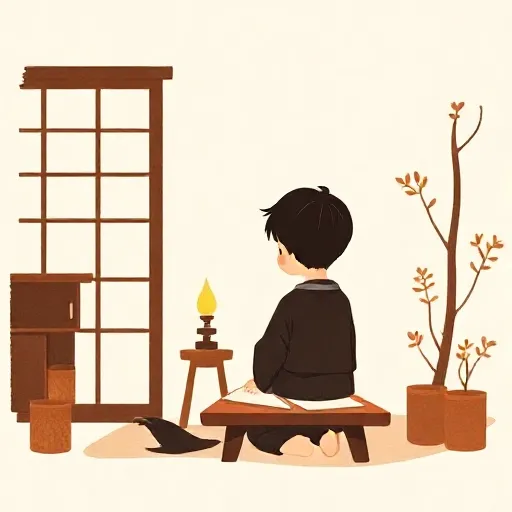
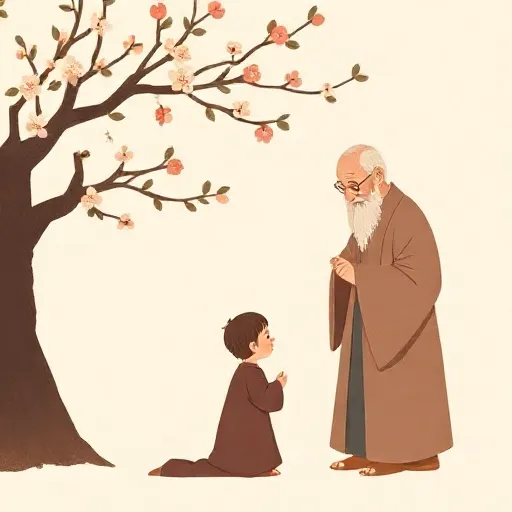
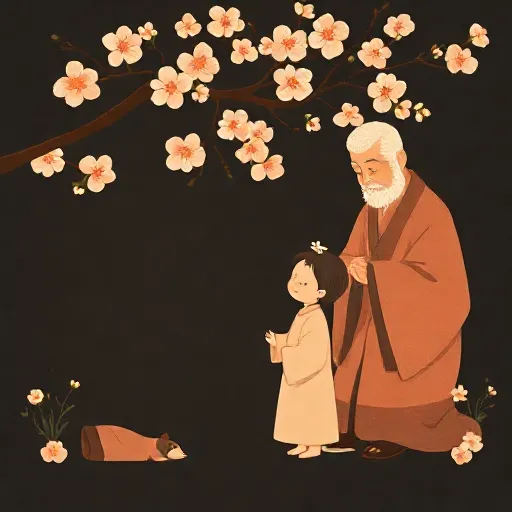
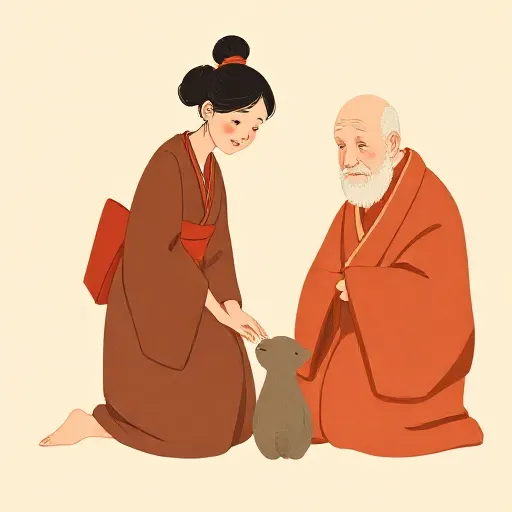
In 1763 a wandering old poet named Kamo no Mabuchi (1697–1769) stopped for the night in the small town of Matsusaka. A local doctor and lover of old Japanese verse, Motoori Norinaga (1730–1801), hurried to meet him. They talked late into the night about an idea that obsessed them both: that Japan once had a pure, natural way of life, uncorrupted by foreign teachings. That meeting lit a fire in Norinaga, and he would spend the rest of his life digging for the ancient Japanese heart buried under centuries of Chinese ideas.
This search became known as kokugaku, which means “native studies” or “national learning.” The scholars who took it up are called kokugakusha. They were not after dry facts. They wanted to recover a lost identity — a way of being Japanese that they believed existed before Buddhism, Confucianism, and Chinese writing changed everything. Their quest would transform how Japan understood its own stories, its gods, and eventually its place in the world.
Digging for Japan’s Lost Heart in Ancient Poems

Long before Norinaga and Mabuchi, a monk named Keichū (1640–1701) had already started the work. Keichū believed that Japan’s most ancient poetry anthology, the Man’yōshū from the 8th century, was more than just literature. To him, the verses were a gift from the kami — the countless spirits and gods of the Japanese tradition — and therefore almost magical. But only a fraction of its 4,400 poems could be read by his own generation, because the ancient script was so puzzling. Keichū spent years creating a huge commentary to crack the code, using a careful mix of historical linguistics and mystical intuition. He called pre-Buddhist Japan “the land of the kami,” a place where rulers simply followed the native Way without any Confucian debates about right and wrong.
Another early figure, Kada no Azumamaro (1666–1736), dreamed of a full academy devoted to the study of old Japanese histories, language, and Shinto ritual. He wanted to strip away centuries of Buddhist and Confucian layers that, he said, had been pasted over the true Japanese spirit. In a petition to the government in 1728, he warned that if the ancient words were not taught, “the old meanings will not be clear. If the old meanings are not clear, the old learning will not revive.” His school did not get official support, but his ideas spread through his students — one of them was the young Kamo no Mabuchi.
By the time Mabuchi became a teacher in the bustling capital of Edo, the stage was set. The kokugakusha had turned ancient poetry into a battlefield for Japan’s soul.
Kamo no Mabuchi: China’s Ideas Had Poisoned Japan
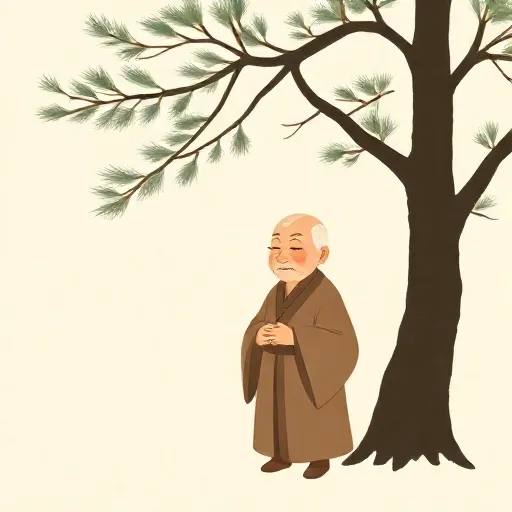
Mabuchi worshipped the Man’yōshū. He taught that its rough, direct, and manly verses recorded the spirit of an uncorrupted Japan before Chinese writing, laws, and morals had taken hold. He called that early age a natural arcadia where rulers simply moved with the rhythms of heaven and earth. When Chinese theories were later imported, he said, “tremendous chaos erupted.” Artificial Confucian ideas about duty and virtue replaced native directness, vitality, and honesty.
He made a bold claim: if you advanced far enough to recite the oldest Man’yōshū poems aloud, something strange would happen. Your language and your kokoro — your heart-mind — would slip back into the ancient past, while only your body stayed stuck in the present. In that state, you would naturally absorb the lost virtues: truthfulness, courage, and a native elegance that the corrupt politics of his own day had destroyed.
Mabuchi also sharpened a weapon that kokugaku would carry for generations: a fierce opposition to Chinese influence. He noticed that Japanese did not even have native words for classic Confucian values like “benevolence” or “righteousness.” That, he argued, proved those teachings were never needed in a land where people lived in an untutored harmony. His own private academy in Edo drew hundreds of students who sat outside his veranda to hear him speak. Among them, though only for a single night, was Motoori Norinaga.
Motoori Norinaga: Tears, Kami, and a World We Can’t Quite Know
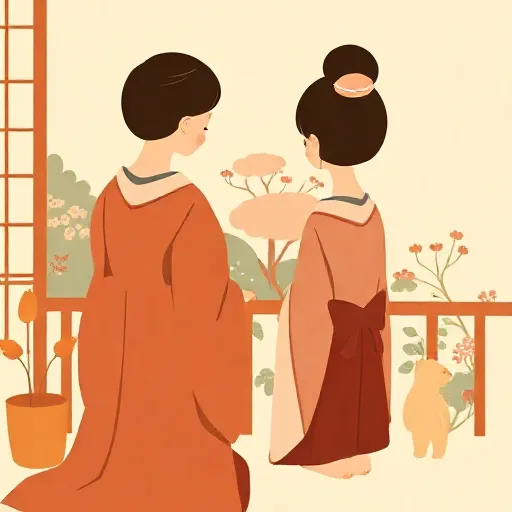
Norinaga took kokugaku in two radical directions. First, he contradicted his teacher. Mabuchi had dismissed The Tale of Genji, the great 11th‑century novel, as too soft and feminine. Norinaga instead argued that Genji did something no Confucian or Buddhist book could do: it showed life exactly as it feels. He coined the term mono no aware — the deep, touching sadness or pity of things — and said that Genji’s power was to make you enter the world of a character without asking if they were good or bad. He wrote that the novel “dwells only on the goodness of those who are aware of the sorrow of human existence.” This opened a door to a modern kind of literary criticism, where the only test was whether a scene rang true to your own heart.
Second, Norinaga turned to Japan’s oldest chronicle, the Kojiki (712 CE). He treated it as a True Book, a record of the divine age. There he found what he called kami no michi, the Way of the kami. His definition of kami was the widest anyone had given: the spirits of shrines, yes, but also birds, beasts, trees, seas, even awesome or frightening things. The world is full of kami, some good and some bad, and everything that happens happens because they act. Human beings are born with a magokoro (true heart), but the kind of heart you get depends on the creating kami, so some people are naturally wise and others clumsy, some good and some wicked. This meant you could never fully blame a person for their choices — kami were behind it all.
Norinaga also linked the Japanese monarch to the sun goddess Amaterasu, who was both a deity and the physical sun itself. In his vision, the whole world owed a daily debt to a Japanese kami for warmth and light. Yet his cosmos had a dark corner: the ancient Kojiki described the afterlife as a filthy, polluted netherworld called Yomi. Norinaga wrote a verse that moaned about staying in this world “a thousand ages evermore” rather than facing that grim destination.
Hirata Atsutane: You Don’t Have to Go to the Dirty Underworld
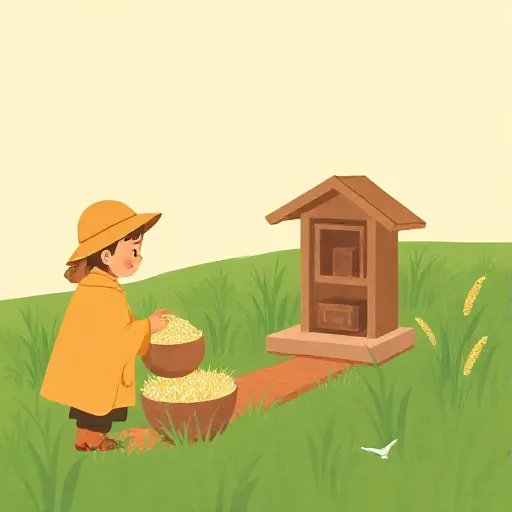
Hirata Atsutane (1776–1843) never met Norinaga, but when he read his work, he was so electrified that he joined the school run by Norinaga’s son. Atsutane was not a careful manuscript scholar like his predecessors. He gathered evidence from everywhere — even from Christian sources he disguised to look Shinto. His mission was to touch ordinary hearts. He taught that good food, love, and the pleasures of daily life were part of the Way, and that you could “learn from the kami” through prayer alone, with no need for literacy. Farmers, who made up most of the population, suddenly found that their daily labor could be sacred service.
And Atsutane fixed the afterlife problem. He rejected Norinaga’s gloomy Yomi. Instead, he insisted that after death every Japanese person becomes a kami. Their souls do not go to heaven or an underworld but remain eternally in Japan, dwelling in an invisible spirit realm — the kakuriyo — right alongside the living world. This hidden world was governed by the deity Ōkuninushi, whom the dead serve faithfully. No more fear of a stinking nether pit; death became a quiet passage into a parallel space where your ancestors watched over you.
Atsutane also sharpened Japanese superiority into a weapon. He wrote that Japan was the “ancestral country of the ten thousand countries,” made from the finest materials, and that the Japanese people were born with a true Yamato gokoro (Japanese heart) that no other nation could match. This message of a divine land and a divine people would echo loudly in the centuries to come.
From Imperial Shrines to Anime Spirits
After the Meiji Restoration of 1868, kokugaku was no longer a fringe academic pursuit. The new government used it to build a state religion. Amaterasu was placed at the center of a national pantheon, and the emperor became a sacred ruler whose rituals were part of government itself. Shrines were purified of Buddhist influences, and priests taught a unified doctrine of a divine land. The gentle search for ancient poems had become an engine of empire.
Following Japan’s defeat in 1945, the whole enterprise was suddenly untouchable. Outside a few Shinto universities, openly studying kokugaku as a source of Japanese superiority became taboo. But the longing for a unique Japanese essence did not vanish. In the 1970s a new wave of theories about Japaneseness — called Nihonjinron — filled bookstores. They described Japan as a harmonious, animistic spirit-world where people were naturally cooperative, frugal, and sensitive to the seasons.
Today you can see the old kokugaku dream all around you. The forests in Miyazaki films rustle with countless spirits. Anime series treat the world as a place where humans, animals, and gods mingle, and where a stone or a river can hold a living presence. This is not just entertainment; the Japanese government supports it as “soft power” to tell a story about Japan’s soul. A young doctor and an old poet once stayed up late to dream of a world charged with kami. You might have met those kami yourself, in a movie, without ever knowing their name.
Think about it
- If a culture thinks it has a special, unchanging “heart” from long ago, does that make people prouder of who they are, or does it make it harder to accept new ideas?
- Norinaga said you could understand a story best when you stop judging the characters as good or bad and just feel what they feel. Do you read books or watch movies that way? Can you give an example where that approach changed how you felt about a character?
- The old kokugaku scholars believed that kami were in trees, rivers, and even in shocking events. Does seeing the world as full of living presences change how you would treat nature? What would be lost if you stopped believing that?