Is Your Heart Also Your Brain? Ancient Chinese Philosophers on Knowing
The Student’s Question and the Heart’s Answer
In the Chinese state of Lu around 500 BCE, a student asked Confucius (551–479 BCE) how to know what is right. Confucius pointed to his chest and explained that cultivating his xin would help him know.
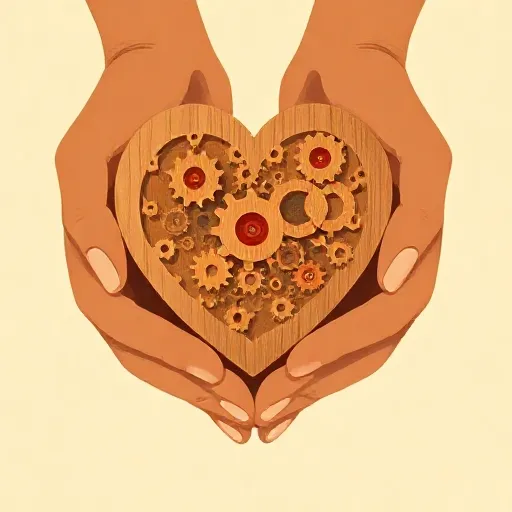
To a twelve-year-old today, that answer sounds upside-down. We say “use your head” to mean think. For ancient Chinese thinkers, however, the heart was the center of everything we now separate into “thinking,” “feeling,” and “deciding.” They called it xin, often translated as heart-mind. The character originally meant the physical heart, but it also covered perception, understanding, intuition, memory, and moral judgment. The heart-mind wasn’t just a pump; it was the governor of the whole person. You saw the world with your eyes, but your heart-mind made sense of what you saw. You heard a melody, and your heart-mind stirred with emotion. You faced a difficult choice, and your heart-mind weighed the options.
This wasn’t a metaphor the way “follow your heart” is for us. It was a description of how humans worked. And because the heart-mind was the seat of knowing, knowledge could never be just a collection of facts stored in the brain. To know something deeply — say, what justice is — was also to feel its pull and to act on it. The heart-mind didn’t separate cognition from emotion, or thinking from doing. That integrated picture shaped the whole Chinese tradition of asking what knowledge is and how we get it.
Words That Fit the World: The Battle Over Names
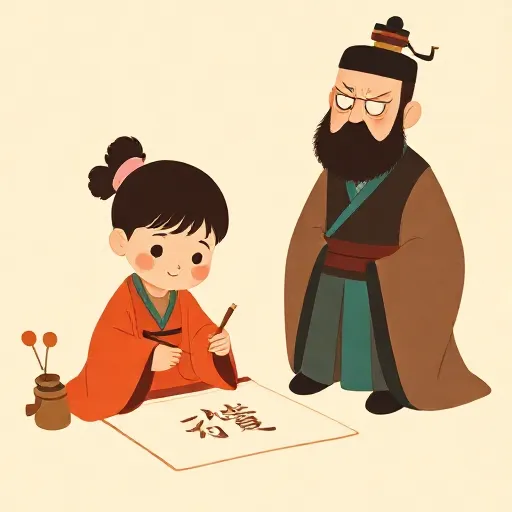
One of the big early debates in Chinese epistemology grew out of a simple observation: when words stop matching reality, society breaks down. Imagine a kid who is called “class president” but never does any of the job. The title no longer describes the actual person. Confucius called this the problem of zheng ming — the rectification of names. He argued that a well-ordered society depends on ming (names, labels, concepts) aligning with shi (actualities, what really is). A ruler who rules selfishly isn’t living up to the name “ruler.” The crisis of Confucius’s era, the Warring States period (475–221 BCE), was, in his eyes, a crisis where names and realities had drifted apart.
Not everyone agreed on the solution. Mozi (5th century BCE), the founder of Mohism, flipped the Confucian approach. Why should reality twist itself to fit old names? Language, he said, is a tool for transmitting what’s actually happening. If the names don’t match reality, it’s the names that need changing. Mohists cared about practical results, not preserving an ideal past. They asked: does this name help people’s needs? If not, scrap it.
The Confucian Xunzi (around 310–230 BCE) took a middle path. He agreed that names are conventions, not magic windows into the essence of things. But because all humans share similar senses — our eyes see green the same way, our ears hear a drumbeat similarly — we can agree on names. A ruler, then, should standardize names so that communication is clear and social harmony is possible. If everyone uses “kind” to mean the same thing, you can teach kindness. Xunzi was a pragmatist, but he still wanted names to guide behavior toward goodness.
The School of Names pushed the puzzle even further. Gongsun Long (around 325–250 BCE) famously argued “a white horse is not a horse.” His point was that the name “white horse” picks out a specific thing that the name “horse” does not. He wanted to show that language could be precise, and that semantic overlaps — where one word covers many things — create confusion. If we can’t even say what a horse is, how can we use names to guide a society? His critics, including the later Mohists, thought language’s messy overlapping was natural and not a flaw. The argument wasn’t just about horses. It was about whether clear definitions are the foundation of knowledge, or whether knowledge requires something more flexible.
Knowing and Doing: Two Halves of a Single Motion

While ancient Greek philosophers often prized knowledge as a kind of detached understanding — the pure theory you arrive at by sitting and thinking — classical Chinese thinkers tied knowledge to xing (action) from the start. The pair zhi (knowledge) and xing appear together constantly, like two feet that must move together for you to walk. Early Confucians taught knowing how and knowing to: knowing how to perform rituals correctly, knowing to help a neighbor in need. A person who could recite all the rules of proper conduct but treated others rudely didn’t truly know proper conduct.
Mengzi (372–289 BCE) believed that moral knowledge is intuitive — we are born with sprouts of goodness that need nurturing. For him, the heart-mind naturally moves toward what is right, the way a sprout leans toward the sun. Xunzi, by contrast, saw that same knowledge as something built through education, drill, and ritual. But both sides agreed that the test of knowledge is the kind of person you become and the actions you take.
Centuries later, Wang Yangming (1472–1529) made this idea explosive. He declared the unity of knowledge and action: to genuinely know something is to act on it; if you don’t act, you don’t really know. He argued that true knowledge inevitably leads to action. You might say you know you should care for your parents. But if you ignore them when they are old and sick, your claim is empty. Your heart-mind hasn’t actually grasped filial piety. Wang called this real, lived understanding zhen zhi (genuine knowledge). He thought every person also possesses liangzhi (innate knowledge), a built-in moral compass that doesn’t need books or lectures. Innate knowledge is the quiet voice that tells you, in a real situation, what is right. Wang’s radical claim is that this voice already contains all the principles you need — you just have to stop ignoring it and act.
When Words Get in the Way: Daoist Silence
Not everyone in ancient China trusted language as a path to knowledge. The legendary Laozi (6th century BCE), founder of Daoism, began his classic text by cautioning that the dao that can be put into words is not the eternal Dao. Dao means the Way — the ultimate pattern and flow of the cosmos. Laozi believed that putting the Way into words freezes it into something partial and dead. Real knowing comes from emptying yourself of chatter, from quiet observation and introspection. Language, according to Laozi, is a form of social pressure that trains us out of our natural spontaneity. The more you memorize rules and definitions, the further you wander from the living, breathing world. So he taught a kind of non-linguistic comprehension — knowing without naming.
Zhuangzi (4th century BCE) took relativity even further. He pointed out that every distinction — good/bad, large/small, true/false — depends on your particular standpoint. A flood is a disaster for humans but a delight for fish. Our senses are limited, our values shaped by our circumstances. We are, he said, all stumbling through a maze together, each of us convinced our own little patch of the maze is the whole world. The human “thinking machine” carves the seamless flow of reality into separate things and names, and then mistakes the labels for the things themselves. Zhuangzi didn’t just criticize language; he offered a practice of forgetting — dropping the constant labeling so that you can act with a kind of embodied skill that words can’t teach. A master swimmer doesn’t recite buoyancy formulas; she swims. For Zhuangzi, that unspoken know-how is the deepest knowledge.
Even Mengzi, a Confucian, downplayed the role of words in moral development. He never mentions the Rectification of Names. Instead, he argued that the heart-mind’s four moral sprouts — compassion, shame, courtesy, and a sense of right and wrong — are inborn. You don’t need a dictionary to feel a tug of pity when you see a child about to fall into a well. The sprout is already there, pre-linguistic. This anti-language current meant that Chinese epistemology wasn’t just a debate about definitions. It was a debate about whether the most important kind of knowing can be said at all.
The Neo-Confucian Split: Explore the World or Peer Within?
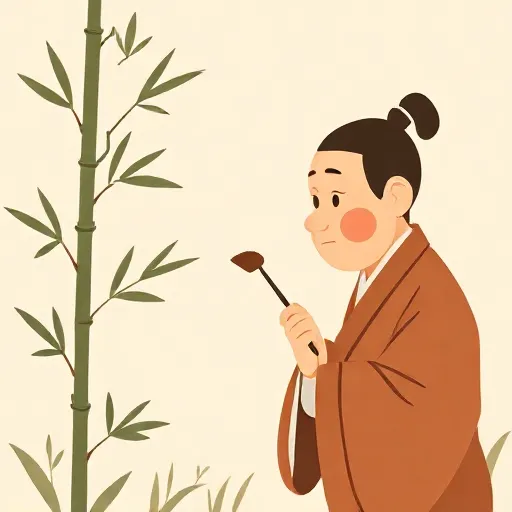
After Buddhism arrived in China, new questions sharpened old debates. By the Song dynasty (960–1279), thinkers were wrestling with a knot that still felt tight: should you find truth by looking outward at the world, or by turning inward to your own heart-mind?
Zhu Xi (1130–1200) championed the outward path. He revived the classical phrase gewu — “exploring things” — and made it the center of his epistemology. Everything in the world, from a bamboo plant to a human relationship, is shaped by li, the structural principle or pattern that makes it what it is. And that same li is also present in your heart-mind. To know something, then, you must study it exhaustively: observe its qualities, trace its connections, understand the principle behind it. Over time, studying enough things and affairs would illuminate the li inside you. For Zhu Xi, this wasn’t cold science; it was moral training. Grasping the principles of things enabled you to act in harmony with the cosmos. He spoke of zhizhi — attaining ultimate knowledge — which he saw as the inward dimension of the same activity of exploring things.
Wang Yangming, roughly three centuries later, flipped the direction. He had once tried Zhu Xi’s method by staring at bamboo for days, hoping to grasp its principle. It made him ill and taught him nothing. He concluded that the principles aren’t in the bamboo; they’re already in your heart-mind. The task is not to pile up data from outside, but to strip away selfish desires that cloud your liangzhi — your innate knowledge. Wang taught that the immediate alarm and compassion you feel upon seeing a child about to fall into a well is a direct and true response, not requiring any investigation. For Wang, all the cosmological li you need is already inside, lively and ready. The method, then, is not gewu in Zhu Xi’s sense but intense, honest introspection and immediate moral action.
The split between these two Neo-Confucian visions — the “realist” investigation of things and the “intuitionist” turn to the heart-mind — ran through Chinese philosophy for centuries. But note what they shared: both believed that knowledge is incomplete until it transforms how you live. Neither side wanted knowledge that just sat in the head collecting dust.
Why This Still Matters: Knowing as Becoming

A tradition that puts the heart-mind at the center, ties knowledge to action, and questions whether the deepest truths can be spoken may feel remote. But it’s actually strikingly close to some of the hardest questions you face. Next time you know the right thing to do but hesitate — you feel the tug but don’t help — ask: in Wang Yangming’s sense, did you actually know? If you can name all the planets but feel no awe when you look at the night sky, have you missed something important about the universe?
The Chinese relational approach to knowing — that you are not a separate observer but a participant woven into a world of patterns — challenges the idea that knowledge is only about detached, provable facts. It suggests that understanding reality means learning to move through it gracefully, ethically, and wisely. It says that emotions aren’t the opposite of reason; they are part of the same heart-mind process that lets you perceive value and connection. Today, when information floods our screens but wisdom feels scarce, the Chinese insight that knowing is becoming — that every bit of real knowledge should make you a fuller human being — is more than an old story. It’s a compass.
Think about it
- Can you think of something you “knew” was wrong to do but still did it? In what sense did you know it, if your action didn’t match?
- If someone could perfectly describe kindness using definitions and examples but never once acted kindly, would you say they understand kindness?
- Imagine a world where every name perfectly captured the reality of a person or thing. Would such a world be more just, or would it freeze people into boxes?