
The Secret Inside Your Mind That Reinhold Thought Explained Everything
The Monk Who Made Kant Famous
In 1786, readers of a popular German magazine found something unexpected: a series of letters explaining a strange new philosophy from a thinker named Immanuel Kant. The writer wasn’t Kant himself, but a restless former monk named Karl Leonhard Reinhold (1757–1823). His Letters on the Kantian Philosophy turned a difficult, technical system into a kind of “gospel of pure reason” — and made Reinhold one of the most celebrated teachers in Germany. Students packed his lectures at the University of Jena. But Reinhold wasn’t content just to explain Kant. He believed Kant’s revolutionary ideas were missing something crucial: a single, unshakeable starting point that would hold the whole thing together. That belief set him on a lifelong chase after the perfect first principle.
The Dream of a Tower Built on One Brick
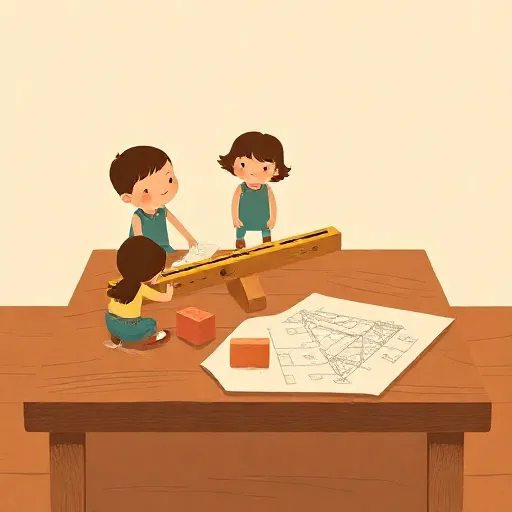
Reinhold insisted that philosophy, to be truly scientific, must be systematic. That means every claim has to connect logically, with no contradictions, and everything must trace back to one root. He put it bluntly: a system that starts from two or more unrelated first principles isn’t one system — it’s several. The only way to be sure all the pieces fit is to derive them from a single, self-evident starting point, a proposition that needs no proof because anyone who reflects will see it’s true.
This idea — that knowledge can grow from a single foundation like a tower built on one perfectly placed brick — is called foundationalism. Reinhold didn’t invent it, but he gave it an especially bold version. He thought Kant had the right materials but had just piled them up without a real foundation. So Reinhold set out to supply one with his own creation: the Elementary Philosophy.
The Principle of Consciousness: A Mirror That Never Lies?

At the heart of the Elementary Philosophy sits one proposition — Reinhold’s candidate for the first principle of everything. He called it the Principle of Consciousness. It goes like this: whenever you are conscious of something, three things are always involved. There is you, the subject who is aware. There is what you’re aware of, the object. And there is the representation — the mental picture, thought, or sensation that connects the two. In the act of being conscious, you automatically distinguish the representation from both the subject and the object, yet you also relate the representation to both.
Imagine looking at a tree. You don’t just experience a blur. You’re aware that you are the one seeing, that the tree is out there, and that the image in your mind (the representation) is not the tree itself but your way of being conscious of it. Reinhold claimed this three-part structure is a fact of consciousness — a truth so basic that you can’t deny it without using it.
He thought the Principle of Consciousness could serve as the “common root” of all our mental powers — the place where thinking and sensing, theoretical reason and practical reason, all meet. From this one self-evident starting point, he believed he could derive Kant’s entire critical philosophy, including the ideas of space, time, and the categories of understanding. It was meant to be the bottom brick under the whole tower.
Fichte’s Objection: The Brick Was Already Cracked
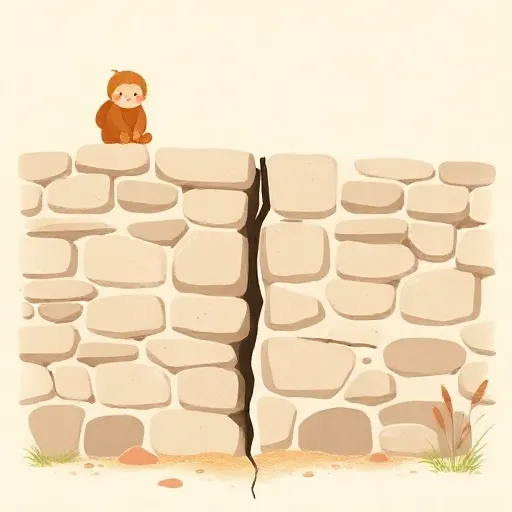
Reinhold’s idea electrified his contemporaries, especially a younger philosopher named Johann Gottlieb Fichte (1762–1814). Fichte admired Reinhold’s systematic spirit but insisted the Principle of Consciousness couldn’t do the job. His objection was sharp: the principle says the subject distinguishes the representation from subject and object. But that means the idea of a subject and of an object are already baked into the statement. Where did they come from? If the whole system is supposed to start from this one claim, it’s already smuggling in concepts it hasn’t explained.
Fichte put it another way. The Principle of Consciousness describes a finished scene — a person, a mental picture, and a thing. But what makes that scene possible in the first place? For Fichte, the real starting point had to be something more original than a fact you could state: it had to be an act. He proposed the Tathandlung, a “fact-act,” where the pure I simply posits itself — a kind of self-lighting spark that generates both the subject and the object later. In his Wissenschaftslehre (“Theory of Scientific Knowledge”), the active, self-positing I replaced Reinhold’s static mirror.
There was another crack. The Principle of Consciousness talked about representations, but where does the raw content of a representation — the specific color, smell, or shape — come from? Reinhold had to admit that something outside the subject, a thing in itself, must provide that “matter.” Yet a thing in itself, by definition, is never directly present in consciousness. So his first principle couldn’t account for the very stuff that fills our mental lives. The foundation was wobbling.
Jumping from System to System

Faced with these problems, Reinhold did something remarkable: he publicly switched sides. By 1797 he announced that Fichte’s Wissenschaftslehre was the stronger system and abandoned much of his own Elementary Philosophy. But his restless mind didn’t settle for long. Soon he felt Fichte’s philosophy was one‑sided, too. Reinhold briefly championed a rational realism built on “thinking qua thinking” — the idea that logical laws are the very structure of reality — before breaking with that too. In his final years, he took a sharp linguistic turn, arguing that thought and language are so tightly woven together that no pure, wordless first principle can ever stand alone. Philosophy, he now said, must start by cleaning up the ambiguities in language itself.
It was a dizzying journey from one “final” foundation to the next.
Why We Keep Looking for Solid Ground

Reinhold’s story matters because his dream never really went away. Deep down, many of us want a foundation — one rule, one obvious truth, that everything else can rest on. Maybe you’ve felt that when trying to settle an argument: if you could just find the one fact everyone has to accept, the rest would fall into place. Philosophers call that a first principle, and Reinhold devoted his life to finding one that would never crack.
But his story also shows why the search is so hard. Every time he thought he had hit rock bottom — the undeniable fact of consciousness — someone (including his own later self) found a new crack. That doesn’t mean the quest is silly. It means that building knowledge might be less like a tower on one brick and more like a web where many threads hold each other up. Reinhold’s restless changes remind us that being wrong, even spectacularly wrong, can be the engine that keeps philosophy moving.
Think about it
- If you had to pick one completely unshakable truth to build all your knowledge on, what would it be? What could ever make you doubt it?
- Try to describe what happens when you think of your favorite place. Can you do it without using the ideas of a “you,” a mental picture, and the place itself? Why or why not?
- The article says Reinhold’s first principle kept slipping. Is it possible that no single starting point can ever be perfect — and that this might actually be a good thing for how we learn?