
Why Does Your Job Decide How Long You Live?
The Whitehall Mystery

In 1967, a British doctor named Michael Marmot (born 1945) started an odd study. He did not give anyone medicine. Instead, he tracked 18,000 civil servants in London. These men all had steady jobs and free healthcare. None were very poor. Marmot simply watched who died and when.
After twenty-five years, the numbers told a surprising story. The higher a worker’s rank, the longer they lived. Top administrators lived longest. Executives and professionals lived a bit less. Clerks lived shorter still. The lowest-ranked workers, like messengers, died the earliest. This was not just a gap between rich and poor. It was a smooth staircase. Scientists call this a social gradient in health. Each step up the ladder brought better health, and each step down brought worse.
The gradient held firm even after Marmot accounted for smoking, blood pressure, and cholesterol. Those risk factors explained only about a third of the extra heart disease. Something else—something tied to rank—was shortening lives.
The Hidden Causes Behind the Gradient

Many people guess that bad habits cause the gap. But the Whitehall data showed a deeper truth. Even when workers had similar lifestyles, the lower ranks still suffered more. Researchers now point to social determinants of health. These are the social and economic conditions that shape your body long before you see a doctor.
Some determinants are obvious. Low income can mean poor nutrition or unsafe housing. Little education can limit health knowledge. But one of the most powerful is job control. Later studies asked workers how much authority they had over their tasks. Clerks with no say and messengers with zero control had much higher heart disease rates. Low control triggers long-term stress. The body stays stuck in fight‑or‑flight mode. Over time, stress hormones like cortisol damage arteries and weaken the immune system. Scientists call this damage allostatic load.
Other pathways add up. A childhood spent in poverty often leaves biological scars. Racial discrimination piles on extra stress. All these forces act outside the healthcare system. Yet they carve deep tracks into our bodies.
When Is a Health Gap Unfair?
The Whitehall findings raise a huge ethical question. Is it unjust that your rank decides your lifespan? Public health experts use the term health equity. A health inequity is a difference that is avoidable, unnecessary, and unfair. But what makes it unfair?
Philosophers give two main answers. The free‑standing approach says the health inequality itself is unjust. If some people die younger because of social rank, that gap is wrong—no matter what caused it. A pure equality view would demand that everyone have the same health status. But that leads to a problem. Imagine a magic wand that could shorten the lives of the healthiest to match the sickest. That would make things more equal, but it seems cruel. Philosophers call this the leveling down objection.
A subtler view is luck egalitarianism. G. A. Cohen (1941–2009) and others argue that only inequalities from unchosen circumstances are unjust. They split luck into two kinds. Brute luck covers things you never chose, like your genes or your family’s poverty. Option luck covers things you choose, like smoking or extreme sports. Health gaps from brute luck should be fixed. Gaps from option luck might be fair. So if a messenger suffers heart disease from constant low‑control stress, that is unjust. But if someone drinks heavily by choice and damages their liver, they might bear some of the cost.
The second big approach is derivative. Norman Daniels (born 1942) argues that a health gap is unjust only when its causes are unjust. He borrows ideas from John Rawls (1921–2002), a towering figure in political philosophy. Rawls imagined a just society where everyone has fair equality of opportunity. Inequalities in income are allowed only if they help the worst off—the difference principle. Daniels claims that if a society truly followed those principles, the major social determinants of health would be arranged fairly. The steep health ladder would flatten. Whatever differences remained would be just, because their social roots would be just.
So the debate is not whether health gaps matter. It is whether the unfairness lives in the health gap itself or in the unjust social structures that produce it.
Do You Deserve Your Illness?
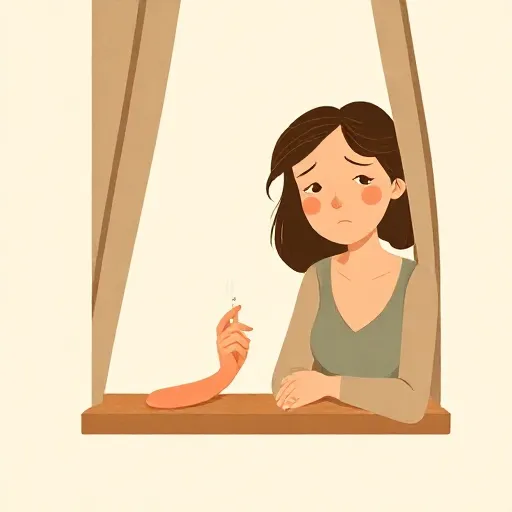
A messy part of the debate involves health behaviors—smoking, diet, exercise. Some health differences clearly come from personal habits. If someone smokes for decades and gets lung cancer, should they receive the same treatment as a non‑smoker with genetic cancer? Luck egalitarians might say no, because the smoker’s illness came from a choice. But many people find that answer harsh. Critics call this the “abandonment objection.” Punishing sick people feels cruel, especially when addiction and stress are not simple choices.
Even when a choice looks free, it is often shaped by social determinants. A lonely, overworked man might smoke for a few moments of calm. A poor family might live in a “food desert” with no fresh vegetables. Their “choices” are very different from a wealthy person’s hobby. John Rawls’s idea of the social division of responsibility offers a way out. Society must first provide fair conditions and genuine opportunities. Only then can it hold individuals fully responsible for their lifestyles. In an unjust society, the disadvantaged are not fully to blame.
Some philosophers add that poverty itself can weaken a person’s ability to make long‑term plans. The stress of never having enough makes it harder to resist immediate relief. Others warn that blaming the sick often stigmatizes the poor and distracts from the real work: fixing broken social conditions. The question remains open. Should your health be a report card on your choices, or a mirror of the world you were handed?
Building a Fairly Healthy World

If health gaps flow from unjust social structures, then the cure is not simply more doctors. It is changing those structures. One approach, called sufficientarianism, says we do not need perfect health equality. We need everyone to have enough health to live a decent life. Philosophers Madison Powers and Ruth Faden argue that justice requires securing a sufficient level of six essential things: health, personal security, reasoning, respect, attachment, and self‑determination. As long as everyone clears that bar, some remaining differences may be acceptable.
On a global scale, the stakes are enormous. Life expectancy in low‑income countries can be nearly twenty years shorter than in wealthy ones. Cosmopolitan thinkers say every human has a claim to a minimum level of health capability, no matter where they were born. Others, like Daniels, argue that global institutions must show equal concern for all people. Trade rules, drug patents, and healthcare‑worker migration all have health consequences.
These ideas shape real policies. Should every neighborhood have clean air and safe parks? Should workers have more control over their tasks? Should tobacco taxes pay for cancer care? The answers depend on what you think makes a health difference unfair.
Why This Debate Is About You
You do not need a civil service job to feel the social gradient. The zip code you were born into, the schools you attend, the air you breathe on your walk home—all of them leave traces on your future health. The philosophical question is simple but deep: when these differences strike, who owes what to whom?
Some say you have a right to be healthy. Others say society owes you fair opportunities, and your health is part of that deal. The way a society answers shapes everything from hospital funding to anti‑poverty programs. It even raises a personal question: if you find yourself more fortunate than someone else in health, what do you owe them?
No single philosopher has settled the argument. And that is exactly why it is worth thinking through for yourself.
Think about it
- If a future machine could predict at your birth that you would die ten years earlier because of your family’s income, would that be fair? Why or why not?
- Imagine a classmate who smokes because all his older relatives smoke. If he gets sick, should society spend less on his treatment than on a non‑smoker’s? Who gets to decide?
- Would it be fair if every neighborhood had exactly the same average lifespan, even if that meant lowering some people’s good health to bring everyone to the same level? Why?