If You Get Sick, Does Society Owe You Help?
The Two Sick Kids
Imagine two twelve-year-olds. Both wake up with the same sharp pain in their side, the same fever. One lives in a country where a doctor’s visit costs nothing at the door — the government pays, and nobody asks about money. The other lives where seeing a doctor means a bill, and her family doesn’t have insurance. She waits. The pain gets worse. By the time she gets care, the problem is much harder to fix.
Most people feel a gut punch hearing that second story. But why exactly? Is it just sad — or is it unjust? And if it is unjust, who owes what and why?
Philosophers who study justice and health care try to answer those questions. They ask whether societies have a moral duty to make sure everyone gets medical help when they need it. The answer sounds like it should be obvious — until you start asking who pays, what counts as “enough” care, and whether health care is even the most important thing for keeping people healthy.
This debate isn’t just theory. It shapes laws, hospital budgets, and who lives or dies. And it starts with a puzzle about what counts as fair.
What Does “Equal Access” Even Mean?
Before we can argue about whether access should be equal, we have to figure out what equal access means. That turns out to be trickier than it sounds.
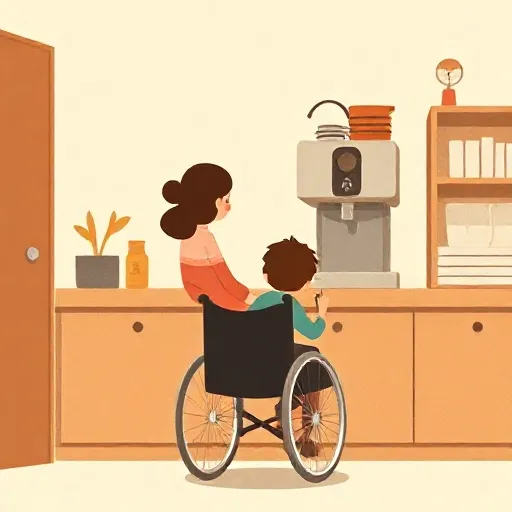
Imagine the coffee machine in a school staff room. One teacher’s desk is right next to it. Another teacher must walk down two flights of stairs, and a third uses a wheelchair and can’t reach the machine at all. Do all three have equal access? If someone offers to fetch coffee for the teacher in the wheelchair, is the problem solved?
Philosophers and health researchers disagree about how to measure access to health care. One approach — the use-per-need view — says access is equal when how much care you get depends only on how sick you are. If rich people and poor people with the exact same condition get different amounts of treatment, something unfair is happening. The system is distorted by money, geography, or discrimination.
A different view, sometimes called the modified market view, says we only owe each other a decent basic minimum of care. Above that minimum, people can buy extras if they want — fancier waiting rooms, faster appointments — just like they buy nicer cars. On this view, inequality above the minimum isn’t unfair; it’s just different preferences expressed through different budgets.
A third idea, which some American politicians advanced during recent health-care debates, says access is fair when everyone has a real choice to buy insurance. If subsidies make insurance affordable for all, then choosing not to buy it counts as a free choice. Critics of this idea point to a problem: people who skip insurance can still show up at emergency rooms, and the cost of keeping that safety net ready falls on everyone else who paid in. Those who opt out become free riders, getting the benefits without sharing the burden.
So just defining equal access forces us to take sides on moral questions. That’s a pattern you’ll see again in philosophy: the “facts” already have values baked in.
Health Changes Your Chances
One of the most influential arguments for universal access comes from philosopher Norman Daniels (born 1942). He builds on ideas from John Rawls (1921–2002), who argued that a just society must protect fair equality of opportunity — meaning your chances in life shouldn’t be determined by accidents of birth.
Daniels adds a critical link: your health powerfully shapes your opportunities. If you can’t see the board, hear the teacher, walk to school, or concentrate because of untreated pain, your range of real choices shrinks. Health, Daniels says, is about normal functioning — the ability to do the things a typical human being can do. When normal functioning breaks down, so does your chance to pursue whatever life plan you might reasonably choose.
From this, Daniels draws a bold conclusion: if a society promises to protect everyone’s opportunity range — the set of paths their lives could reasonably take — then it must also protect the health that makes those paths walkable. That means universal access to a reasonable package of preventive care, treatments, and public health measures.
Notice the word “reasonable.” Daniels doesn’t claim every possible treatment must be free for everyone. Resources are limited, and hard choices have to be made. Which treatments go into the basic package? Daniels argues we can’t settle that from an armchair. We need a fair, public, deliberative process — a version of what he calls accountability for reasonableness — where decision-makers give real reasons, listen to challenges, and can change their minds. Justice isn’t just about the right answer; it’s about the right way of deciding.
What Would a Careful Shopper Buy?

Not everyone agrees that opportunity is the right way to think about health care. Another family of arguments asks a different question: what would a prudent person choose to insure against, if the insurance market were truly fair?
Philosopher Ronald Dworkin (1931–2013) imagined a thought experiment. Suppose income and wealth were perfectly equal. Suppose everyone had the same medical knowledge as the best doctors. And suppose nobody knew their own personal health risks in advance. In that imaginary world, what health insurance would a prudent buyer purchase? Dworkin argued that whatever most people would prudently buy is what a universal system should cover.
Philosopher Allan Gibbard (born 1942) proposed a simpler version. He assumed people have a right to a decent minimum of income and then asked: from that starting point, what health insurance is it smart for everyone to buy? If a policy makes everyone’s prospects better and nobody’s worse — that’s the Ex Ante Pareto Principle — then that’s the decent minimum of care.
Both arguments share a key insight: they’re trying to figure out what we owe each other without assuming we know better than individuals what they value. But both also rely on highly idealized assumptions — perfectly competitive insurance markets, equal resources or guaranteed minimums, no gaps in medical knowledge — that don’t exist in the real world. They’re thought experiments, not blueprints.
And both arguments converge on a common enemy: the idea that a society must pay for any treatment that might save a life, no matter how expensive or unlikely to work. Dworkin and Gibbard both say that’s unreasonable. Prudent shoppers don’t buy lottery tickets with terrible odds.
The Plot Twist: Health Care Isn’t the Whole Story
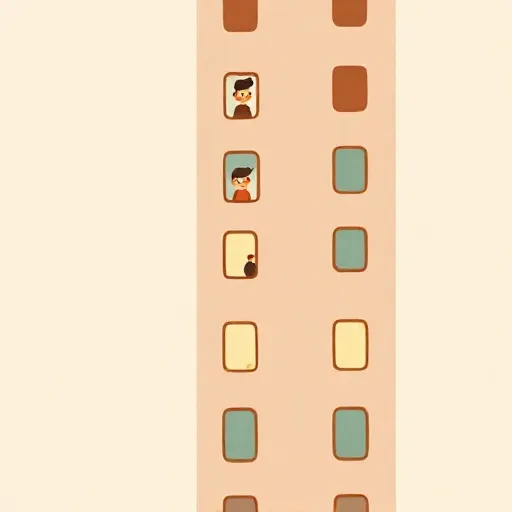
Here’s something surprising. The United Kingdom has had universal, government-funded health care — the National Health Service — since 1948. And yet, a famous set of studies called the Whitehall Studies (led by researcher Michael Marmot, born 1945) found something startling: British civil servants at the top of the job ladder live longer, healthier lives than those one rung below them. And they live longer than those below them. The pattern forms a smooth gradient, all the way from top to bottom — even though nobody in the study was poor or lacked medical care.
This is the challenge from the social determinants of health. Your health is shaped by your income, your education, your sense of control at work, whether you face discrimination, and how safe your neighborhood feels. Health care matters — but it’s only one piece of a much bigger puzzle.
So does this mean the fight for universal access is misplaced? Daniels and others respond: no, but it means health care has to be paired with other policies. Even if we perfectly distribute income, housing, and education, some people will still get sick. A just society needs a system that catches them. And the fact that other things matter for health doesn’t cancel the moral urgency of care — it adds urgency to fixing those other things too.
Philosopher Allen Buchanan (born 1948) takes a different route. He argues that while there may not be a single, clean moral right to health care, a patchwork of special obligations — to veterans wounded in service, to communities harmed by pollution, to groups owed compensation for historical injustice — plus a duty to enforce charitable giving, together add up to a legal entitlement to a decent minimum. The pluralist approach is messier, but it might fit how real societies actually reason.
Why This Messy Debate Matters to You
You might think this is a grown-up argument about insurance premiums and tax rates. But it reaches right into your life.
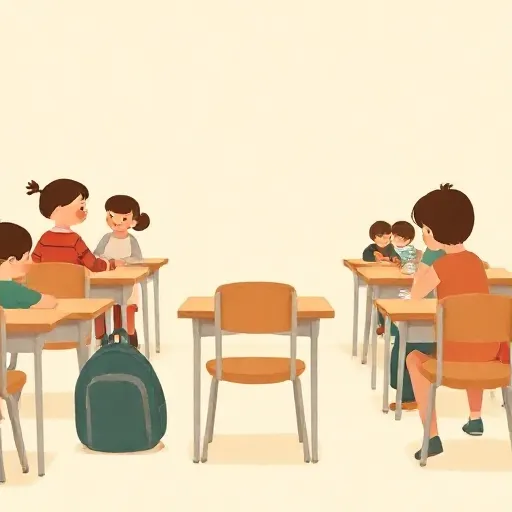
If your classmate’s asthma goes untreated because her family can’t afford an inhaler, she misses school. She falls behind. Her opportunities shrink — the same argument Daniels made about society plays out in a single classroom. If your town closes its only public clinic to save money, your own future options change, even if you never walk through its doors, because the health of the people around you shapes the world you share.
The debate also forces you to think about what kind of society you want. Should everyone queue in the same line for the same care, as Canada’s system requires? Or should we allow a basic public tier and a speedier private one, as Britain does? Is it fair that a wealthy family can buy better health for their child while another family waits? Your gut reaction to that question says something about your deepest beliefs about fairness — beliefs you’ll carry into how you vote, what you advocate for, and how you treat the people around you.
Philosophers won’t hand you a clean answer. But they’ve given you sharper tools: a clearer picture of what equal access means, an argument linking health to the chances that shape a life, and a warning that hospitals alone won’t make a healthy society. The rest is for you — and all of us — to argue about.
Think about it
- If a scientist could predict every illness you’ll ever get based on your zip code and family income, would it be fair to call those illnesses “bad luck” — or would they be something more like an injustice?
- If your country offered everyone decent basic health care but let richer people pay for faster treatment, would that bother you? Why or why not?
- You have a fixed amount of money to spend on your community’s health. Would you put more into a new hospital or into safer playgrounds, cleaner air, and better school lunches? What’s your reason?