Why a 12th-Century English Clerk Thought Moderation Was Everything
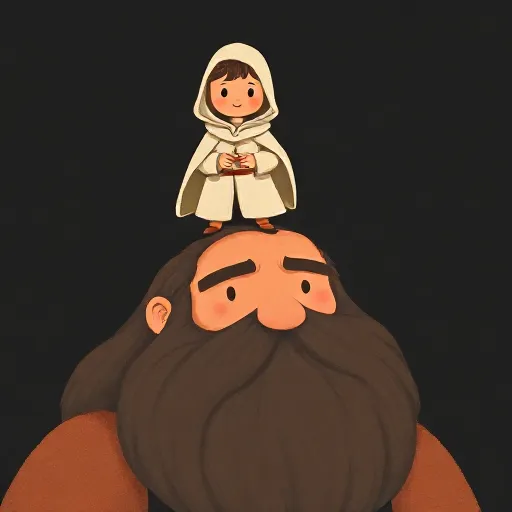
The Student Who Climbed onto a Giant’s Shoulders

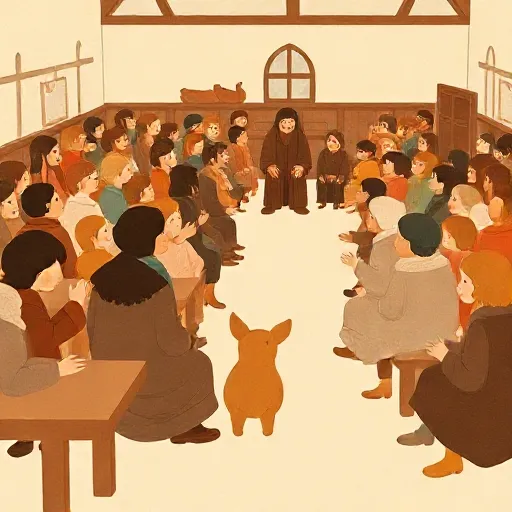
In the mid-1100s, a well-traveled English churchman named John of Salisbury (around 1115–1180) wrote down a famous saying he’d heard from his teacher, Bernard of Chartres. Bernard told his students that they were like dwarfs sitting on the shoulders of giants — able to see farther than the giants themselves, not because their eyes were sharper, but because they were lifted up by the greatness of those who came before. John loved this image. It captured exactly how he felt about learning: every generation builds on the hard work of earlier thinkers.
John’s own learning started early. He was born at Old Sarum, near Salisbury, and later studied in Paris, starting in 1136. For twelve years he soaked up philosophy, rhetoric, literature, and theology from some of the brightest minds of the century, including Peter Abelard (1079–1142), William of Conches (c. 1080–1154), and Gilbert of Poitiers (1080–1154). His education turned him into a devoted follower of ancient Roman thought, especially the writings of Cicero (106–43 BC). This love of the classical world set the stage for his own major works, the Metalogicon (a defense of real learning) and the Policraticus (a book about how to run a kingdom and live a good life), both written in the late 1150s.
How to Think Without Being Too Sure
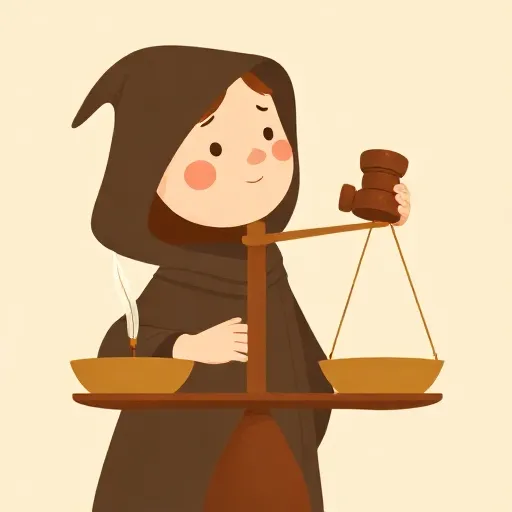
John believed that the best way to do philosophy was to follow Cicero’s New Academy — a school of thought that practiced moderate skepticism. A moderate skeptic doesn’t claim that nothing can ever be known. Instead, she admits that some things are certain (like basic mathematical truths or the fact that she exists), but on many other topics she says, “I’m not totally sure. Let’s weigh the evidence and go with what’s most probable.”
John drew a sharp line between this modest approach and a more extreme skepticism that said, “I can’t be certain about anything at all — not even that I’m doubting!” He thought that extreme view was silly and even dangerous, because a philosopher who refuses to accept any truth at all can’t love wisdom. John listed three reliable foundations we can trust: faith (beliefs taught by religion), the senses (what we see, hear, and touch), and reason (careful logical thinking).
But he also pointed to a long list of topics where reasonable people can disagree: for example, where virtues come from, whether all sins are equally bad, or what makes a law just. In such debates, John urged his students to avoid dogmatism — clinging to an opinion as if it were a proven fact. Instead, they should speak with words like “I think” or “it seems probable,” and they should always be ready to change their minds when better evidence appears. He called this the “modesty” of the Academic school, and he believed it was the only way to keep inquiry free and honest.
The Middle Path: Why Moderation Is the Secret to Virtue

John’s love of the middle didn’t stop with his theory of knowledge. He applied the same idea to moral life, insisting that every virtue (a good character trait) is a mean between two vices — just as Aristotle had taught. Courage, for instance, lies between cowardice and recklessness. John packed this rule into all his advice about education. The Metalogicon warns that if you study too little, your mind stays weak; if you study without stopping, you burn out and become muddled. Real learning needs a balance of serious reading and playful rest.
He was equally critical of the verbal duels that were popular in the schools of his day. Some teachers treated philosophy like a sport, scoring points by talking endlessly without caring about truth. John saw that as intellectual excess. After visiting old classmates, he sadly reported that they had unlearned moderation and lost all modesty. For him, arguments were only valuable if they helped people live better, not if they just showed off quick tongues. This practical concern — that philosophy must shape how we actually behave — runs through all his writings.
A Kingdom as a Body: The Body Politic
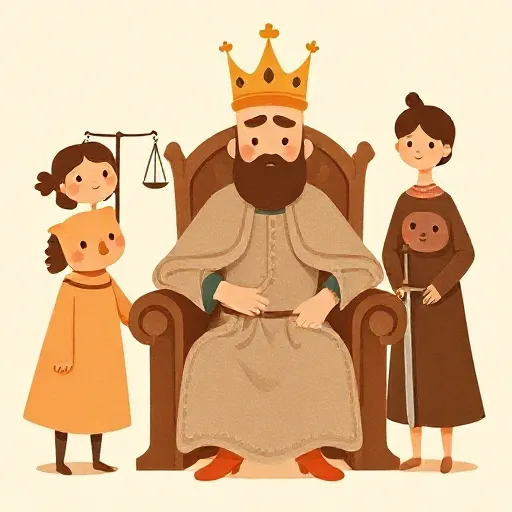
One of John’s most vivid ideas appears in the Policraticus, where he compares a whole commonwealth to a human body. He calls this the body politic. Every member of society has a function, just like the parts of your body. The prince — the ruler — is the head, guiding the whole. The senate (a council of advisers) is the heart, offering wise counsel. Judges and local officers are the senses, noticing trouble and reporting it. The financial officers who handle taxes are the stomach and intestines, digesting resources. Soldiers and tax collectors are the two hands that protect and provide. Finally, the peasants and artisans who do the physical work are the feet, supporting the entire mass.
John’s point was not simply to put people in ranked boxes. He insisted that every part, no matter how lowly, matters for the health of the whole. The feet need the head, but the head also needs the feet. Harmony comes from cooperation and a shared commitment to the common good — the benefit of everyone, not just the powerful. Justice, he said, boils down to two duties: do no harm yourself, and don’t let others do harm when you could stop it. When all the parts practice justice, the body politic thrives; when they fight or serve only themselves, it falls sick.
When the Body Gets Sick: Tyranny and the Right to Resist
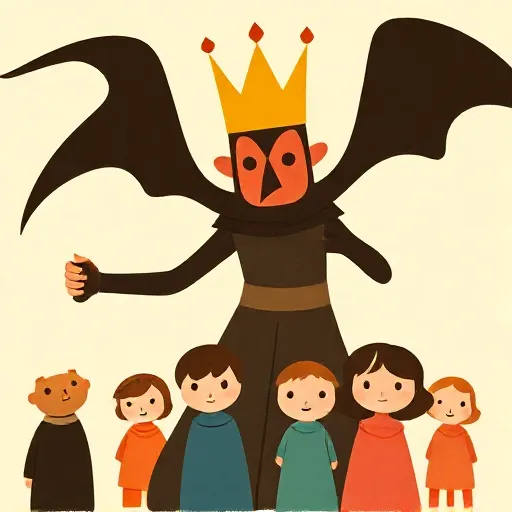
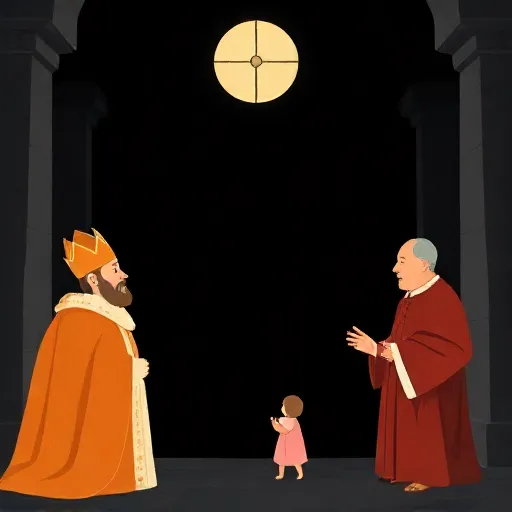
What happens if the head itself becomes diseased — if a prince rules not for the common good but for his own pleasure and power? John had a clear word for such a ruler: tyrant. A tyrant, in his view, is someone in authority who uses force to make others serve his private wishes, treating free people like tools. John warned that tyrants aren’t just kings who behave badly; anyone with power — a local official, a church leader, even a father — can act tyrannically if they crush others’ freedom for selfish ends.
John did not, however, say that citizens must silently suffer. He argued that under extreme conditions, when a tyrant’s crimes threaten to destroy the whole community and no other remedy works, it can be lawful and even a duty to remove him — by force if necessary. This conclusion, called tyrannicide, was shocking and dangerous in his day. But John placed strict conditions on it: you could not act out of private revenge or ambition; you had to be certain the tyrant was truly beyond correction; and the action had to be for the sake of justice, not personal gain. He saw it as the last, desperate medicine for the body politic, much like amputating a limb to save a life.
From the Library to the Real World: Philosophy You Can Use

John never treated philosophy as a game you leave in the classroom. He used it in his daily work as a secretary and adviser to archbishops, in his letters to friends, and even in the histories he wrote. When he was forced into exile during the conflict between King Henry II and Archbishop Thomas Becket, he comforted himself by reflecting that a true philosopher embraces poverty and defends justice even when it costs comfort. He thought that wisdom should steer every choice, from how you manage money to how you treat your enemies.
This belief — that philosophy is a guide for living, not just a set of puzzles — is John’s most lasting lesson. He didn’t think we should chase absolute, unshakeable truth about everything before we act. Instead, he taught that we can use moderate skepticism to keep our minds open, the rule of the middle to keep our desires in check, and the ideal of the body politic to keep our communities fair. He would tell you that it’s okay not to have the final answer, as long as you’re honestly seeking the wisest one you can find, and that’s true whether you’re arguing with a friend, deciding how hard to study, or someday leading a group.
Think about it
- If your whole class had to work together like parts of a body, which role would you pick and why?
- John thought that it’s sometimes okay to push back against a leader who is unfair. Where would you draw the line between complaining and standing up for what’s right?
- Is there any topic you’re so sure about that you wouldn’t even listen to the other side? How do you decide when to doubt your own beliefs?