
Are You Born Knowing Everything? The 13th-Century Monk Who Said Yes
A Shocking Claim in a Paris Classroom
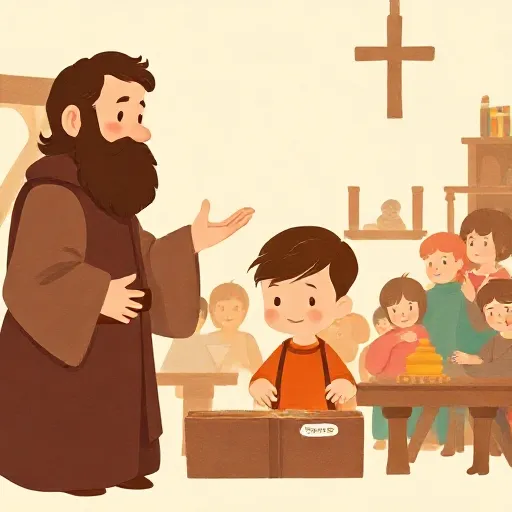
Paris, around the year 1295. A young friar named James of Viterbo (c. 1255–1307) stands before a room of theology students. He is about to tell them something that sounds impossible: You already know everything you will ever learn. Not in the way you might guess—not because you once read it in a book—but because every idea, every concept, is already sitting inside your soul, planted there before you were born.
James belonged to the Augustinian order. He had studied at the great University of Paris and now taught there as a Master of Theology. His students were used to hearing complicated arguments about God, the soul, and the universe. But this claim about knowledge was different. It challenged the standard medieval picture of how our minds work. For James, learning is not about soaking up new information from the outside world. It is about waking up what has been sleeping inside you all along.
Your Mind as a Garden Full of Seeds
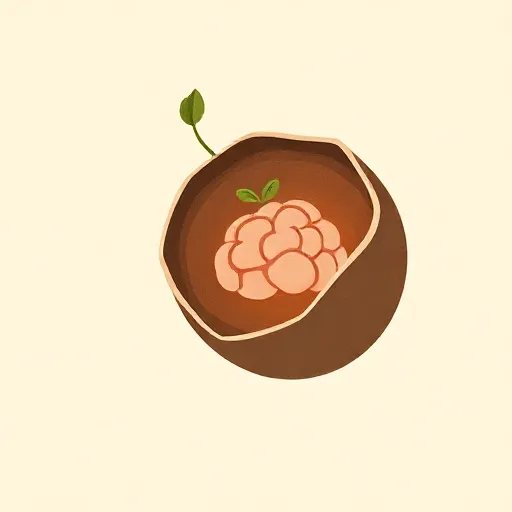
James gave these inner seeds a name: idoneitates, a Latin word that means “fitnesses” or “aptitudes.” An aptitude is a built‑in readiness to become something, like an acorn’s readiness to grow into an oak. According to James, your intellectual soul is not an empty page waiting to be written on. It is more like a garden of seeds, each one containing the blueprint of a possible thought—a thought about dogs, about numbers, about justice, about anything you could ever understand.
He did not just say this about our capacity to think. He believed the same pattern held for the senses (the soul already contains the seeds of all sensations) and for the will (the soul holds inborn leanings toward every kind of choice). But his boldest claim was about the mind’s ideas. For James, innatism—the view that we are born with knowledge—was not a metaphor. It was a detailed theory: the intellect comes equipped with a “general fitness” that splits into countless “specific fitnesses,” one for each kind of thing we can know.
Of course, James knew that a newborn baby cannot recite the Pythagorean theorem. His answer was that these fitnesses are incomplete actualities. They are not yet awake. Like a sprinter crouched at the starting block, they hold a real potential that still needs a trigger.
Why Doesn’t It Feel Like We Know Everything?

If all knowledge is already inside you, why do you ever feel confused? James’s answer was that the seeds need something to wake them up. They will not sprout on their own.
Medieval philosophers often explained learning through abstraction. On that model, our senses give us images (called phantasms, from the Greek for “appearance”), and a special mental power called the agent intellect strips away specific details to form a universal idea—like extracting the concept “dog” from seeing many particular dogs. That universal is then stored in the possible intellect, the receiving part of the mind.
James rejected that whole picture. Since the ideas are already in the soul as fitnesses, there is no need for an agent intellect to pull them out of sense‑images. So he denied that the agent intellect even exists as a separate power. Instead, he said, the role of the phantasm is not to provide the idea but to rouse it. He called this an excitatory cause—a kind of gentle nudge or wake‑up call.
Think of it like a piece of music stored as silent data on a phone. The data is real and complete, but you hear nothing until you tap “play.” For James, the phantasm (the sensory image of a dog) is like pressing play. It activates the already‑present fitness, which then moves itself to become full‑fledged knowledge. He described this as formal self‑motion: the mind moves itself into act, fueled by its own inner resources, while the outside world supplies only the trigger.
James’s Middle Way: Neither Just Inside Nor Outside

James loved to find a path between two opposing views. He believed that extreme positions tended to miss part of the truth. His theory of knowledge is a perfect example of this habit.
On one side were those who said all knowledge comes from the senses through abstraction. On the other side, a pure innatist might claim the mind needs no help from the outside world at all. James took a middle road: the content of our thoughts is already inside us as innate fitnesses, but we cannot access it without the triggering spark of experience. The fit is real, the trigger is real, and both are necessary.
This style of finding a “middle way” shows up everywhere in his work. When later thinkers argued about whether kings get their political power directly from God or only through the Pope, James stepped in with a compromise: a ruler’s authority, he said, has a “material and incomplete” origin in natural human inclinations, but it is “perfected and formed” by the spiritual power of the Church. You can disagree with his solution, but you can always see him trying to hold more than one piece of the puzzle at once.
In his theory of knowledge, the middle way gave him a daring answer: the intellect is the main cause of its own knowing, yet it still needs the world to wake it up. No other medieval teacher gave the inner seeds so much weight.
Why It Still Matters: The Seeds of Today’s Debates

You might never have heard of James of Viterbo. But scholars notice something striking: his theory sounds a lot like the one that would become famous three hundred years later, when the philosopher René Descartes argued that the mind comes furnished with ideas from birth. That later debate—are we born with knowledge, or is the mind a blank slate?—has never really stopped. It lives on today in questions about how much babies understand, what machines can learn, and whether some abilities are “hard‑wired.”
James’s answer still has something to offer. If you have ever understood a new idea so quickly that it felt more like suddenly seeing something you half‑knew already, you have touched the kind of experience his theory tries to explain. It may not prove that all knowledge is already inside you. But it does suggest that learning might be more than just storing facts. It might also be a process of recognition.
The seeds James imagined were planted in the soul by God, a claim that belongs to his medieval world. But the deeper puzzle remains: where do our thoughts really come from, and why does the mind seem so ready to grasp certain truths? That puzzle is still growing.
Think about it
- If all knowledge is already inside you, why do you need teachers? What exactly do they do?
- Can you think of a time when you suddenly understood something complex and it felt like you were “remembering” it rather than learning it for the first time?
- Imagine you meet an alien who has never seen a cat. If James is right, would that alien already have the idea of “catness” tucked away inside? Why or why not?