Why Do the Japanese Love Cherry Blossoms That Fall So Quickly?
The Cherry Blossoms That Make You Feel the Sadness of Things
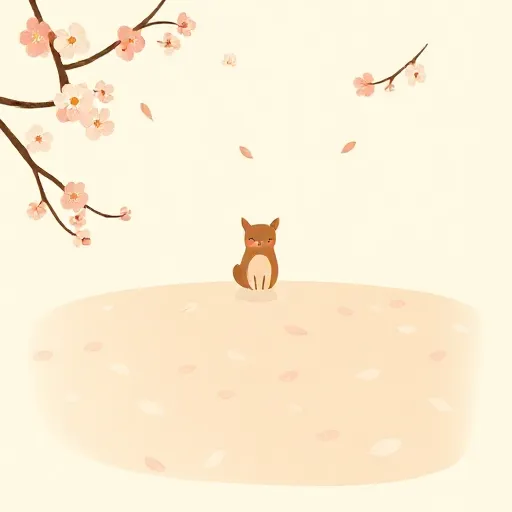
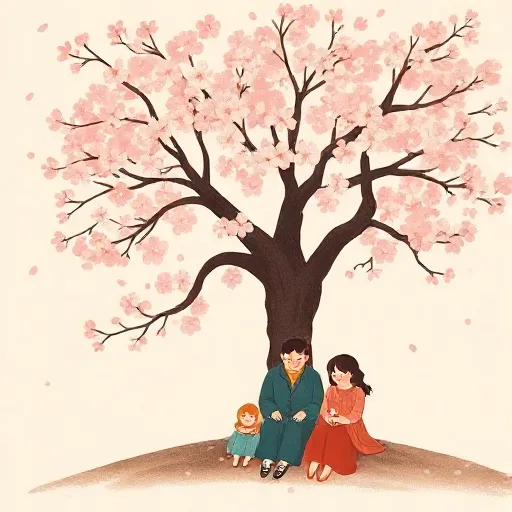
It is a warm April afternoon in Kyoto. Thousands of people crowd the parks, but they are not here for a concert or a game. They are watching the cherry trees. The pale pink blossoms will only last a few more days, and everyone knows it. There is laughter, music, and picnics — but also a quiet, wistful feeling hanging in the air. The Japanese call this feeling mono no aware, the bittersweet awareness that nothing lasts.
The idea comes from Buddhism. In Japanese Buddhist thought, reality is constant change, or mujō — impermanence. There is no hidden, perfect world behind the one we see. The world of passing moments is all there is. Instead of despairing over this, many Japanese artists and thinkers have celebrated it. The Buddhist priest Yoshida Kenkō (c. 1283– 1350) wrote in his Essays in Idleness that if people never faded away, the world would lose its power to move us. The very uncertainty of life, he argued, is what makes it precious.
The classic war tale The Tale of the Heike opens with the same thought, describing temple bells that ring out the truth that all things must pass. The proud do not endure; they are like a dream on a spring night. For centuries, the most admired stories and poems in Japan have been those that capture this quiet sadness at the heart of things. In the 18th century, the scholar Motoori Norinaga (1730–1801) showed that the whole of the world’s first novel, The Tale of Genji, is a study in mono no aware — a deep sensitivity to the emotional texture of fleeting moments.
Wabi: Why a Cracked Teacup Can Be More Beautiful Than a Perfect One
Kenkō once asked a surprising question: should we look at cherry blossoms only when they are in full bloom, or the moon only on a cloudless night? He thought not. Branches about to blossom, gardens strewn with fallen petals — these, he said, are even more deeply moving. This is an early expression of wabi, an aesthetic that finds beauty in the simple, the understated, and the imperfect.
Wabi was refined to an art in the Japanese tea ceremony. The Nampōroku, a 17th‑century record of the tea master Sen no Rikyū’s sayings, explains that in the small tea room every utensil should be “less than adequate.” A bowl with a slight crack, carefully repaired, was often valued far more than a flawless one. The wabi ideal was not about poverty or neglect; it was about moderation. A meal for a wabi gathering was to be a single soup and two or three dishes — nothing elaborate.
The novelist Tanizaki Jun’ichirō (1886–1965) captured wabi’s deepest mood in his essay In Praise of Shadows. He described the special alcove, or tokonoma, in a traditional tea house. Nothing is painted on its plain wood walls. Instead, an empty space is marked off, and the dim light that enters gathers into shadows. There is nothing there — and yet, gazing into that simple darkness, one feels complete silence and a kind of immutable calm. The genius, Tanizaki wrote, was that instead of adding something beautiful one simply removed part of the wall and let emptiness become the art.
The Tea Master Who Made Everyone Equal — By Making Them Crawl
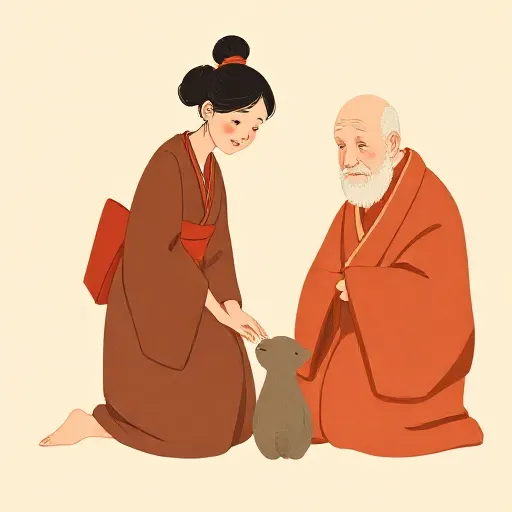
Sen no Rikyū (1522–1591) did more than anyone to shape the tea ceremony into a living philosophy. In 16th‑century Japan, society was rigidly divided. At the top were samurai warriors; at the bottom were farmers and merchants. Tea gatherings among the rich were often displays of wealth, featuring rare Chinese porcelain and lavish decorations. Rikyū inherited a different tradition — the “grass‑hut” style that celebrated the humble life of the hermit or farmer — and he pushed it to its logical conclusion.
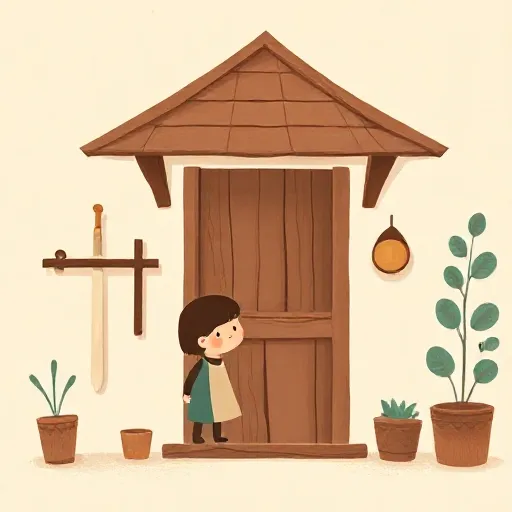
Rikyū’s version of the ceremony, called Wabicha, was designed to erase social rank the moment a guest arrived. He built tea huts with a single tiny entrance, the nijiriguchi, just 60 centimeters square. No one — not even the mightiest warlord — could enter without crouching and squeezing through. And before crawling in, every guest had to leave their long swords outside on a specially built rack. Inside the hut, with its raw unfinished walls and simple bamboo utensils, no signs of wealth or status were allowed. Even conversation about one’s job or rank was forbidden.
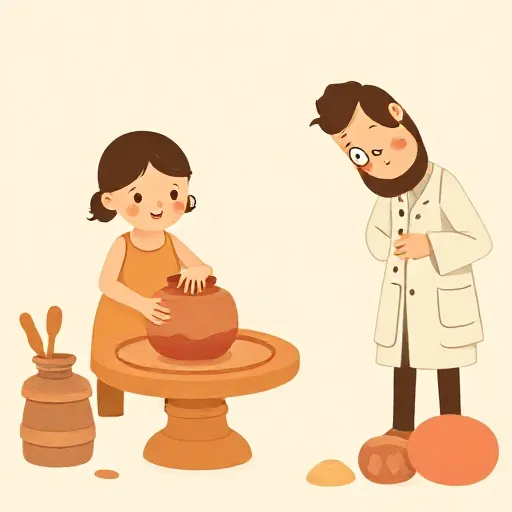
To replace the expensive imported wares, Rikyū worked with a local potter named Chōjirō to create Raku pottery — rustic earthenware, often asymmetrical, imperfect in shape, and fired with methods that let nature leave its mark on the clay. These bowls embodied wabi: they looked like something a farmer might have made, not a court artist. Rikyū also commissioned simple ink scrolls from local Zen monks instead of costly Chinese paintings. In his tea room, a rich merchant and a poor farmer truly sat as equals. The beauty of the ceremony lay in the shared moment of quiet, not in the objects’ price tags.
Rikyū’s ideas were so radical that they eventually threatened the power of the warlord he served. He was ordered to take his own life in 1591. His legacy, however, lived on: the tea ceremony became one of Japan’s most enduring arts, and the values of wabi spread far beyond the tea hut.
Sabi: The Beauty of Things That Have Grown Old
Closely related to wabi is sabi, a word that began with meanings like “desolate” and “rusty.” Over time it came to describe the beauty of something that has aged well — the patina that makes an old wooden temple, a weathered stone, or a simple iron kettle more beautiful than when it was new. Tanizaki put it simply: “We love things that bear the marks of grime, soot, and weather, and we love the colors and the sheen that call to mind the past that made them.”
For Tanizaki, sabi reached even into the most ordinary places. He wrote with delight about the traditional Japanese toilet — a small wooden structure set apart from the house, surrounded by leaves and moss, where one could look out at the sky and trees. Polished porcelain and shiny metal, he argued, could never match the warmth of wood that had darkened with age. The old materials connected a person to nature and to time itself.
The Silver Pavilion at Ginkakuji in Kyoto is one of the finest examples of sabi. It was meant to be covered in silver leaf, like the famous Golden Pavilion across town, but it never was. Instead, its bare wood darkened gracefully over centuries, becoming an object of quiet, profound beauty. In the late 20th century, the Golden Pavilion was finally coated entirely in gold leaf — and longtime Kyoto residents complained that it would take hundreds of years for it to gather enough sabi to be worth looking at again.
Why This Matters for Your Own Life
The Japanese aesthetic of impermanence is not just a museum piece. It offers a different way of seeing the world around you, especially the things you might otherwise overlook. That old bicycle with the chipped paint, the frayed corner of a favorite blanket, the way your friend’s laugh changes as they grow up — none of these are perfect, and none will last. Yet they are beautiful precisely because they are passing.
When you understand mono no aware, a wilting flower can feel more precious than a fresh one, because it reminds you that the bloom was real and limited. When you get the idea of wabi, you might notice that the emptiness of your room, with just a few things you love, can feel more restful than a space crammed with glossy new gadgets. And sabi might make you appreciate the worn path in the park, the old tree with its twisted bark, or the hand-me-down jacket with its soft, faded color — things that carry a quiet story of time.
These ideas do not ask you to stop enjoying what is bright or new. They simply add another layer to your vision, a way of finding depth and calm in a world that is always changing. Next time you see cherry blossoms falling, or a cracked mug still holding your drink just fine, you may feel a little of what Kenkō and Rikyū felt: not sadness alone, but a full, rich appreciation for a life that will not stay still.
Think about it
- Think of an object you own that is old or broken but that you love anyway. What makes it special to you?
- If everything in the world lasted forever, do you think we would appreciate anything as much? Why or why not?
- Some people say “new is always better.” After learning about wabi and sabi, do you still agree? Why might an old, worn thing be worth keeping?