Is a Rock a Crowd of Tiny, Feeling Minds? James Ward’s Panpsychism
A Boy Alone with the Sea Birds
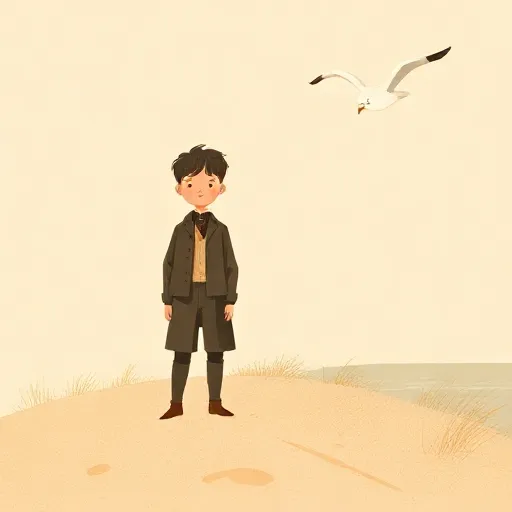
James Ward (1843–1925) grew up poor in northern England. His father’s business failures left the family scraping by, and at age thirteen Ward was left to fill his own days. He wandered for hours on the wild sandhills near Waterloo, just outside Liverpool, alone with his thoughts and the wheeling sea birds. Those solitary years lit a fire in him: a love of nature and a powerful sense that there was more to the world than the hard, lifeless matter scientists described.
That question — what is the world really made of? — became the engine of his whole life. In Ward’s day, two answers dominated. Both, he thought, fell short in a way you might not expect.
Two Tired Answers: Stuff and the One Big Mind
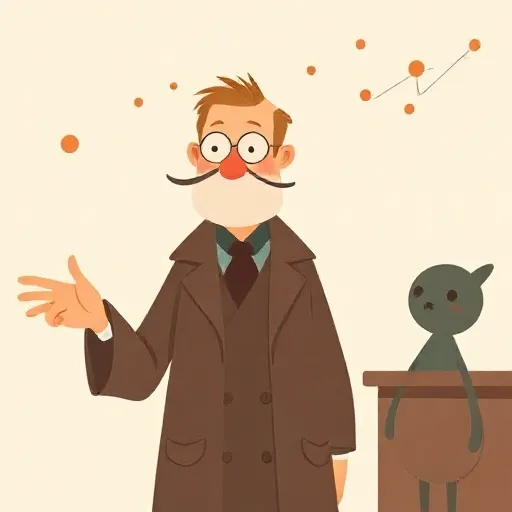
The first answer was scientific materialism. This view says reality is nothing but tiny material particles, like miniature billiard balls, obeying strict laws of motion. Every event — including your own thoughts — would be just atoms knocking around. Ward saw a deep problem: a universe of lifeless particles cannot explain where life comes from. There is no magic recipe that turns purely dead stuff into a living, feeling creature. Materialism also makes the world look like a single clockwork track that could never have been otherwise. Yet we constantly see surprises, new events, genuine change. Ward called that openness contingency, and he took it as a plain fact that any good philosophy must respect.
The second answer was absolute idealism, which was hugely popular in Ward’s England and Germany. This view says the entire universe is really one enormous Mind or Spirit, and all the separate things we see — tables, mountains, other people — are just appearances of that One. The leading British idealist, F. H. Bradley (1846–1924), even admitted that he could not explain why the One appears as a messy many in the first place. That was exactly Ward’s complaint. If everything is ultimately one mind, why does it disguise itself as a crowd? Absolute idealism, Ward decided, explains nothing.
So Ward carved a third path. He argued that reality must be a pluralism — a community of many distinct minds, not one big one and not dead matter.
From Leibniz’s Closed Minds to Ward’s Open Windows
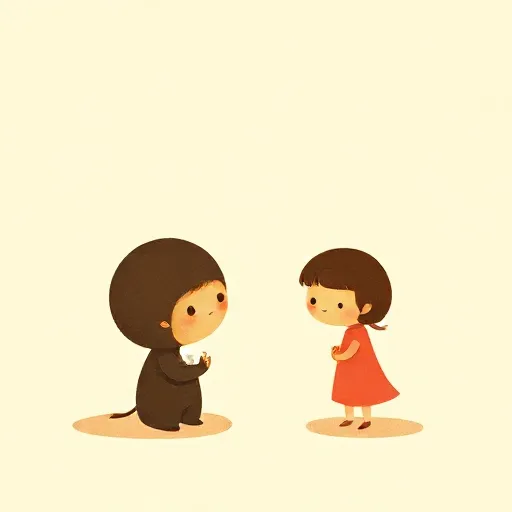
To build his picture, Ward borrowed from a giant of earlier philosophy: Gottfried Wilhelm Leibniz (1646–1716). Leibniz had proposed that the ultimate units of reality are monads — simple, living substances that are like tiny souls. Each monad has its own inner stream of perceptions and appetites. But Leibniz also claimed a strange thing: monads have “no windows.” That means no monad can directly affect any other. God had to set up a pre‑established harmony at the beginning of time, so that each monad’s inner movie would stay synchronised with every other’s, like thousands of perfectly cued-up music boxes.
Ward found this unacceptable. For one thing, pre‑established harmony eliminates real contingency. If everything is already scripted, nothing genuinely new can ever enter the world — evolution would just be the unrolling of a finished plan. More importantly, Ward charged Leibniz with a simple category mistake. Leibniz thought of monads as if they were tiny things that would have to pass properties back and forth, which indeed seems impossible. But Ward said monads are not things at all. They are subjects — feeling, striving centers of experience, much like you yourself. And subjects, Ward insisted, can directly influence one another. We feel ourselves acting on the world and being acted on, all the time. So Ward boldly reversed Leibniz’s slogan: all monads have windows.
These living subjects are the real building blocks of everything.
How a Rock Becomes a Society
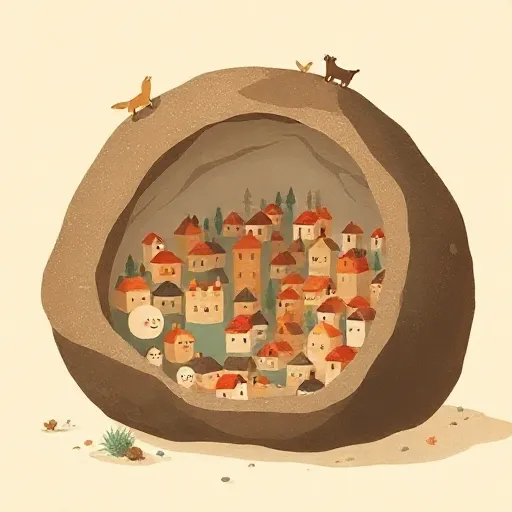
If the world is crowds of open-windowed subjects, how do we get the solid, predictable world we know — rocks, water, the law of gravity? Ward gave a startling answer: nature works like a society.
Imagine, he said, a huge multitude of people suddenly placed in a paradise with all the resources they need. At first it would look like chaos. But over time, they would settle into roles — farmers, builders, teachers — and a stable social order would emerge. An outside observer might mistake this organised civilisation for a single machine. Yet it was built entirely by the free choices of many minds, cooperating and clashing, making habits and occasionally breaking them.
Ward thought the physical world works the same way. Take a rock. It is not a heap of dead atoms. It is a society of monads that, over cosmic time, fell into a repetitive modus vivendi — a way of living together. Some monads, he suggested, are like restless inventors, always pushing toward new forms of self‑realization. Others are like habit‑loving homebodies, clinging to the familiar. When a group of monads becomes dominated by the passive, routine‑loving type, their behaviour settles into a monotonous pattern. That pattern is what we perceive as the rock’s solidity and its obedience to physical laws.
On this view, what we call natural laws are not eternal decrees. They are statistical regularities — habits of vast societies of monads, acquired over time, and possibly destined to change as new, bolder monads nudge history in fresh directions.
The American philosopher Charles Sanders Peirce (1839–1914) had a similar idea. But where Peirce said absolute chance (what he called tychism) lies at the bottom of all things, Ward disagreed. Monads are not coin‑flipping machines. Every monad acts for a reason — either to stay safe (self‑preservation) or to pursue something better (self‑realization). So the world is not random. It is crowded with purpose, even though no single plan controls it all.
Mind Dust versus Living Minds
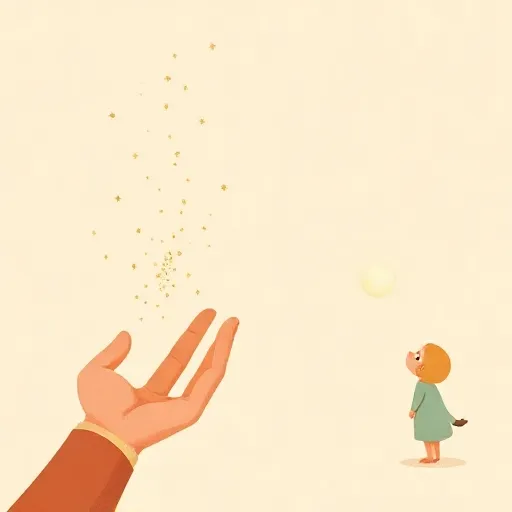
If monads are everywhere, then everything has at least a whisper of experience. This is panpsychism, and Ward pushed it all the way: reality consists entirely of experiencing subjects. In his time, another panpsychist, William Kingdon Clifford (1845–1879), proposed a different version. Clifford imagined that each atom of ordinary matter is paired with a tiny atom of mind‑stuff — a little shred of experience, something less than a full thought. When atoms combine into a brain, their mind‑stuff combines into a human consciousness.
Ward found three fatal cracks in Clifford’s picture.
First, the plan of pairing every material atom with a mental atom depends on knowing what an atom really is. Physics was already dissolving the old solid atom into vibrations and fields. So what is the mental partner of a vibration?
Second, mind‑stuff smuggles in an idea Ward thought made no sense at all: experience with no subject. According to Clifford, a speck of mind‑dust could exist all by itself, not belonging to anyone. But Ward insisted that experience is always owned — every feeling is someone’s feeling. There are no orphan sensations floating loose. You cannot build a unified self‑consciousness out of subjectless scraps any more than you could build a city out of scattered bricks that belong to nobody.
Third, even if you believe in mind‑dust, you still face a puzzle just as big as the one you started with. How do billions of tiny mind‑bits suddenly fuse into one coherent “me”? Clifford had not really closed the gap between matter and mind; he had only shrunk the pieces.
Ward’s own Leibnizian picture dodges all three problems. The physical world is not a one‑to‑one mirror of single atoms; it is the massive, confused appearance of countless monads interacting. Every scrap of experience belongs to a monad that is already a genuine unity. And there is no magic jump from non‑experience to experience, because experience was there from the start, growing fuller through the social push‑and‑pull of monads.
Of course, Ward’s theory raised huge questions of its own. If your mind is the dominant monad ruling your body’s lesser monads, why don’t you feel your own neurons directly? How exactly does one subject reach out and influence another? And where does interaction happen, if monads are not in ordinary space? Ward freely admitted he had no satisfying answers. He left those riddles for others.
A Cosmic Artist and an Unfinished World

Ward did not stop with nature. He thought his picture of free, striving monads pointed toward a different kind of God. He acknowledged that God’s existence cannot be proved. But a universe of interacting monads, left to itself, might simply collapse into conflict or boring routine. Something — or Someone — had to keep luring history toward richer harmony.
So Ward imagined God as a Cosmic Artist, who gives the world its existence and direction without turning monads into puppets. If God pre‑programmed every detail, genuine novelty would again be impossible. So Ward proposed that God limits his own power. He creates creatures who are themselves creators of new events. As a result, even God does not know every detail of the future — though, knowing all tendencies and possibilities, he is never truly surprised. God’s own knowledge grows as history unfolds.
This was a bold departure from the timeless, unchanging God of Leibniz and classical theology. Ward called it a developing God, one who genuinely relates to the world. But, with his usual honesty, he confessed that how God influences the world “is to us inscrutable.”
Why Ward Still Whispers in Today’s Debates

After Ward’s death, his philosophy was largely swept aside by a new wave of thinkers who cared more about logic and language. Yet his ghost has never entirely left the room. Today, the mind‑body problem is as fierce as ever. How does the wet, grey tissue of a brain produce the technicolour show of your inner life? Frustrated by the difficulty of squeezing mind out of matter, respected contemporary philosophers — Thomas Nagel, David Chalmers, Galen Strawson — have revived panpsychism as a serious option. The idea that experience may be a fundamental and widespread feature of reality, rather than a freak accident of evolution, is very much alive.
Ward also left a quieter legacy. He lived his own philosophy of the striving monad. From a bankrupt childhood, through a painful loss of faith, to an honored chair at Cambridge, he kept wrestling with the hardest questions. His favourite phrase was a German one: Das Denken ist schwer — thinking is hard. He never pretended it was easy. But he believed in the power of many minds, each reaching out through its open windows, slowly building a more connected and more interesting world. He called it having “faith in light to come.”
Think about it
- If you thought a rock was really a society of tiny, feeling beings, would you treat it differently than you do now? Why or why not?
- Imagine you could build a friend by gluing together a hundred tiny, mindless parts. At what point, if ever, would the pile start to feel something — and how would you know?
- If the laws of nature are just habits that could change over billions of years, does that make the universe more exciting or more unsettling?