

Are You a Whole Person? The Search for Integrity
What does it really mean to have integrity?

You promised your best friend you’d help them build a model volcano after school. Then another friend invites you to see a movie you’ve been dying to watch. You feel two strong tugs — loyalty and excitement. You don’t just want to flip a coin. You want to be someone whose life makes sense, someone whose actions match what really matters to you. Philosophers call that quality integrity. But what exactly is it? And why is it so hard to hold onto?
The integrated self: making your desires fit together
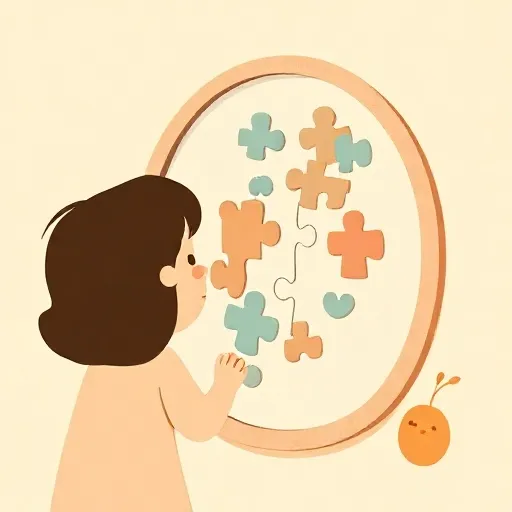
One famous answer comes from Harry Frankfurt (1929–2023). He thought integrity is about putting the different parts of your personality into a harmonious, whole self. You have many desires — what Frankfurt calls first-order desires: you want to eat ice cream, you want to practice guitar, you want to scroll on your phone. But you don’t just act on whatever desire is strongest at the moment. You also have second-order desires — desires about which first-order desires should win.
For example, you might want to eat the whole tub of ice cream (first-order), and you also want to want to eat healthily (second-order). When you wholeheartedly endorse the desire to eat healthily and push aside the ice-cream craving, you aren’t just fighting a battle — you are deciding what kind of person you are. Frankfurt said that someone who simply acts on every passing impulse without caring which desire truly belongs to them is a wanton. Integrity requires that you take a stand: you identify with certain desires and “outlaw” others, building a self that you fully own.
To have integrity, on this view, is to achieve wholeheartedness — a state where your higher-order desires and your lower-order desires are in harmony. No unresolved conflict, no wavering. You aren’t secretly wanting one thing while forcing yourself to do another. You become your decision.
But critics spotted a problem. Imagine a used-car salesperson who wholeheartedly embraces the goal of selling cars for as much money as possible, happily lying to every customer. Inside, he’s perfectly integrated — no conflict, no guilt. Yet would you call him a person of integrity? Most of us would hesitate. Being wholehearted about a lousy goal doesn’t feel like integrity. And suppose a friend wholeheartedly pursues nothing but making everyone like her, no matter what. That seems spineless, not admirable. So something seems missing from the pure self-integration picture.
The identity view: staying true to who you are

Bernard Williams (1929–2003) proposed a different approach. Integrity is not about tidying up your desires inside. It’s about holding fast to the commitments that make you the person you are. These aren’t casual interests — he called them identity-conferring commitments or sometimes ground projects. They are the things that give your life its point and direction. If you lost them, you wouldn’t just be sad; you’d lose your grip on your own identity.
Imagine you’ve been a committed pacifist your whole life. You believe deeply that making weapons is wrong. Now imagine you’re offered a well-paying job in a weapons laboratory. You could take the job and secretly dislike it, but that would mean ignoring the commitment that has shaped who you are. For Williams, acting with integrity means acting in a way that stays true to those deep commitments — even when it costs you. It’s not about having no conflicts inside; it’s about not betraying the person you have become.
But this view also draws fire. First, it seems to make integrity a matter of sticking to your commitments no matter what — but what if your deepest commitment is to something terrible? A wholehearted criminal could claim integrity just as much as a devoted doctor. Second, we expect people of integrity to act with honesty and decency in everyday, not just when their core life project is at stake. If a person cheats on homework but is deeply committed to their music, we still feel their integrity is tarnished. Finally, if integrity is just holding onto your identity, can it really be a virtue — something we admire and strive for? Williams himself thought integrity wasn’t exactly a virtue in the way courage or generosity are; it’s more like a structural fact about a person. But many of us think integrity is a virtue — a quality worth cultivating.
Standing for something: integrity and others

Cheshire Calhoun (born 1955) argued that integrity isn’t just a private inner arrangement. It’s a social virtue — it involves how you relate to other people’s judgments. A person of integrity, she says, treats their own best judgment as something that matters to others, and stands up for it within a community of people trying to figure out what’s worth doing. Integrity means you don’t lie about your views, hide them under pressure, or sell them out for rewards. You put your real convictions on the table.
This helps explain why fanatics don’t seem like models of integrity even if they are perfectly wholehearted. A fanatic ignores the views of others entirely; they don’t treat other people’s deliberations as worth taking seriously. Calhoun says integrity requires proper regard for both your own judgment and the judgment of others. It’s not just stubbornness. But what counts as proper regard? That’s tricky. Sometimes a person of integrity must stand firm in the face of a whole community. Was Galileo lacking integrity because he didn’t respect the astronomical views of his time? We need a delicate line: you can disagree strongly while still respecting others as fellow thinkers.
The social view also pushes back against the idea that a genocidal Nazi could have integrity. If integrity involves proper respect for others’ judgment, and that respect has moral weight, then someone who denies the moral standing of entire groups fails that test. Many philosophers conclude that integrity does have some moral limits: you can’t hold truly abhorrent commitments and count as a person of integrity. But exactly where to draw the line remains a live debate.
Integrity as a virtue: the balancing act

If integrity is a single quality, what kind is it? Williams thought it didn’t supply a person with a characteristic motivation the way generosity does. But one influential idea is that integrity is a cluster concept — it’s not one clean trait, but a bundle of related character strengths that together make a person whole. Thinkers like Cox, La Caze, and Levine suggest that integrity stands opposed to two families of failure. On one side are traits like rigidity, dogmatism, fanaticism, and preciousness — you stick to a party line so tightly you can’t grow or change. On the other side are capriciousness, wantonness, self-deception, hypocrisy, and weakness of will — you have no stable self to be true to.
A person of integrity lives in the fragile space between these extremes. That means you need self-knowledge to see your own desires and commitments honestly, the flexibility to revise them when you learn something new, and the steadfastness not to abandon them under pressure. It’s a never-ending process, more like keeping a plant alive than building a machine. You don’t achieve perfect wholeness and then stop; you keep adjusting as you grow.
Why integrity matters: a collision with moral rules

Bernard Williams used integrity to launch a famous attack on a popular moral theory: act-utilitarianism, the view that you should always choose the action that produces the most overall happiness for everyone. Suppose you are George, a pacifist chemist struggling to support your family. You’re offered a job making chemical weapons. If you turn it down, the job will go to someone more eager and produce even more weapons. A utilitarian calculation suggests you should take the job, because that maximizes everyone’s well-being: your family thrives and fewer destructive weapons are made overall.
But Williams argued this would attack your integrity. It asks you to set aside your deepest, identity-conferring commitment to pacifism and act as if it were just one preference to be weighed. Utilitarianism treats you as a mere channel for producing the best outcome, not as someone whose actions must flow from convictions that define you. To act with integrity, you cannot simply do what the numbers say; you must act from motives that are genuinely yours.
Critics shot back in several ways. Some built versions of utilitarianism that allow you to give extra weight to your own projects. Others said moral demands really are that stringent: maybe sometimes integrity must be sacrificed to prevent great suffering. A powerful reply is that a committed utilitarian would identify with the goal of maximizing happiness; doing so wouldn’t violate their integrity because their deepest commitment is the utilitarian principle itself. But that doesn’t settle the question for someone like George, who isn’t a utilitarian. The debate shows that our ideas about integrity shape what we expect from a decent moral theory — and that a theory that asks you to abandon who you are feels wrong.
So what does this mean for you?

Every time you feel pulled between studying and hanging out, between being loyal and speaking up, you’re doing a small version of what these philosophers are talking about. Integrity isn’t just a fancy word for not cheating on tests. It’s the ongoing project of becoming someone whose actions, commitments, and convictions fit together in a way you can stand behind. It means knowing yourself well enough to know what you truly stand for, and having the courage to act on it — even when it’s inconvenient. And because you live among other people, integrity also means figuring out how to hold onto your best judgment while still treating others’ views with real respect. That balance is one of the hardest things you’ll ever learn.
Think about it
- Could you still be a person of integrity if your deepest commitment changed completely — say, from wanting to be an artist to wanting to be a scientist? What would it take for that change to feel honest, not like giving up?
- If someone is wholeheartedly committed to causing harm, do they have any integrity at all? Why or why not?
- Imagine you are in George’s shoes: taking the weapons job would help your family and slow down weapons production, but compromise your pacifism. How would you decide, and what would integrity demand of you?