Do Your Genes Carry a Secret Message?
A Monkey’s Alarm
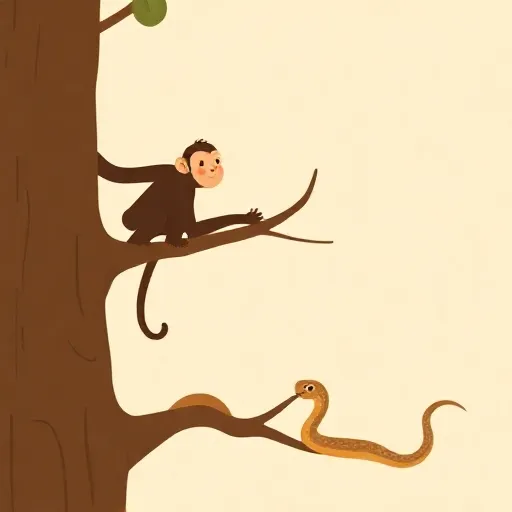
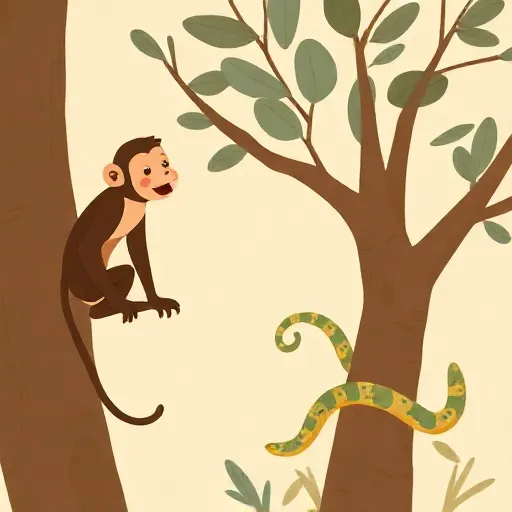
You are walking through a forest in Kenya. High in an acacia tree, a vervet monkey spots a snake and lets out a short, sharp chirp. Instantly, other monkeys climb higher or scan the ground. Scientists say the alarm call carries information about a snake. But what does that really mean? Is the call a kind of sentence — “Watch out, snake!” — or is it simply a noise that happens to change behavior, like a loud crash that makes you jump? And if a gene in your body “codes for” brown eyes, is that a message, or just chemistry?
This is the puzzle of biological information. It’s a fight over a word scientists use all the time, and it’s far from settled. To make sense of it, we need to travel from noisy telephone lines to the inner workings of your cells.
Two Ways to Think About Information
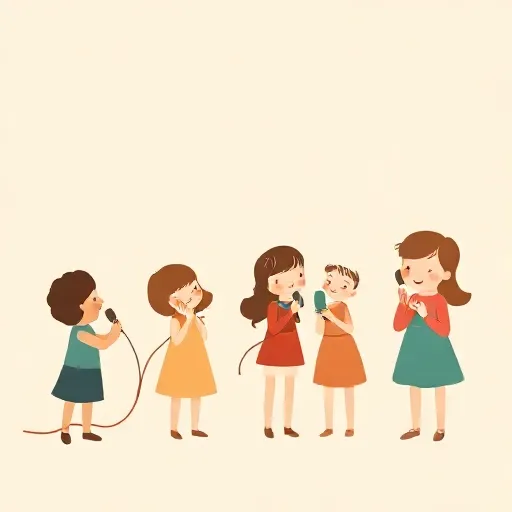
In 1948 a mathematician named Claude Shannon (1916–2001) wanted to solve a practical problem: how can a telephone signal travel without errors? He imagined a system: a sender passes a message through a channel (which may add noise), and a receiver tries to reconstruct the original. Shannon defined mutual information as the amount by which knowing one thing reduces your uncertainty about another. If the signal is perfectly correlated with the original sound, the mutual information is high. If you can’t guess anything from it, it’s low.
This idea is called correlational information. Smoke carries information about fire in exactly this sense: seeing smoke makes the presence of fire more probable. It’s a purely statistical link. That’s why Shannon’s measure is symmetric: smoke tells you about fire, and fire tells you about smoke. It has no truth or falsehood; it just is a correlation. And it’s everywhere — almost any physical thing carries some correlational information about something else.
But when biologists say a gene carries information or a monkey’s call has meaning, they often seem to mean something stronger. Many philosophers call that stronger idea semantic information. Unlike correlations, it looks asymmetric: the alarm call is about the snake, but the snake is not about the call. It seems normative: you can get it wrong, as when a vervet gives a snake call but no snake is there. And it is not found just anywhere; only some special things have it. A heart pumps blood, but nobody says it carries information — so being functional isn’t enough on its own.
So which idea fits biology better? That question opens a door to two huge debates.
The Genetic Recipe Book: Fact or Metaphor?
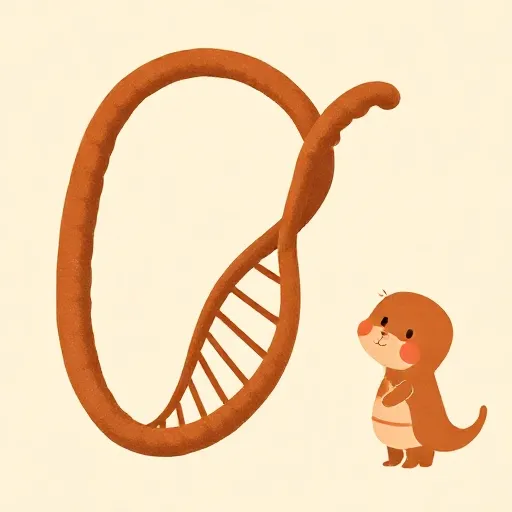
Inside nearly every one of your cells, there is a long molecule called DNA. In the 1950s, Francis Crick (1916–2004) proposed the “central dogma” of molecular biology: information flows from DNA to RNA to protein, never backwards. Scientists began talking about a genetic code, where triples of chemical letters (codons) specify which amino acid a cell should add next when building a protein. The language feels natural: the cell transcribes DNA into messenger RNA and then translates that into a chain of amino acids.
Many biologists, like John Maynard Smith (1920–2004), argued that genes really do carry semantic information — they are like a recipe, not just a correlated ingredient. Part of the reason is that the genetic code seems arbitrary (another word for no necessary physical reason). You could, in theory, swap which triplet means which amino acid, like swapping the letters in a secret code, and the machinery would still work if you changed the reader accordingly. That feels a lot like a message, not just a chemical reaction.
But critics pushed back hard. The Developmental Systems Theory group, led by thinkers like Susan Oyama (living), argued that genes are just one of many causes that build an organism. The parity thesis says no single factor — DNA, diet, sunlight, temperature — has a special “informational” role; all are equally necessary. Why call a gene a blueprint when it only works inside a cell full of other machinery? Moreover, the correlation idea runs into trouble: a gene sometimes correlates better with diseases than with healthy development. If information is just correlation, then genes carry “rotting” information in some environments, which sounds odd.
Philosopher Kim Sterelny (1950– ) and others responded by pointing to function: a gene’s job, or evolved purpose, is to help produce certain proteins or traits. That gives us asymmetry and the possibility of error — the gene is supposed to do something, even if it sometimes fails. But then you have to accept that information depends on long evolutionary history. And what about a molecule‑for‑molecule copy of you that appeared by pure luck in a swamp (a famous thought experiment called Swampman)? It would have no evolutionary past, yet we’d still want to say its genes carry information. So a purely functional theory faces problems too.
Thus the debate over genetic information remains alive. Is a gene an instruction, or just a piece of chemistry that correlates with an outcome? Your answer shapes how you think about everything from “innate talents” to genetic testing.
Animal Calls: Honest Signal or Sneaky Trick?
Now step back to the vervet monkeys. For decades, many ethologists (scientists who study animal behavior) treated signals as functionally referential — meaning the signal refers to something in the world, like a word. A certain screech means “leopard!”; a different grunt means “eagle!” And indeed, when researchers play a recording of a leopard call, monkeys run into bushes; an eagle call makes them scan the sky. That looks a lot like conveying information.
But in 1978, Richard Dawkins (1941– ) and John Krebs (1946– ) threw a wrench into the story. They said animal signals are really about manipulation. A signal is a way to get another animal to do what you want, not to share facts. A rooster doesn’t crow out of kindness to tell you morning has arrived; the crow influences hens and rivals. On this view, even honest‑looking calls are just moves in a game of control. Information talk, they argued, is misled — what matters is influence.
The debate got noisy. Defenders of the informational view pointed out that if every signal were a trick, receivers would soon stop listening. Many signals persist only because, on average, both sender and receiver benefit — the monkey who hears a true alarm is more likely to survive. That requires partial cooperation and a real correlation between the signal and something in the world. Still, the manipulation angle reminds us not to assume that an animal’s message is exactly what it seems. A bird’s long, complex song may carry information about its fitness, but it might also just keep the listener from getting bored and wandering off. The two ideas might not be rivals after all; they might illuminate different sides of the same behavior.
Why the Fight Over “Information” Still Matters

So philosophers have been picking apart a word most people take for granted. You might wonder: does any of this affect my life?
Yes, quietly. When a company says your DNA test reveals “information about your ancestry,” they are using the word in a way that mixes correlation and meaning. The test finds statistical associations between your genes and groups of people alive today. It is not reading off a message written in the past. If you treat that as a factual message (“You are 23% Irish”), you risk misunderstanding what a genetic connection actually is — it’s a probability, not a storybook.
In animal communication, the distinction matters too. If we think of animal calls as mere manipulation, we might underestimate the richness of animal minds. If we think they carry precise information like words, we might overestimate them. Getting the concept right helps scientists design better experiments and helps the rest of us see the natural world more clearly.
In your own body, the gene‑as‑instruction metaphor is powerful. It shapes how doctors explain genetic diseases and how you imagine your own inheritance. But remember the parity thesis: genes are never the whole story. Everything from the temperature of your mother’s womb to the food you ate as a toddler helps build who you are. Calling any one part the “information” may be a useful shortcut, but it’s also a choice — one that philosophers are still arguing about.
Think about it
- If a gene is just a correlation, like a cloud indicating rain, would it still make sense to say the gene “tells” the cell to build a protein? Why or why not?
- Imagine you hear a friend yell “Look out!” when a ball is flying at you. If your friend only yelled because they wanted you to flinch and look funny, did they still communicate information? What if they genuinely wanted to warn you?
- Scientists predicted that a certain gene always leads to a disease. Later they found many people with the gene never get sick. Does the gene still “carry information” about the disease? What in everyday life changes when a correlation isn’t perfect?