Why Don't You Run from an Imaginary Tiger?
A Tiger in the Kitchen

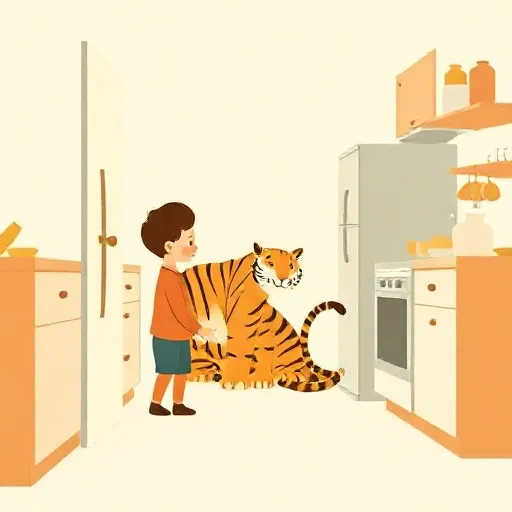
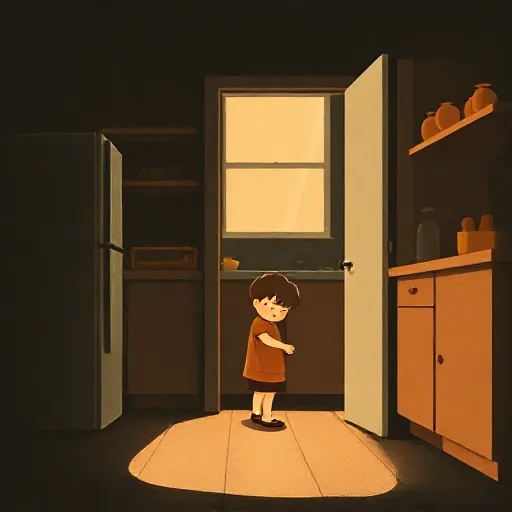
Suppose you read a story about a tiger hiding in your kitchen. You know perfectly well there is no tiger. But if you really try to picture it — orange fur, glassy eyes, a low growl — you might feel a tiny flutter in your chest. Maybe you even hesitate for half a second before stepping through the door. Why?
That flutter is a clue. It shows that imagination isn’t just a weak copy of seeing or thinking. It works by its own strange rules. When you imagine something, your mind tends to borrow the rules of the real world but keeps the results safely trapped inside a bubble. Philosophers call the two main rules mirroring and quarantining. Understanding them unlocks how you pretend, enjoy stories, and even guess what other people are thinking.
The Two Secret Rules of Make-Believe
In a famous experiment, the psychologist Alan Leslie asked children to join an imaginary tea party. Even though all the cups were completely dry, the children quickly agreed on which cups were “full” and which were “empty” inside the make-believe world. When an experimenter tipped and pretended to spill a cup, the children treated that cup as empty from then on. They never expected real wetness on the table.
This little tea party reveals two hidden principles that steer every act of imagining.
Mirroring says that, unless you are told otherwise, imaginary situations should work like real life. If you imagine a tea party, the tea pours out when you tip the cup because that’s how gravity works. If you imagine a dragon, it should breathe fire, not ice cream — unless you actively decide to change the rule. Your mind automatically fills in missing details by copying reality.
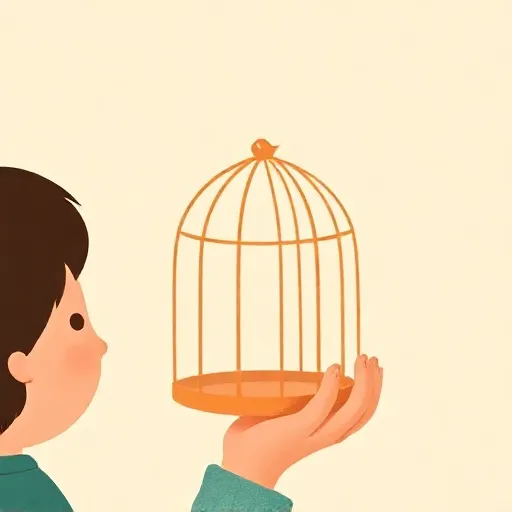
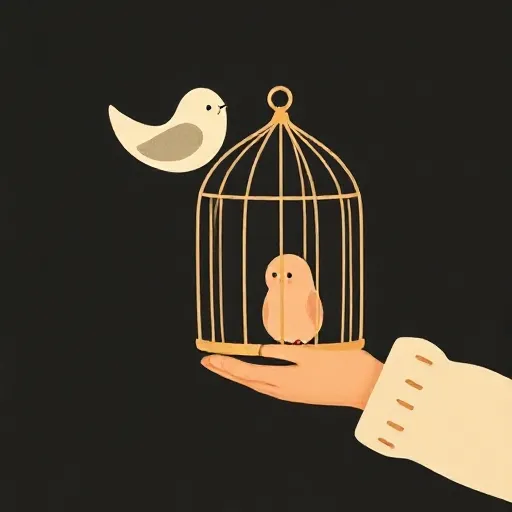
Quarantining says that the effects stay inside the pretend bubble. You don’t try to drink the imaginary tea. You don’t grab a towel when it spills. You don’t call a firefighter for the dragon’s flames. Your mind puts a fence around the imaginary world so it doesn’t leak out and confuse your real actions.
These rules are not perfect. Sometimes disparity breaks mirroring — you might imagine a toaster that reverses logical truths, which makes no real-world sense. And sometimes contagion weakens quarantining. That’s why you hesitate at the imaginary tiger. The fear leaks out even though you know the tiger isn’t real. In extreme cases, imagining something scary can make your heart pound, your palms sweat, and even make you more likely to mistake a rock for an animal in the dark. The fence isn’t always as solid as you’d like.
Imagining Versus Believing: Two Engines in Your Head
If imagination copies reality so closely, how is it different from belief? Both can involve the same thought: “There is a tiger in the kitchen.” But when you believe it, your whole body prepares — you run, you shout, you call for help. When you merely imagine it, you (usually) keep eating your cereal.
Philosophers explain this by looking at the mental code. According to the single code hypothesis, put forward by thinkers like Shaun Nichols (20th–21st century), imagination and belief use the same representational format. Both are attitudes you can take toward a proposition, like “the tiger is in the kitchen.” But they come with different settings. Belief aims at truth: you only believe something if you take it to be the case in the real world. Belief also feeds directly into your action system — it makes you ready to act. Imagination aims at something else: exploring possibilities. The line to action is (usually) blocked. Imagining winning the lottery doesn’t make you rush to the bank.
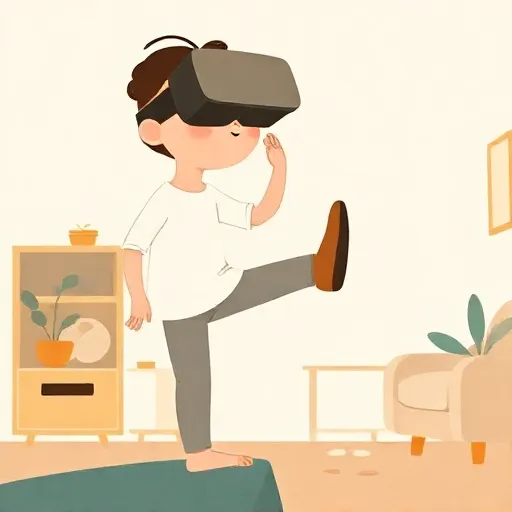
Yet the line can blur. When you are totally absorbed in a videogame or a daydream, your body sometimes moves without you meaning it to. The philosopher Tyler Doggett and Andy Egan argue that in deeply immersive imagining, the action system can be triggered directly, just a little. Most philosophers still think the connection is much weaker than with belief, but the boundary isn’t sharp.
Emotions work in a similar half-real way. The philosopher Kendall Walton (20th–21st century) pointed out that the fear you feel while watching a horror movie isn’t quite genuine fear — if it were, you’d flee the theater. He called it a quasi-emotion, a felt response that mimics real fear but stays cordoned off from full-blown action. Other thinkers think the sadness you feel for a fictional character is just as real as any other sadness, only directed at something that doesn’t exist. Either way, your body treats imagined events as worth an emotional response — just not one strong enough to get you out of your chair.
Pretending and Reading Other Minds

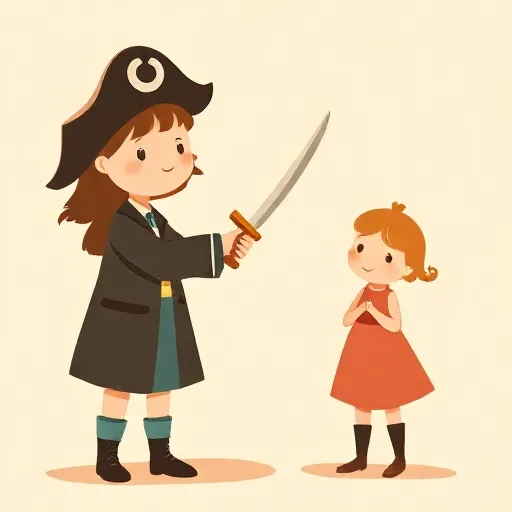
Imagination isn’t only for private daydreams. It’s the engine behind pretending. When you and your friends become pirates, you are running your own decision-making systems on imaginary input — you think, “If I were a pirate and saw a rival ship, what would I do?” This simulation theory of mindreading says that you understand other people in much the same way. To guess what your friend wants at lunch, you put yourself in her shoes (imaginatively), run your own mental processes offline, and see what desire pops out. You don’t need a giant rulebook of psychology; you just use yourself as a model.
The simulation view has real-world backing. Children with autism often avoid spontaneous pretend play and can find it harder to guess others’ thoughts. Some researchers think a shared imaginative deficit lies behind both difficulties. Philosophers like Gregory Currie and Ian Ravenscroft even argue that problems with imagination are the root cause of social challenges in autism. Other thinkers caution that imagination is only one piece of the puzzle, but the link is strong enough that many “hybrid” theories now blend simulation with theory-based reasoning.
When you pretend, you also practice quarantining at a high level. You might brandish a stick as a sword, but you don’t try to cut anyone. You might “eat” imaginary cake without getting full. Pretend play is a workshop where you learn to navigate the halfway world between belief and fantasy — a skill you’ll use every day.
Stories Are Props for Your Brain
Kendall Walton built a whole theory of art on the idea of make-believe. He said that novels, movies, and even music work like props in a game. Just as a toy teapot tells you to imagine tea, a novel tells you to imagine its characters and events. These prescriptions aren’t random — the author sets the rules, and mirroring fills in the rest. That’s why you can picture Hogwarts even though only a fraction of it is described.
This explains a puzzle that has bugged philosophers for centuries. If you know that Anna Karenina never existed, how can you feel genuinely sad about her fate? Walton’s answer: you don’t feel sadness in exactly the same way you would for a real person. Instead, you feel a type of make-believe sadness that fits the game. It feels real because your emotional system runs on the same basic code whether the input is real or pretend — but the quarantine mechanism keeps it from making you sob uncontrollably for hours. Other thinkers, such as Shaun Nichols and Jonathan Weinberg, insist the emotion truly is sadness, just directed at a fictional object. The debate remains alive and hot.
Imagination also has limits that reveal something about your mind. Try to imagine, in the context of a story, that cruelty is morally wonderful. Most people find they cannot do it — or they can only do it if they treat the story as obviously silly. This imaginative resistance suggests that your moral beliefs have a special grip on your imagination. Even in make-believe, some things just cannot be swallowed.
Why Imagination Still Matters to You
Imagination isn’t just for entertainment. It helps you plan: “What would happen if I took the bus instead of walking?” It lets you be creative, whether you’re inventing a new game, writing a song, or designing a science fair project. The philosopher Peter Carruthers has even argued that childhood pretend play is an evolutionary practice ground for adult creative thinking.
Philosophers also debate whether imagination can give you knowledge. Galileo used a thought experiment — imagining a light object and heavy object tied together — to disprove Aristotle’s theory of motion without ever dropping a real weight. That kind of constrained imaginary scenario can reveal real-world truths. But some experiences resist imagination entirely. L.A. Paul (20th–21st century) argues that you cannot truly imagine what it is like to become a parent until you are one, because parenthood can transform your deepest values. Some life-changing choices, she says, cannot be previewed in the mind’s theater.
So imagination is both powerful and limited. It borrows from reality just enough to be useful, quarantines just enough to keep you safe, and sometimes leaks just enough to make a story unforgettable. That half-second hesitation when you picture the tiger? That’s not a bug. It’s a sign that your mind is built to simulate dangers, feel for people who don’t exist, and try on futures that haven’t happened yet. That’s a lot of heavy lifting for one mental trick.
Think about it
- If you can get so absorbed in a daydream that you almost believe it, are imagining and believing really two different things, or just points on a single line?
- Could a person who never pretends still fully understand other people’s feelings? Why or why not?
- If you imagine being someone very different from yourself, does that make you a better friend — or might it fool you into thinking you understand them when you really don’t?