
Why Do "Clark Kent" and "Superman" Feel Different?
A Reporter’s Puzzle

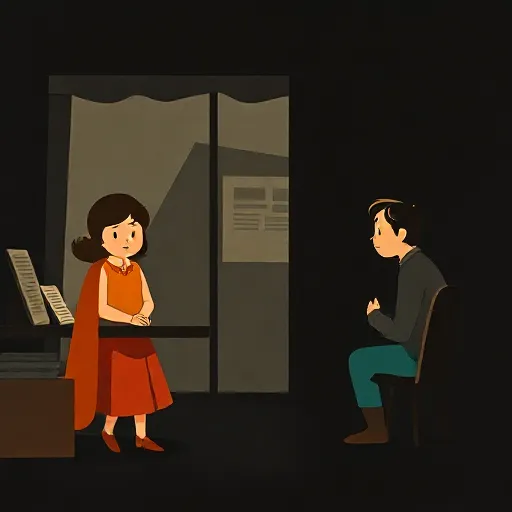
Picture Lois Lane at the Daily Planet. She has just typed up a story about Superman catching a falling plane. She knows, without a doubt, that Superman can fly. But Lois does not know that Clark Kent can fly. She’s worked beside Clark for years and has no idea he is secretly Superman.
Here’s the puzzle. The names “Superman” and “Clark Kent” both point to the very same person. So the sentence “Superman can fly” and the sentence “Clark Kent can fly” seem to describe the exact same fact. If that fact is true — and it must be, because Superman is Clark Kent — then both sentences are true in every way the world could possibly be. Yet one sentence is something Lois obviously believes, and the other is something she clearly does not.
This tangle lies at the heart of a quiet revolution in how philosophers think about meaning, thought, and even reality itself. The rebel idea was given a name: hyperintensionality. Once you see it, you start noticing it everywhere. It shows up when we learn something new, when we dream about impossible things, and when we argue about what really explains what. Welcome to one of the liveliest debates in the philosophy of language.
The World of Possible Worlds

For much of the 20th century, many philosophers worked with a simple, powerful tool. They said the meaning of a sentence is the set of possible worlds where that sentence is true. A possible world is just a complete way things could have turned out: a world where it rains today, a world where you eat cereal for breakfast, a world where dinosaurs still roam. The sentence “It is raining” picks out all the worlds where rain is falling right now. The sentence “Dinosaurs are alive” picks out a different bunch of worlds.
This picture had a huge advantage. It could explain why “Superman can fly” and “Clark Kent can fly” must have the same meaning: they are true in exactly the same possible worlds. Because “Superman” and “Clark Kent” refer to the same person in every possible world (according to philosophers like Saul Kripke [1940–2022] and Ruth Barcan Marcus [1921–2012]), there is no world where Superman can fly but Clark Kent cannot. The two sentences cut reality into the same two piles — the worlds where the claim holds and the worlds where it doesn’t.
The trouble is, this picture crashes into the Lois puzzle head‑on. If the two sentences have the very same meaning, how can one be informative and the other obvious? How can a person like Lois believe one but not the other?
Philosophers soon realized the problem was not just about superheroes. It appears whenever a necessary truth — something that must be true, no matter what — is compared to another necessary truth that sounds totally different. Consider these two statements:
- “All woodchucks are woodchucks.”
- “All woodchucks are whistle‑pigs.”
A whistle‑pig is another name for a groundhog — and a woodchuck just is a groundhog. So both sentences are necessarily true, true in all possible worlds. Yet the first one is completely trivial, while the second one, if you didn’t know the name “whistle‑pig,” teaches you something real. A person can learn the second without learning the first. That should be impossible if they mean the same thing.
Worlds That Couldn’t Be, but Somehow Are
To escape this tangle, some philosophers expanded the list of worlds. They added impossible worlds — ways things definitely could not be, places where the laws of logic or mathematics break down.
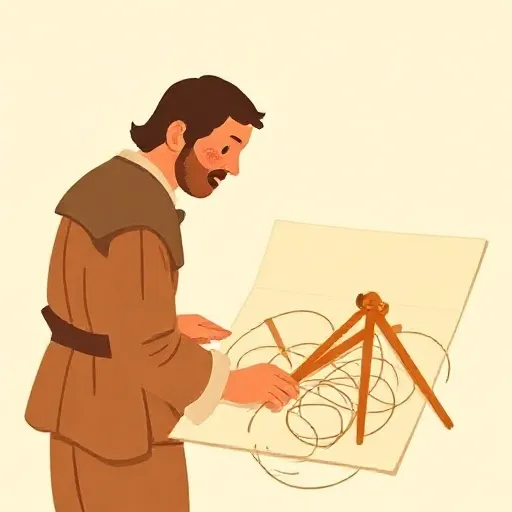
Why would anyone want impossible worlds? Imagine this historical example. The philosopher Thomas Hobbes (1588–1679) was convinced he had found a way to square the circle — to construct a square with the same area as a given circle using only a straightedge and compass. We now know this is mathematically impossible. Still, consider these two sentences:
- “If Hobbes had squared the circle, sick children in South America would have cared.”
- “If Hobbes had squared the circle, sick children in South America would not have cared.”
Most of us think the first sentence is false and the second is true. Hobbes’s geometric triumph would have made no difference whatsoever to those children. But in a plain possible‑worlds framework, any conditional with an impossible “if” part — a counterpossible — comes out vacuously true. There are no possible worlds where the antecedent happens, so nothing to stop the whole conditional from being counted as true. That wrongly makes both conditionals true, even though they clearly say opposite things.
Impossible worlds fix this. We allow worlds where the impossible happens — worlds where squares are circles, where contradictions are true, where 2+2=5. At some such worlds, Hobbes squares the circle and sick children are unaffected; at others, they miraculously care. This lets us evaluate the two conditionals differently. Philosophers such as Daniel Nolan (20th–21st century) and Mark Jago (20th–21st century) have shown that impossible worlds can also make sense of why we can have inconsistent beliefs without believing everything, or how a character in a fantasy novel rides a dragon even though dragons don’t exist in our world.
By adding impossible worlds, we get a more fine‑grained toolbox. Two sentences that are true in all possible worlds can still land in different sets of impossible worlds. That means they do not have to be treated as meaning the same thing after all.
What Are You Even Talking About?
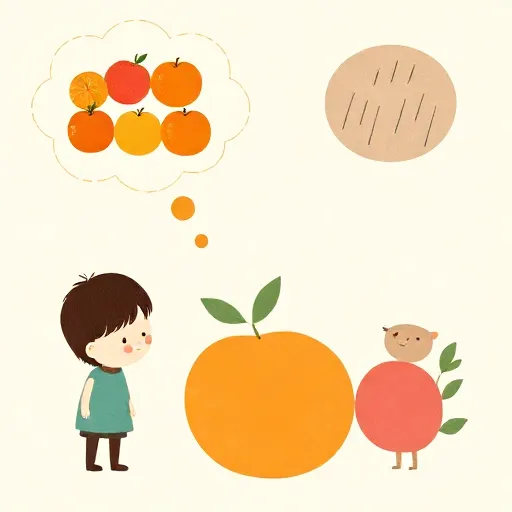
Another route to hyperintensionality came from a very different direction. Instead of adding impossible worlds, philosopher Stephen Yablo (born 1962) argued that a sentence’s meaning includes something a possible‑worlds picture misses entirely: its subject matter, what the sentence is about.
Take these two necessary truths:
- “John is either a bachelor or he is not.”
- “Either 44 is the sum of two primes or it is not.”
Both are true in absolutely every possible world. Yet they are about completely different things — one concerns John and marriage, the other concerns numbers and primes. If meaning were only a set of possible worlds, the two would be identical. But that feels wrong: the sentences answer different questions, they bring different topics to mind.
Yablo proposed that we should treat a complete proposition — what he calls a thick proposition — as two things combined: the set of worlds where it is true (the old, thin picture) plus its subject matter. The subject matter can be thought of as a collection of issues, like “How things stand with John” versus “How things stand with the number 44.” Two sentences can have the same truth‑world footprint yet still differ because they deploy different topics.
This about‑ness idea elegantly handles cases where someone learns one necessary truth but not another. When you learn that woodchucks are whistle‑pigs, the proposition you grasp has a subject matter that includes groundhogs and naming conventions. The proposition that woodchucks are woodchucks, even though it picks out the same worlds, has a thinner (or different) subject matter — it’s about logic and identity, not furry animals. So no wonder you can believe one without the other.
Even the “bachelor or not” vs. “primes or not” pair splits cleanly. Their subject matters diverge, so they count as genuinely distinct propositions, not just stylistic variations on the same bland truth.
An Argument That Hyperintensionality Can’t Be Real
Not everyone welcomed these extra‑fine distinctions. One powerful pushback came from philosopher Max Cresswell (20th century). He argued that any account of meaning that relies on truth conditions — that is, specifying when a sentence is true — faces a deep problem.
Think about negation. The sentence “Not A” is true exactly when A is false. If we take that as all there is to the meaning of “not,” then the proposition “Not A” is uniquely determined by the truth condition of A’s falsehood. Now consider two distinct, necessarily equivalent propositions, C and D. Their negations, “Not C” and “Not D,” would each just be the proposition that is true when the original is false. But if truth conditions are all that matter, those negations must be identical. Then double negation would force C and D themselves to be identical. The conclusion: you cannot have two different necessarily equivalent propositions in any truth‑conditional system.
This is known as the Boolean challenge. It suggests that if we want meanings to be more fine‑grained than possible worlds, we must give up the idea that logical operations like negation are completely captured by simple truth‑condition rules. Defenders of hyperintensionality accept that challenge. They reply that meanings are not just truth conditions. They contain extra structure — topics, impossible distinctions, or internal composition — so that “not” flips more than just extension across worlds, and distinct necessary propositions can coexist peacefully.
Robert Stalnaker (born 1940) and David Lewis (1941–2001) offered different escape routes. They tried to explain away the hyperintensional feel by suggesting that what we really lack is knowledge about which sentences express which propositions, not knowledge about the propositions themselves. When Lois doesn’t know Clark can fly, she’s merely confused about the language, not about the facts. But many philosophers find this too drastic. It seems we often perfectly grasp the meaning of a sentence like “Every even number greater than 2 is the sum of two primes,” yet still wonder whether that very proposition is true. Meaning ignorance cannot be the whole story.
Why It Matters in Your Own Mind
You might never meet a philosopher, but you live inside hyperintensionality all the time. Every time you watch a film and wonder “What if the hero had made a different choice?” you’re considering a counterpossible or counterfactual scenario. Every time you learn a new fact in mathematics — like the surprising truth that the angles of a triangle always add up to 180° — you gain information about a necessary truth, something a plain possible‑worlds model would call trivial. Every time a friend says “I promise to call,” you understand that the obligation to pick up the phone is different from the obligation to pick up the phone and also be self‑identical, even though those are necessarily equivalent.
The whole debate is about something deeply human: our capacity to care about the impossible, to have new thoughts about old truths, and to build explanations that connect one bit of reality to another. By insisting that meaning is richer than a list of possible situations, hyperintensional approaches give us tools to understand why stories move us, why discoveries feel fresh, and why arguments about what makes something true really matter.
Think about it
- If you learn a surprising fact that had to be true all along — like “Water is H₂O” — did you already believe it before you learned it? What actually changed in your mind?
- When you read a fantasy story where characters do impossible things, could you understand the story if you could only picture possible worlds? What makes impossible events feel meaningful?
- Suppose a friend knows that Superman can fly but doesn’t know that Clark Kent can fly. Could you explain what your friend is missing just by describing all possible worlds? Why or why not?