Is Laughter Mean, Irrational, or the Best Thing About Us?
The gods laughed—and Plato was not amused
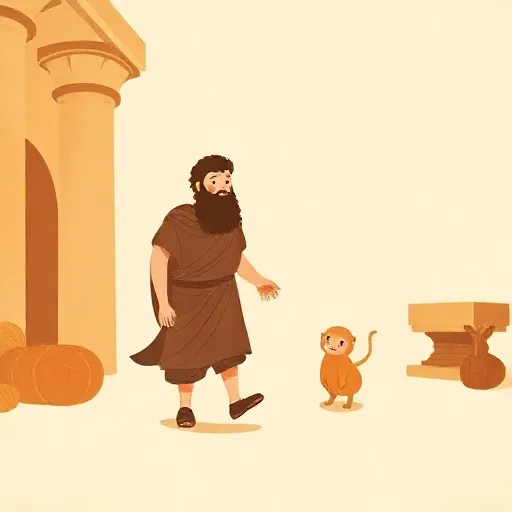
Picture Mount Olympus, home of the Greek gods. In one story, the blacksmith god Hephaestus limps around, serving drinks to the other gods. They find his awkward walk hilarious and burst into roaring laughter until the whole mountain shakes. To most ancient Greeks, that scene was funny. To the philosopher Plato (c. 427–347 BCE), it was dangerous.
Plato believed laughter overpowers our rational self-control. In his Republic, he warned that the Guardians—the wise rulers of his ideal city—must avoid violent laughter because it provokes a loss of reason. He was especially upset that Homer showed the gods themselves losing control. Plato’s second objection was that laughter is malicious. In his dialogue Philebus, he argued that what we find ridiculous is a kind of vice: we laugh at people who are ignorant of their own flaws, and taking pleasure in someone else’s weakness is morally wrong. Because of these worries, Plato said comedy should be strictly controlled. Free citizens were not allowed to practice it; only slaves and hired foreigners could perform comic plays, and no one could mock a fellow citizen.
Those hostile ideas stuck. Aristotle (384–322 BCE) said wit was “educated insolence.” The Stoics, who valued iron self-discipline, told followers never to laugh loudly or often. Early Christian thinkers, reading both Greek philosophy and the Bible—where God’s laughter is always angry and mockers get mauled by bears—condemned joking. Monastic rules punished monks who even smiled during services. For nearly two thousand years, the official message was clear: laughter is morally risky.
Hobbes and the “sudden glory” theory
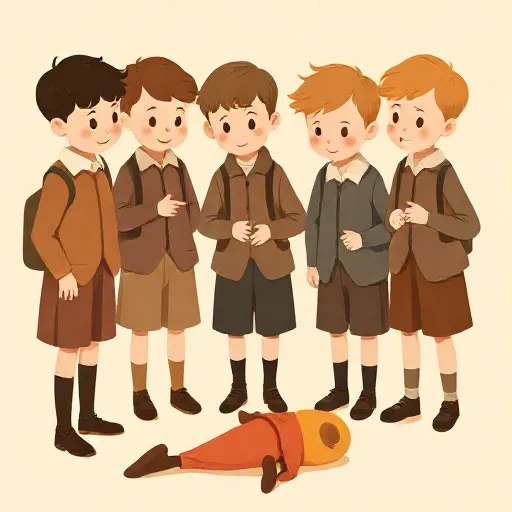
Why would anyone think something as natural as laughter is so awful? A big reason became known as the Superiority Theory—the idea that our laughter always expresses feelings of being better than someone else. The English philosopher Thomas Hobbes (1588–1679) gave a sharp version of this view. He said laughter is a “sudden glory” that bursts out when we notice a defect in another person and compare it to ourselves. For example, if you see someone slip on a banana peel, you might instantly feel superior and laugh. Hobbes added that people who laugh a lot at others’ flaws are usually the least confident themselves—they need to prop up their own egos.
Hobbes’s theory made sense of why laughter so often seems mean. But in the 1700s, the Scottish thinker Francis Hutcheson (1694–1746) punched holes in it. He pointed out that we often laugh without comparing ourselves to anyone. When we giggle at a clever pun or a bizarre image in a poem, no one is being put down. And feeling superior doesn’t always make us laugh: a rich person seeing a shivering beggar through a carriage window feels superior but is more likely to feel pity than amusement.
Modern examples make the same trouble for the Superiority Theory. In old silent comedies, Charlie Chaplin escapes a hopeless trap with a brilliant acrobatic move. We laugh, but we don’t think we’re better than him—we’re amazed. And if you search the whole house for your glasses only to realize they’ve been on your head the whole time, you laugh at yourself. The Superiority Theory can’t explain that. Even a simple experiment: when people lift weights that unexpectedly turn out much heavier or lighter, they often laugh. No one is comparing themselves to anyone. Laughter clearly isn’t always about feeling superior.
The surprise inside every joke
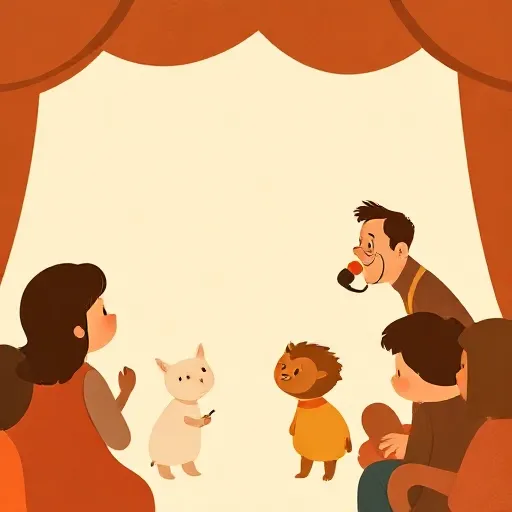
A rival explanation grew up in the 18th century and eventually became the leading theory in philosophy and psychology: the Incongruity Theory. It says laughter is our response to something that violates our mental patterns and expectations—something that just doesn’t fit. James Beattie (1735–1803) described humorous laughter as coming from “two or more inconsistent … parts” combined in one thing. Immanuel Kant (1724–1804) said that a joke sets up a “strained expectation” and then suddenly transforms it into nothing.
Kant loved this example: An Indian man sees a bottle of ale opened for the first time and watches the beer foam out. When asked why he’s astonished, he replies, “I’m not surprised it comes out—I just wonder how you ever got it in!” We laugh, Kant argued, not because we feel smarter than him, but because our expectation was built up and then popped like a bubble. Arthur Schopenhauer (1788–1860) gave the Incongruity Theory a different twist. He said humor happens when we suddenly see a mismatch between an abstract concept and the real, particular thing it supposedly covers. When a prison guard lets a convict join his card game but kicks him out for cheating—forgetting he’s supposed to be locking him up—we laugh at the clash between the concept “bad company” and the actual prisoner.
But Incongruity Theory faced a sharp objection: why would a rational animal enjoy something that doesn’t make sense? George Santayana (1863–1952) insisted that people can no more like absurdity than they like hunger or cold. If noticing a violation of our expectations is the whole story, humor looks irrational. This is the Irrationality Objection. Something was still missing.
Why laughter is really just play
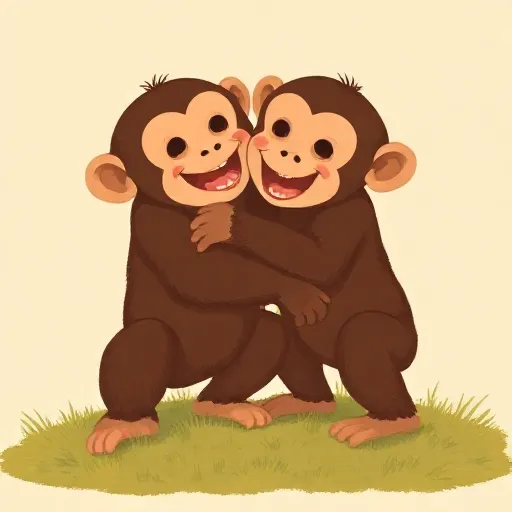
There’s a clue that many philosophers overlooked: humor is a form of play. And play, scientists now know, has its own ancient signals. In chimpanzees and gorillas, mock-fighting—chasing, wrestling, tickling—comes with a “relaxed open-mouth display,” a breathy panting sound very like human laughter. Ethologists believe that millions of years ago, our ancestors evolved this signal to say, “This isn’t real aggression; it’s just for fun.” When we laugh today, we are waving the same ancient flag.
Seeing humor as play turns the Irrationality Objection on its head. In play, young animals test the limits of their speed, balance, and coordination in a safe setting. Human children skip, do cartwheels, and throw things—practicing skills for an unpredictable world. Humor does something similar with the mind. When we play with words and ideas, we break the normal rules of conversation on purpose. We exaggerate, tell fantastic stories, twist meanings, and take sudden leaps in logic. Play signal laughter tells everyone, “Relax, we’re just messing around.” That safe rule-breaking builds mental flexibility. It trains us to step back from a problem, see it from a stranger’s viewpoint, and not get trapped by fear or anger.
Even the medieval philosopher Thomas Aquinas (c. 1225–1274) glimpsed this. Following Aristotle, he argued that playful wit—what the Greeks called eutrapelia—is a virtue. It rests the soul, eases tension, and makes social life sweeter. A person who can never joke, Aquinas said, is “against reason” and a burden to everyone. Today’s research backs him up: laughing lowers stress hormones, relaxes muscles, and even boosts the immune system. By shifting into a playful frame of mind, we become more objective, more creative, and more resilient. Instead of making us irrational, humor trains a special kind of rationality—the ability to hold ideas lightly and see the world from many angles at once.
From ancient ban to stand‑up: why humor wins

So why does this ancient fight over laughter still matter? Because it’s not just about jokes—it’s about two different ways of meeting life’s problems. Tragedy and serious philosophy have traditionally celebrated what you might call Warrior Virtues: solemn courage, unflinching loyalty, and emotional intensity. Comedy, by contrast, champions anti‑heroic cleverness. Its heroes talk their way out of trouble, run away to fight another day, and rely on groups of friends rather than lone glory. Comedy’s worldview is pragmatic, forgiving, and alert to the sheer oddness of being human.
Its modern form, stand‑up comedy, shares deep threads with philosophy itself. Both start from everyday puzzles: “You ever notice how … ?” Both step back from emotion to think critically. Both question authority and poke holes in lazy language. And both can delight in seeing the familiar as strange. Bertrand Russell (1872–1970), one of the sharpest philosophical minds of the last century, once said, “The point of philosophy is to start with something so simple as not to seem worth stating, and to end with something so paradoxical that no one will believe it.” That’s also a perfect description of a great comedy routine.
For centuries philosophers mostly wrote about justice, knowledge, or God and treated laughter as a silly distraction. But that prejudice is crumbling fast. Today we understand that humor fosters mental flexibility, social bonds, and physical health. The old warnings—that laughter is necessarily hostile, that enjoying incongruity is irrational—turned out to be too narrow. Laughter can be mean, but it can also be generous. It can be mindless, but it can also be the mind’s best warm‑up. And when life doesn’t make sense, sometimes the most philosophical thing you can do is laugh.
Think about it
- If you hear a joke that plays with a stereotype, does enjoying it mean you believe the stereotype? Can you laugh at something without agreeing with it?
- Think of a time you made a silly mistake that embarrassed you. Is it possible to laugh at that moment? How does laughing change what you feel and what you do next?
- Imagine a world where comedy was forbidden so that no one’s feelings were ever hurt. What would be enjoyable about such a world, and what would be lost?