The Philosopher Who Said Science Isn’t Enough
The Philosopher in the Lecture Hall
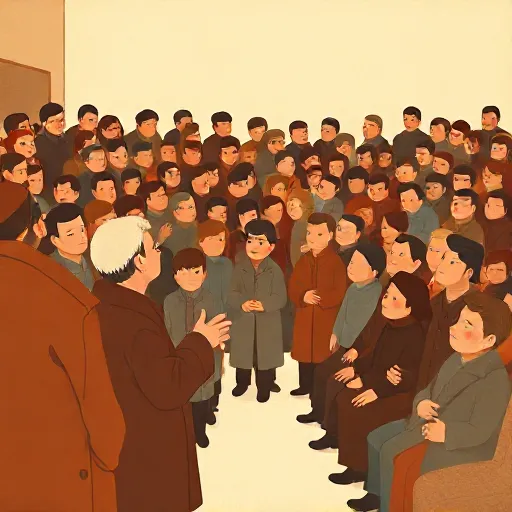
It’s the 1850s. You step into a packed university lecture hall in Germany. The air smells of chalk dust and lamp oil. Every seat is taken by students eager to hear the latest discoveries about electricity, fossils, and the human brain. The speaker draws a perfect diagram of a nerve cell. He explains that the human body is nothing more than a machine made of physical and chemical parts. Some students whisper excitedly. Others look troubled.
Among the professors of this era was Hermann Lotze (1817–1881). He was both a trained physician and a philosopher. He had dissected bodies in a medical lab and knew all about the new science that was sweeping through Europe. But he also believed that science, for all its power, had a limit. It could describe how a nerve fires or a muscle contracts — but it could never explain what it means to be alive, to care about something, or to be good.
Lotze’s whole career was an attempt to sit with both truths at once. He insisted that you can be a scientist and still believe that purpose, beauty, and moral worth are real — things that no microscope or chemical formula can capture.
The Machine of Life

In Lotze’s day, many scientists and philosophers were arguing that everything — including your thoughts and feelings — could be reduced to matter in motion. This view was called materialism. One of the hottest debates was about something called a vital force, or Lebenskraft. Some thinkers claimed that living things were driven by a mysterious, invisible “life force” that no physics could ever touch. Others said that was nonsense: organisms are just complicated machines, nothing special.
Lotze came down firmly on the side of mechanism. As a doctor, he saw that chemical and physical processes were at work in every heartbeat and breath. He attacked the idea of a vague “vital force,” calling it an empty label that pretended to explain things while actually explaining nothing. Real science, he thought, had to investigate actual causes — the push and pull of measurable forces.
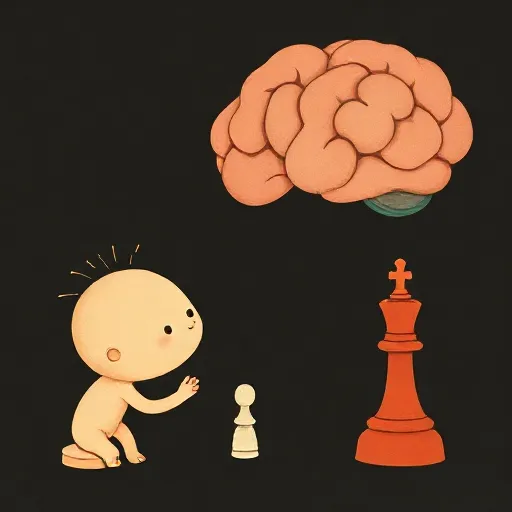
But here’s the twist: Lotze did not become a materialist. He argued that describing how a frog’s leg twitches is one thing; understanding why the frog — or you — live at all in a meaningful way is another. He called the first approach mechanism (the search for physical causes) and the second teleology (the search for purpose). For Lotze, these two didn’t have to fight. A scientist could investigate the clockwork of the body while a philosopher asked what the whole existence is for. Mechanism explains the gears; teleology asks about the goal.
Facts Don’t Make Values
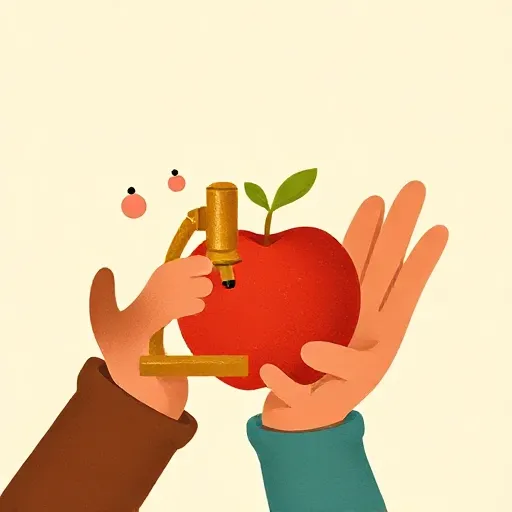
Lotze drew a sharp line that many people still find useful today: you cannot leap from a fact to a value. Knowing that a brain produces a certain chemical when you feel love doesn’t tell you whether love is worthwhile. Describing the physics of sound waves doesn’t explain why music moves you. Some truths belong to science; others belong to what Lotze called the realm of value.
He used this idea to challenge a dangerous kind of thinking. In the 19th century, some scientists claimed that different human “races” had separate biological origins, and that this supposedly proved that some people were naturally inferior. Lotze didn’t just say the science was uncertain — he went further. Even if the science were settled, he argued, it could never tell you how to treat another human being. The dignity of a person is a moral fact, not a biological one. No measurement of skulls or skin color can justify cruelty or contempt.
For Lotze, philosophy’s job was to guard that insight. Science gives us the “what is”; philosophy must help us understand “what matters.”
What Makes You a Person?
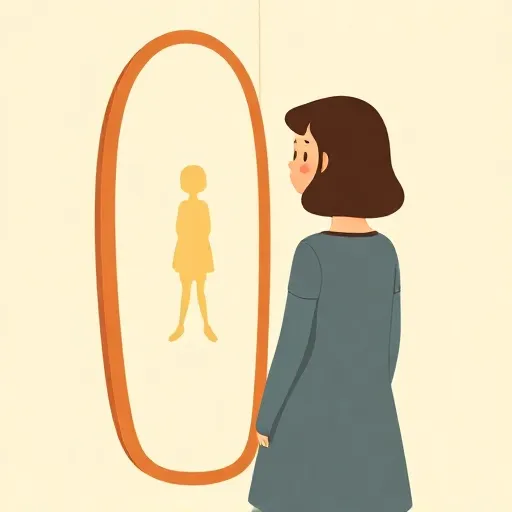
If you’re more than a machine, what exactly are you? Lotze’s answer was built around the idea of personhood. He saw that you aren’t just a heap of sensations. You experience your life as one continuous “I” — a single, unified consciousness that feels, thinks, and makes choices. This unity, he argued, cannot be chopped into separate mechanical parts. It’s not something a brain scan can point to; it’s something you live.
Lotze called this unified center a soul, but he didn’t mean a ghost floating behind your eyes. He meant the fact that you appear to yourself as a whole being. In his words, your belief in your own unity doesn’t result from noticing that you seem unified — it’s what makes any noticing possible at all. Without a single “you” holding your experiences together, there would be nobody to have an experience in the first place.
This wasn’t just a psychological point; it was an ethical one. Lotze believed that what makes you truly valuable — your dignity — comes from being the kind of creature who can care, reason, and act for purposes of your own. That worth belongs to you whether you are rich or poor, brilliant or struggling. It isn’t earned by being useful; it’s given by the very nature of being a person.
Why Lotze Still Matters

Hermann Lotze’s name is not as famous as Kant’s or Hegel’s. He founded no big “ism” with loyal followers. Yet his ideas traveled quietly through the 20th century in ways that still touch your life. The idea that values are distinct from scientific facts helped shape the philosophy of thinkers like Edmund Husserl and Gottlob Frege, who in turn influenced much of modern logic and continental thought.
More surprisingly, Lotze’s personalism — his insistence that every human being has a dignity that science cannot grant or erase — flowed through a chain of philosophers and theologians right into the American civil rights movement. Martin Luther King Jr. was deeply influenced by a school called personalism, which had its deepest roots in Lotze’s vision of the person as a center of will, feeling, and thought. The phrase “the dignity and worth of human personality,” which King used to challenge segregation and injustice, carries a Lotzean echo.
Today, we live in an age of brain scans, artificial intelligence, and sweeping scientific claims. Lotze’s central insight still stands: knowing how everything works is not the same as knowing what to care about. You can have the most complete map of the brain in the world and still need to ask, “What is a good life?” That question isn’t scientific — but it’s the most human question you can ask.
Think about it
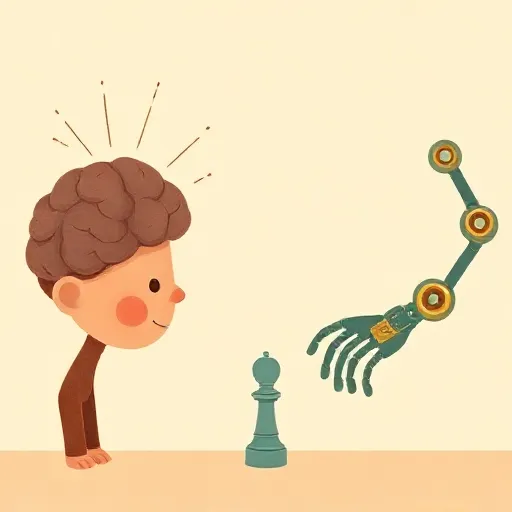
- If a machine someday acted in ways that looked exactly like thinking and feeling, would it be a person — or would something still be missing?
- Is there anything about your life that you think no scientific explanation could ever fully capture?
- Some people say that what is “good” is just whatever makes people happy. Does that idea capture all the things you think really matter?