Why Science Can't See the Real World—and What Can
A Trick of the Nerves: Why Your Senses Lie
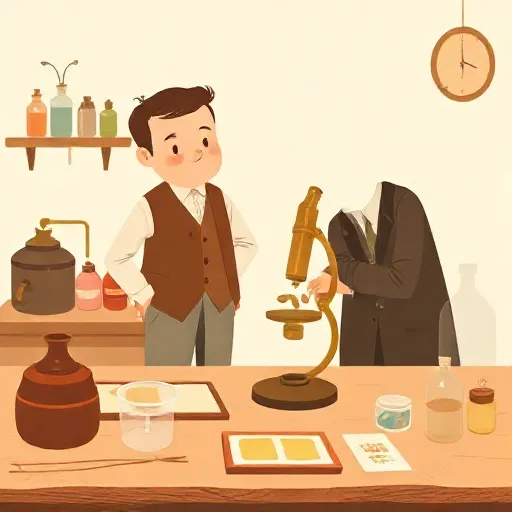
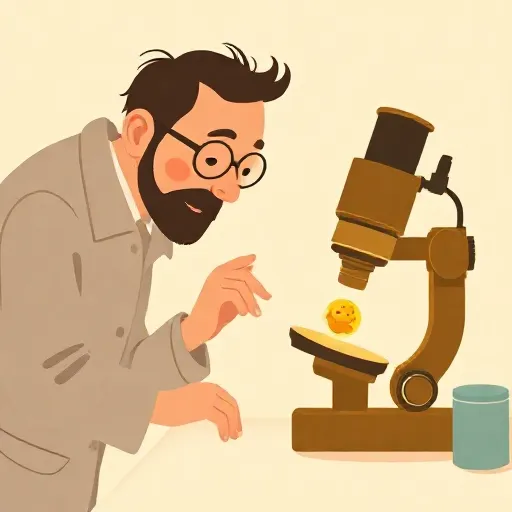
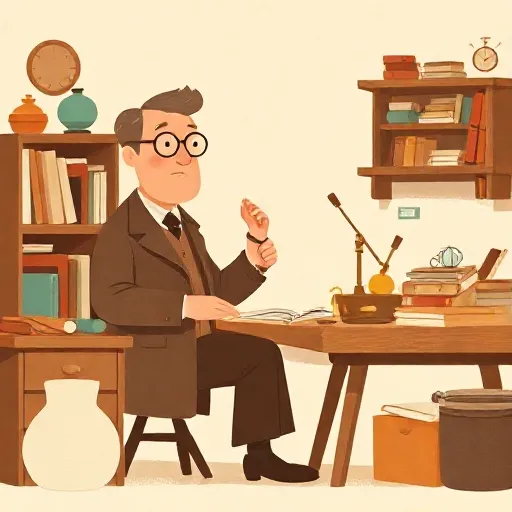
In 1850s Germany, scientist Hermann von Helmholtz (1821–1894) stared into a microscope at a frog’s nerve. He poked it with a tiny electric current, and the muscle twitched. The nerve didn’t send a “twitch” or a “poke” — it sent an electrical pulse. Later, he and others discovered the same thing about the nerves in your eyes and ears. A red rose doesn’t send “redness” up your optic nerve. It sends electric patterns. The color, the scent, the softness — all are built inside your brain. That messy, miraculous organ paints the world you experience. So what are you really seeing? Not the world itself, but your brain’s best guess.
Friedrich Albert Lange (1828–1875) seized on this discovery. He was a German philosopher, teacher, and political activist who never settled for simple answers. He argued that materialism — the view that everything that exists is matter and motion — faced a huge problem. If even your own sense organs don’t show reality as it is, how can you trust that your theory of matter is right? The very science that seemed to support materialism was, for Lange, pulling the rug out from under it.
When Science Undermines Itself: The Self-Destructing Materialist
Imagine you build a camera that takes photos and then claim, “Everything real is what this camera captures.” But then you discover the camera’s lens distorts shapes and its sensor invents colors that aren’t there. Could you still trust the camera’s claim? Lange thought materialism was like that camera. Materialists argued that only physical stuff exists, and that science reveals its true nature. Yet the physiology of the sense organs — the very branch of science they admired — showed something else. Everything we see, hear, and touch is a product of our nervous system. Colors, sounds, and smells “do not belong to things in themselves,” Lange wrote; they are excitations inside us, triggered by something unknown outside.
Some materialists tried to dodge this. Heinrich Czolbe (1819–1873), for example, insisted that redness and musical tones literally travel unchanged along the nerves — as if sound waves already contain the experience of music. Lange admired Czolbe’s boldness but pointed out that this flatly contradicted the evidence: nerves use electricity, not little colored lights. So, Lange concluded, if your best account of matter tells you that your picture of matter is a mental construction, then materialism undermines itself. The consistent materialist, Lange said, changes around and becomes an idealist — someone who thinks reality is shaped by mind.
Back to Kant: The “Thing-in-Itself” to the Rescue
Where could Lange turn? To Immanuel Kant (1724–1804). A century earlier, Kant had argued that we never encounter the world directly. There’s the phenomenal world — the world as it appears to us, filtered through our senses and mind — and the noumenal world of things-in-themselves, which lies forever beyond our reach. Helmholtz had put it in his own scientific way: sensations are like symbols, not photographs. They give us enough information to get by, no more.
Lange made this the center of his “back to Kant” move. Science, he said, works perfectly well within the phenomenal realm — it discovers the laws of appearances and lets us predict and control. But it can’t claim to describe ultimate reality. That means we don’t have to cling to the idea that everything is dead matter bumping around. The door to the thing-in-itself stays closed. And that, Lange thought, was liberating.
Homemade Ideals: The World Your Imagination Builds

If science can’t tell us the deep truth about reality, what keeps us from falling into a cold, meaningless world of atoms? Lange’s answer was surprising: the power of imagination. He saw religion, art, and ethical ideals not as facts about the world, but as powerful creations — myths that inspire us. A person cannot live on facts alone, he believed; you need ideals you create yourself to fill out reality. Religious stories, for Lange, are like fairy tales: they might not be literally true, but they can still fill us with courage, compassion, and a sense of purpose. He thought the poet Friedrich Schiller was a perfect model: someone who crafted soaring visions of freedom and dignity that lifted people’s spirits.
This didn’t mean anything goes. Lange held that the moral law — the idea that you should treat others with universal respect, much like Kant’s rule “act so that your actions could become a law for everyone” — was a fixed compass. The ideals we invent must serve that moral starting point. So you could imagine a hero who fights for justice, or a community built on fairness, and let that image guide your choices. It’s not a scientific fact; it’s a lighthouse, not a map. This view became known as the “standpoint of the ideal.”
Why It Still Matters: Science and Your Moral Compass

Today, we have more science than Lange could have dreamed. We can map the brain’s color-making circuits and detect gravitational waves from black holes. But we still face his question: Does science exhaust what’s real? When you feel the unfairness of a playground bully, or the joy of a friend’s forgiveness, are those experiences less real because a brain scanner could measure them? Lange would say no. The world of facts and the world of ideals are different layers — and you need both to live a full human life.
Lange’s ideas rippled forward. He mentored the young Hermann Cohen, who founded the Marburg School of neo-Kantianism, a movement that kept asking how knowledge is possible. The philosopher Friedrich Nietzsche (1844–1900) found inspiration in Lange’s picture of ideals as creative fictions. And Eduard Bernstein, a socialist leader, credited Lange with showing that you could fight for workers’ rights without expecting a single revolutionary explosion — slow, democratic progress was also on the table. Lange himself had been deeply involved in workers’ cooperatives and newspapers, trying to organize laborers while refusing to pretend that politics would magically dissolve the mysteries of existence.
In the end, Friedrich Albert Lange held two truths in his head at the same time: science is our best tool for understanding the world of appearances, and still, the most important things — love, justice, beauty — are ideals we build together. You can be a clear-eyed scientist and a poet of values. His legacy is an invitation: stare into the microscope, but don’t forget to craft your own castle in the clouds.
Think about it
- If science can’t prove that fairness or kindness are real “out there” in the universe, are they still important? Why might someone argue yes, and why might someone argue no?
- Lange thought we need homemade ideals to inspire us. If you could invent one such ideal — a hero, a place, or a story — that would help you be a better person, what would it be, and how would it work?
- Imagine you discover a new sense that reveals one hidden truth about the world — say, that every action sends invisible ripples through time. Would that change how you treat people? Would you still need your own ideals, or would the new facts be enough?