Are Living Things Just Physics and Chemistry?
A Philosopher’s Shocking Claim
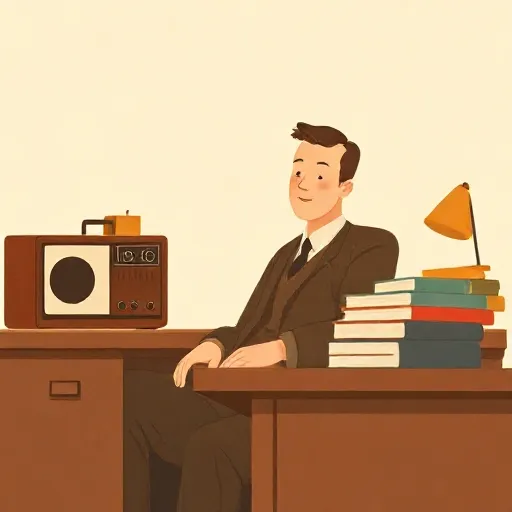
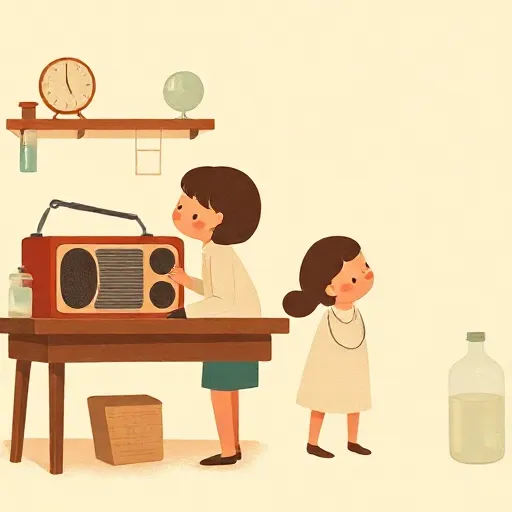
It is 1959. An Australian philosopher named J.J.C. Smart (1920–2012) sits in a book-lined study and writes a sentence that will make a lot of biologists furious. He says biology isn’t a true science like physics. It’s a kind of engineering — like designing a radio. A radio does not add new laws of nature; it just shows how the laws of electricity and physics work in a particular arrangement of wires and circuits. According to Smart, biology is the same. Living things are just special arrangements of atoms, and everything they do can — in principle — be explained by the laws of physics and chemistry alone.
Biologists pushed back. One famous biologist, Ernst Mayr (1904–2005), grumbled that every book with “philosophy of science” in the title should really be called “philosophy of physics,” because they ignored the special puzzles that life throws at us. Over the next decades, a new field called philosophy of biology grew up. Its job was to ask: Is biology really just applied physics, or does the living world have its own kinds of explanations that can’t be squeezed into physics?
Philosophers found that the best way to answer this huge question was to zoom in on some especially puzzling concepts that biologists use every day — concepts like fitness, species, and function. If those concepts can be reduced to pure physics, Smart might be right. If not, biology might need its own set of rules. Let’s look at three of those puzzles.
The Fitness Puzzle: When a Theory Eats Itself
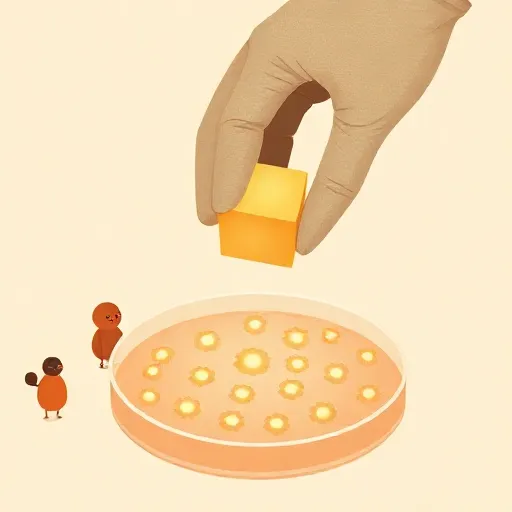
One of the most important ideas in biology is fitness. It’s the core of evolution by natural selection: the fittest organisms survive and leave more offspring. But what does “fittest” actually mean? The obvious answer is that the fittest are the ones that survive and reproduce best. The problem is that this makes “survival of the fittest” into a tautology — a statement that is true just because of how the words are defined, like “all bachelors are unmarried.” It says nothing testable about the world. Smart himself noticed this: if we try to make strict laws of evolution, he warned, we risk reducing them to empty tautologies.
Many philosophers of biology in the 1970s and 1980s tackled this puzzle head-on. They agreed that fitness couldn’t simply mean “survival success” or the theory would be circular. Instead, they proposed that fitness is a propensity — a probabilistic tendency, like a loaded die has a tendency to land on a certain number more often. Even if you define the tendency in terms of possible outcomes (like number of offspring), it’s not a tautology that the fittest actually have the most offspring in any particular run. It’s like saying that a fair die has an equal propensity to land on each side; that’s not the same as guaranteeing it will land equally often in a few throws. Over many trials, the tendency shows up, but any single instance can surprise you.
Philosophers also noted that fitness is a supervenient property: it depends on an organism’s physical features and environment, but the same fitness value can be realized by many different physical combinations. One fit beetle might be fast, another might be camouflaged — same fitness, very different physics. This makes it hard to reduce fitness to a simple physical formula. The propensity view showed that a central biological concept involves a disposition about possible futures, not just a snapshot of current atoms. That’s not the kind of thing physics typically describes.
The Species Puzzle: An Instance of Gold or a Member of a Family?

In physics and chemistry, we group things into natural kinds: all samples of gold have the same atomic number and behave the same way. There are universal laws about gold. Early in the 20th century, many people assumed that species are natural kinds in the same way — each species has an “essence” that makes it what it is.
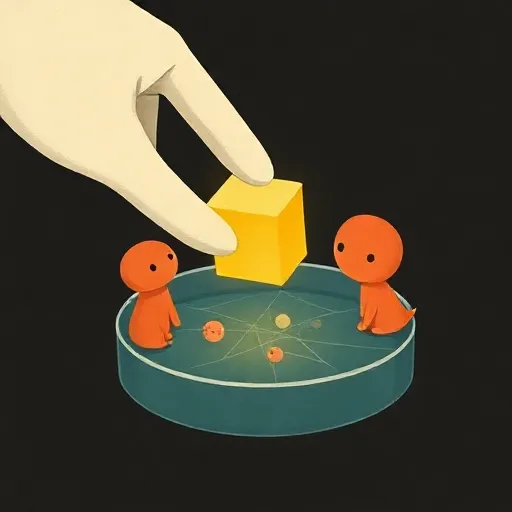
Then, in the 1970s, biologist Michael Ghiselin (born 1939) and philosopher David Hull (1935–2010) argued something startling. A species isn’t a kind like gold. It’s an individual — a historical particular, like a family, a nation, or a galaxy. A species has a birthplace (the speciation event), parts that are connected by shared descent, and an eventual death (extinction). And individual organisms aren’t “instances” of a species, the way a wedding ring is an instance of gold; they are parts of the species, the way you are a part of your family.
This has a huge consequence: there cannot be universal scientific laws about particular species. You can’t write a law of nature that says “all tigers have stripes” the way you write “all gold conducts electricity,” because a species is a unique, historically contingent thing. Smart had glimpsed this years before when he said biology’s generalizations were more like engineering rules than fundamental laws.
Philosophers also discovered that there is no single agreed-upon way to define what a species even is. Some definitions work for animals that reproduce sexually, but not for bacteria that just clone themselves. Some biologists think we should accept that there are many valid species concepts — a view called species pluralism. Others hold out for one best concept. This messiness makes it hard to reduce species to a clean physical category.
The Function Puzzle: Do Hearts Have Goals?
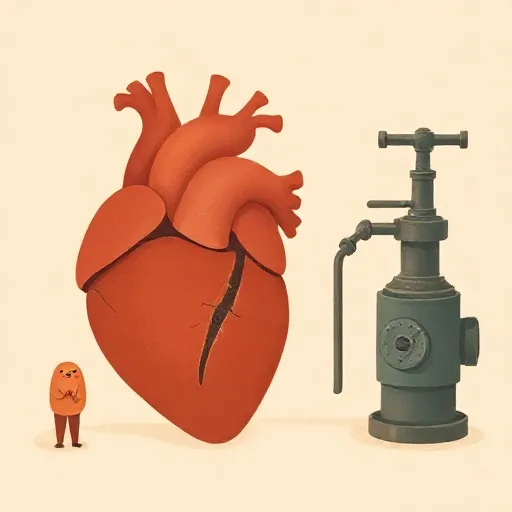
Walk through a biology museum, and you’ll see labels saying things like “the heart’s function is to pump blood.” That sounds as if hearts have a purpose or a goal — something we call teleology. Physics doesn’t talk about goals or purposes; a rock doesn’t have the goal of falling. If biology is just physics, how can it make sense to talk about functions?
In the 1970s and later, philosophers looked to evolution for an answer. They developed the selected-effects theory of function. The idea is simple: a trait’s function is whatever it was selected for in the evolutionary past. Your heart’s function is to pump blood because, in your ancestors, hearts that pumped blood better contributed to survival and reproduction, and that’s why hearts exist today. It’s not that the heart literally “wants” something now; its function is a fact about history.
This theory explains functions without magic, but it still uses a concept — historical selection — that is not part of physics. You can’t read the function of a heart off a snapshot of its current physical structure; you need to know its evolutionary story. So once again, biology seems to need explanations that go beyond describing the current arrangement of atoms.
Why It Still Matters: What Makes Something Alive?

These three puzzles — about fitness, species, and function — are not dusty textbook debates. They all circle the same deep question: What is it to be alive? If biology were truly nothing but applied physics, then given enough information, we could build a living thing from a bucket of chemicals and a set of equations. Some scientists are trying to do just that with artificial life. Some hope to create a robot or a computer program that is genuinely alive. But you might feel that a living, breathing frog is more than a collection of atoms in motion.
Philosophers of biology are still hard at work on the boundary between life and non-life. They argue about whether a computer simulation of a cell could be alive, or whether life requires something extra — maybe a history of evolution, maybe a kind of organization that can’t be captured purely in physical terms. The same puzzles appear when you think about yourself. When you choose a flavor of ice cream, is that choice just the result of chemical reactions in your brain, or is there something about being a living, choosing being that physics alone misses?
The debate Smart started in 1959 is far from over. And every new discovery in biology — about genes, about ecosystems, about the origins of life — gives philosophers fresh reasons to ask: Are living things just physics and chemistry, or something more?
Think about it
- If a scientist built an exact physical copy of a frog out of the same molecules, would it be alive? Why or why not?
- Could a computer program ever have a “goal” in the same way a heart has a goal? What would it need?
- Imagine you could predict every move your pet makes from the laws of physics. Would that change how you feel about your pet?