Can the Mind Be Just a Property of the Body?
A Shocking Disputation in 1641
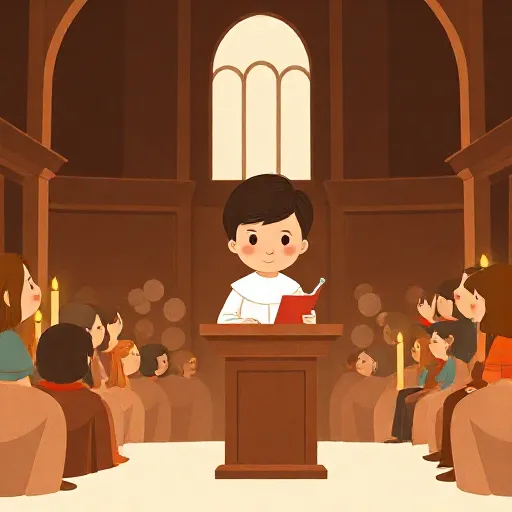
On a December day in 1641, at the University of Utrecht, a student named Henricus van Loon stood up before his professors and defended an idea that made the room crackle with tension. A human being, he claimed, is not a single, unified thing the way people had long believed. The mind and the body are two separate things, joined only accidentally—like a passenger riding in a carriage. In philosophical language, he called this an accidental union.
The professor who had guided van Loon was Henricus Regius (1598–1679), a town physician who had recently become a full professor of medicine. Regius was fascinated by the new mechanical philosophy of René Descartes (1596–1650) and had begun teaching it to his students, partly in secret. He believed the natural world could be explained by the sizes, shapes, and motions of tiny particles—no mysterious “forms” or “qualities” needed. But when van Loon’s disputation was printed and spread through the university, the theology professors were alarmed. If the mind is only accidentally united to the body, they worried, what happens to the Christian teaching that the soul is immortal and will be reunited with a resurrected body? The stage was set for one of the most bitter intellectual battles of the seventeenth century.
The Mind–Body Puzzle: Form, Substance, or Something Else?
To understand why van Loon’s thesis caused such an uproar, you need to know how most educated people in 1641 thought about the mind. Following the ancient Greek philosopher Aristotle, they believed the soul is the substantial form of the body. A substantial form is the organizing principle that makes a thing what it is—it turns a heap of flesh and bones into a living human being. On this view, the soul is not a separate object; it is what gives the body its life, its shape, and its powers. When the body dies, the form simply ceases to animate it.
Descartes broke with that tradition. He argued that there are only two kinds of substance—things that can exist on their own. A thinking substance (the mind) has the attribute of thought, and an extended substance (matter) has the attribute of taking up physical space. The human mind and body are two distinct substances, tightly woven together in a union that Descartes admitted was mysterious. But because they are different substances, the mind can survive the death of the body. This fit better with Christian ideas of immortality.
Regius began as a follower of Descartes. He agreed that substantial forms explain nothing and should be thrown out. A clock doesn’t need a “time-telling form”—it works because of the arrangement of its gears. The natural world, Regius said, is a great machine. But as a physician who spent his days studying nerves, blood, and the body’s organic parts, he found it harder than Descartes to keep mind and body far apart. In his 1646 book Fundamenta physices he called the mind “organic,” meaning that while it is in the body it cannot perform any mental act without bodily organs working properly at the same time. That small word “organic” planted a bomb under Descartes’ crisp division of substances.
Descartes vs. Regius: The Break-Up
Descartes saw the accidental-union thesis as a disaster. He wrote to Regius that there was hardly anything more likely to offend theologians than to say a human being is an accidental being. Under pressure, Regius removed his most controversial claims from the 1646 book—but the peace did not last. The university had already banned him from teaching natural philosophy, restricting him to traditional medicine. And the ferocious theologian Gisbertus Voetius (1589–1676), who relied on Aristotelian philosophy to defend Calvinist theology, accused Regius and Descartes of secretly promoting atheism and scepticism.
Once Regius felt he had nothing left to lose, he went further than ever. In a set of privately circulated Corollaries in 1647 he wrote that, as far as nature alone can tell us, the human mind might be either a separate substance or a mode of a bodily substance. A mode is not a thing by itself; it is a property of something else, like the wetness of water or the heat of a stone. If thinking is a mode of a material body, then the mind is not a substance at all.
Descartes was furious. He replied with a pamphlet called Notes on a Certain Manifesto (1648), accusing Regius of misunderstanding everything he had ever taught about metaphysics. Regius fired back. He pointed out that even if you can doubt you have a body but cannot doubt you have a mind, that does not prove the mind is a separate substance. The body you are busy doubting might still be the very thing that has thinking as one of its properties. He also rejected Descartes’ famous argument that God must exist because existence is contained in the idea of God. All that shows, Regius answered, is that if God existed, he would exist necessarily—it doesn’t tell you that God does exist. By 1650, when Descartes died, the two philosophers had stopped speaking to each other entirely.
No Ideas Are Built In: Regius the Empiricist
Regius’s split with Descartes was not just about the mind–body question. He also rejected one of Descartes’ most cherished doctrines: innate ideas. Descartes had argued that certain ideas—especially the idea of God and basic logical truths—are stamped into every human mind from birth. Regius said flatly that this is unnecessary. “The mind, in order to think, does not seem to need innate ideas,” he wrote. “Its innate faculty of thinking is sufficient on its own.” All it takes is the stimulation of the senses.
Every one of your thoughts that does not come from divine revelation, Regius claimed, is either a sensation or something you have built from sensations. The idea of God is not planted in you before you are born; it enters your mind when someone teaches you about God or when you look at the world and reason your way toward a creator. He even denied the existence of a pure intellect—the capacity to think without any help from the body. For a soul living in a body, he argued, there simply is no thought without the brain and senses being active at the same time. A blind person born without sight never forms ideas of colors; a child not taught language forms no abstract concepts. All knowledge starts from what hits your eyes, ears, and skin.
This also changed how Regius thought about science. Since we cannot see the tiny particles that make up the world, our explanations of them are always guesses. A good natural philosopher should imagine a cause that makes sense of what we observe, then see if a better explanation turns up. If it doesn’t, keep the first one as a probable hypothesis. Real certainty, Regius thought, belongs only to things revealed in Scripture. In matters of physics and medicine we must be content with moral or practical certainty, not the kind of airtight proof that Descartes wanted. Long before it became common, Regius was defending an empiricist view of knowledge and a picture of science as a nest of revisable hypotheses.
Why It Still Matters: Minds, Brains, and What We Can Know
Regius never said, as a flat fact, that the mind is just a mode of the body. He was pulled in two directions. On one side, his medical research and his logic kept pushing him toward that conclusion—after all, if thinking is only ever observed together with a working body, why invent an extra invisible substance? On the other side, he accepted the Bible’s teaching that the human soul is immortal and can be separated from the body at death. He never pretended to resolve the tension perfectly. He simply lived inside it, a reluctant dualist who refused to close his eyes to what anatomy and reason seemed to show.
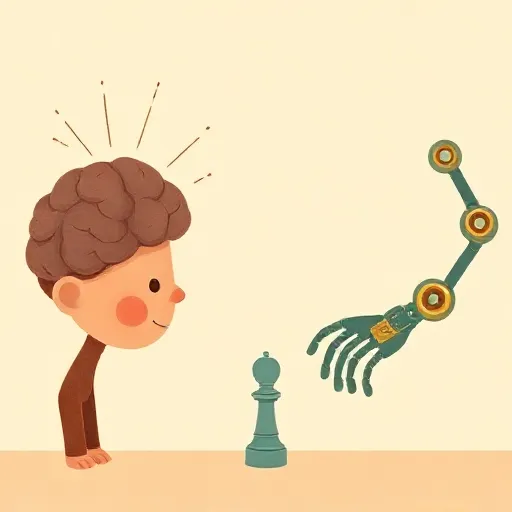
His questions are now your questions, even if you have never heard his name. When brain scientists study how thinking and feeling arise from buzzing neurons, they are investigating exactly the “organic” tie that fascinated Regius. When people argue about whether a powerful artificial intelligence could ever genuinely feel pain or joy, they are re-running the debate about whether a material thing can have a mind. And whenever you learn by touching, tasting, and trying things out—building your world from experience rather than from some inborn mental blueprint—you are acting out Regius’s empiricism. He reminds us that big philosophical fights often begin not with tidy answers but with a brave, uncomfortable question asked at the wrong time.
Think about it
- If you could build a robot that shows every outward sign of being happy or sad, would you believe it really has a mind? Or would you need something more than its physical body to be convinced?
- Do you think a baby born today has any knowledge already inside its head, or does every single thing it knows come from seeing, hearing, and being taught? What might your answer mean for how you treat people who had very different upbringings?
- Regius thought science gives us only probable guesses, not absolute proof. If a scientist tells you the Earth is warming and humans are partly responsible, does the fact that it isn’t “100% certain” affect how seriously you take it? Why?